
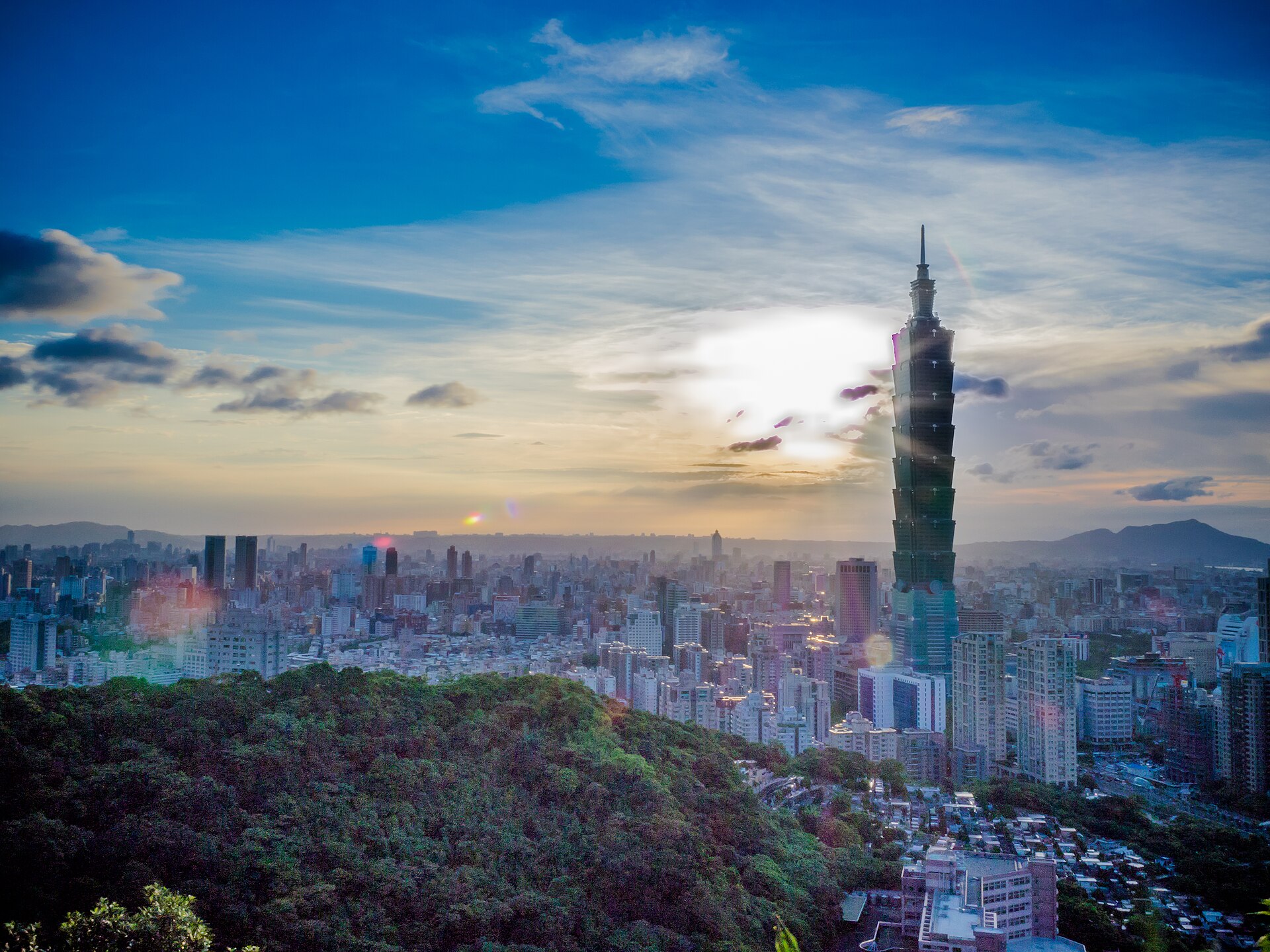

Start with this itinerary
Open this route in Honge as your starting point, then shape the days, stays, and pace around how you travel.
There is something wonderfully easy about travelling alone in Taiwan. You can sit down at a crowded night market and order dinner without worrying about whether everyone else is hungry. You can board a train with a coffee in one hand and your camera in the other, watching mountains and rice fields pass by the window. You can spend an afternoon hiking, change your plans because the weather looks better somewhere else, or simply find a quiet temple and stay longer than you intended. That freedom is one of the reasons Taiwan works so beautifully for solo travel.
It is compact enough to explore without exhausting amounts of planning, yet varied enough that ten days can feel like several different journeys stitched together. Taipei brings the energy of a modern Asian capital, with night markets, temples, neighbourhood cafés and mountain views sitting remarkably close together. Further east, the scenery changes dramatically as the Central Mountain Range meets the Pacific, leading into Hualien and the extraordinary landscapes around Taroko.
Then the pace softens.
The east coast opens into small towns, coastal roads and wide Pacific views before the journey continues south to Taitung. From there, Taiwan becomes increasingly tropical, with Kenting offering beaches, sea cliffs and long afternoons where the only real plan is to find somewhere beautiful to swim.
Finally, the journey ends in Kaohsiung, where temples, harbour views, art spaces and night markets provide an easy urban finale before heading home. You have the freedom to make the itinerary your own, while Taiwan's excellent transport network means you don't have to spend the entire trip solving logistical puzzles.
And although this itinerary is designed as a practical 10-day route, think of it as a framework rather than a set of rules. If you fall in love with Taipei, stay a little longer. If the east coast becomes your favourite part of the trip, slow down. If it rains on your planned beach day, switch things around. That's one of the pleasures of travelling solo. You get to decide what the day becomes.
Why Taiwan Is So Good for Solo Travel
Taiwan has a rare combination of qualities that makes independent travel feel comfortable without becoming predictable. The country has an extensive railway network connecting major cities and many smaller destinations, while Taipei and Kaohsiung have efficient urban transport systems. Long-distance trains make the east-coast journey particularly scenic, and high-speed rail makes travelling through western Taiwan remarkably quick.
Food is another major advantage. Taiwan's food culture is almost perfectly suited to solo travellers because eating doesn't have to be a formal event. You can sit down at a small noodle shop, order a bowl of beef noodles or a plate of dumplings and be finished whenever you want. At night markets, you can wander from stall to stall trying small portions rather than committing to one large meal.
The country's reputation for friendliness adds another layer of comfort. Travellers often encounter people who are willing to help with directions, transport or ordering food, even when language differences make the conversation more complicated.
English isn't spoken everywhere, particularly in smaller towns, but translation apps, station signage and a little patience go a long way.
Taiwan is also generally considered a safe destination for independent travellers, although the usual precautions still apply. Keep an eye on your belongings in crowded markets, take care around traffic and check weather and mountain conditions before hiking.
The result is a destination where you can be independent without feeling isolated. That's a pretty wonderful combination.
What This 10-Day Taiwan Itinerary Covers
This route deliberately moves north to east and then south, avoiding unnecessary backtracking.
You'll begin in Taipei before taking the train to Hualien, using the city as your base for exploring the Taroko region. From Hualien, the route continues south along Taiwan's Pacific side towards Taitung, giving you the opportunity to experience the east coast rather than simply using the train as a way to move between cities. From Taitung, you'll continue south to Kenting for a slower stretch of beaches, coastal scenery and national-park landscapes.
The final stage takes you north-west to Kaohsiung, where the journey ends with temples, food, markets and harbour views.
The route is: Taipei → Hualien → Taroko → East Coast → Taitung → Kenting → Kaohsiung
This makes the itinerary feel like a journey across Taiwan rather than a collection of disconnected day trips.
Journey Overview
| Day | Base | Main Experiences |
|---|---|---|
| 1 | Taipei | Arrival, Taipei streets, temples and first night market |
| 2 | Taipei | Taipei 101, historic neighbourhoods, temples and night-market food |
| 3 | Hualien | Scenic train to Hualien, Qixingtan and relaxed east-coast evening |
| 4 | Hualien | Taroko region exploration, open trails and mountain scenery |
| 5 | Taitung | Scenic train south, east-coast landscapes and Taitung food |
| 6 | Kenting | Travel south, beaches, Hengchun and tropical coast |
| 7 | Kenting | Full coastal day with beaches, viewpoints and national-park scenery |
| 8 | Kaohsiung | Transfer north-west, harbour area and evening markets |
| 9 | Kaohsiung | Temples, Lotus Pond, neighbourhoods, food and final evening |
| 10 | Kaohsiung | Slow breakfast, final exploration and departure |
A Note About Taroko Gorge
There is an important practical detail to understand before planning this trip.
The April 3, 2024 earthquake caused extensive damage throughout Taroko National Park, and the gorge has been reopening gradually rather than returning immediately to its pre-earthquake tourism pattern. As of the latest official information available for this itinerary, several famous trails and sections remain closed, while other areas have partially reopened. The official park information currently lists partial openings around areas including Tianxiang, Lushui and Chongde, while trails such as Shakadang and several major gorge trails remain closed or restricted.
That means this itinerary does not treat Taroko as though every famous trail from older travel guides is available. Instead, Day 4 is designed around what is officially accessible at the time of travel, with flexibility built into the schedule. Conditions and road controls can change because reconstruction and weather-related closures are ongoing, so the park's official notices should always take priority over an older itinerary.
This actually makes Hualien an even more useful base. You can experience the surrounding coast and mountains without putting the entire trip at risk if a particular gorge trail or road section closes.
Best Time to Visit Taiwan
For this particular itinerary, October to April is generally the most comfortable period to consider, especially if hiking, sightseeing and spending time outdoors are important to you.
Autumn can bring pleasant temperatures and clearer conditions, while winter is often comfortable for exploring Taipei, the east coast and southern Taiwan. Spring can also be beautiful, although weather patterns vary considerably across the island.
Summer brings heat, humidity and the possibility of typhoons, particularly between June and October. That doesn't mean you can't visit during summer, but outdoor plans and transport should remain flexible. The east coast and mountain areas deserve particular attention because weather can affect roads, trails and railway operations.
For a solo traveller, flexibility is more than a convenience. Before heading into Taroko or planning a coastal hike, check the latest official park and transport information rather than relying solely on what a guidebook says.
Before the journey properly begins, there are two things worth getting right: where you stay and when you go. Taiwan is wonderfully easy to explore independently, but this itinerary moves from a busy capital to mountains, coastline and tropical beaches, so choosing convenient bases and travelling in a season that suits your plans will make the entire experience feel smoother. The goal is not to plan every minute, but to remove the little logistical frustrations that can otherwise eat into your time.
As a solo traveller, being able to step out of your hotel and find a restaurant, café, convenience store or metro station within a few minutes makes evenings easier, especially when you're tired after a long day of sightseeing. Taiwan is already comfortable for solo travel; good accommodation choices make it even more so.
Where to Stay on This Taiwan Itinerary
Taipei – Zhongshan, Ximending or Taipei Main Station
For the first two nights, choose a central Taipei neighbourhood rather than picking a hotel purely for its views or luxury facilities. Zhongshan is particularly appealing for solo travellers because it has a relaxed mix of cafés, restaurants, independent shops and small streets, while still being extremely well connected by the MRT. It feels lively enough that walking back to your accommodation in the evening doesn't feel lonely, but it doesn't have the constant intensity of some of Taipei's busiest shopping districts.
If you prefer to have something happening around you at almost every hour, Ximending is an excellent alternative. The neighbourhood is packed with shops, restaurants, street food and evening activity, making it particularly convenient if you enjoy stepping outside your hotel and immediately finding somewhere to eat. Taipei Main Station, meanwhile, is probably the most practical choice of all because it makes the Day 3 departure towards Hualien wonderfully simple. If your priority is easy logistics rather than neighbourhood character, staying within walking distance of the station is difficult to beat.
Whichever area you choose, look for accommodation within a short walk of an MRT station and somewhere with restaurants open late. When you're travelling alone, that small convenience can make a surprisingly big difference after a long day.
Hualien – Central Hualien or Near the Station
Hualien is primarily a base for exploring the spectacular landscapes around the city, so I wouldn't worry too much about finding the most luxurious hotel here. What matters more is having somewhere comfortable and convenient from which to organise the next day's adventure.
Staying near Hualien Station makes the arrival and departure days particularly straightforward, especially if you're travelling with a larger suitcase. If you prefer to be closer to restaurants and evening activity, the city centre is a better choice and still gives you easy access to transport.
For a solo trip, lean towards the city centre if you're comfortable arranging transport independently, because having cafés and restaurants within walking distance makes the evening feel more relaxed. After a day among mountains and coastlines, it's rather nice to be able to wander out, find dinner and return to your hotel without having to organise another ride.
Taitung – Stay in Taitung City
For this itinerary, Taitung City is the easiest base because you're only spending one night before continuing south. The city gives you a practical combination of restaurants, cafés, shops and transport connections, so you don't have to spend your limited evening arranging taxis simply to find dinner.
If you eventually decide to extend this trip, however, Taitung is a destination where it can be worthwhile moving away from the city. The wider region is known for its countryside, indigenous culture, hot springs, rice fields and spectacular Pacific-facing scenery, and spending an additional night in a rural guesthouse or hot-spring property would change the character of the trip completely. For a ten-day itinerary, though, keep it simple and stay in the city. You can always save the slower Taitung countryside experience for another trip.
Kenting – Kenting Town or Hengchun
Kenting Town is the convenient choice if you want to walk to restaurants, evening food stalls and the beach, while Hengchun offers a quieter and more local feeling with its historic town walls, traditional streets and relaxed pace. Neither is necessarily better; they simply create different versions of the same beach destination.
For a solo traveller who wants evenings to be easy, Kenting Town makes sense because you can finish a day at the beach, shower, walk outside and immediately find somewhere to eat. If you're more interested in the local atmosphere and don't mind using buses or taxis for some of your sightseeing, Hengchun can feel more distinctive.
Kaohsiung – Formosa Boulevard, Central Park or the Harbour
For the final two nights, I'd stay somewhere close to an MRT station because Kaohsiung is a city that rewards independent exploration. Formosa Boulevard is one of the most practical bases, putting you close to the city's transport network and within easy reach of restaurants and evening activity. Central Park is another convenient option, while staying closer to the harbour works particularly well if you enjoy waterfront walks, cafés and contemporary cultural spaces.
Kaohsiung makes a satisfying ending to this particular route because it feels distinctly different from Taipei without requiring the same amount of energy. You can spend the morning visiting temples, the afternoon exploring the harbour or an art district and the evening eating your way through a night market. After several days of travelling through Taiwan's mountains and coastline, it provides just enough urban energy to bring the journey full circle.
Day 1 – Taipei: Your First Taste of Taiwan
Pace: Easy — The first day is deliberately gentle, giving you enough time to arrive, settle in and experience Taipei without turning jet lag into part of the itinerary.
After arriving in Taipei, resist the temptation to immediately turn your first day into a sightseeing marathon. Once you've checked into your accommodation, take some time to unpack, work out the MRT, get some local currency and simply walk around your neighbourhood. Taiwan becomes easier very quickly, and those first few hours are useful for getting comfortable with the rhythm of the city.
Once you're ready to explore, begin with Longshan Temple and the surrounding Wanhua neighbourhood, one of the best places to see a more traditional side of Taipei.
Longshan Temple is one of the city's most important religious sites, but what makes visiting especially interesting is the way it exists as part of everyday life rather than as a monument separated from the city. People arrive to pray, light incense, make offerings and go about their routines while tourists quietly observe around them. Travelling alone works particularly well here because there is no pressure to move on according to someone else's schedule. If you find yourself fascinated by the rituals or the architecture, you can stay. If the heat becomes too much, you can step outside and find a quiet café. There is no need to justify either choice.
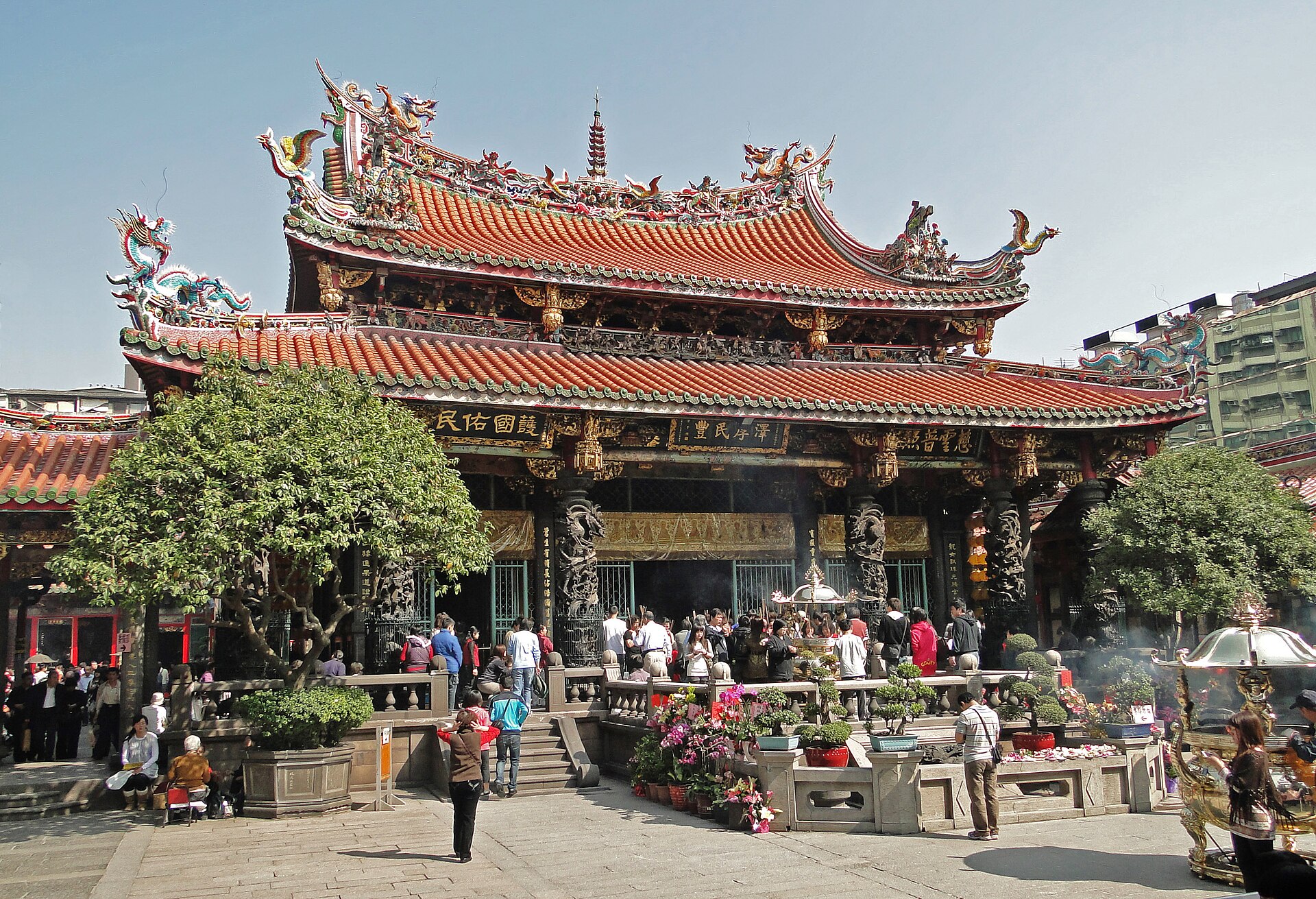

From Longshan Temple, allow yourself to wander through the surrounding streets before gradually making your way towards the evening's main event: a Taiwanese night market.
Your First Taipei Night Market
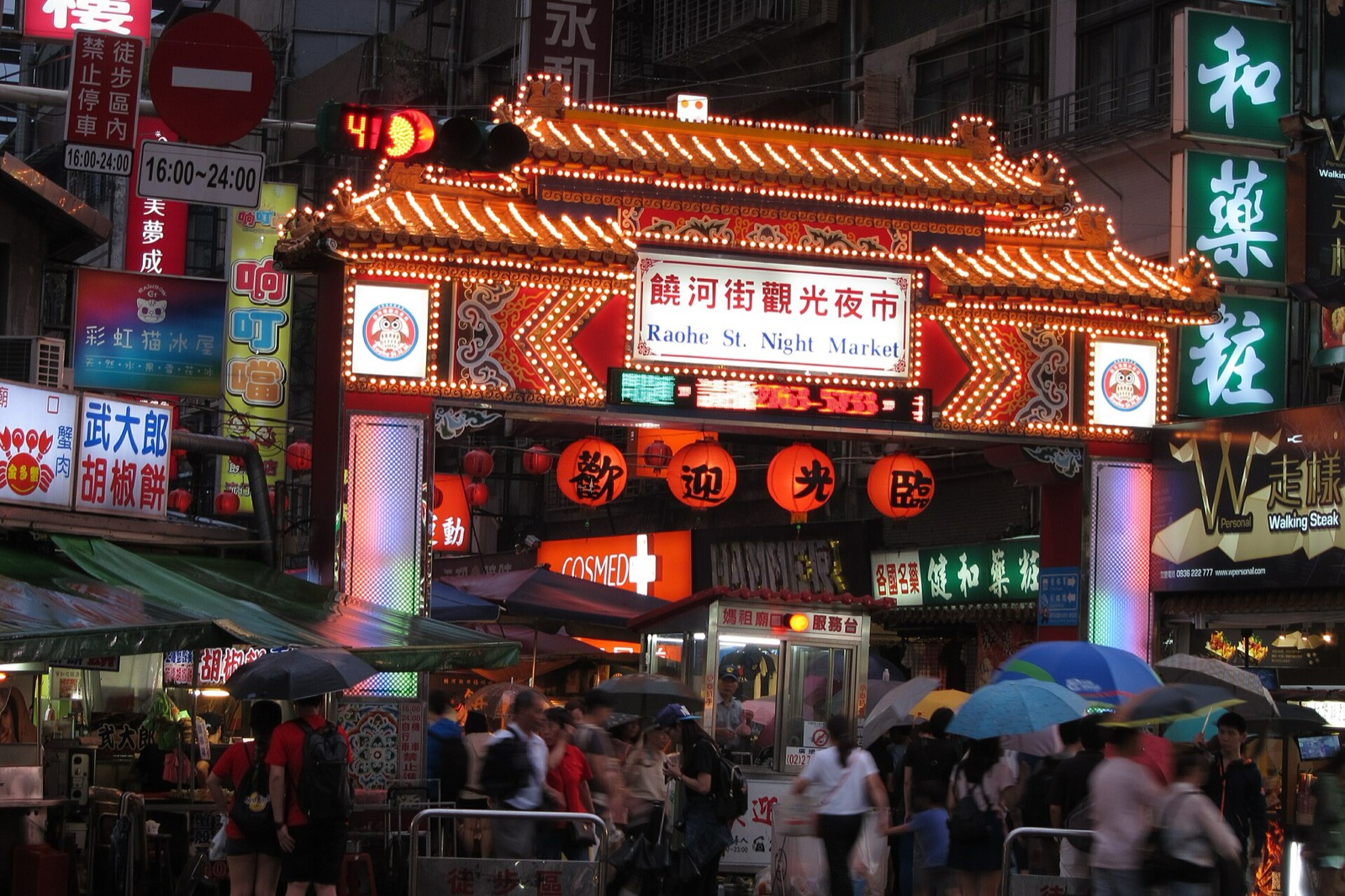
Your first evening in Taiwan should end at a night market because there is simply no better introduction to the country's food culture.
.jpg)
Raohe Street Night Market is an excellent choice for a first visit, although Ningxia and Shilin are also worth considering depending on where you're staying. The beauty of the night-market experience is that you don't need a reservation, a group of friends or even a plan. Rather than ordering one large meal, think of the evening as a moving tasting menu. Try a small snack from one stall, walk a little further, stop when something else catches your attention and keep going until you realise you've somehow eaten an entire dinner without ever sitting down for one.
Day 2 – Taipei: Temples, City Views & a Night Built Around Food
Pace: Moderate — Today includes several major sights, but the neighbourhood-based route and flexible evening make it considerably less exhausting than a traditional sightseeing checklist.
Your first full day in Taipei is where you can begin exploring with a little more intention.
The route combines the city's modern skyline with historic architecture and traditional neighbourhoods, before ending with another night market. The idea is to experience several sides of Taipei without spending the entire day crossing the city from one attraction to another.
Start in the morning around Taipei 101 and the Xinyi district. Taipei 101 is obviously one of the city's most recognisable landmarks, but the surrounding neighbourhood is worth exploring as well. The contrast is immediate: sleek skyscrapers and shopping centres rise above broad avenues, while temples, small restaurants and older neighbourhoods remain woven into the wider city.
If the weather is clear and you enjoy panoramic views, going up to the Taipei 101 Observatory can be worthwhile. If the city is covered in clouds, however, don't feel obligated to spend money simply because it was on the itinerary. Taipei's skyline is best appreciated when you can actually see it.
From Xinyi, continue towards Chiang Kai-shek Memorial Hall, where the enormous plaza and distinctive white-and-blue architecture provide one of Taipei's most impressive urban spaces.
Rather than rushing in, take time to walk through the grounds and observe the changing scale of the city around you. Taipei has an unusual ability to shift between enormous public spaces and tiny neighbourhood streets within minutes, and understanding that contrast is part of understanding the city itself.
Dihua Street and the Older Taipei
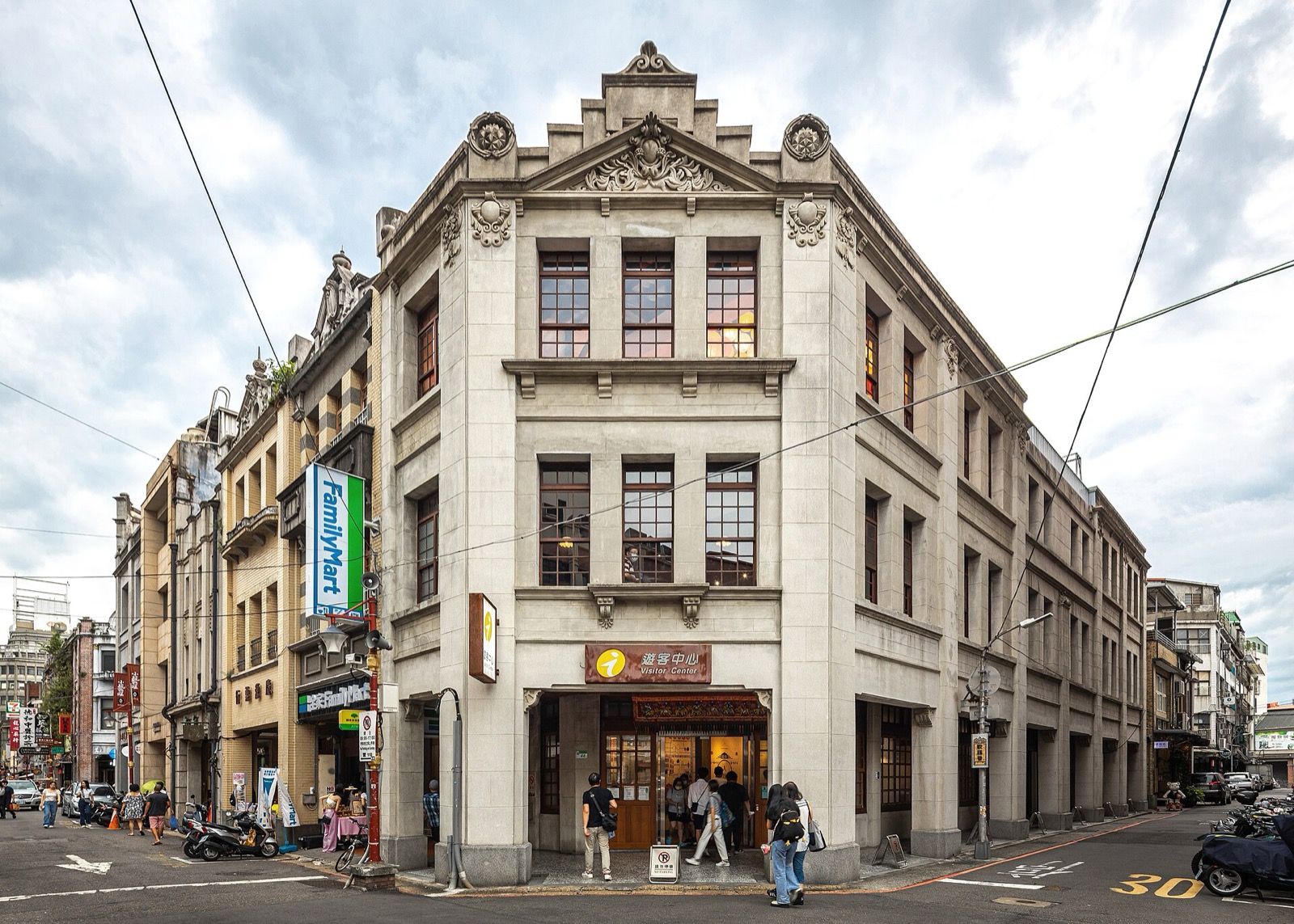
In the afternoon, move towards Dihua Street, one of the city's most interesting historic areas. The traditional shophouses, tea merchants, food stores, herbal shops and independent businesses create a very different atmosphere from the polished modernity of Xinyi. This is a good place to slow down, browse without a shopping list and let yourself become curious about what the shops actually sell.
.jpg)
Stop for tea if you find somewhere appealing. When you're travelling alone, these small decisions become part of the pleasure of the day because there is no need to keep everyone else entertained or moving towards the next attraction.
Evening: Choose Another Night Market
For the second evening, try a different market rather than returning to the one from Day 1. Ningxia Night Market is particularly well suited to a food-focused evening because it is relatively compact and makes it easy to sample several dishes without committing to a long walk between stalls.
By now, you'll probably have a better idea of what you like, which means you can start returning to dishes that impressed you on the first night while still trying something new. That balance—familiar favourites mixed with small discoveries—is one of the easiest ways to enjoy Taiwanese food without feeling overwhelmed by choice.
Day 3 – Taipei to Hualien: Trading the Skyline for the Pacific
Pace: Easy — The train journey takes up part of the day, and the remaining time is intentionally relaxed so that you arrive in Hualien rested rather than immediately exhausted.
Day 3 is when Taiwan begins to change in front of you. Leave Taipei in the morning and take the train east towards Hualien, and don't treat the journey as a simple transfer between two hotels. The railway journey is part of the experience because the scenery gradually shifts from the dense urban environment of Taipei into valleys, mountains and eventually the broad Pacific coastline.
This is the point where the itinerary starts feeling less like a city break and more like a journey through Taiwan. The eastern side of the island is defined by an extraordinary geographical contrast. The Central Mountain Range rises dramatically inland while the Pacific stretches out along the opposite side, creating landscapes that feel much more expansive than you might expect from an island of Taiwan's size.
Morning: Train to Hualien
Take a Taiwan Railways service from Taipei to Hualien, checking the current timetable and availability for your specific travel date before booking. Journey times vary according to the service, so it's better to use the official railway schedule than rely on a fixed duration from an older itinerary. If your plans are fixed, booking ahead is sensible, particularly around weekends and public holidays. Once you arrive in Hualien, check into your accommodation, leave your main luggage behind and keep the rest of the day deliberately light.
Afternoon: Qixingtan and the Pacific
Your first taste of the Hualien coastline should be Qixingtan, a beautiful stretch of Pacific shoreline just north of the city. Don't arrive expecting a traditional tropical beach. Qixingtan is defined by smooth rounded stones, deep blue water and dramatic mountain views rather than soft white sand. The landscape feels wilder and more open than Taipei, and after two days surrounded by city streets, that sense of space is almost startling.
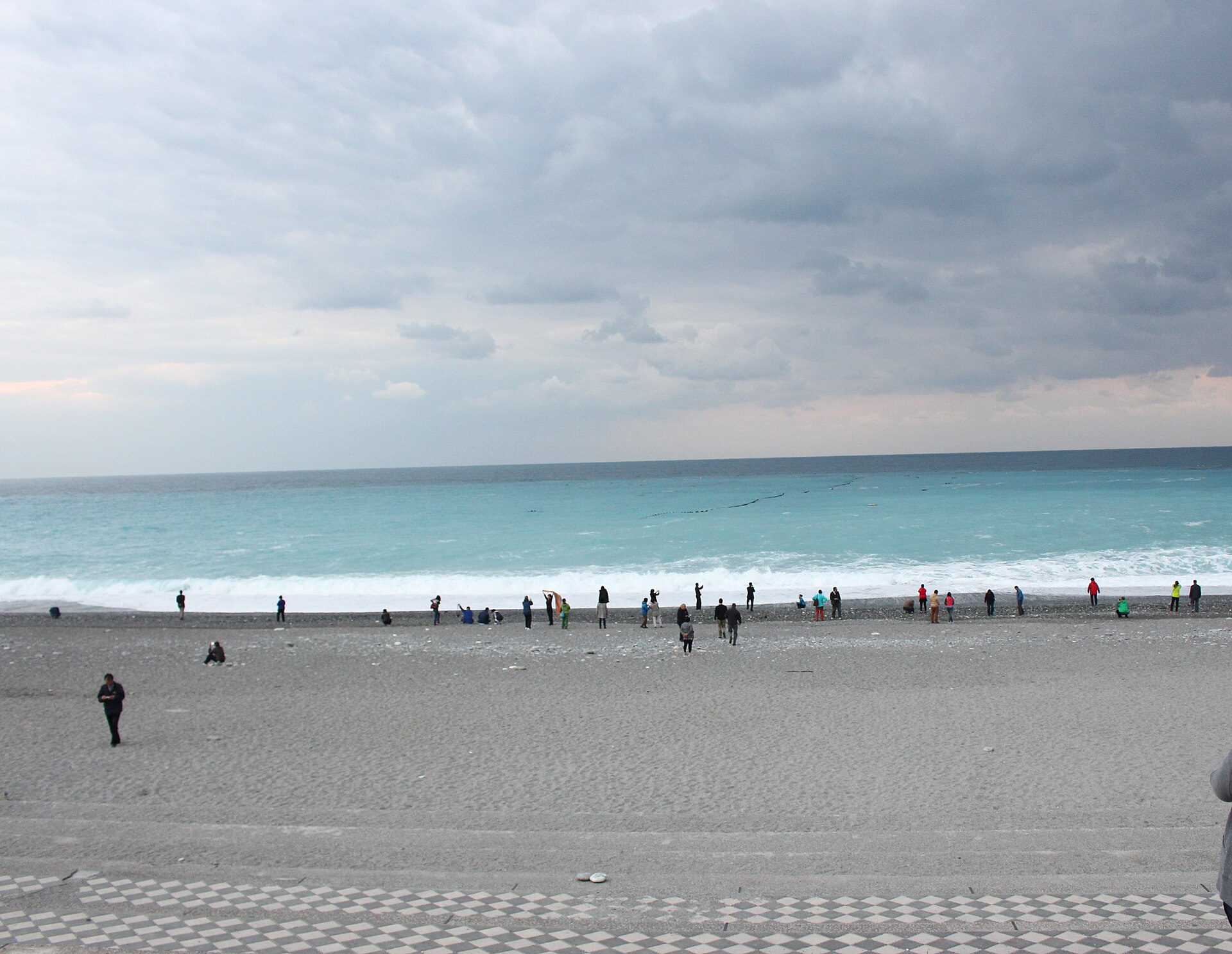

Walk along the shoreline, find a comfortable place to sit and give yourself time to simply watch the ocean. If the weather is clear, the late afternoon light can be particularly beautiful as the mountains begin to change colour and the Pacific takes on deeper shades of blue.
Evening: Hualien Food and a Quiet Night
Return to Hualien for a relaxed dinner and use the evening to prepare for the following day. This is a good time to pick up water and snacks, check the weather and confirm your transport arrangements for the Taroko region. Because conditions in the mountains can change quickly, tomorrow should not be treated as a completely fixed sightseeing day.
Instead, think of it as a mountain day with several possible versions. That mindset will make the experience considerably less stressful if weather, road conditions or trail closures force you to change plans.
A Flexible Note Before Taroko Gorge
Tomorrow is one of the most anticipated parts of the trip, but it is also the day that requires the most flexibility.
The April 3, 2024 earthquake caused extensive damage throughout Taroko National Park, and the park has been reopening gradually rather than simply returning to its pre-earthquake tourism conditions. Some areas and trails have reopened under specific conditions, while several famous routes remain closed or restricted as reconstruction continues.
For that reason, don't build your entire trip around one specific Taroko trail unless you have checked its current status immediately before travelling.
The official Taroko National Park information should always take priority over older itineraries, guidebooks, social-media posts or even recent-looking travel videos. Road controls, weather conditions and trail access can change, and the mountains should be treated with respect.
The good news is that Hualien remains worthwhile even when particular Taroko trails aren't accessible. You can adapt the day towards officially open sections, accessible mountain scenery, coastal areas or other experiences around the region rather than treating a trail closure as though it has ruined the trip. That flexibility is particularly valuable when you're travelling alone.
If the mountains say "not today," you can simply change direction. And sometimes, the unexpected version of the day becomes the one you remember most.
Day 4 – Taroko Region: Into Taiwan's Mountain Country
Pace: Moderate — The day involves an early start, mountain travel and potentially some walking, but it should not become a race to collect viewpoints. Leave enough time for weather changes and transport delays.
Today is the most important day to approach with an open mind. Taroko Gorge is one of Taiwan's most spectacular natural areas, famous for its marble cliffs, deep river valleys, waterfalls and mountain roads carved dramatically into the landscape. Before the 2024 earthquake, trails such as Shakadang, Swallow Grotto and Zhuilu were among the country's most popular hiking experiences.
The landscape remains extraordinary, but access has changed. Rather than presenting an old list of trails as though everything has reopened, use the official Taroko National Park information to decide what is accessible during your visit. Conditions can change, and some areas require restrictions, advance arrangements or remain closed while reconstruction continues.
The goal is to experience the Taroko region safely and meaningfully with whatever is officially accessible on your travel date.
Morning: Enter the Taroko Landscape
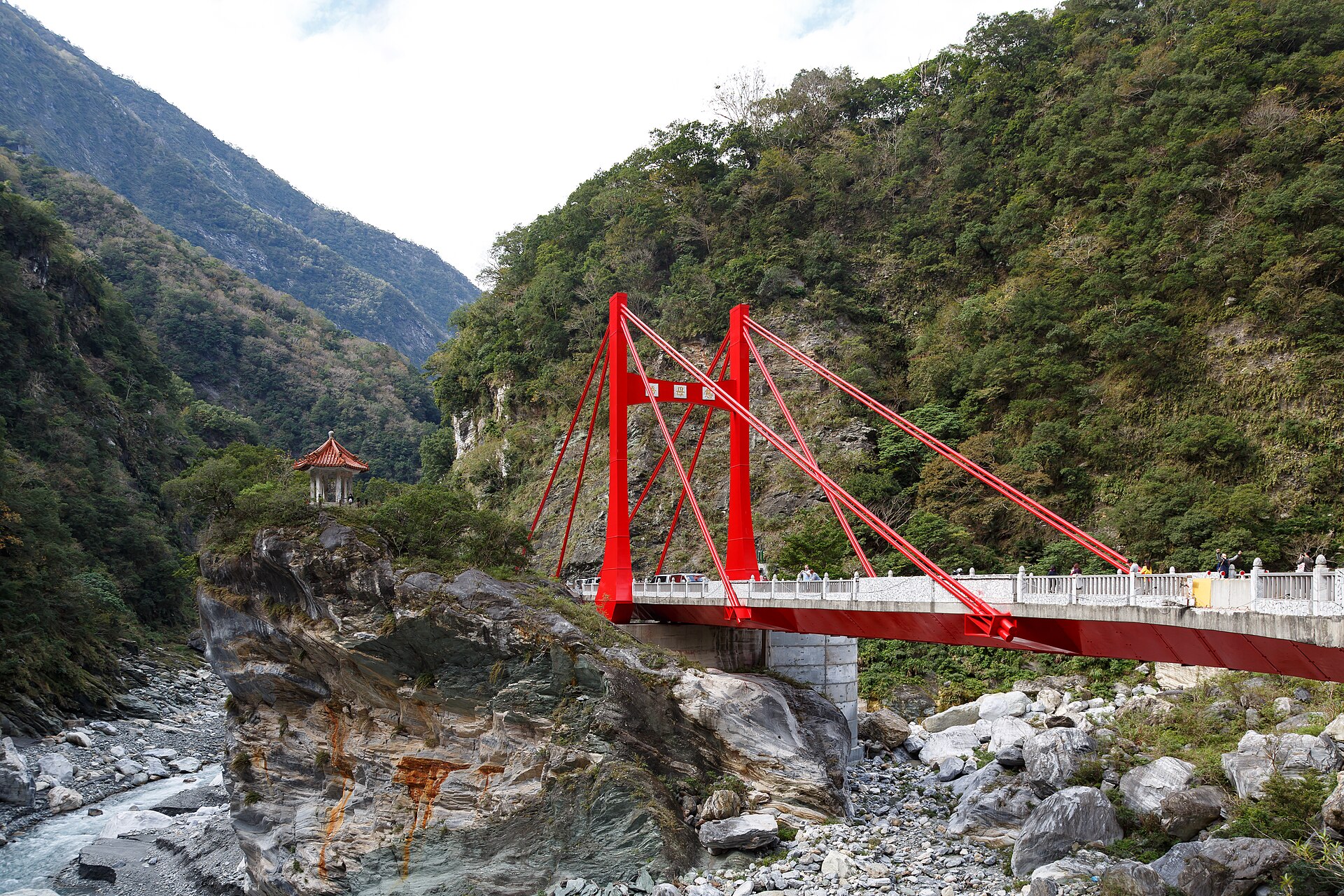

Start early from Hualien because mountain weather and road conditions are generally easier to manage earlier in the day, and an early departure also gives you more flexibility if you need to change plans. Depending on the current access situation, you may use a local bus, taxi, organised excursion or private transfer to reach the open areas of the park. If you're travelling independently, check the current public transport information before leaving Hualien rather than assuming that a route from an older travel guide is still operating exactly as described.
As the road moves inland, the scenery changes quickly. The flat coastal landscape gives way to steep green mountains, narrow valleys and towering rock faces. The first time you see the marble cliffs rising above the river, the scale can be difficult to process from a photograph alone.
Choose Your Trail According to Current Conditions
If an accessible trail is open during your visit, use it as the centrepiece of the day rather than trying to squeeze several hikes into one morning. The official park information currently identifies certain areas around Lushui, Tianxiang and other sections as accessible under changing conditions, while several well-known trails remain closed or restricted because of earthquake damage and reconstruction.
The important thing is to check the latest information immediately before your visit.
If a short trail is open, enjoy it properly rather than treating it as a consolation prize. Taroko's appeal comes from the relationship between the cliffs, river and forest, and even a relatively short walk can give you an extraordinary sense of scale. If hiking access is limited, you can instead focus on officially accessible viewpoints, scenery around the open sections or another east-coast experience.
The itinerary should adapt to the mountain, not the other way around.
Lunch Among the Mountains
Depending on what is open and where you're able to travel, keep lunch simple today. Carry water and snacks from Hualien, and don't rely on every mountain area having restaurants or convenience stores operating normally.
This is one of those small details that becomes particularly important when you're travelling alone. If a road closure changes your route, you don't want hunger to become another problem you have to solve. Find somewhere safe and permitted to stop, enjoy the mountain scenery and take your time.
Afternoon: Tianxiang or Another Open Area
If current conditions allow access towards Tianxiang, this can provide a rewarding continuation of the mountain experience. The area has long been one of the key visitor centres within Taroko and offers a different perspective from the narrow gorge itself, with mountain scenery surrounding the settlement. However, treat this as an option rather than a guaranteed itinerary point.
The exact road and trail situation is more important than preserving the original plan. This is also a good afternoon to put the camera away occasionally. Taroko is so visually dramatic that it's easy to spend the entire day trying to photograph everything, only to realise later that you barely stopped to experience it.
Find a viewpoint, sit for a while and watch the clouds move across the cliffs. Those quiet moments often become the memories you carry home.
Day 5 – Hualien to Taitung: The Pacific Coast Takes Over
Pace: Easy — This is primarily a scenic travel day with a relaxed afternoon, giving you time to recover after the mountain experience in Taroko.
After the mountains, today's journey returns to the coast. Take the train south from Hualien towards Taitung, and once again, don't think of the railway journey as merely a way to get somewhere else. The east-coast railway is one of the most enjoyable parts of this itinerary because the landscape continually changes outside the window.
There are stretches where the mountains seem to close in around the railway. Then, almost suddenly, the Pacific appears. Rice fields open across the valleys, small towns pass by and the mountains retreat into the distance. It's one of those journeys where sitting quietly beside the window becomes an activity in itself.
Morning: Train South to Taitung
Check the current Taiwan Railways timetable and book your preferred service in advance if your dates are fixed. The exact journey time varies by service, so use the official timetable when planning your day rather than relying on a single estimated duration.
Try to travel earlier rather than later if possible. Arriving in Taitung with part of the afternoon still available gives you time to explore rather than turning the entire day into a transfer. Once you arrive, check into your accommodation in Taitung City and leave your larger luggage behind.
Afternoon: Taitung's Slower Side
Taitung feels different from both Taipei and Hualien. The city is smaller and the pace is noticeably more relaxed, while the surrounding region opens into farmland, mountains and coastline. If you have energy after the train journey, spend the afternoon exploring the city rather than immediately organising a complicated excursion.
Visit a local temple, browse small shops, stop for coffee or find a regional speciality for lunch. Taitung is also an excellent place to experiment with Taiwanese food beyond the famous night-market staples. Look for local dishes, seasonal produce and indigenous influences from the communities that have shaped the region's food culture.
If you have arranged transport and weather conditions are favourable, you can use the afternoon for a short outing beyond the city, but don't feel pressured to do so.
Evening: Taitung After Dark
Spend your evening around Taitung City, finding a local restaurant or food market before turning in relatively early. Tomorrow begins the journey towards Taiwan's tropical south, and the character of the trip will change again.
The mountains and Pacific coast will gradually give way to warmer weather, palm trees, beaches and the landscapes of Kenting National Park.
Day 6 – Taitung to Kenting: Entering Tropical Taiwan
Pace: Easy — The transfer takes up much of the day, so the afternoon and evening are deliberately light, allowing you to settle into the slower rhythm of southern Taiwan.
Today feels almost like the beginning of another holiday. The landscapes become warmer and more tropical as you travel south from Taitung towards Kenting, where Taiwan's eastern and southern coasts meet around the country's famous national park.
The journey itself requires a little more planning than the train-based sections because Kenting does not have a railway station. You'll typically continue by bus or other ground transport towards Hengchun and Kenting, with the best option depending on your accommodation and the day's schedule. This is one of the places where a little advance planning pays off.
Morning: Travel South
Leave Taitung in the morning and make your way towards Kenting. As you travel south, the scenery begins to change noticeably. The air feels warmer, vegetation becomes more tropical and the coastline takes on a different character.
If you're travelling during a hot season, carry water and don't underestimate the sun. The southern part of Taiwan can feel significantly warmer than Taipei or the mountains around Hualien.
Afternoon: Settle Into Kenting
Once you arrive, check into your accommodation and resist the urge to immediately create another packed sightseeing schedule. You've already moved through three very different regions of Taiwan.
Kenting is where the itinerary is supposed to breathe. Spend the afternoon at a nearby beach, walk along the coast or simply find a café and enjoy doing very little. If the weather is good, this is the perfect opportunity to finally put away your hiking shoes and spend some time near the water.
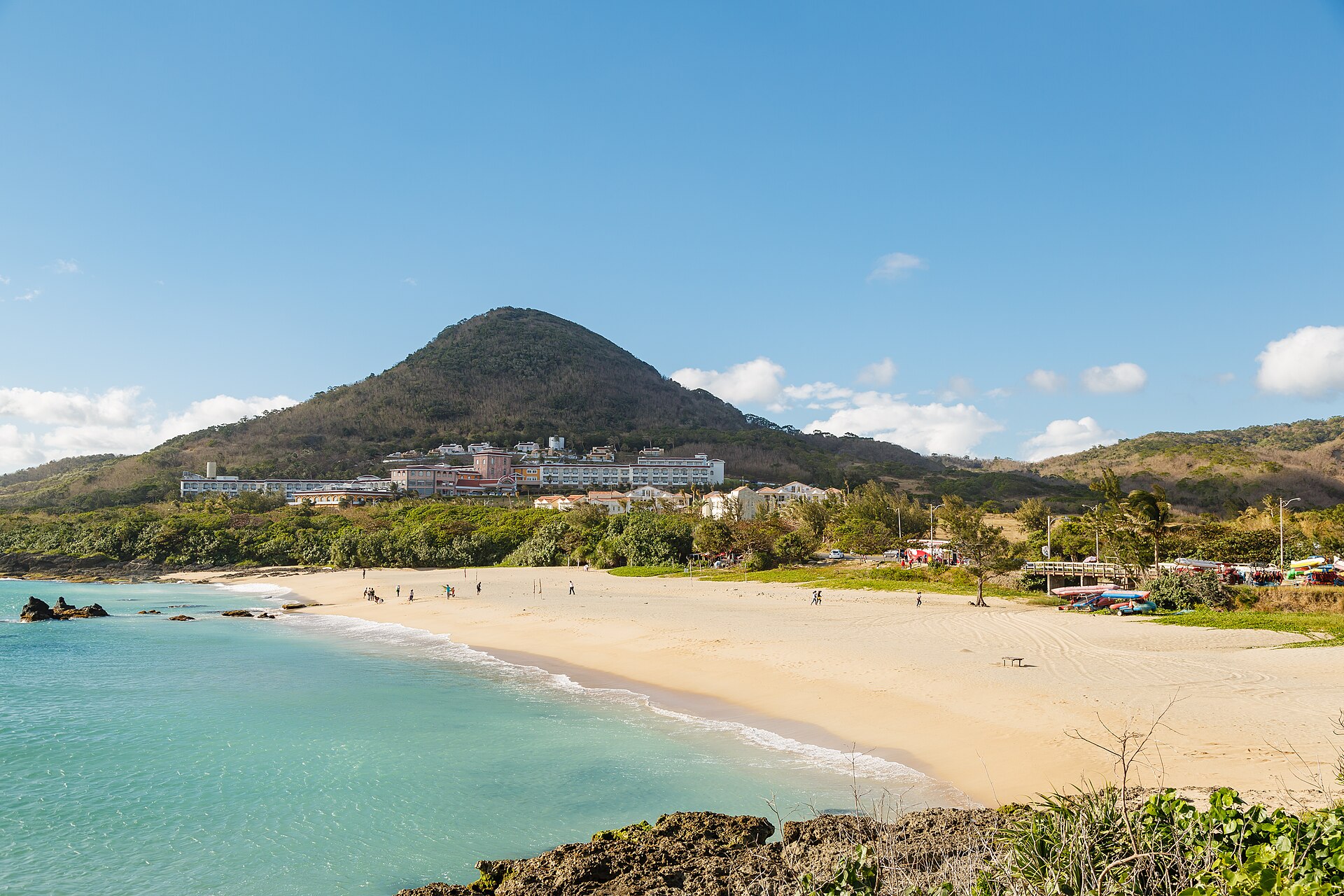

Kenting National Park is known for its beaches, coral reefs, limestone landscapes, coastal cliffs and tropical vegetation, giving the southern end of the itinerary a distinctly different feel from the Pacific scenery around Hualien and Taitung.
Evening: Kenting Night Market
As evening arrives, make your way through Kenting's evening food scene.
The main road becomes lively with food stalls, restaurants and small shops, creating an easy environment for solo travellers because you can simply wander rather than committing to a long formal dinner. After several nights of Taiwanese city food and east-coast exploration, it feels good to end the day somewhere casual.
Day 7 – Kenting: Beaches, Coastline & a Day With No Rush
Pace: Easy to Moderate — The day contains several possible stops, but none needs to be rushed. Choose two or three experiences and allow the rest of the day to unfold naturally.
The southern tip of Taiwan combines beaches, coral coastline, forested hills, rocky headlands and open ocean, and the best way to experience it is to move between a few highlights while leaving plenty of time to stop whenever somewhere looks inviting.
After several active days, today's main purpose is simple: enjoy being somewhere beautiful.
Morning: Eluanbi and Taiwan's Southern Edge
Start your morning by travelling towards Eluanbi, the southernmost tip of Taiwan and one of the most scenic parts of Kenting National Park. The Eluanbi Lighthouse is the area's best-known landmark, but the surrounding park is just as interesting. Walking paths wind through tropical vegetation before opening towards views of the sea, and the combination of greenery, limestone and bright blue water makes this feel very different from the eastern coastline around Hualien.
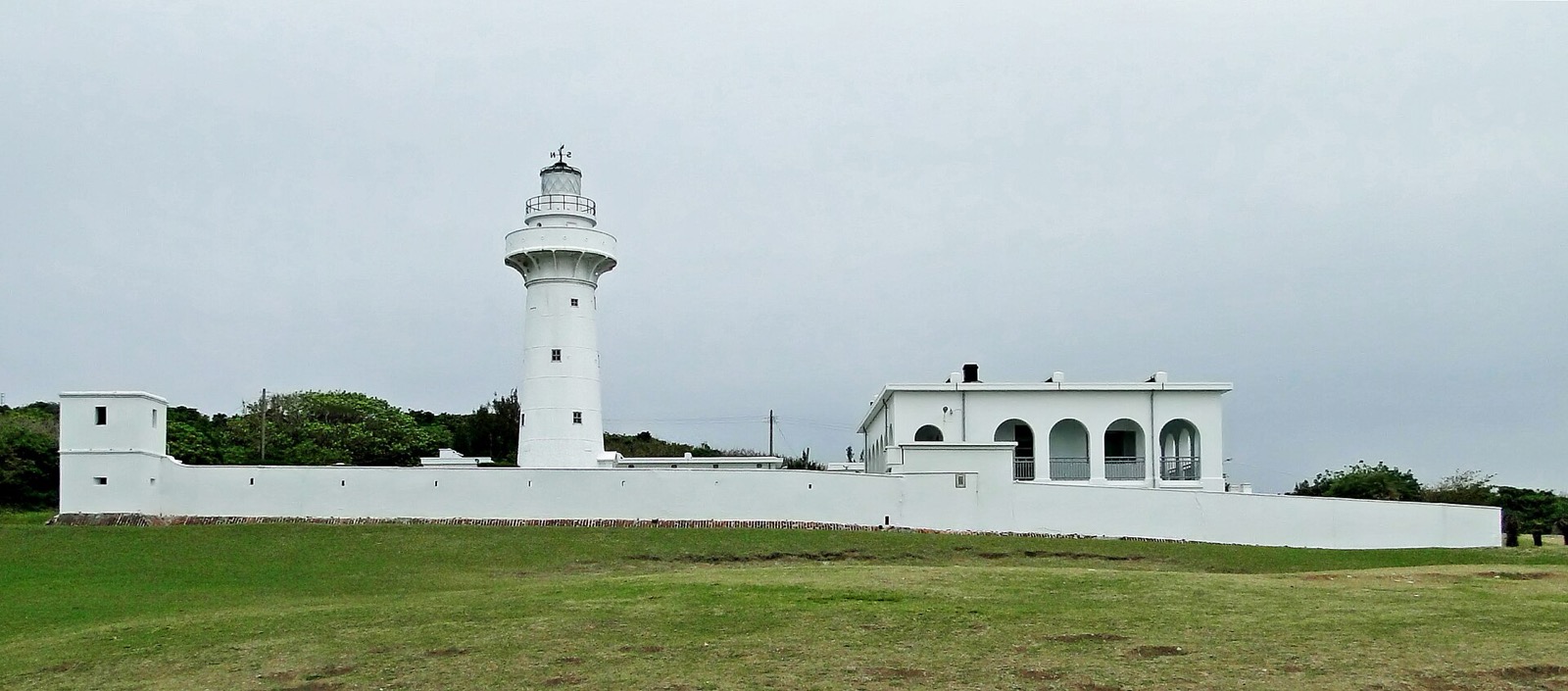

Take your time here. Walk through the surrounding park, find viewpoints over the coastline and enjoy the warmer southern weather before the midday heat becomes intense. If you're travelling during the hotter months, an early start is especially worthwhile.
Late Morning: Long Beach Time
After exploring Eluanbi, choose one of Kenting's beaches for a slower stretch of the day. The exact beach you choose can depend on the conditions and where you're staying, but Baisha Beach is a good option if you want a more relaxed setting, while beaches closer to the main Kenting area are convenient if you prefer easy access to food and facilities.
Don't feel that you need to spend the entire afternoon moving between beaches. Pick one that looks good, settle in and enjoy it. Swimming conditions can vary with weather, waves and seasonal conditions, so check local advice before entering the water rather than assuming every stretch of coastline is suitable for swimming.
This is also the day to let yourself do something you often don't have time for on a sightseeing trip: nothing. Solo travel gives you permission to make an entire afternoon out of something that would normally be considered a gap between attractions.
Afternoon: Coastal Views and Cape Landscapes
Later in the afternoon, continue along the coast towards one of Kenting's scenic viewpoints or rocky coastal areas. The southern coastline becomes particularly beautiful as the sun begins to soften, and the combination of cliffs, tropical vegetation and open sea creates some of the most photogenic scenery of the entire itinerary.
If you have rented a scooter or arranged a private vehicle, this is where having flexible transport becomes especially useful because you can stop at viewpoints that aren't directly beside the main tourist attractions. If you're relying on buses, don't try to reproduce a car itinerary exactly. Choose fewer stops and spend more time at each one.
Evening: Return to Kenting Town
Come back to Kenting Town for another relaxed evening. You can return to the night-market area if you discovered a favourite food stall the night before, or choose a sit-down restaurant and give yourself a proper dinner after a day outdoors.
By now, you'll probably have developed your own Taiwan food favourites. Maybe it's beef noodles. Maybe it's scallion pancakes. Maybe you've become unexpectedly obsessed with pineapple cake or shaved ice.
Day 8 – Kenting to Kaohsiung: From Tropical Coast to Harbour City
Pace: Easy — The morning is mostly a transfer, so keep the afternoon focused on one neighbourhood rather than trying to see the entire city immediately.
Leave Kenting after breakfast and travel north towards Kaohsiung, Taiwan's major southern city and the final destination on this itinerary. The journey isn't as straightforward as the railway sections earlier in the trip because Kenting does not have its own train station. Depending on your departure point and plans, you can use the Kenting Express bus network or other public transport options to connect towards Kaohsiung, checking the latest schedules before travelling.
The tropical landscapes gradually become more urban, and by the time you arrive in Kaohsiung, you'll be surrounded by wide streets, rail connections, cafés, temples and a busy harbour. After several days of beaches and mountains, city life begins to feel surprisingly refreshing.
Morning: Leave Kenting
Have breakfast near your accommodation before starting the journey north. If you have luggage, keep today's transport simple rather than attempting to combine several complicated connections. Kaohsiung is well connected once you arrive, so the priority is simply reaching your hotel comfortably. Once you check in, give yourself a little time to rest before exploring.
Afternoon: Pier-2 Art Center and the Harbour
Begin your Kaohsiung experience around the Pier-2 Art Center, a former warehouse district transformed into one of the city's most interesting creative spaces. Large-scale public art, converted industrial buildings, galleries, installations and waterfront spaces make this a pleasant place to wander without a strict sightseeing route.
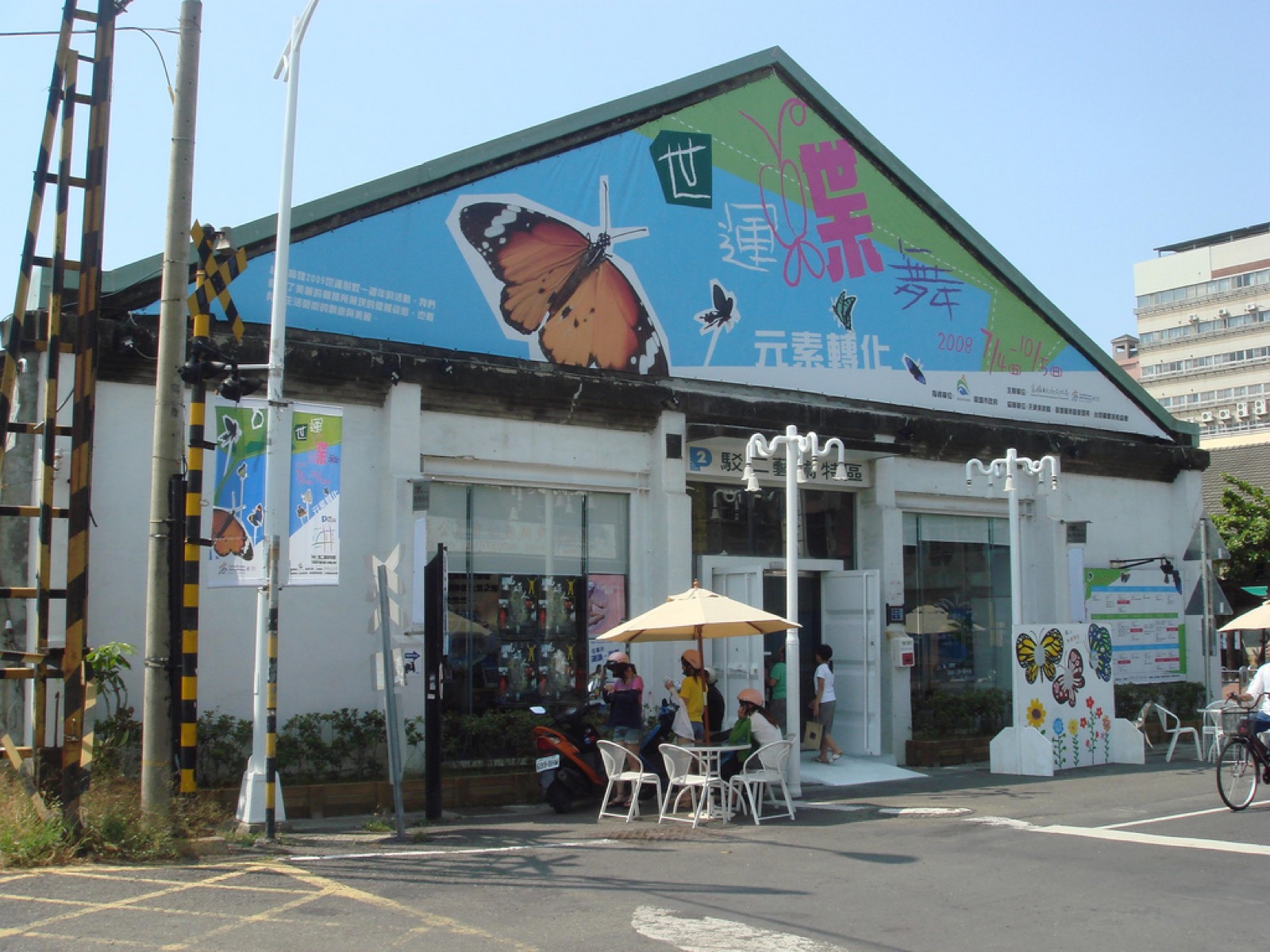

It also provides a nice contrast with the historical temples and markets you'll visit later. From Pier-2, continue towards the harbour and Love River area if you have the energy. The waterfront becomes especially enjoyable later in the afternoon, when the heat begins to soften and the city lights gradually appear.
Evening: Kaohsiung Food
For dinner, look for a local night market or explore the restaurants around your accommodation. Kaohsiung's food culture has its own character, and this is a good opportunity to try southern Taiwanese dishes rather than simply repeating everything you ate in Taipei. You may find yourself ordering seafood, noodles, grilled snacks or desserts while wondering how you still have room after ten days of eating.
That is a perfectly reasonable problem to have.
Day 9 – Kaohsiung: Temples, Lotus Pond & One Last Big Food Day
Pace: Moderate — There is enough sightseeing to keep the day interesting, but the flexible afternoon prevents it from becoming exhausting.
Your final full day is deliberately designed to bring together several of the things that made this trip memorable: temples, local neighbourhoods, food and time to wander. Kaohsiung is large enough that you could spend several days exploring it, but the city also works beautifully as a final two-night stop because its main experiences can be combined without too much effort.
Morning: Lotus Pond and Zuoying
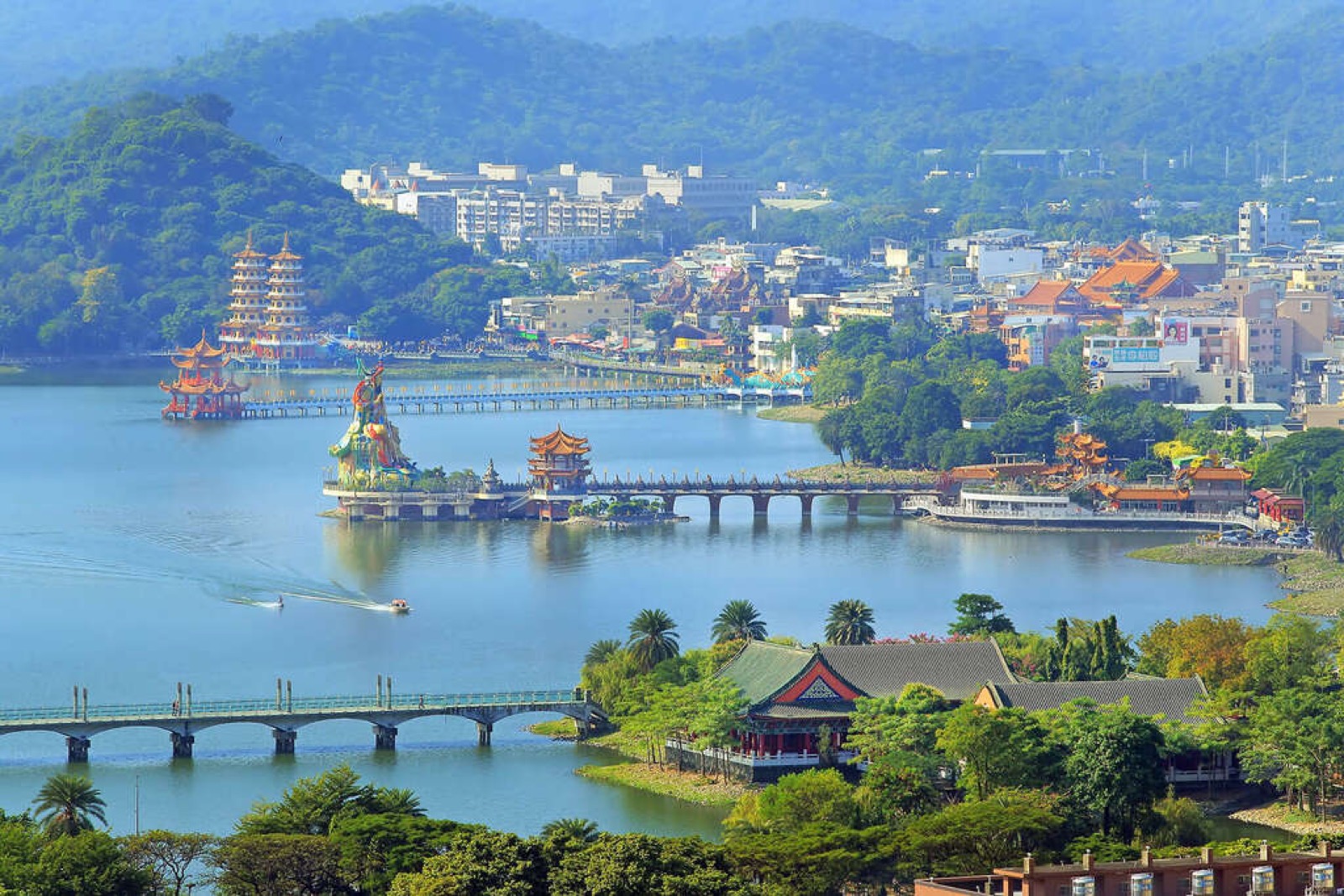
Start in the Zuoying area around Lotus Pond, one of Kaohsiung's most recognisable cultural landscapes. The lake is surrounded by temples and colourful structures, creating a completely different visual experience from Taipei's dense urban centre. The Dragon and Tiger Pagodas are particularly famous, with their bright colours and distinctive architecture making them impossible to miss. Take your time around the lake. Several temples and smaller religious sites are scattered throughout the area, and wandering between them gives you a better sense of the neighbourhood than simply arriving at the most famous landmark.

Afternoon: Kaohsiung at Your Own Pace
After Lotus Pond, keep the afternoon flexible. You could explore another historic neighbourhood, visit a museum, return towards the harbour or simply find a café and sit for a while. If there is something from earlier in the trip that you didn't have time to experience, today is also the perfect opportunity to revisit that kind of experience.
Perhaps you want another night market. Perhaps you realised you haven't bought enough tea. Perhaps you simply want to sit somewhere quiet and write down everything you've seen.
Evening: Your Final Taiwanese Dinner
Make your final evening about food. Choose somewhere you've been curious about rather than automatically returning to the most famous restaurant in town. Order several smaller dishes if you can, try something you haven't eaten before and give yourself enough time to enjoy the meal.
After dinner, take a final walk through the city. By now, the MRT announcements, scooters, convenience stores, temple sounds and food stalls that felt unfamiliar on Day 1 will probably feel strangely ordinary. That's usually how you know a place has started becoming familiar.
Day 10 – Kaohsiung: A Slow Goodbye
Pace: Relaxed — The final day is intentionally light, allowing you to enjoy breakfast, pick up last-minute gifts and reach the airport without unnecessary stress.
If your flight leaves later in the day or at night, have a relaxed breakfast and spend the morning somewhere close to your accommodation rather than crossing the city for one final attraction. This could mean returning to a café you enjoyed, browsing a local market, buying tea or snacks for the journey home, or simply walking through a neighbourhood without a destination.
After ten days of constantly changing scenery, a quiet morning can feel surprisingly meaningful.
You began this trip in Taipei surrounded by unfamiliar streets and the excitement of figuring everything out alone. Now you're ending it in Kaohsiung with a much better understanding of how Taiwan works: how to read the train signs, how to order food even when the menu looks unfamiliar, how to recognise a good local restaurant and, perhaps most importantly, how comfortable it can feel to spend an entire day following your own curiosity.
A Final Taiwanese Breakfast
Before leaving, give yourself one final proper breakfast. Taiwanese breakfast culture is worth experiencing at least once, whether that means soy milk, youtiao, dan bing or another local favourite you've discovered during the trip.
It's a fitting way to end a food-first journey. You started by wandering night markets and trying unfamiliar dishes, and you're leaving with a list of foods you'll probably spend the next few months trying to find back home.
Getting to the Airport
Kaohsiung is well connected by public transport, and the exact route will depend on which airport you're flying from. If you're departing from Kaohsiung International Airport, the city's MRT makes the airport straightforward to reach from central neighbourhoods.
If your international flight departs from Taiwan Taoyuan International Airport, however, you'll need to account for the considerably longer journey north, typically using Taiwan's high-speed rail and onward airport transport. Don't schedule this too tightly; leave a generous buffer because the final day should be about getting home comfortably rather than creating one last transport adventure.
Budget, Practical Travel Tips & Official Taiwan Resources
A ten-day solo trip through Taiwan can be surprisingly manageable because the country gives you several ways to control your spending without compromising the experience. You can eat extremely well at night markets and small local restaurants, use trains instead of private transfers for most of the route, stay in simple but comfortable hotels or guesthouses, and spend entire afternoons enjoying beaches, temples and neighbourhoods that cost little or nothing to experience.
The biggest difference in your budget will usually come from accommodation, transport choices in the east and south, and how many organised experiences you add. Taipei and Kaohsiung are straightforward to explore independently, while places such as Taroko, rural Taitung and parts of Kenting can become more expensive if you rely heavily on private transfers.
The figures below are therefore best treated as planning ranges rather than fixed prices, because accommodation and transport costs change by season, weekend and availability.
Estimated Budget for 10 Days
For a comfortable solo trip using mid-range accommodation, local restaurants, trains, public transport and a few paid attractions or experiences, plan around NT$35,000–55,000 per person, excluding international flights.
A more budget-conscious traveller could potentially travel for around NT$22,000–32,000, particularly by staying in hostels or simple guesthouses and relying heavily on public transport and night-market meals. At the other end, boutique hotels, private transfers, guided nature experiences and more frequent taxis could easily push the trip beyond NT$60,000.
| Expense | Budget Approach | Comfortable Solo Trip |
|---|---|---|
| Accommodation | NT$1,000–1,800 per night | NT$2,000–3,500 per night |
| Food | NT$500–900 per day | NT$900–1,500 per day |
| Trains & Local Transport | NT$4,000–7,000 total | NT$7,000–11,000 total |
| Attractions & Experiences | NT$1,500–3,000 | NT$3,000–6,000 |
| Taxis / Transfers | NT$1,000–2,500 | NT$3,000–6,000 |
| Approximate Total | NT$22,000–32,000 | NT$35,000–55,000 |
These figures don't include international airfare, travel insurance, shopping or major optional activities such as private guided tours.
Where You Can Save Without Missing the Experience
Food is probably the easiest place to keep your budget under control.
You don't need to eat at expensive restaurants to experience Taiwanese cuisine. In fact, some of the most memorable meals on this itinerary are likely to come from breakfast shops, noodle restaurants, dumpling counters, night markets and small family-run establishments.
Accommodation is the next major variable. In Taipei, staying slightly outside the most expensive central zones while remaining close to an MRT station can reduce the nightly cost considerably. In Hualien and Taitung, guesthouses and smaller hotels can offer excellent value, while Kenting gives you a wider range of options depending on how close you want to be to the beach.
Transport is another reason Taiwan works well for independent travellers. You don't need a private driver for the entire journey. Save private transfers for the sections where they genuinely add value, particularly difficult-to-reach natural areas, and use trains and local transport everywhere else.
Official Accommodation & Travel Resources
For accommodation, use Taiwan's official tourism accommodation database as a starting point rather than relying only on generic booking platforms.
The Taiwan Tourism Administration's accommodation directory allows travellers to search registered hotels and homestays across the country, while the official Taiwanstay platform provides information on legal accommodation and categories such as certified hotels, homestays and accessible properties.
- Taiwanstay — official legal accommodation search
- Hualien Tourism Service Network — hotels, homestays, local food and itinerary information
- Taiwan Tourism — official national tourism information
The advantage of checking these official directories is that you can verify that a property is part of Taiwan's registered accommodation system rather than relying entirely on an unfamiliar third-party listing.
Getting Around Taiwan: The Practical Version
For Taipei, use the MRT and buses, with taxis or ride-hailing when they're genuinely more convenient. The city is compact enough that many neighbourhoods are also best explored on foot.
For Taipei to Hualien and Hualien to Taitung, Taiwan Railways is the natural choice because the east-coast railway is both practical and scenic.
For Taitung to Kenting, you'll need to switch to road transport because Kenting isn't served directly by Taiwan's railway network. This is one of the legs where checking the current bus schedule or arranging a suitable transfer before departure is worthwhile.
For Kenting to Kaohsiung, road transport is again the simplest option. Once you're in Kaohsiung, the MRT, light rail, buses, ferries and walking make independent exploration straightforward.
Official Train Websites
For this itinerary, Taiwan Railways is the most important transport website because it covers the scenic east-coast journeys between Taipei, Hualien and Taitung. The official booking system allows passengers to search by station, date and time and supports passport-number booking for international travellers. Taiwan Railways also advises travellers to check schedules close to the travel date because timetables can be adjusted.
- Taiwan Railways Administration (TRA) — official website
- TRA booking system — search and reserve tickets
- Taiwan High Speed Rail (THSR) — western corridor; useful for Taoyuan Airport connections or Kaohsiung–Taipei transfers
For this itinerary, book your Taipei → Hualien and Hualien → Taitung trains in advance if your dates are fixed, particularly around weekends and Taiwanese public holidays. The high-speed rail is most useful on the western side of Taiwan rather than for the east-coast portion of this itinerary. You may use it if you're flying into Taoyuan and heading south, or if you need to travel between Kaohsiung and Taipei at the beginning or end of a longer Taiwan trip. THSR currently allows reservations up to 29 days before departure.
Taroko: Check This Before You Do Anything Else
Taroko deserves its own warning because conditions can change significantly. The park is still operating with post-earthquake reconstruction, changing road controls and trail restrictions. The official Taroko National Park website currently publishes road and trail updates, and its visitor information specifically advises travellers to confirm conditions before entering the gorge.
- Taroko National Park — official English website and current notices
Kenting: Beaches, Trails & Official Park Information
Kenting National Park's official website is particularly useful because it covers attractions, transportation and accommodation information as well as park tours and visitor guidance. For a solo traveller, checking conditions before swimming, hiking or heading to exposed coastal areas is particularly important because you won't have another person automatically looking out for changing conditions.
- Kenting National Park — official English website
Official Local Tourism Websites
- Taitung Travel — attractions, culture, events and regional experiences
- Kaohsiung Travel — attractions, transport, night markets, LRT routes and themed itineraries
- Hualien Tourism — local accommodation, food and itineraries
Entry Requirements & Arrival Information
Visa and entry requirements depend on your passport and nationality, so don't rely on a generic travel article for this part. Check Taiwan's official National Immigration Agency information before booking non-refundable arrangements. The agency provides official information for foreigners, online services and the Taiwan Arrival Card.
- Taiwan National Immigration Agency — official information for foreign visitors
Solo Travel Tips That Make a Real Difference
Taiwan is a place where asking for help is often straightforward, particularly at railway stations, tourist information centres and official visitor facilities. Save your accommodation address in Chinese on your phone, keep screenshots of important train reservations and have a translation app ready for situations where English isn't enough.
Keep your daily essentials fairly light. A small daypack with water, sunscreen, a power bank, tissues, a compact rain layer and some cash will cover most situations.
For food, don't be afraid to eat alone. Taiwan's noodle shops, breakfast restaurants, night markets and casual eateries make solo dining feel completely normal, and some places are actually easier to enjoy alone because you can take one available seat without waiting for a table for two or four.
For hiking, be more conservative than you might be when travelling with friends. If a trail looks questionable, the weather changes or an official warning appears, turn around. There is no prize for completing a hike that wasn't safe.
The Essential Booking Checklist
- Book your accommodation first, particularly in Taipei and Kenting during busy periods, and use official accommodation directories to verify registered properties where possible.
- Reserve your key Taiwan Railway journeys, especially Taipei to Hualien and Hualien to Taitung, if your dates are fixed.
- Check Taroko access shortly before travel, because this is the part of the itinerary most affected by changing conditions.
- Confirm your Kenting transport, particularly if you're arriving from Taitung and travelling without a rental vehicle.
- Keep Kaohsiung flexible, because most of the city's major experiences can be arranged independently once you're there.
- Check the weather before every outdoor day, with particular attention to typhoon, heavy-rain and mountain warnings.
- And most importantly, don't overbook the trip. Leave room for the little things that make solo travel memorable.
Frequently Asked Questions About Travelling Solo in Taiwan
Is Taiwan a good destination for first-time solo travellers?
Yes, Taiwan is particularly well suited to first-time solo travellers because the country combines reliable public transport, easy-to-navigate cities, excellent food and a generally welcoming atmosphere without requiring you to have every detail organised in advance. Taipei is especially straightforward because the MRT connects most major neighbourhoods, while Taiwan Railways makes it relatively simple to move between cities. Even when you travel into smaller destinations such as Hualien and Taitung, there are usually practical transport options available, and tourist information centres can be helpful when you need local guidance.
The other advantage is that Taiwan doesn't make solo dining feel unusual. Small restaurants, noodle shops, breakfast counters and night markets are all perfectly comfortable places to eat on your own, so you don't have to build your itinerary around finding restaurants that cater specifically to solo travellers. Add in the ability to change your plans without coordinating with anyone else, and Taiwan becomes a destination where travelling alone can feel surprisingly liberating.
Is 10 days enough to see Taiwan?
Ten days is enough to experience a very good cross-section of Taiwan, but it isn't enough to see everything the island has to offer. This itinerary deliberately focuses on a north-to-south route that combines Taipei's food and culture with Hualien's mountains, the east coast, Taitung's slower atmosphere, Kenting's beaches and Kaohsiung's urban and cultural experiences.
The advantage of this approach is that every few days the scenery and atmosphere change completely. You won't have time to explore every mountain trail, remote village or offshore island, but you'll experience enough variety to understand why Taiwan works so well as a longer travel destination. If you have two weeks or more, the easiest way to extend the itinerary would be to add extra time around Taitung, spend longer exploring the east coast or add another night or two in Taipei rather than trying to squeeze additional destinations into the existing route.
Can I follow this Taiwan itinerary without renting a car?
Yes, although the answer depends on how independently you want to explore the more remote areas. Taipei and Kaohsiung are extremely manageable without a car, while the journeys between Taipei, Hualien and Taitung can be handled by Taiwan Railways. The southern section between Taitung, Kenting and Kaohsiung also has public transport options, although they require a little more planning than the railway journeys.
The main place where a car, private transfer or organised excursion can make life easier is the Taroko and east-coast section, particularly because post-earthquake road and trail conditions continue to change. You shouldn't rent a car simply because you assume Taiwan requires one. For this itinerary, public transport combined with occasional taxis, transfers or guided experiences is likely to be more convenient for many solo travellers.
Is Taroko Gorge open for visitors after the 2024 earthquake?
Taroko National Park has reopened some areas following the April 2024 earthquake, but access remains different from what older Taiwan itineraries describe. Several famous trails and sections of the gorge remain closed or restricted while reconstruction continues, and road controls can change because of weather, rockfall risks and ongoing work.
For that reason, Taroko should be treated as the most flexible day of this itinerary. Check the official Taroko National Park notices immediately before your visit rather than relying on an older blog post, YouTube video or social-media recommendation. If a particular trail is closed, the trip isn't ruined; you can build the day around whatever areas are officially accessible, combine the mountains with Hualien's coastline or choose another regional experience.
What is the best way to experience Taiwanese food as a solo traveller?
The easiest approach is to stop thinking of Taiwanese food as a series of formal meals and instead treat the entire trip as one long tasting experience. Breakfast shops, noodle counters, dumpling restaurants, night markets, tea houses and small local eateries are all excellent places to eat alone, and many dishes are inexpensive enough that you can try something new without worrying about wasting money if you don't love it.
Night markets are particularly useful because you can order small portions from several different stalls rather than committing to one large meal. Taipei, Hualien, Taitung, Kenting and Kaohsiung all give you opportunities to explore local food, and by the end of the trip you'll probably have a personal list of favourites that you never expected to discover. If you have dietary restrictions, keep the relevant Chinese phrases saved on your phone and use a translation app when you need to explain ingredients clearly.
How many nights should I spend in each destination?
For the route described here, the distribution is designed to give the most time to the places that benefit from it rather than forcing every destination into an equal number of nights. Taipei deserves two nights because it gives you enough time to experience the city's food, temples, neighbourhoods and major sights without spending the entire trip in the capital.
Hualien also receives two nights, partly because it provides the most practical base for the Taroko region while giving you time to experience the Pacific coast. Taitung gets one night in this ten-day version because it acts as a transition between the east coast and southern Taiwan, although it would be one of the first places I'd extend if you had extra days. Kenting receives two nights, giving you enough time for both travel and a genuine beach day, while Kaohsiung gets the final two nights, allowing the trip to finish at a comfortable pace rather than immediately turning into an airport transfer.
What should I do if it rains during my Taiwan trip?
Rain doesn't necessarily mean that the day has been lost, particularly in Taipei and Kaohsiung. Both cities have plenty of museums, cafés, temples, shopping streets, food markets and indoor attractions that can easily replace an outdoor plan for a few hours. In fact, rainy weather can make Taipei's neighbourhoods feel particularly atmospheric, especially when the streets begin reflecting the neon lights in the evening.
The bigger consideration is mountain and coastal weather. If heavy rain, typhoon conditions or official warnings affect Taroko, don't try to force a hiking day simply because it was on your original schedule. Move the outdoor experience to another day if possible and use the weather as an excuse to discover a different side of the destination. One of the benefits of travelling independently is that you can make that decision without having to convince anyone else that changing plans is a good idea.
How much should I budget for 10 days in Taiwan?
A comfortable mid-range solo traveller can generally plan around NT$35,000–55,000 for ten days, excluding international flights, depending on accommodation choices, transport, activities and shopping. Budget travellers who use hostels or simple guesthouses, eat primarily at local restaurants and night markets, and rely heavily on public transport may be able to travel for considerably less.
The largest variables are usually accommodation and private transport rather than food. Taiwan's local food scene makes it possible to eat extremely well without spending a fortune, while trains and public transport keep intercity travel relatively manageable. If you want to splurge somewhere, I would save it for a memorable experience or particularly beautiful accommodation rather than spending heavily on everyday meals.
Prompts to Try in Honge
Ready to make it yours?
Make This Taiwan Itinerary Your Own
This itinerary is a starting point, not a rulebook. You can shorten the city sections, add extra beach days, spend longer in the mountains, turn Taitung into a slow-travel stop or build the entire trip around Taiwan's food culture. Use this route as your foundation in Honge, then remix it around your own travel style, interests, pace and priorities. Your Taiwan adventure doesn't have to follow the map perfectly — it just has to feel like yours.
Related itineraries
- 7 Days Solo in Malta & Gozo: Valletta, Mdina, Beaches & Island Life
- The Perfect 10-Day Ireland Road Trip: Dublin to the Wild Atlantic Way
- 10-Day Bhutan Itinerary: Paro, Thimphu, Punakha & Phobjikha
- 10-Day China Itinerary: Beijing, Xi’an & Shanghai
- 7-Day Hong Kong & Macau Itinerary: City Lights, Culture & Coastal Beauty
- 10-Day Sri Lanka Itinerary: Beaches, Tea Country & Wildlife Safari
- 10-Day Philippines Island-Hopping Itinerary: El Nido, Coron & Bohol
- 7-Day Tuscany Luxury Itinerary: Florence, Chianti & Val d'Orcia
- 10-Day Namibia Self-Drive Itinerary: Sossusvlei, Coast & Etosha
- Vegetarian Japan Itinerary: 10 Days Through Tokyo, Kyoto & Osaka
- 5-Day Croatia Itinerary for Solo Travelers
- 5-Day Portugal Solo Itinerary: Lisbon, Sintra & Porto
- 8-Day London and Southern England Itinerary: Museums, Cricket, Bath & Jurassic Coast
- 4-Day Santa Fe & Taos Itinerary: Art, Culture & Rio Grande Gorge
- 5-Day Singapore Family Itinerary: Gardens, Attractions & Easy Transit
Written by
This blog was contributed by B. Sai Nikita, a travel enthusiast and writer. B. Sai Nikita can be reached at bsainikita10@gmail.com.
About Honge
Honge is an AI travel planning platform that helps travelers turn destination ideas into realistic, customizable itineraries.
Image credits: Photos are sourced from Wikimedia Commons. Copyright remains with the photographers and rights holders. Wikimedia Commons images are used under their applicable Creative Commons license terms.
Travel disclaimer
This itinerary is intended as general travel inspiration and planning guidance only — not as personalized travel advice. Conditions change. Before you travel, check the current entry requirements, visa rules, and any travel advisories issued by your government for your destination. Review weather forecasts for your specific travel dates, confirm opening hours, trail and road access (especially for Taroko National Park after the April 2024 earthquake), and ticket availability for attractions directly, and take out comprehensive travel insurance that covers medical, cancellation, and disruption. Honge is not responsible for any changes to conditions, services, or experiences described in this article after the date of publication.