
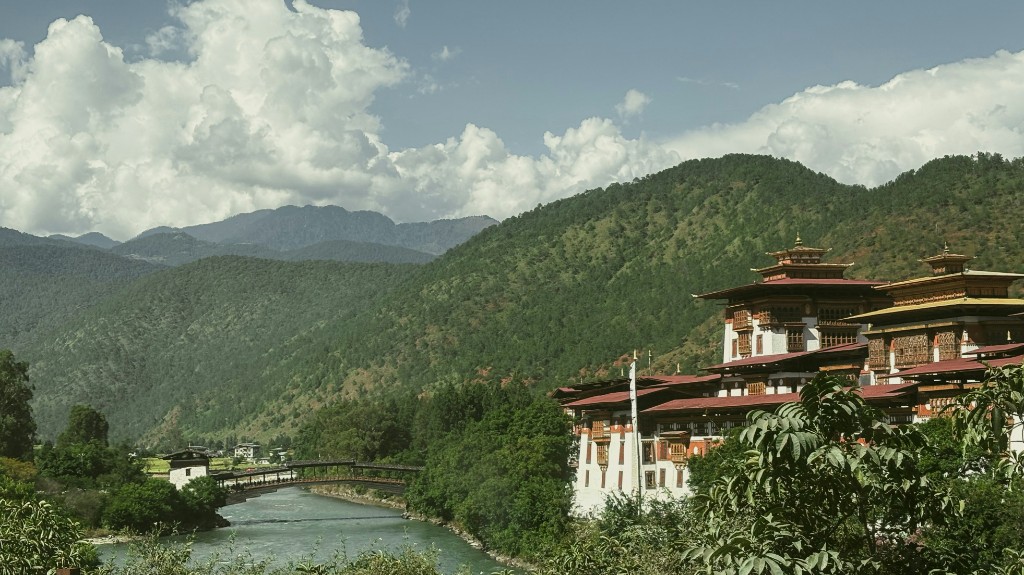
The distances on a map look short, but Bhutan unfolds slowly: around prayer flags and forested bends, through dzong courtyards and valleys where walking is part of the point.
This itinerary gives each region a distinct role. Thimphu introduces contemporary Bhutanese life and institutions; Punakha adds warmer valleys and riverside heritage; Phobjikha creates two quieter days in a high-altitude wetland; and Paro provides both cultural depth and enough acclimatisation before the Tiger’s Nest hike.
Who This Itinerary Is For
This route suits first-time visitors who want Bhutan’s essential western valleys without turning every day into a transfer. It works particularly well for travellers interested in Buddhist culture, architecture, gentle nature walks and photography. Families with older children can adapt it, while anyone with limited mobility should discuss the Punakha and Tiger’s Nest hikes with their operator before confirming the route.
Why Bhutan Feels Different
Bhutan’s scale, conservation policies and living Buddhist traditions shape the journey as much as any single attraction. Dzongs still function as religious and administrative centres. National dress remains part of public life, forest covers much of the country, and development is deliberately discussed through social and environmental wellbeing as well as economic growth.
That philosophy is often summarised as Gross National Happiness, or GNH. It is not a promise that every resident is happy; it is a policy framework that weighs culture, governance, environmental resilience and quality of life alongside material progress. Travellers notice it most in the care given to cultural continuity and landscapes.
Best Time to Visit Bhutan
March to May brings flowering valleys and generally comfortable days, although cloud can gather around the mountains. Late September to November often delivers crisp air and clearer Himalayan views, with popular festivals drawing extra demand. December to February is cold but quiet; roads usually remain open on this western route, though frost and occasional snow can affect high passes. June to early September is the monsoon period, when the valleys are intensely green but rain, cloud and road delays are more likely.
Where to Stay
Suggested hotels are samples only and depend on availability; in the Honge app they may appear as booking options when offered by our vendors.
Thimphu: Nights 1–2
Stay near the city centre for restaurants, shops and easy evening walks, or choose a quieter hillside property for valley views. Central stays reduce driving between daytime sights.
Punakha: Nights 3–4
Properties are spread through Punakha and nearby Wangdue. A riverside or valley-facing lodge feels more restorative than a roadside stop and puts you closer to village walks.
Phobjikha: Nights 5–6
Choose a small lodge or farmstay near Gangtey or the valley floor. Heating and hot-water arrangements vary, so confirm them in colder months and expect simpler facilities than in Paro or Thimphu.
Paro: Nights 7–9
Paro town is convenient for cafés, shops and the airport. A valley resort is quieter and more scenic, but may add driving time. For Day 9, choose somewhere with straightforward access to the Tiger’s Nest trailhead.
Getting Around Bhutan
A private vehicle with a licensed local driver is the practical way to complete this route. Roads are paved but winding, and average speeds are low; a journey that appears short by distance can take several hours. Keep transfer days light, carry water and motion-sickness medication if needed, and avoid planning a tight airport connection after a cross-country drive.
Public buses connect larger towns but are not designed around sightseeing. Guide requirements and access rules can change, so confirm the current arrangement for your nationality and route with an authorised Bhutanese operator before payment.
Visa, Permit & Sustainable Development Fee
Most international visitors need a visa before arrival. Indian nationals require a permit, while visitors from Bangladesh and the Maldives follow specific arrangements. Applications, supporting documents and processing guidance are available through the official Bhutan visa page and Bhutan Immigration Services Portal.
Bhutan also charges a Sustainable Development Fee (SDF) for each eligible night. The amount, child concessions, exemptions and payment process can change, so do not rely on an old quoted rate: verify the total directly on the official sites for your dates. The national tourism portal at Bhutan Travel is the best starting point for current planning information.
Altitude & Health
Paro and Thimphu sit above 2,000 metres, Dochula rises above 3,000 metres, and the Tiger’s Nest route climbs higher still. Most visitors adjust without serious problems, but headaches, fatigue and disturbed sleep can occur. Hydrate, limit alcohol at the start, walk slowly and tell your guide if symptoms worsen. This itinerary places Tiger’s Nest near the end so your body has time to adjust; it is still important to seek medical advice for personal health concerns and ensure your insurance covers trekking and evacuation.
Cultural Etiquette
- Cover shoulders and knees at temples and dzongs; remove shoes and hats where instructed.
- Walk clockwise around chortens, prayer wheels and sacred structures unless local guidance says otherwise.
- Ask before photographing people, ceremonies or monks. Photography is frequently prohibited inside shrine rooms.
- Do not point feet toward altars or touch religious objects without permission.
- Use your right hand, or both hands, when giving or receiving something in a formal setting.
- Festivals are living religious events, not staged performances. Follow your guide’s directions and avoid blocking local worshippers.
Journey Overview
| Day | Route & Highlights | Stay |
|---|---|---|
| Days 1–2 | Paro arrival and Thimphu — Memorial Chorten, crafts & Tashichho Dzong | Thimphu |
| Day 3 | Thimphu → Punakha via Dochula — 108 chortens, Punakha Dzong & suspension bridge | Punakha |
| Day 4 | Punakha — village walks, Chimi Lhakhang & hot stone bath | Punakha |
| Days 5–6 | Phobjikha — Gangtey Monastery, valley walks, conservation & black-necked cranes (seasonal) | Phobjikha |
| Days 7–9 | Paro — scenic return, Rinpung Dzong, valley walks & Tiger’s Nest on Day 9 | Paro |
| Day 10 | Paro — airport transfer & departure | — |
Day 1: Arrive in Paro & Transfer to Thimphu
Pace: Easy · Overnight: Thimphu
The flight into Paro is part of the arrival experience, descending between green ridges into Bhutan’s broadest airport valley. After immigration and meeting your guide, keep the first hours unhurried. Pause beside the Paro Chhu for your first view of farmhouses, terraced fields and traditional roofs before beginning the drive to Thimphu.
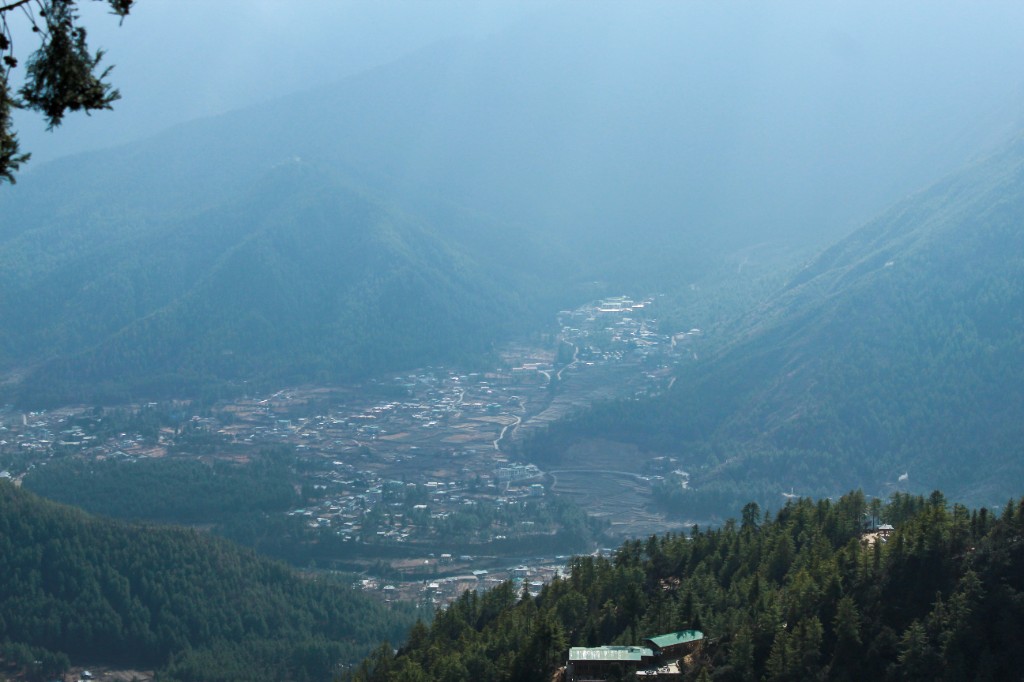
On the way, stop at the viewpoint for Tachog Lhakhang and its iron-chain bridge if time and access allow. Reach Thimphu in the afternoon, check in and take a short orientation walk around the centre. The capital has traffic but no traffic lights; uniformed police direct the busiest central junction with precise hand movements.
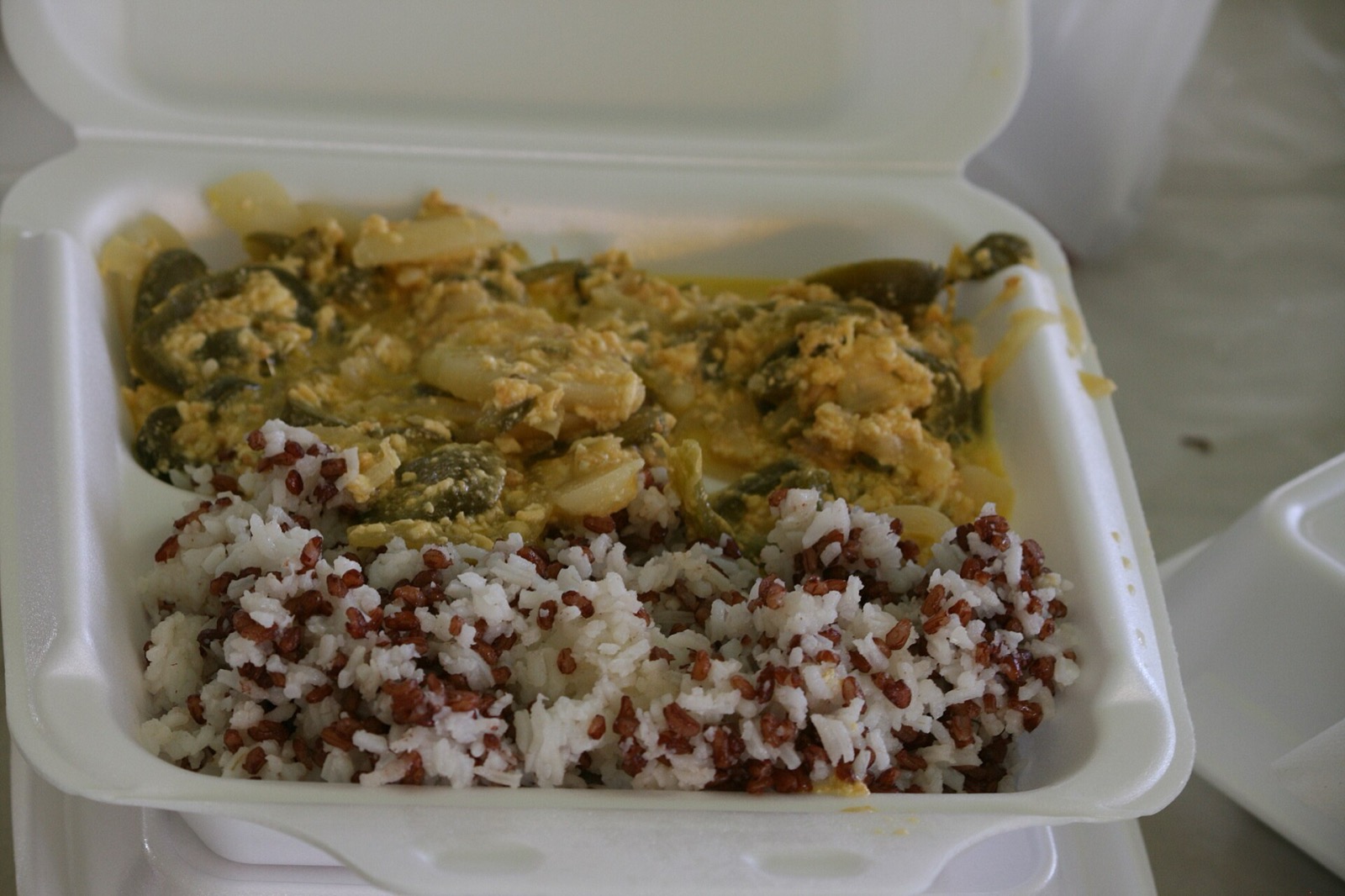
Food note: begin gently if you are sensitive to chilli. Ema datshi — chillies cooked with cheese — is Bhutan’s signature dish, but kitchens can usually prepare a milder spread with red rice, vegetables, momos and kewa datshi, made with potatoes and cheese.
Day 2: Thimphu’s Culture, Crafts & Dzong
Pace: Moderate · Overnight: Thimphu
Start above the city at Buddha Dordenma, the immense gilded statue overlooking the Thimphu Valley. Morning light is softer and the terrace helps you understand the capital’s compact geography. Continue to the National Memorial Chorten, where residents circle the whitewashed monument, turn prayer wheels and meet friends throughout the day.
Choose a small number of cultural stops rather than racing between every museum. The Institute for Zorig Chusum introduces Bhutan’s thirteen traditional arts, while the Folk Heritage Museum focuses on rural domestic life. A textile or handicraft centre adds context for the weaving, woodwork and painting seen throughout the journey.
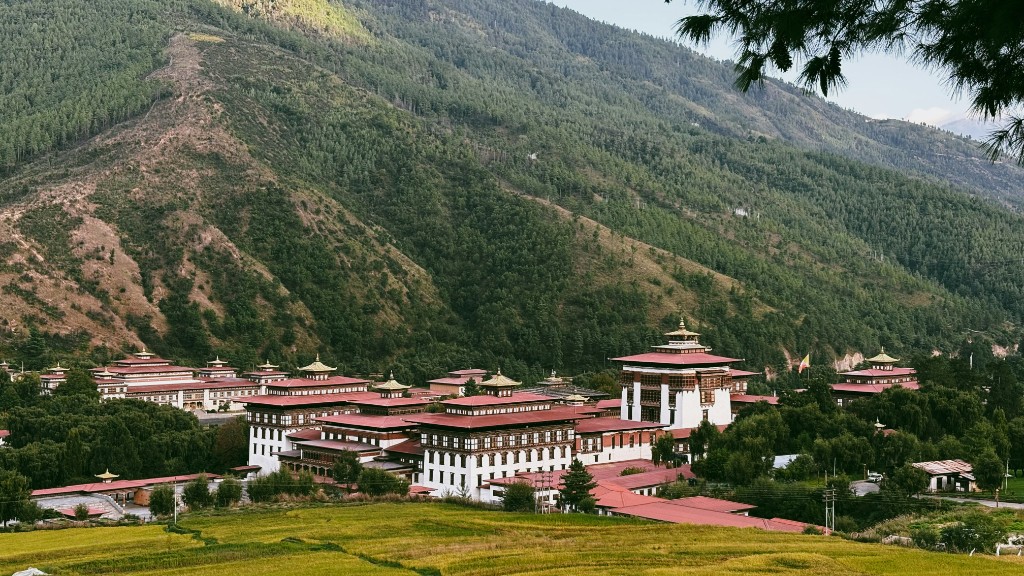
Visit Tashichho Dzong when its public areas are open, often later in the day outside working hours. The vast white walls, painted timber and orderly courtyards embody the dual religious and civic role of Bhutan’s dzongs. Your guide can confirm seasonal access and dress requirements.
Food note: try momos, buckwheat noodles or a simple thali-style meal. Thimphu has the route’s broadest restaurant choice, including cafés for anyone who wants a break from hotel buffets.
Day 3: Thimphu → Punakha via Dochula Pass
Pace: Active transfer day · Overnight: Punakha
Leave after breakfast for Dochula Pass. On a clear morning, the pass opens toward Bhutan’s high Himalayan peaks; in mist, its forest and prayer flags feel equally atmospheric. Walk clockwise around the 108 Druk Wangyal chortens, built in three concentric tiers, and allow time for the altitude before continuing downhill.
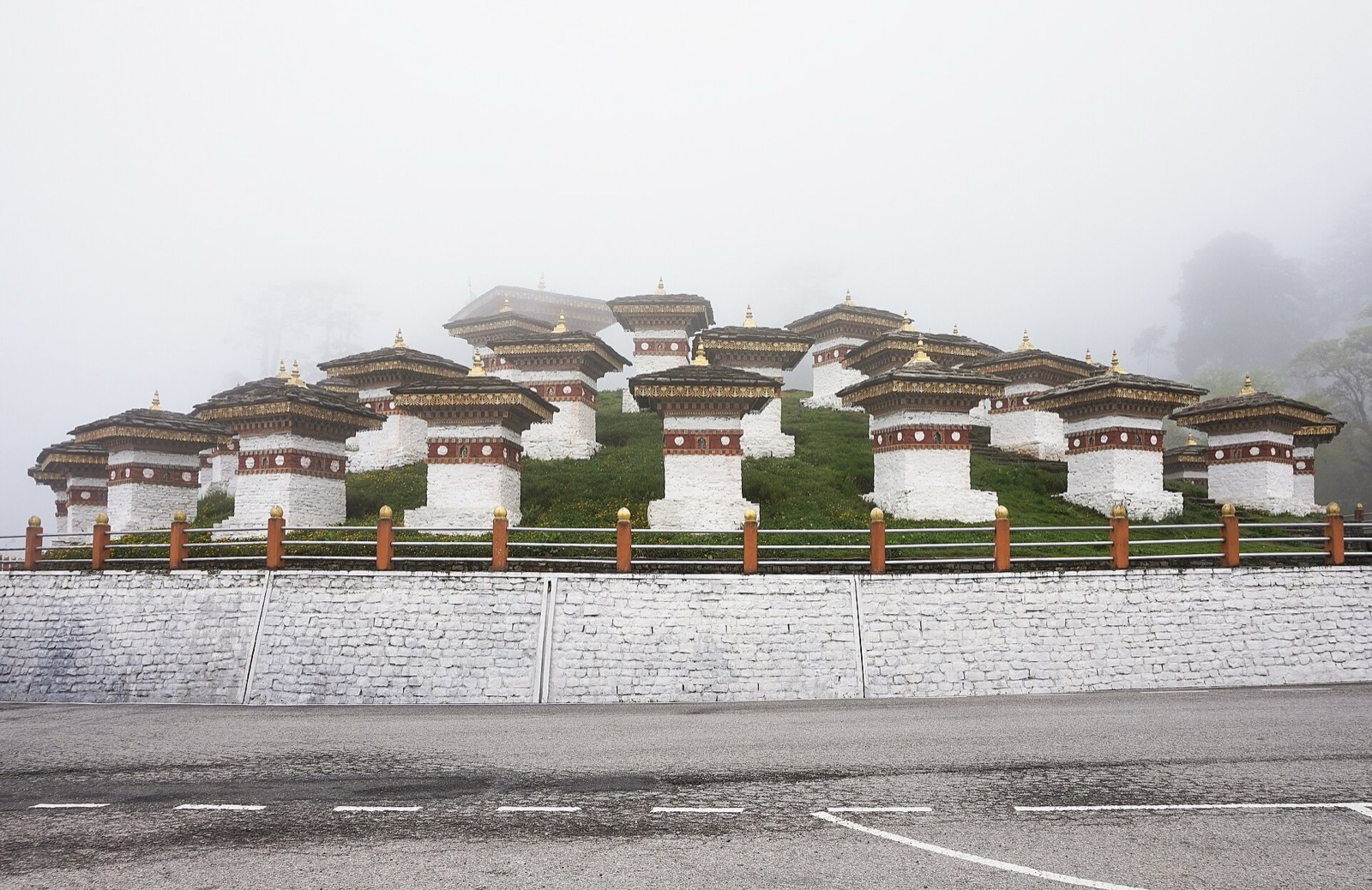
The road descends into warmer vegetation toward the Punakha Valley. Arriving lower in elevation, the landscape opens into farmland, rivers and traditional settlements.
Continue to Punakha Dzong at the confluence of the Pho Chhu and Mo Chhu rivers. Its position is spectacular, but the detail inside deserves time too: carved windows, painted courtyards and towering religious halls reflect the dzong’s importance in Bhutanese history.
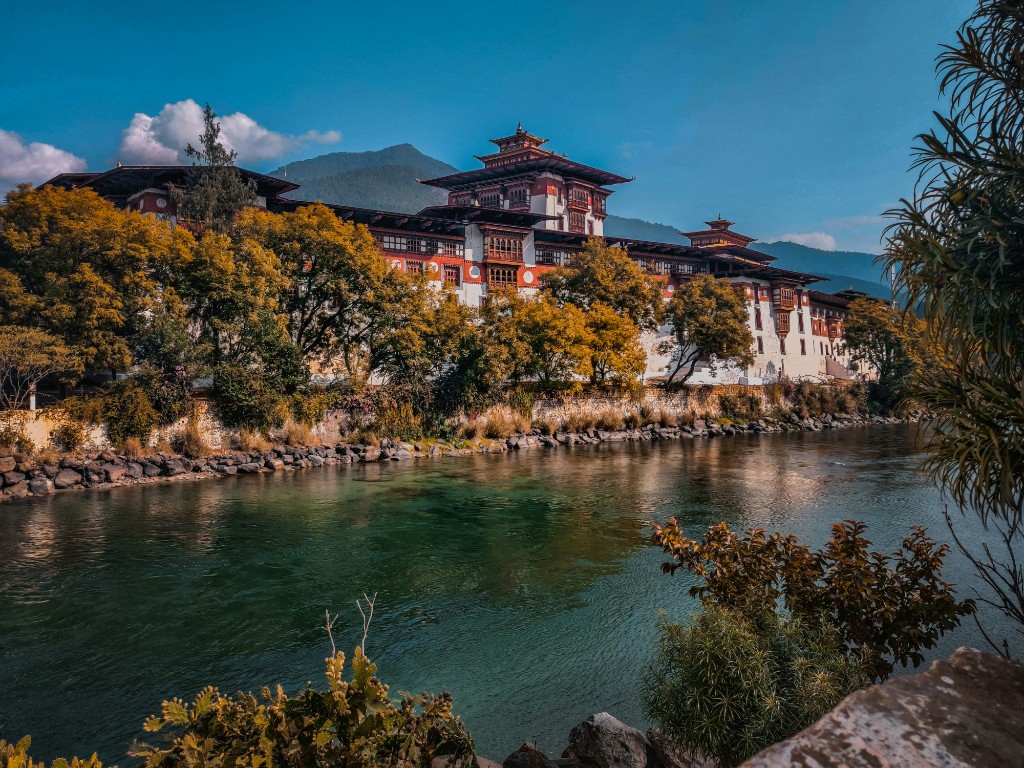
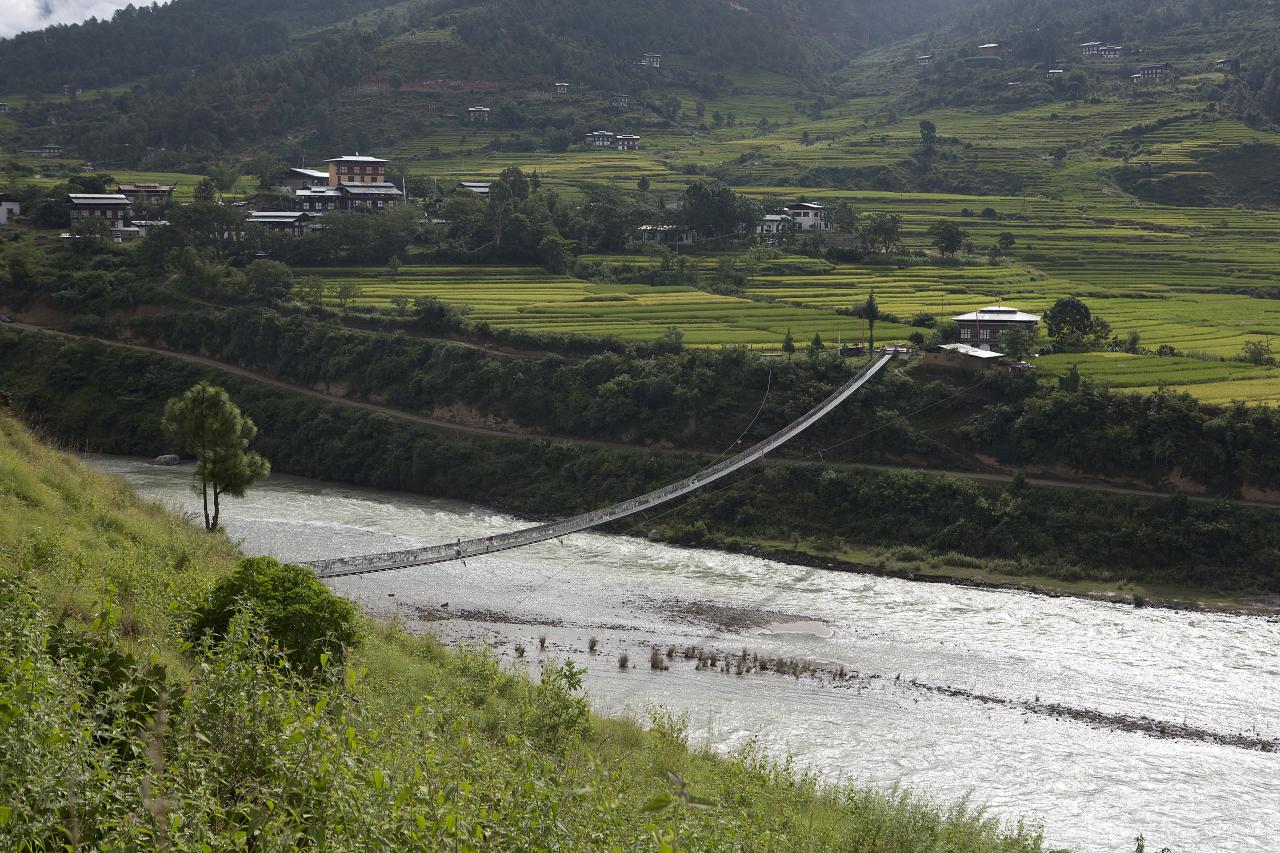
If daylight and current access permit, add the long pedestrian suspension bridge upstream. It sways gently above the river, linking rural communities with the dzong side of the valley; prayer flags turn the crossing into one of Punakha’s most memorable short walks.
Day 4: Punakha Villages, Chimi Lhakhang & a Hot Stone Bath
Pace: Gentle · Overnight: Punakha
Begin with a countryside walk through Punakha’s agricultural landscape. The valley’s lower elevation brings warmer weather than Thimphu, and traditional farmhouses sit among fields, orchards and mountain streams. Your guide can explain seasonal crops and how rural homes are built and used.
Continue on foot toward Chimi Lhakhang, a temple associated with the Buddhist teacher Drukpa Kunley — popularly known as the “Divine Madman.” The walk across farmland is part of the experience. Approach the distinctive fertility symbolism around the area respectfully; it has a specific cultural and religious context rather than being a novelty for visitors.
After the temple, keep the afternoon unhurried. A traditional Bhutanese hot stone bath — river stones heated and placed into a wooden tub of water, sometimes with herbs — is one of the most restorative ways to spend time in Punakha. If your lodging offers a farmstay meal or a dinner with a local family, make that a priority.
Food note: explore beyond ema datshi — momos, red rice, vegetable dishes, phaksha paa and buckwheat preparations when available. Ask for less chilli if needed.
Day 5: Punakha → Phobjikha Valley
Pace: Scenic transfer day · Overnight: Phobjikha
The road climbs from Punakha toward the Black Mountains, passing forest, villages and viewpoints before dropping into the bowl of Phobjikha. Allow much of the day for the drive and stops; road work, fog or livestock can slow progress.
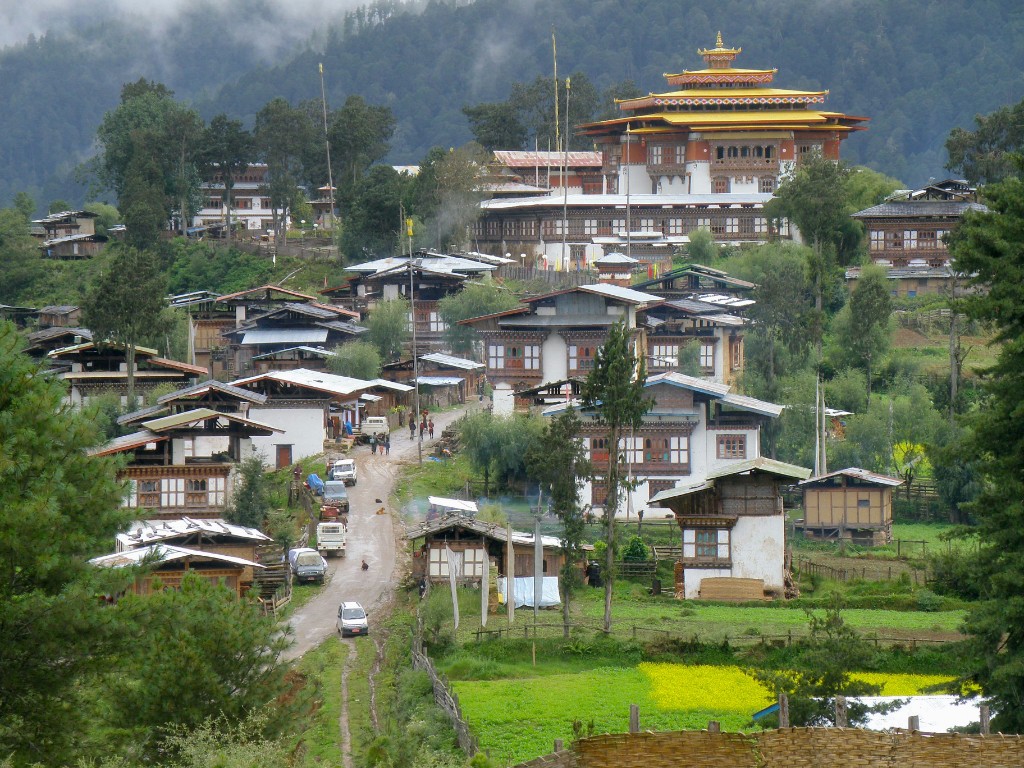
Visit Gangtey Goenpa, the monastery overlooking the valley, then walk all or part of the Gangtey Nature Trail. The trail descends through pine forest, meadow and villages toward the wetland edge, making a calm introduction without demanding a full trekking day.
In winter, Phobjikha is one of Bhutan’s best-known habitats for black-necked cranes. They usually arrive in the colder months and leave in spring; sightings should never be promised outside the migration season.
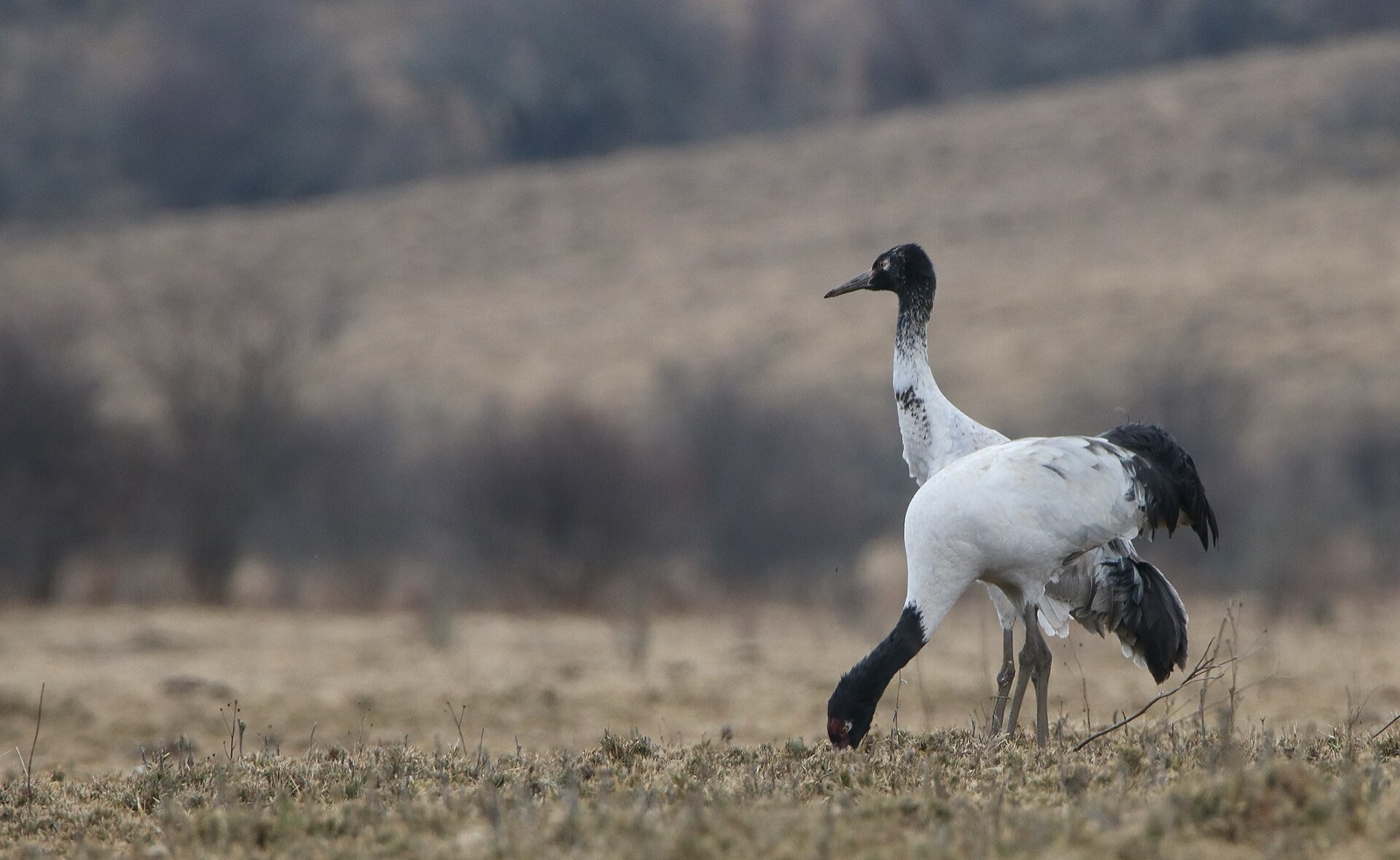
Day 6: Villages, Wetlands & Conservation in Phobjikha
Pace: Easy · Overnight: Phobjikha
Give the valley a full day. Begin at the Black-necked Crane Information Centre for context on migration, wetland ecology and local conservation. For current conservation information beyond the visit, consult the Royal Society for Protection of Nature.
Continue on foot between farming settlements, keeping to established tracks and away from marshy nesting habitat. A guide can shape the walk around weather, seasonal farm work and your energy level. The pleasure here comes from small observations: potato fields, smoke rising from farmhouses, schoolchildren on the road and clouds moving across the valley floor.
Spend the late afternoon at the lodge, try a hot-stone bath if responsibly operated and available, or return to Gangtey Goenpa for quieter light. Nights can be cold even outside winter, so keep a warm layer accessible.
Food note: farmhouse meals may include buckwheat pancakes or noodles, potatoes, cheese, dried meat and butter tea. Ask before the meal if you prefer less chilli or have dietary restrictions.
Day 7: Phobjikha → Paro
Pace: Long transfer day · Overnight: Paro
Retrace the mountain road toward Wangdue, climb back over Dochula and pass Thimphu before reaching Paro. This is the itinerary’s longest drive, so start early and resist adding major sightseeing. Your guide can choose rest stops according to road and weather conditions.
After checking in, take an easy walk through Paro town. Its main street has cafés, prayer-flag shops, handicrafts and traditional façades without the scale of Thimphu. An early dinner and good sleep will be more valuable than another checklist stop.
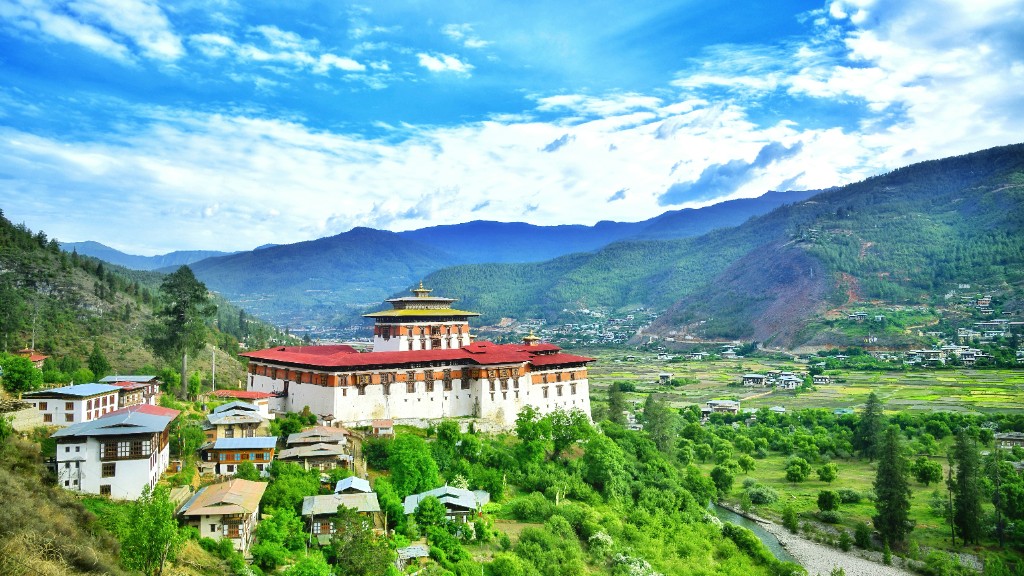
Day 8: Rinpung Dzong, National Museum & Paro
Pace: Easy · Overnight: Paro
Begin at Rinpung Dzong, crossing the traditional cantilever bridge over the Paro Chhu. Its name means “fortress on a heap of jewels,” and its courtyards still serve district administration and the monastic community. Access changes during official or religious events, so follow local instructions.
Walk uphill to the National Museum, housed around the historic Ta Dzong watchtower complex, for collections covering masks, thangka painting, natural history and everyday culture. The displays add useful context before the final monastery day.
Keep the afternoon light to preserve your legs. Browse Paro’s centre, visit Kyichu Lhakhang — one of Bhutan’s oldest temples — or ask your guide for a short valley walk. Prepare a small daypack for tomorrow with water, sun protection, a rain layer and any personal medication.
Day 9: Hike to Tiger’s Nest Monastery
Pace: Active · Overnight: Paro
Start early for Taktsang Monastery, better known as Tiger’s Nest. The trail climbs steadily through pine forest, passing prayer flags and viewpoints before reaching the cafeteria around the halfway point. A slower start is usually wiser than trying to maintain a fast pace at altitude.
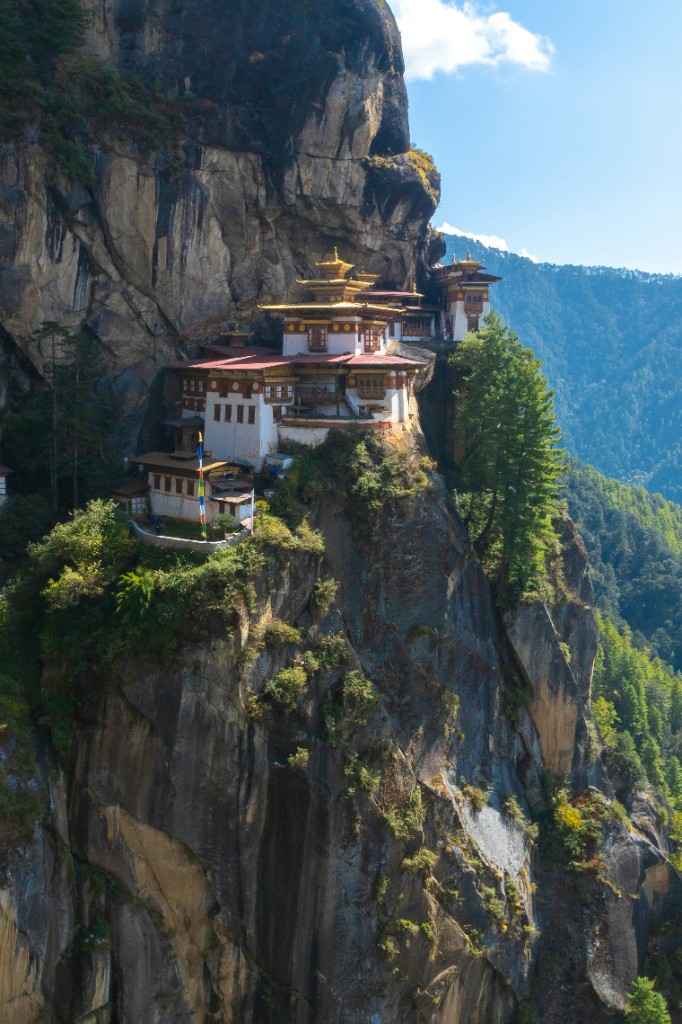
Beyond the main viewpoint, the path descends a long flight of steps past a waterfall and climbs again into the monastery. According to tradition, Guru Rinpoche reached this cliff on the back of a tigress and meditated in a cave here in the eighth century. The present temples were rebuilt after a 1998 fire.
Allow roughly five to seven hours for the return trip, including breaks and time inside, though pace varies widely. Walking poles help on the descent. Horses may be available for part of the uphill route but do not complete the monastery approach, and they should be arranged only through operators following responsible animal-welfare practices.
Food note: carry water and a small snack, and arrange lunch with your guide. Celebrate that evening with a relaxed Bhutanese meal rather than scheduling more sightseeing.
Day 10: Depart Paro
Pace: Easy · Overnight: End of trip
Transfer to Paro International Airport with the margin recommended by your airline and local team. Mountain weather can affect flights, so avoid placing an inflexible onward connection immediately after arrival at your next airport. Keep your passport, visa or permit records and baggage documents readily accessible.
If you have a later departure, use the final hours for breakfast in Paro or a short riverside walk rather than a distant excursion. The route works because it ends quietly after its most demanding day.
Estimated Budget
Bhutan costs vary substantially by season, hotel level, group size and nationality. The Sustainable Development Fee is separate from many quoted tour costs and is normally calculated by eligible night; visa or permit charges may also apply. Confirm the current SDF, concessions and inclusions on official Bhutanese websites before comparing packages.
| Category | What to budget for |
|---|---|
| SDF, visa or permit | Current nightly levy plus any applicable application or permit fees; verify official rates for every traveller |
| Accommodation | 9 nights across four bases; price depends heavily on season and lodge category |
| Guide, driver & vehicle | Licensed services, fuel, road transfers and guide accommodation or allowances where applicable |
| Meals | Often bundled into organised trips; clarify drinks, snacks and à la carte meals |
| Monuments & activities | Dzong, museum and monastery fees, optional rafting, hot-stone bath or cultural activities |
| Flights & insurance | International or regional flights to Paro and comprehensive travel insurance |
| Personal spending | Tips, handicrafts, laundry, café stops and contingency funds |
Ask for an itemised quote stating what is included, which meals are covered, the hotel names or standard, cancellation terms and whether monument fees may change. A cheaper headline package is not necessarily cheaper once the SDF and essential ground services are added.
Sustainable Travel Tips
- Refill a reusable bottle with treated water instead of buying single-use plastic bottles.
- Stay on marked paths in Phobjikha and keep well away from cranes, nesting areas and other wildlife.
- Buy directly from recognised local artisans and ask about materials before purchasing antiques or wildlife products.
- Use locally owned guides, farmstays, restaurants and community experiences where they fit your route.
- Do not fly drones without explicit permits; restrictions are particularly strict around temples, government buildings and airports.
- Carry out all litter, conserve hot water and heating, and avoid requesting daily linen changes in remote lodges.
- Travel in a smaller group when possible and give mountain roads enough time instead of pressuring drivers to rush.
Useful Planning Links
- Bhutan Travel — official tourism portal
- Official Bhutan visa and SDF guidance
- Bhutan Immigration Services Portal
- Royal Society for Protection of Nature
FAQs
Is 10 days enough for Bhutan?
Yes. Ten days gives first-time visitors enough time for Thimphu, Punakha, Phobjikha and Paro without rushing every transfer, including a full day for the Tiger’s Nest hike.
Do I need a visa to visit Bhutan?
Most international visitors need a visa before travel. Indian visitors require a permit, while rules for Bangladeshi and Maldivian visitors differ. Check Bhutan’s official tourism and immigration websites for current requirements.
What is Bhutan’s Sustainable Development Fee?
The Sustainable Development Fee, or SDF, is a nightly visitor levy that supports conservation and development. Rates, concessions and payment rules can change, so confirm the current amount on Bhutan’s official visa website before booking.
What is the best time to visit Bhutan?
March to May and late September to November usually offer the best combination of clear mountain views, comfortable walking weather and festivals. Winter is quieter and colder; summer is greener but wetter.
How difficult is the Tiger’s Nest hike?
The return hike commonly takes five to seven hours, with a sustained uphill trail, many steps and a high point above 3,000 metres. A slow pace, water and an acclimatisation day in Paro make it more manageable.
Can I travel independently in Bhutan?
Current guide and route requirements depend on nationality, location and regulation. Most visitors arrange a licensed guide and driver because public transport is limited and road journeys require local planning.
What should I wear at Bhutanese temples and dzongs?
Wear clothing that covers shoulders and knees, remove hats and shoes where instructed, speak quietly and ask before taking photographs. Photography is often restricted inside shrine rooms.
What food should I try in Bhutan?
Try ema datshi, kewa datshi, red rice, momos, buckwheat dishes and butter tea. Bhutanese food can be very spicy, so ask for a milder preparation when needed.
Ready for a Slower Himalayan Journey?
Bhutan is most rewarding when you leave room between its landmarks. Let Phobjikha stay quiet, give mountain roads the time they need, and arrive at Tiger’s Nest acclimatised rather than exhausted. This route can be adjusted for festival dates, winter crane season, gentler walking or a higher level of comfort.
Ten days is enough to see Bhutan’s western valleys, but the memories come from moving slowly enough to notice them.
Ready to plan your adventure?
Customize this itinerary with AI
Turn this Bhutan route into a trip that fits you — adjust valley nights, hiking difficulty, stays and cultural stops around your season, interests and pace.
Related itineraries
Written by
This blog was contributed by B. Sai Nikita, a travel enthusiast and writer. B. Sai Nikita can be reached at bsainikita10@gmail.com.
About Honge
Honge is an AI travel planning platform focused on practical, experience-led itineraries with realistic pacing and logistics. All blog content is edited and published by Honge. Our Bhutan research draws on updated practical logistics as of September 2026. © Honge. All rights reserved.
Image credits: Photos are sourced from Unsplash and Wikimedia Commons. Copyright remains with their respective photographers and rights holders. Unsplash images are used according to the Unsplash License. Wikimedia Commons images are used according to their applicable CC BY-SA 4.0 license terms.
Travel disclaimer
This itinerary is intended as general travel inspiration and planning guidance only — not as personalised travel advice. Conditions change. Before you travel, check current visa or permit rules, Sustainable Development Fee rates and concessions, guide requirements, government travel advisories, road conditions, monument access and airline schedules directly with official sources and your licensed Bhutanese operator. Take out comprehensive travel insurance that covers altitude-related care, medical evacuation, cancellation and disruption. Suggested hotels and stay styles in this article are samples only and depend on availability; in the Honge app they may appear as booking options when offered by our vendors at the time of your search. Weather, wildlife sightings, temple access and journey times cannot be guaranteed. Honge is not responsible for changes to conditions, services or experiences described in this article after the date of publication.