
Before travelling to Japan, we heard every possible warning about being vegetarian there.
Start with this itinerary
Open this route in Honge as your starting point, then shape the days, stays, and pace around how you travel.
“Everything contains fish broth.”
“You’ll struggle to find food.”
“You’ll survive on convenience store snacks.”
And honestly, we believed some of it.
But once we actually travelled through Japan, we discovered a completely different side of the country — one filled with temple cuisine in Kyoto, incredible vegan ramen in Tokyo, tiny hidden cafés, comforting curries, artisanal tofu dishes, beautifully crafted desserts, and some of the most thoughtful food experiences we have had anywhere in the world.
If you want to turn this route into a practical day-by-day plan, use Honge's AI trip planner to build and refine the itinerary with your pace and food preferences.
This itinerary follows Japan’s classic Golden Route:
Tokyo → Kyoto → Osaka.
But instead of trying to rush through giant checklists, we focused on slower exploration, beautiful neighborhoods, great vegetarian food, scenic train journeys, and leaving enough room for spontaneity.
That ended up making the trip feel far more memorable.
Is Japan Vegetarian Friendly?
This was probably the question we researched most before the trip.
The honest answer is:
Japan is not naturally vegetarian-friendly in the same effortless way as places like Thailand or parts of Europe. Fish broth (dashi) quietly appears in many dishes, and vegetarian labeling is still inconsistent in smaller restaurants.
But at the same time, Japan has some of the most thoughtful vegetarian food we have ever eaten.
Once we understood:
- how to identify vegetarian-safe meals,
- where to find vegan ramen,
- how to use translation apps,
- and how useful convenience stores actually are,
the trip became dramatically easier than we expected.
Tokyo especially now has a genuinely impressive vegan scene, while Kyoto offers some of the world’s best Buddhist vegetarian cuisine through Shojin Ryori.
Best Time To Visit
Japan feels deeply seasonal, and the atmosphere changes dramatically depending on when you go.
Spring (March–April) is famous for cherry blossoms, and it genuinely feels magical. Parks, riversides, and temple gardens suddenly turn pink for a few weeks. The downside is that this is also one of the busiest tourist periods of the year.
Autumn (October–November) honestly felt even more appealing to us while planning. Kyoto in particular looks incredible during autumn with deep red maple leaves, cooler weather, quieter temple gardens, and ideal walking temperatures.
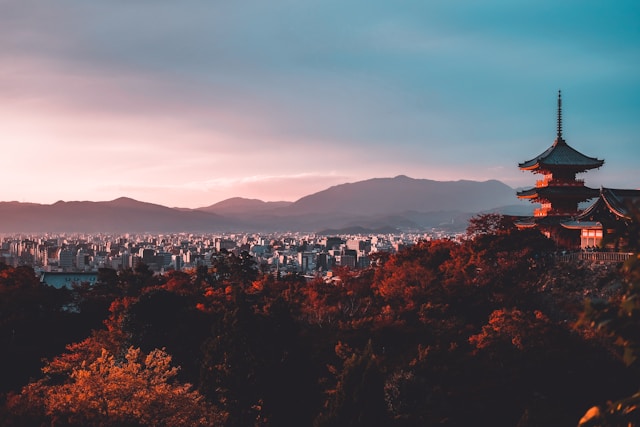
The one season we would probably avoid is peak summer. Japan’s humidity can become exhausting very quickly, especially when you are walking all day through cities and temple districts.
Golden Week, which falls around late April and early May, is another period we would avoid if possible because domestic tourism becomes extremely busy.
Getting Around Japan — Trains, Rail Passes & Domestic Flights
Before arriving in Japan, the transportation system honestly felt intimidating to us. Looking at Tokyo’s train maps online beforehand almost made the entire trip feel complicated. But within a day or two, navigating Japan somehow became surprisingly intuitive — and eventually one of our favorite parts of the experience.
The trains are unbelievably efficient. They arrive almost exactly on time, stations are extremely clean, and despite the number of people moving through them every day, everything somehow feels calm and organized.
Very quickly, train travel stopped feeling like “transportation” and became part of the trip itself.
Some of our favorite memories happened during train journeys:
sharing onigiri from convenience stores,
watching Japanese countryside scenery pass outside the window,
or sitting quietly together on evening trains after long walking days.
For the Tokyo → Kyoto → Osaka route, the Shinkansen (bullet train) is by far the best option. Flights technically exist between these cities, but honestly they make very little sense once you factor in airport transfers and security lines.
The Shinkansen feels completely different from flying.
The ride from Tokyo to Kyoto takes only a little over two hours, yet somehow feels relaxing instead of tiring. The trains are smooth, spacious, quiet, and remarkably comfortable. At one point during our ride to Kyoto, Mount Fuji briefly appeared outside the window, and nearly the entire side of the train collectively reached for cameras.
That moment alone made the train ride memorable.
We booked most of our Shinkansen tickets online before travelling using SmartEX Official Reservation Site, which made seat reservations surprisingly easy. For anyone travelling during cherry blossom season or autumn, booking earlier is definitely worth it.
Before the trip, we also spent a lot of time researching whether the Japan Rail Pass was worth buying. Years ago, almost every traveler recommended it automatically, but after recent price increases, it no longer makes sense for every itinerary.
For our Tokyo → Kyoto → Osaka route, individual Shinkansen tickets actually worked out cheaper than buying the nationwide pass. A 7-day ordinary Japan Rail Pass currently costs around ¥50,000, so unless you are travelling extensively across Japan, individual tickets are often better value.
We still found the official rail pass website useful while comparing options: Official Japan Rail Pass Website
Inside the cities themselves, the real game changer was using an IC transit card like Suica or Pasmo. Instead of constantly buying train tickets, we could simply tap into stations, buses, convenience stores, and even vending machines.
That tiny convenience made daily travel dramatically less stressful.
We used Welcome Suica, which is designed specifically for tourists and can be purchased directly at Narita Airport, Haneda Airport, Tokyo Station, Shinjuku Station, and JR East travel centers.
Official information:
Welcome Suica Official Website
Purchase locations:
Official Welcome Suica Purchase Locations
Japan also supports mobile Suica through Apple Wallet, and many travelers around us seemed to skip physical cards entirely.
Mobile version:
Welcome Suica Mobile
One thing we realized quickly in Japan is that transportation is not just functional there — it is part of the country’s rhythm and culture.
Even ordinary commutes somehow feel thoughtful:
people queue patiently,
trains remain quiet,
stations run with incredible precision,
and long-distance rail journeys become strangely peaceful.
By the end of the trip, we actually started looking forward to train rides instead of seeing them as downtime between destinations.
As for domestic flights, we honestly never felt the need for them on this route. The Shinkansen was simply too efficient and enjoyable. Flights only really start becoming useful for destinations much farther away like Hokkaido or Okinawa.
We did notice that airlines like Japan Airlines and All Nippon Airways occasionally offer discounted tourist fares for international visitors, but for Tokyo, Kyoto, and Osaka, trains felt like the far better experience.
Vegetarian Food In Japan — What Surprised Us Most
One of the biggest surprises of the trip was how memorable vegetarian food became in Japan.
Instead of trying to imitate meat, many Japanese vegetarian dishes focus on:
texture,
seasonality,
balance,
simplicity,
and presentation.
Meals often felt intentional rather than heavy.
Most ramen meals we ate cost roughly ¥1,200–1,800, while convenience store breakfasts often cost less than ¥500 for surprisingly decent food.
Our Favorite Vegetarian Foods In Japan
Shojin Ryori
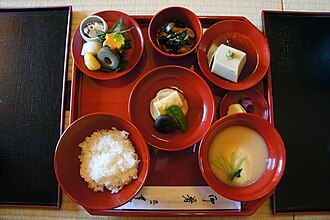
Traditional Buddhist temple cuisine ended up becoming one of the most unique food experiences of the trip.
While Kyoto is especially known for it, Shojin Ryori is also available in Tokyo and other parts of Japan.
Instead of imitation meat, the meals celebrated tofu, mountain vegetables, sesame, delicate broths, and seasonal ingredients. Everything felt beautifully balanced and carefully plated.
Shojin Ryori somehow captured Kyoto’s atmosphere perfectly:
quiet,
refined,
and deeply thoughtful.
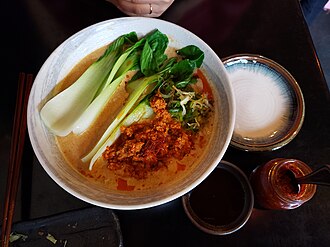
Vegan Tan Tan / Goemon Ramen
Before visiting Japan, we assumed vegan ramen would feel like a compromise.
We were completely wrong.
The rich broths, sesame flavors, handmade noodles, chili oils, and toppings felt deeply satisfying and comforting.
Some bowls honestly became among our favorite meals in Japan.
Onigiri
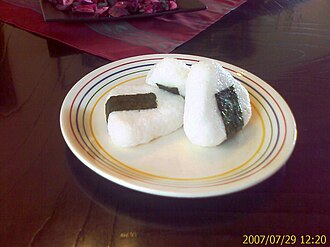
Simple convenience store onigiri quietly became one of the emotional symbols of the trip.
We ate them beside train platforms, during long walking days, while waiting for trains, and during early mornings before sightseeing.
Sometimes the smallest travel moments become the most memorable.
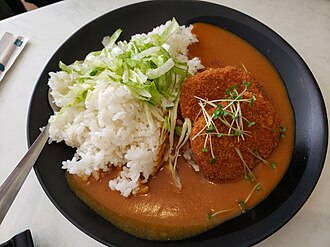
Pumpkin Curry Rice
Japanese curry feels very different from Indian or Thai curry.
The texture is thicker, sweeter, warmer, and incredibly comforting after long days of walking.
Pumpkin curry became one of our repeated comfort meals throughout the trip.
Matcha Swiss Roll
Japan’s dessert culture deserves far more attention.
One of our favorite discoveries was matcha swiss roll: soft sponge cake, earthy matcha bitterness, light cream, and delicate sweetness.
Sitting in a quiet Kyoto café sharing matcha desserts while rain fell outside became one of those simple moments we still remember vividly.

Best Vegan Ramen in Tokyo
One thing we did not expect before visiting Japan was how strong Tokyo’s vegan ramen scene had become.
These ended up becoming some of our favorite places.
Tokyo Vegan Ramen Center Harajuku Sohonzan ↗
After wandering through Harajuku, Meiji Jingu, and Yoyogi Park, sitting down for a warm bowl of ramen here felt unbelievably comforting after a long travel day.
Vegan Bistro Jangara ↗
This place completely changed our expectations of vegan ramen in Japan.
The broth was rich, creamy, spicy, and deeply flavorful without feeling heavy.
Even non-vegetarian travelers would probably enjoy this place.
T's Tantan ↗
Hidden inside Tokyo Station, this became one of the most useful vegetarian discoveries of the trip.
Perfect before train journeys or immediately after arriving in Tokyo.
Day 1 — Arrival in Tokyo
We landed in Tokyo feeling equal parts exhausted and excited. Even before leaving the airport, Japan already felt different from anywhere else we had travelled together — quieter, calmer, and somehow incredibly organized despite the sheer number of people moving through the terminals.
The train ride into the city became our first real glimpse into Tokyo life. Apartment buildings passed by endlessly outside the window, tiny ramen shops glowed beneath railway tracks, vending machines appeared on almost every street corner, and commuters sat in near-total silence despite packed train cars.
We stayed near Shinjuku, which turned out to be the perfect introduction to Tokyo. At first it felt overwhelming in every possible way — giant neon screens flashing above the streets, endless restaurant signs stacked vertically up buildings, crowded crossings, narrow alleyways filled with lantern-lit bars — but after an hour or two, the chaos somehow started feeling exciting instead of intimidating.
That said, Tokyo Station and Shinjuku Station genuinely confused us at first. At one point we accidentally exited the wrong side of Shinjuku Station and spent nearly twenty minutes completely disoriented trying to find our hotel.
Rather than forcing ourselves into a packed itinerary on the first evening, we simply wandered.
That became one of the best decisions of the trip.
We walked through tiny side streets, explored convenience stores like curious children, and spent an absurd amount of time examining neatly packaged desserts and vegetarian snacks at FamilyMart.
Later that evening, we made our way toward Shibuya Crossing. Standing above the crossing watching thousands of people move beneath giant video screens and glowing advertisements genuinely felt cinematic.
Dinner that night was at Tokyo Vegan Ramen Center Harajuku Sohonzan, and after nearly a full day of airports and trains, the warm vegan ramen felt unbelievably comforting.
What surprised us most about Tokyo on the first night was not how futuristic it felt, but how quickly it stopped feeling foreign.
Day 2 — Tokyo’s Old and New Worlds
We started the morning early in Asakusa before the larger crowds arrived. Walking toward Senso-ji Temple while the streets around Nakamise Street were still quiet felt completely different from the version of Tokyo we had experienced the night before.
The smell of incense drifted through the cool morning air, shopkeepers slowly opened shutters, and temple bells echoed softly in the background.
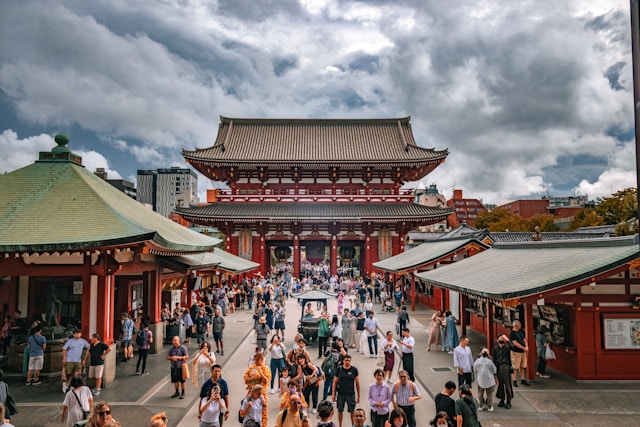
One of the things we quickly started loving about Tokyo was the constant contrast between old and new.
Within a single train ride, the city shifts between ancient temples, silent residential neighborhoods, towering skyscrapers, anime arcades, and tiny traditional cafés.
After wandering through Asakusa, we took the train toward Ueno and eventually found ourselves walking through Yanaka Ginza, which unexpectedly became one of our favorite neighborhoods in Tokyo.
Nothing dramatic happens there.
There are no giant attractions or famous landmarks.
Instead, Yanaka feels lived-in and deeply local — old wooden homes, narrow alleys, tiny bakeries, sleepy cats near temple entrances, family-run cafés, and quiet side streets that seem almost untouched by modern Tokyo.
By evening, we completely changed gears and visited TeamLab. After spending the afternoon surrounded by temples and traditional neighborhoods, stepping into rooms filled with floating lights, mirrored reflections, projected flowers, and digital waterfalls felt surreal.
Tokyo somehow makes these extreme contrasts feel completely natural.
Day 3 — Tokyo Food Exploration
By the third day, we had stopped trying to “cover” Tokyo and instead started enjoying individual neighborhoods at a slower pace.
Shimokitazawa ended up being perfect for that.
Compared to Shibuya or Shinjuku, the atmosphere there feels more relaxed and creative. Vintage clothing spills onto sidewalks, cafés hide above staircases, handwritten menus sit outside tiny bakeries, and every narrow lane seems to contain either a record store or a minimalist coffee shop.
Lunch that day was at Vegan Bistro Jangara, which completely changed our expectations of vegan ramen in Japan.
Later that evening, we found ourselves sitting near a train platform sharing a convenience store onigiri while watching trains arrive with almost impossible precision every few minutes.
It sounds insignificant, but moments like that slowly became the emotional texture of the trip:
quiet train rides,
warm canned coffee,
tiny desserts from station stores,
the sound of pedestrian crossings,
and the strange calmness hidden beneath Tokyo’s chaos.
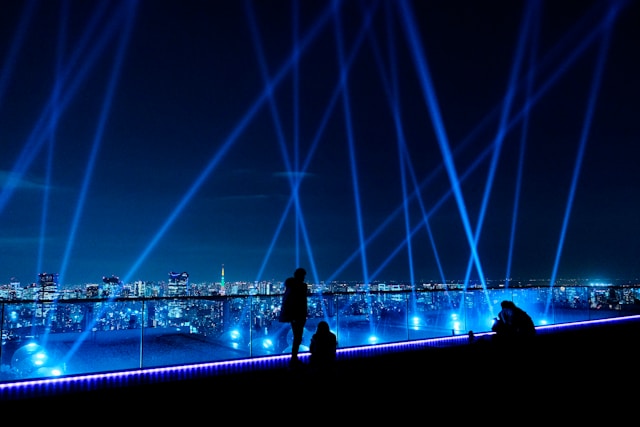
That night, we went up to Shibuya Sky just before sunset. Watching Tokyo slowly transform from soft evening light into an endless sea of neon felt almost unreal.
Day 4 — Hakone Day Trip
After several intense days in Tokyo, Hakone felt like exhaling.
The pace immediately changed.
Train stations became quieter, buildings shorter, and the scenery greener.
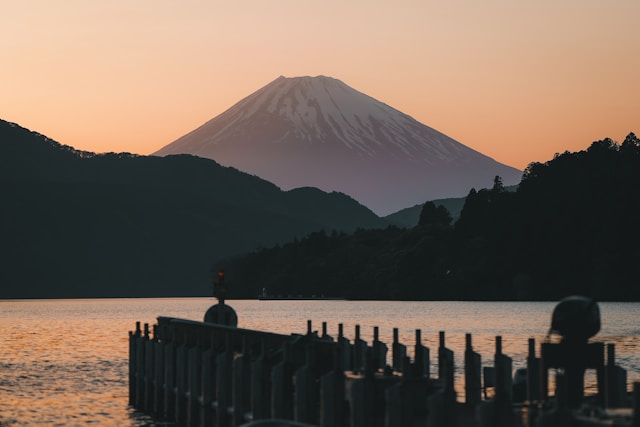
We spent most of the day moving slowly between Lake Ashi, ropeways, scenic viewpoints, small cafés, and Owakudani while hoping for occasional glimpses of Mount Fuji through the clouds.
Even when Fuji partially disappeared behind mist, the atmosphere still felt beautiful.
Compared to Tokyo’s intensity, Hakone felt almost meditative.
Day 5 — Travel to Kyoto
Taking the Shinkansen to Kyoto became one of our favorite experiences in Japan.
The train itself felt impossibly smooth and quiet. Watching cities slowly transition into countryside while eating snacks bought from Tokyo Station somehow turned a simple train ride into part of the adventure itself.
Arriving in Kyoto felt like entering a completely different version of Japan.
Tokyo feels vertical, fast, and electric.
Kyoto feels softer.
The streets narrow.
The buildings lower.
Temples appear unexpectedly between homes and cafés.
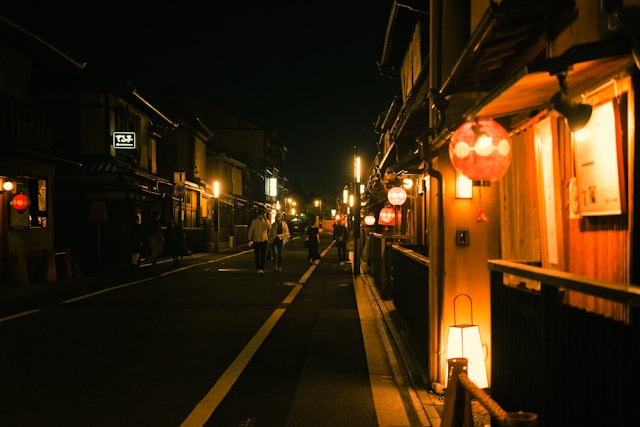
We stayed near Gion, and that first evening walking through lantern-lit streets beside wooden tea houses genuinely felt timeless.
At one point, light rain started falling while we walked through the narrow lanes around Yasaka Shrine and suddenly Kyoto looked exactly like the version of Japan we had imagined before the trip.
Dinner that night included our first proper Shojin Ryori experience, and it completely changed how we thought about vegetarian food in Japan.
Day 6 — Fushimi Inari & Traditional Kyoto
We woke up before sunrise to reach Fushimi Inari early, and it ended up being one of the best decisions of the entire trip.
For a while, the pathways were nearly silent except for footsteps and distant birds.
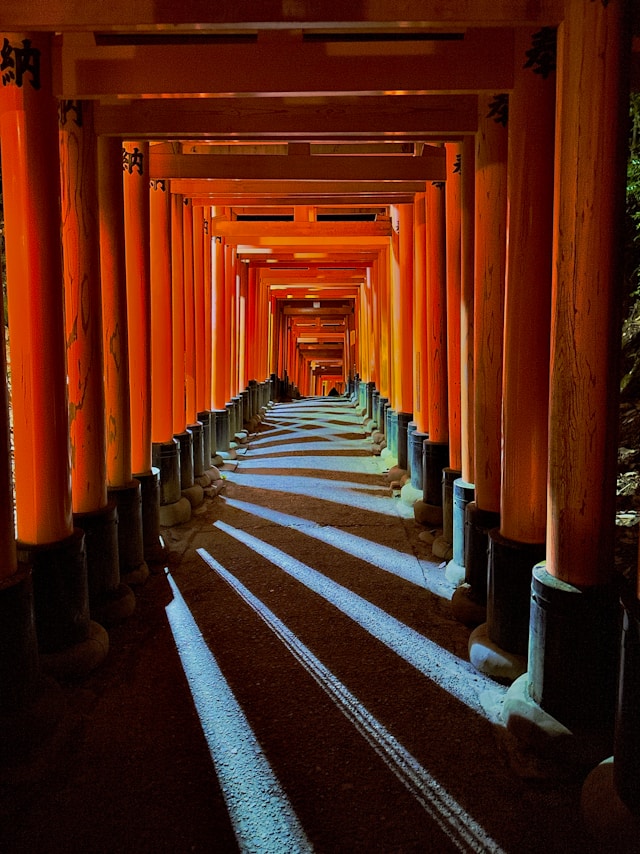
Walking through thousands of red torii gates with almost nobody else around felt strangely peaceful and immersive in a way photographs never fully capture.
Later in the day, we wandered through Higashiyama, Sannenzaka, and Ninenzaka without much structure. Tiny tea shops, ceramic stores, hidden staircases, and quiet alleys kept pulling us away from any planned route.
That afternoon, we shared matcha desserts in a tiny café, including one of the best matcha swiss rolls we had during the trip.
Day 7 — Arashiyama & Bamboo Forest
We reached Arashiyama early in the morning before the crowds fully arrived, and for a short while the bamboo grove actually felt calm and atmospheric instead of crowded.
The sound surprised us most.
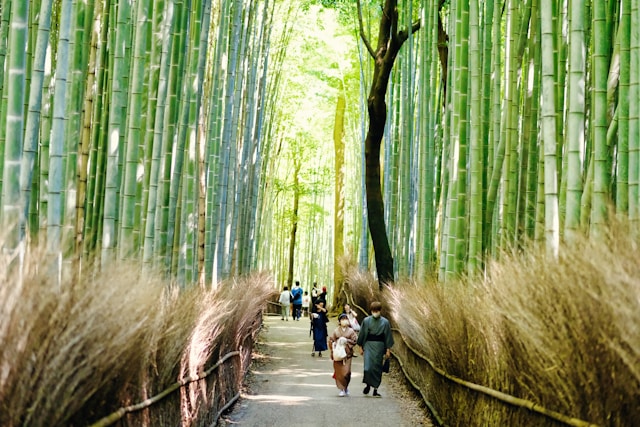
Not silence exactly — but wind moving softly through towering bamboo stalks, distant footsteps, birds somewhere deeper in the forest.
After exploring Tenryu-ji Temple, Togetsukyo Bridge, and nearby gardens, we spent hours simply walking beside the river, stopping for coffee, browsing tiny shops, and slowing the pace down completely.
Kyoto constantly rewarded us whenever we left space for spontaneity.
Day 8 — Arrival in Osaka
Osaka immediately felt different from Kyoto.
Louder.
Warmer.
Messier.
More energetic.
After Kyoto’s quiet temples and tea houses, arriving in Dotonbori at night felt like stepping into pure sensory overload.
Gigantic neon signs reflected off the canals, food aromas filled the streets, arcade music echoed from buildings, and crowds moved endlessly through narrow lanes packed with restaurants.
Compared to Tokyo, Osaka felt less polished but somehow more approachable.
Later that evening, we wandered into Hozenji Yokocho almost accidentally, and suddenly the atmosphere changed again — narrow stone alleys, lantern light, tiny restaurants, and a much quieter side of Osaka hidden only minutes away from Dotonbori’s chaos.
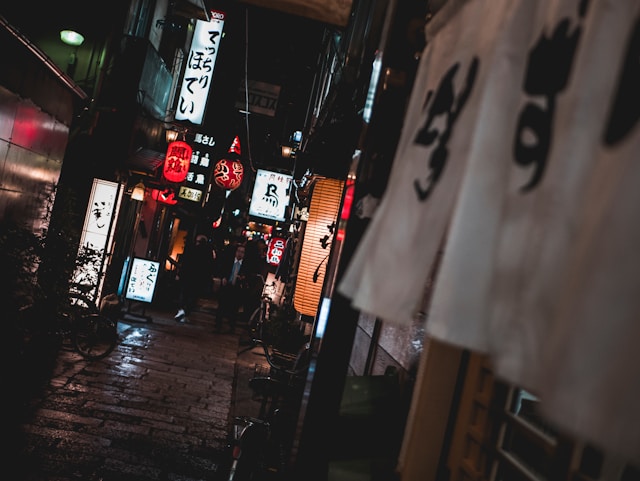
Late that night, we walked along the canal again simply to absorb the atmosphere one more time.
Osaka felt alive at every hour.
Day 9 — Nara Day Trip
Nara ended up becoming one of the calmest days of the trip.
After the intensity of Tokyo and Osaka, the slower atmosphere there felt refreshing.
The famous deer roaming freely through Nara Park initially seemed almost surreal.
Some were calm and gentle.
Others were clearly experienced professionals at aggressively demanding snacks from tourists.
Beyond the deer, though, Nara felt deeply peaceful.
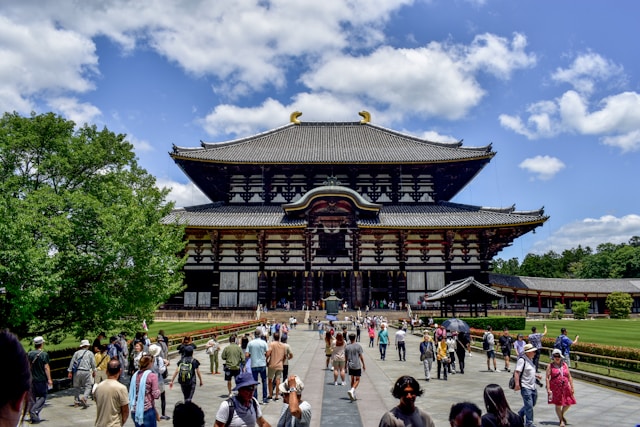
Walking toward Todai-ji Temple through wide park pathways surrounded by enormous trees created a completely different atmosphere from the busy urban energy we had grown used to throughout the trip.
Japan repeatedly surprised us like that.
One moment:
neon signs,
crowded crossings,
bullet trains,
arcades.
The next:
temple gardens,
forest paths,
incense smoke,
and near silence.
Final Thoughts
By the end of the trip, Japan no longer felt intimidating or unfamiliar.
Instead, it started feeling deeply comforting.
Not because everything was easy — vegetarian travel in Japan still required attention and occasional planning — but because the country approaches even ordinary experiences with so much care and precision.
Some of our strongest memories were not the major landmarks at all.
They were:
sharing onigiri beside train platforms,
wandering through quiet Kyoto alleys after rain,
finding tiny cafés hidden above staircases,
watching Tokyo glow at night from above,
and sitting silently on trains while countryside scenery drifted past the windows.
Japan constantly reminded us that travel does not always need to be fast to feel meaningful.
Sometimes the best moments happen completely between the plans.
FAQ
Is Japan vegetarian friendly?
Major cities like Tokyo, Kyoto, and Osaka are becoming increasingly vegetarian-friendly, especially in tourist-friendly neighborhoods and modern café districts.
Is fish broth common in Japan?
Yes. Even dishes that appear vegetarian may contain dashi (fish stock), so it is important to confirm ingredients when ordering.
Which Japanese city is easiest for vegetarians?
Tokyo likely has the widest variety of vegetarian and vegan restaurants, while Kyoto offers exceptional traditional Buddhist vegetarian cuisine.
Is Kyoto or Osaka better for vegetarian travelers?
Kyoto offers more traditional vegetarian dining experiences, while Osaka is stronger for modern casual food culture.
Ready to make it yours?
Customize this itinerary with AI
Now that you've seen the full route, use Honge to tailor stays, activities, and day-by-day pacing to your trip.
Related itineraries
- 10-Day Taiwan Solo Itinerary: Taipei Food, Nature & Culture
- 9-Day Vegan Thailand Itinerary: Bangkok, Chiang Mai & Islands
- 5-Day Croatia Itinerary for Solo Travelers
- 5-Day Panama City & San Blas Itinerary: Canal, Casco Viejo & Islands
- 8-Day London and Southern England Itinerary: Museums, Cricket, Bath & Jurassic Coast
- 4-Day Santa Fe & Taos Itinerary: Art, Culture & Rio Grande Gorge
About The Author
Honge is a travel planning platform focused on practical, experience-led itineraries. Our editorial travel stories combine first-person route context, local friction, and planning realism so readers can convert inspiration into workable plans. We prioritize grounded detail over checklist-style travel content.
Image credits: Photos are sourced from Wikimedia Commons and Unsplash. Copyright remains with the respective photographers and rights holders. Images from Wikimedia Commons are used in accordance with their applicable licensing terms, including the Creative Commons Attribution-Share Alike 4.0 International license where noted. Unsplash images are used in accordance with the Unsplash License.
Travel disclaimer
This itinerary is intended as general travel inspiration and planning guidance only — not as personalised travel advice. Conditions change. Before you travel, check the current entry requirements, visa rules, and any travel advisories issued by your government for your destination. Review weather forecasts for your specific travel dates, confirm opening hours and ticket availability for attractions directly, and take out comprehensive travel insurance that covers medical, cancellation, and disruption. Honge is not responsible for any changes to conditions, services, or experiences described in this article after the date of publication.