
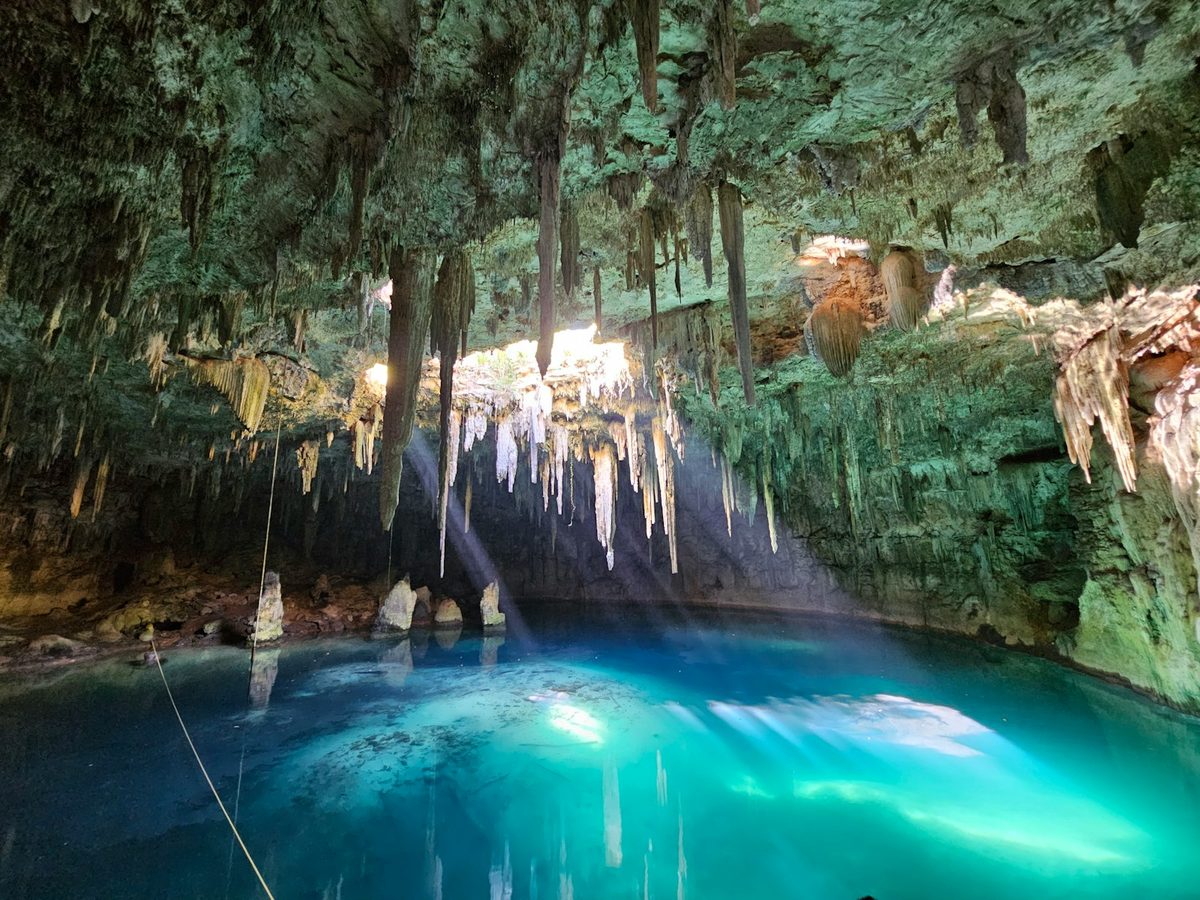
A Yucatán road trip with more than one story: colonial streets, Maya cities, jungle swimming holes, lagoon blues and a Caribbean finish.
Why This Road Trip Works
Starting in Mérida, the route heads east through Izamal and Valladolid before continuing south to Bacalar and finishing in Tulum. It is designed for first-time visitors who want a mix of history, food, swimming, culture and scenery without turning every day into a checklist.
The route changes character as you travel. Mérida brings colonial architecture, markets and some of the Yucatán's best food. Izamal adds a smaller yellow-painted colonial town with Maya history. Valladolid provides an easy base for Chichén Itzá and cenotes. Bacalar slows the pace around its spectacular freshwater lagoon, while Tulum finishes the trip with Maya ruins, beaches and the Caribbean.
Route Map
The drive runs east from Mérida through Izamal and Valladolid, then south to Bacalar before finishing on the Caribbean at Tulum.
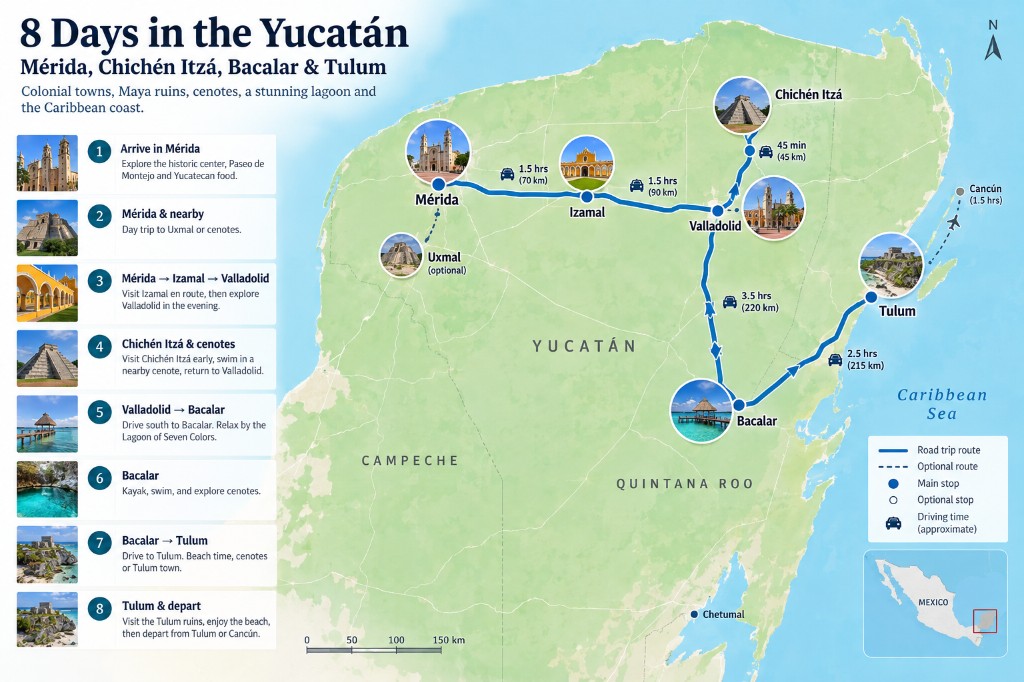
Mérida → Izamal → Valladolid → Chichén Itzá (day trip) → Bacalar → Tulum
Major stops and suggested highlights:
- Mérida: Historic Center · Plaza Grande · Paseo de Montejo · markets · Yucatecan food · Uxmal or cenotes
- Izamal: Yellow City · Convento de San Antonio de Padua · Maya pyramids · Museo de Arte Popular
- Valladolid: Parque Francisco Cantón Rosado · Calzada de los Frailes · Casa de los Venados · Cenote Zací · local markets
- Chichén Itzá: El Castillo · Great Ball Court · Temple of the Warriors · Cenote Sagrado · Thousand Columns · Caracol · Las Monjas
- Bacalar: Lagoon of Seven Colors · kayaking · sailing or boat trip · swimming · Cenote Azul · Fort San Felipe
- Tulum: Tulum ruins · Playa Pescadores · beaches · cenotes · Tulum Pueblo · evening food scene
Where to Stay
Nights 1–2: Mérida
Stay around the Historic Center, Santa Lucía or Paseo de Montejo. The center is the most convenient for walking, while Paseo de Montejo offers a quieter base and impressive historic architecture.
Nights 3–4: Valladolid
Stay near the historic center so you can walk to the main plaza, restaurants, markets and evening activities.
Nights 5–6: Bacalar
Stay close to the lagoon if waterfront access, sunrise views and easy access to water activities are priorities.
Night 7: Tulum
Stay in Tulum Pueblo for easier access to restaurants and driving, or near the beach for a more relaxed final night.
Rental Car & Road Tips
A rental car is recommended for this route because several of the best cenotes and archaeological sites are outside the main towns, and it gives you flexibility to stop along the way.
You do not necessarily need the car for every minute in Mérida. The Historic Center is highly walkable, while taxis and ride-hailing services can be useful for shorter journeys.
Once you are on the road, keep a few things in mind:
- Watch for topes: Speed bumps can be steep and are not always obvious.
- Slow down through towns: Intersections can work differently from what first-time visitors expect.
- Keep cash in pesos: Small businesses, parking areas and some local experiences may not accept cards.
- Download offline maps: Useful when driving between smaller towns and attractions.
- Parking: Use official or clearly marked parking areas at archaeological sites, cenotes and major attractions. In town centers, parking can be limited, so staying at accommodation with parking is useful.
Driving Distances
| Route | Approx. distance | Approx. driving time |
|---|---|---|
| Mérida → Izamal | ~70 km | ~1 hr |
| Izamal → Valladolid | ~120 km | ~1 hr 30 min |
| Valladolid → Chichén Itzá | ~45 km | ~45 min |
| Valladolid → Bacalar | ~264 km | ~3 hr 40 min–4 hr |
| Bacalar → Tulum | ~210 km | ~2 hr 30 min |
| Tulum → Cancún Airport | ~118 km | ~1 hr 30 min |
Driving times are approximate and should be treated as planning estimates rather than guaranteed journey times.
Local Foods to Try
Yucatecan food should be treated as part of the itinerary, not an afterthought. Look for:
- Cochinita pibil
- Sopa de lima
- Panuchos and salbutes
- Poc-chuc
- Papadzules
- Relleno negro
- Queso relleno
- Chaya-and-queso empanadas
- Longaniza de Valladolid
- Tikin-xic
- Tamales
- Marquesitas
In Mérida, use the markets to sample several dishes rather than limiting yourself to restaurants. In Izamal, Kinich is a useful stop for traditional Yucatecan cooking. In Valladolid, look for local market food and regional specialties rather than relying only on tourist-oriented restaurants.
Family-Friendly Options in Yucatán
- Mérida's plazas and cultural performances
- Izamal's colorful streets and Maya pyramids
- Cenote swimming
- Chichén Itzá
- Valladolid's walkable center
- Bacalar kayaking or boat trips
- Lagoon swimming
- Tulum's beaches
- Shorter archaeological walks with plenty of water breaks
For younger children, start outdoor activities early and use the hottest part of the afternoon for swimming, lunch or indoor attractions. This route works well for families because it combines sightseeing with plenty of swimming and slower days.
Best Time to Visit
November through April is ideal for a road trip, with drier weather for sightseeing and outdoor activities. Yucatán can get very hot, so pack light clothing, sunscreen, a hat and plenty of water. The hurricane season runs June 1 to November 30, so check forecasts if traveling then. Start outdoor activities early and use hot afternoons for swimming, lunch, museums or rest.
Introduction
In just eight days, this Yucatán road trip takes you from Mérida’s colonial streets and vibrant food scene to the colorful towns of Izamal and Valladolid, the ancient Maya city of Chichén Itzá, the freshwater blues of Bacalar and the Caribbean coast of Tulum.
Along the way, you’ll explore historic architecture, traditional markets, Maya ruins and cenotes, while leaving time for swimming, local food and relaxed evenings. With a rental car and a route designed to avoid unnecessary detours, it offers a balanced introduction to the region’s history, culture, nature and coastline.
Journey Overview
| Day | Route | Highlights |
|---|---|---|
| Day 1 | Mérida | Historic Center, Plaza Grande, Yucatecan dinner |
| Day 2 | Mérida | Paseo de Montejo, markets, museums, Uxmal or cenotes |
| Day 3 | Mérida → Izamal → Valladolid | Izamal’s Yellow City, Convento de San Antonio de Padua, Valladolid |
| Day 4 | Valladolid → Chichén Itzá → Valladolid | Chichén Itzá, El Castillo, cenote, Valladolid’s historic center |
| Day 5 | Valladolid → Bacalar | Scenic drive south, Bacalar Lagoon, waterfront evening |
| Day 6 | Bacalar | Lagoon of Seven Colors, kayaking or boat trip, cenotes, swimming |
| Day 7 | Bacalar → Tulum | Coastal drive, optional cenote stop, Tulum Pueblo |
| Day 8 | Tulum → Departure | Tulum ruins, beach time, cenote, final Yucatecan meal, departure |
Day 1: Arrive in Mérida
Pace: Easy · Driving: Airport or local driving only
Check into your hotel and explore Plaza Grande and the Historic Center, then have your first Yucatecan dinner. A local restaurant or traditional dining experience is a better introduction to the region than trying to fit in another major attraction.
If you arrive with enough time, take an evening walk around the plaza and nearby streets. Mérida frequently hosts free cultural performances and public events, so check the city's current event calendar during your stay.
Pick up your rental car if you want to have it from the beginning, or arrange transportation into the city and collect the car before leaving Mérida.

Day 2: Mérida — Food, History & Paseo de Montejo
Pace: Moderate · Driving: Minimal
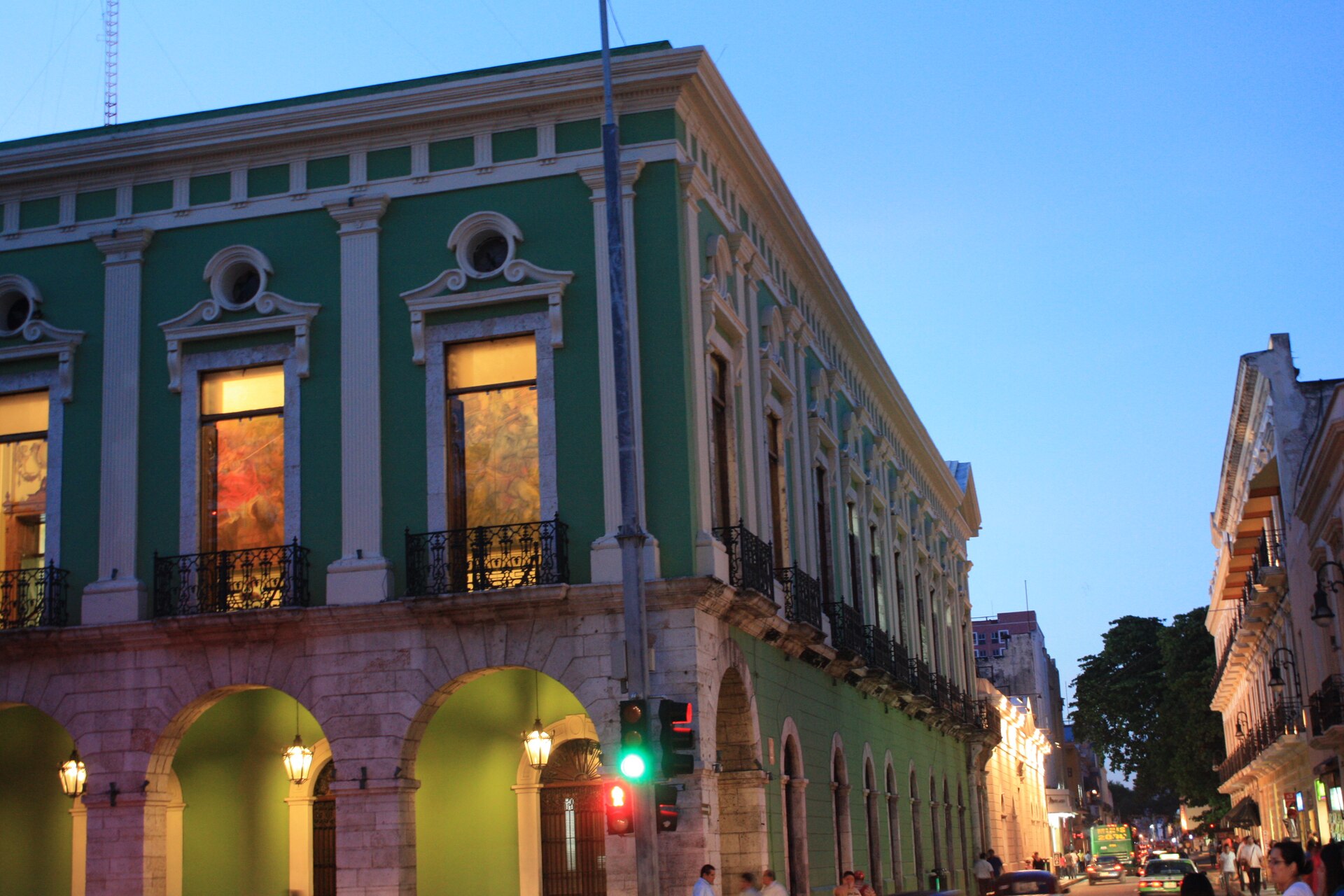
Start around Paseo de Montejo, the city's grand historic avenue lined with elaborate mansions and French-influenced architecture. If you want a closer look at this architectural heritage, consider visiting Montejo 495.
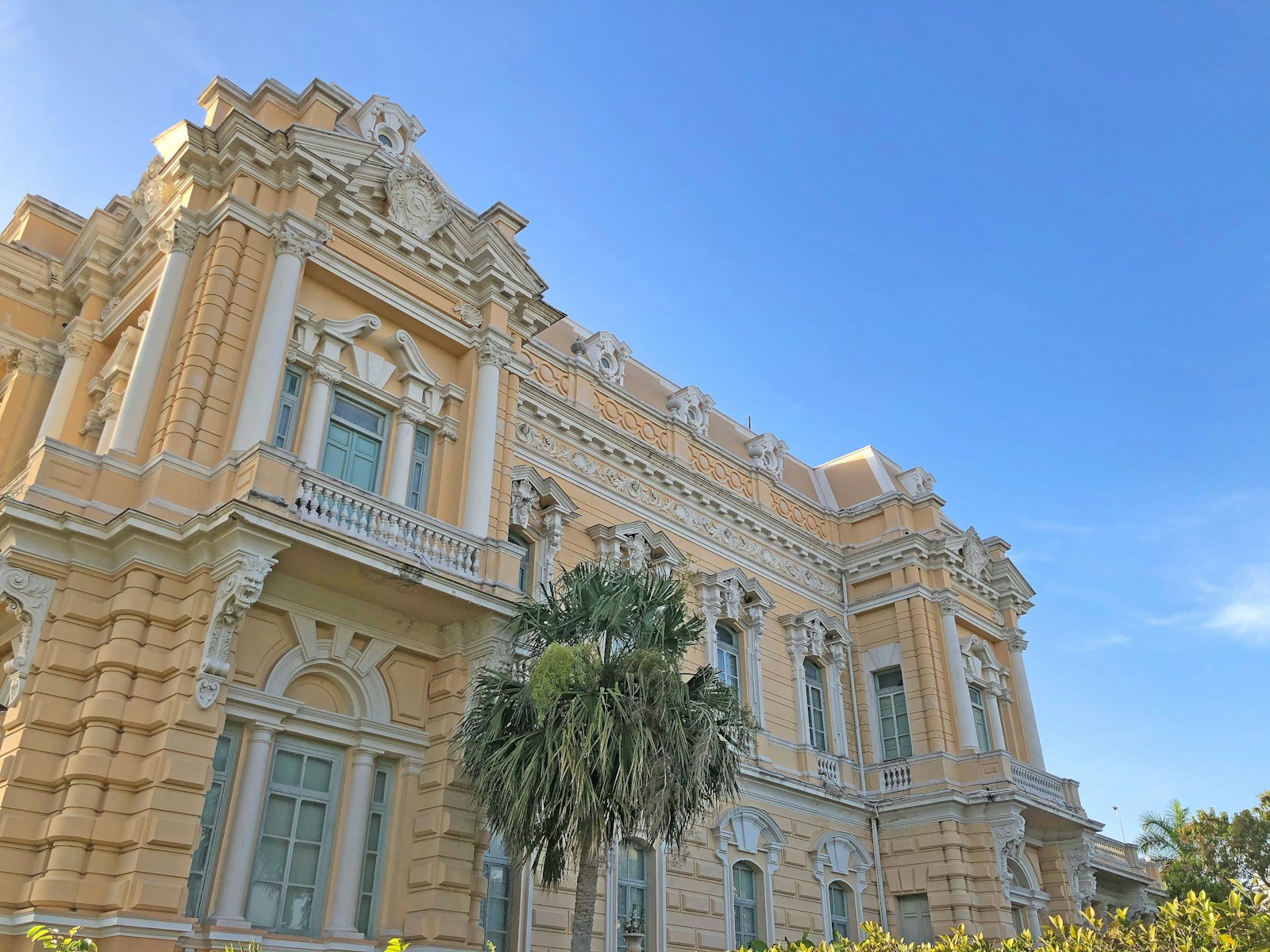
Continue to the Museo Regional de Antropología at Palacio Cantón, then return toward the Historic Center for Casa de Montejo, the cathedral and Plaza Grande.
For lunch, make time for a local market such as Mercado Lucas de Gálvez. Instead of ordering one large meal, try several small Yucatecan dishes from different stalls. In the afternoon, slow down. Browse local shops for regional crafts or a guayabera, take a break from the heat, then return downtown in the evening.
Optional afternoon: Choose between a trip to Uxmal for more Maya history or a nearby cenote for swimming. If you choose Uxmal, allow enough time for the drive and archaeological visit; if you prefer a slower day, choose a cenote instead.
Day 3: Mérida → Izamal → Valladolid
Pace: Moderate · Driving: ~190 km total
Leave Mérida in the morning and drive approximately 70 km to Izamal.
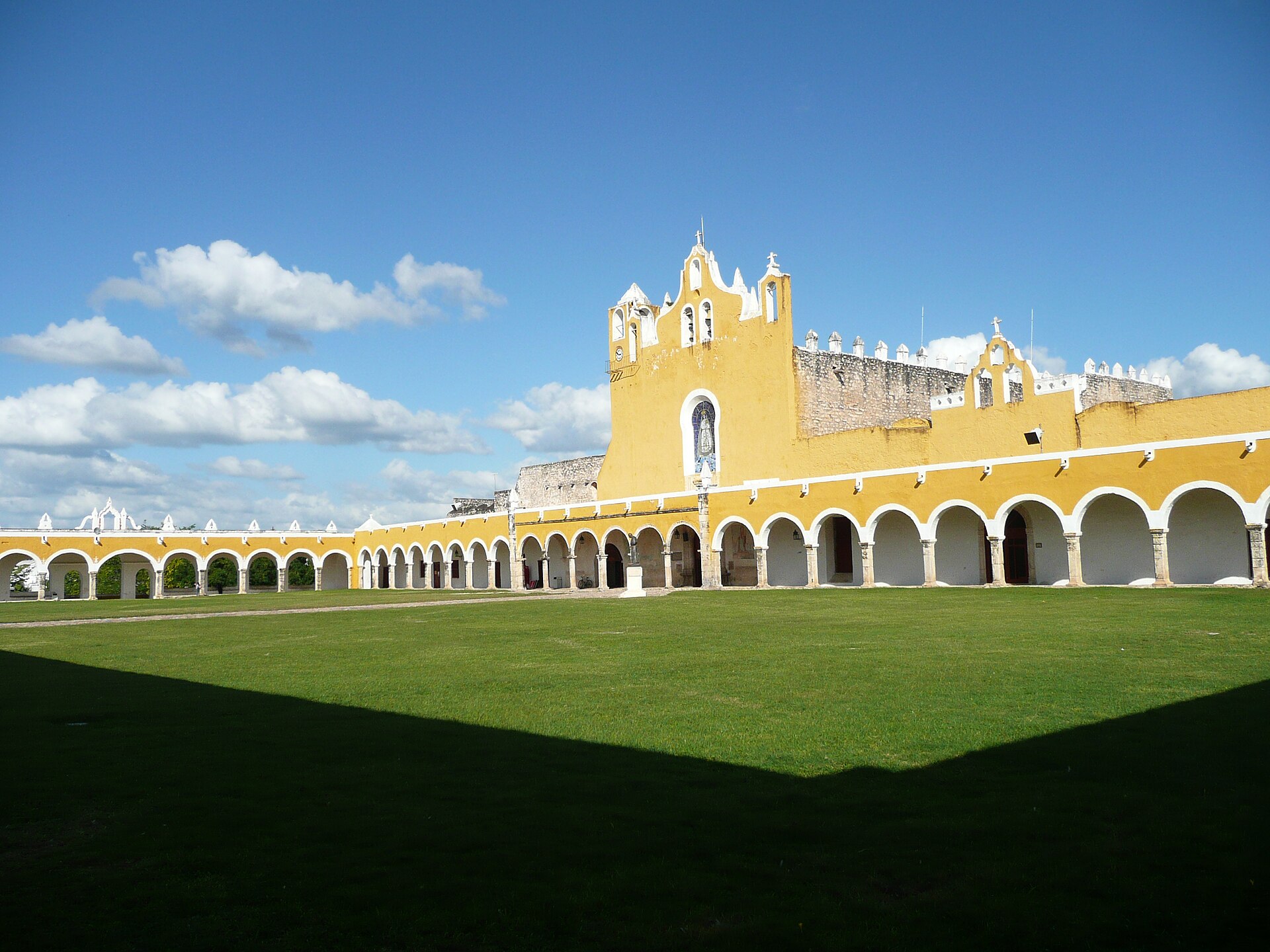
Izamal is known as the Yellow City, and its yellow and white colonial buildings make the town one of the most distinctive stops on the route. Visit the Convento de San Antonio de Padua, then explore the town's Maya heritage. One of the unusual attractions here is the opportunity to climb a Maya pyramid. If time allows, visit the Museo de Arte Popular before lunch.
For food, Kinich is a particularly useful stop for travelers wanting to try traditional Yucatecan cooking. After lunch, continue approximately 120 km to Valladolid. Spend the evening walking around Valladolid's colorful center.
.jpg)
Day 4: Chichén Itzá & Valladolid Cenotes
Pace: Moderate · Driving: ~90 km round trip to Chichén Itzá
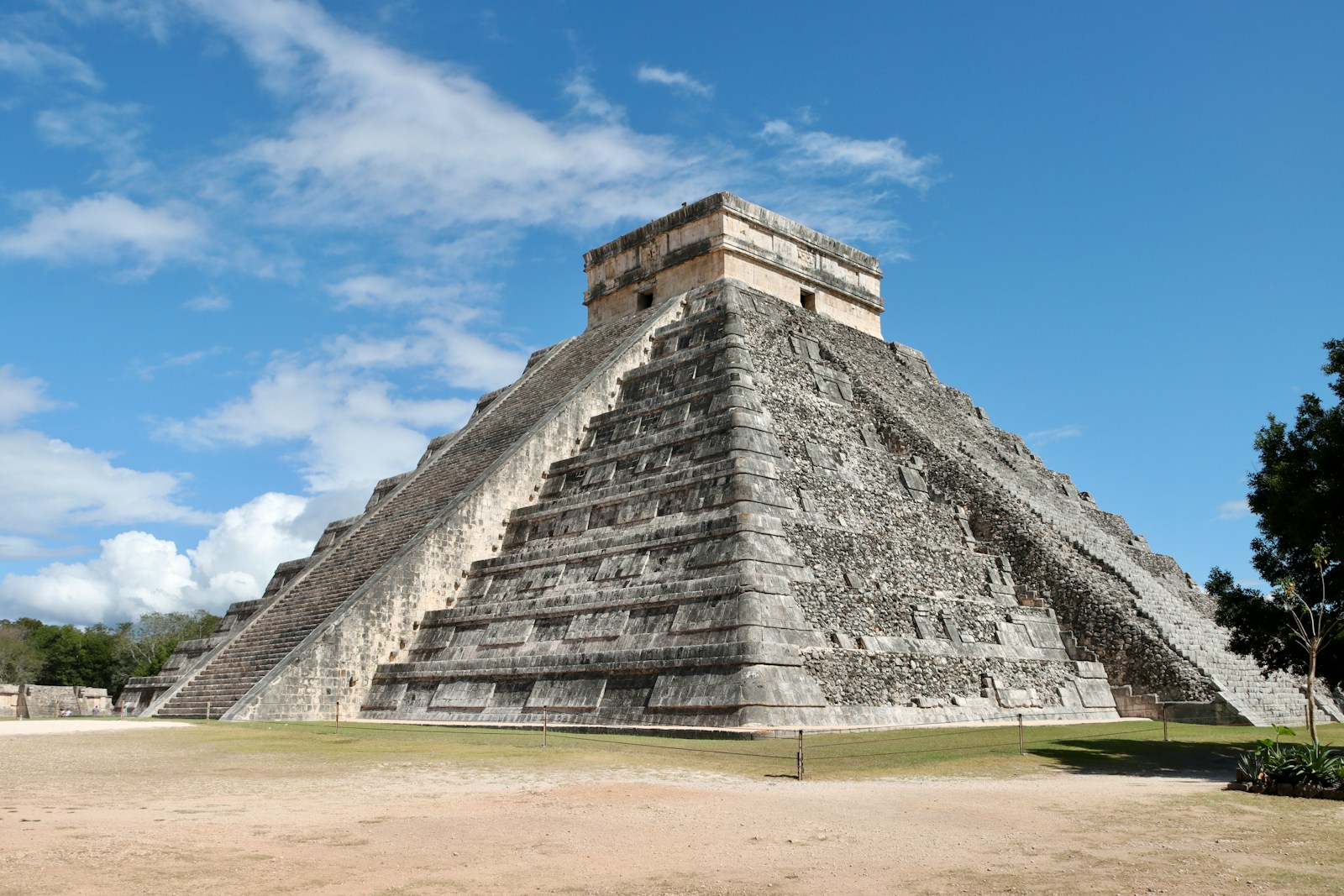
Start early for Chichén Itzá, approximately 45 km from Valladolid. The earlier you arrive, the cooler the temperatures, and the easier it is to explore the site before the largest crowds arrive. Visit El Castillo. A certified guide can add useful context to the architecture, Maya astronomy, rituals and history.
After Chichén Itzá, return toward Valladolid and spend the afternoon at a cenote. For a particularly convenient option, Cenote Zací is located within Valladolid itself, while other cenotes outside town can provide a more jungle-like experience.
Walk through Parque Francisco Cantón Rosado, see the Convento de San Bernardino de Siena, explore Calzada de los Frailes, and consider visiting Casa de los Venados or a local chocolate experience.
Note: Chichén Itzá’s opening hours and access rules can change for special events and seasonal operations. Check the INAH listing before visiting.
Day 5: Valladolid → Bacalar
Pace: Easy apart from the drive · Driving: ~264 km
Leave Valladolid after breakfast and drive south toward Bacalar, using the journey as an opportunity for a few short sightseeing breaks rather than rushing straight to the lagoon.
Enjoy the drive through the Yucatán countryside. Stop at a small local town or roadside food spot for lunch and a taste of regional Yucatecan cuisine. Continue toward Bacalar, with time for a short scenic or cultural stop along the route if desired. Arrive in Bacalar, check into your accommodation and settle in. Take a relaxed walk around Bacalar town and the waterfront, then have dinner.
Day 6: Bacalar & the Lagoon of Seven Colors
Pace: Relaxed · Driving: Minimal
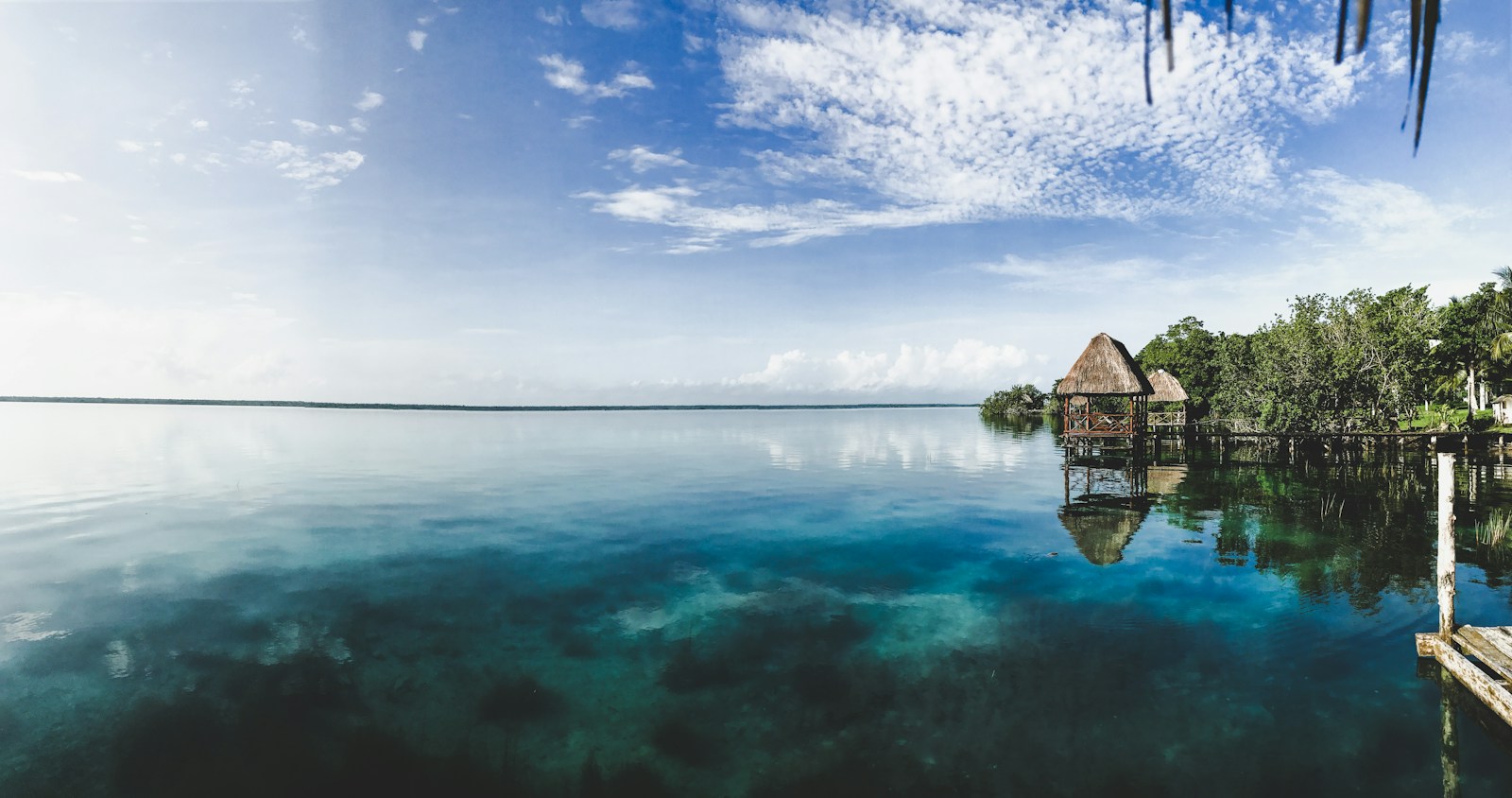
Spend the morning actually getting onto the Lagoon of Seven Colors. Choose between kayaking, paddleboarding, sailing or a boat trip. Visit Cenote Azul or another nearby cenote for swimming in the afternoon.
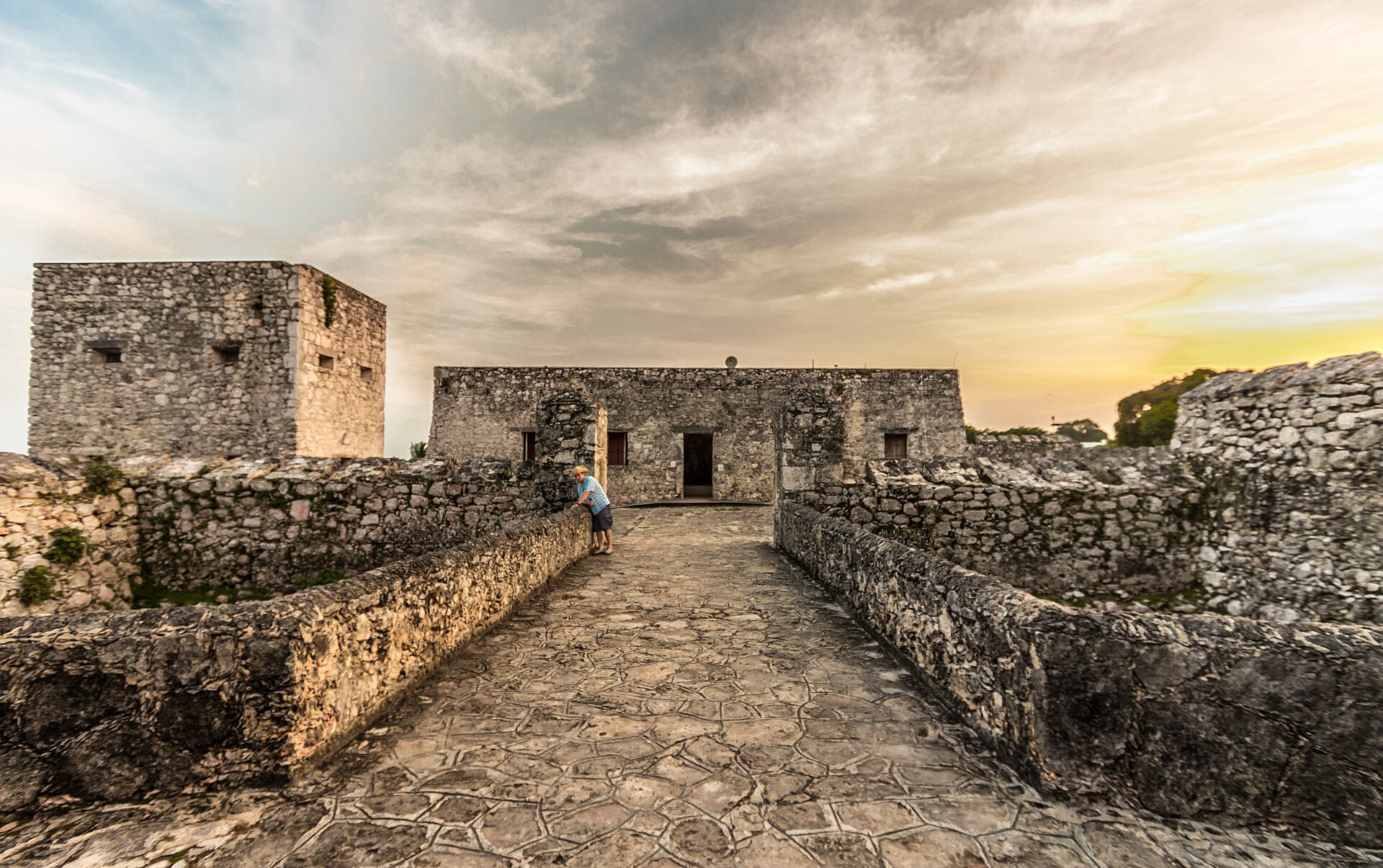
For an evening change of pace, visit Fort San Felipe, which also provides views over the lagoon and adds some historical context to the town. Watch the sunset from the fort.

Day 7: Bacalar → Tulum
Pace: Easy to moderate · Driving: ~2 hours 30 minutes
Leave Bacalar in the morning and drive to Tulum. After checking in, explore Tulum Pueblo or head toward the beach.
If you have enough time and energy, visit a nearby cenote in the afternoon. Otherwise, simply enjoy the beach and save the archaeological site for tomorrow morning.
For a local evening, explore the area around Parque Dos Aguas and look for street food options. The town's evening food scene is a good opportunity to try tacos, tamales, esquites, churros or other casual Mexican dishes.
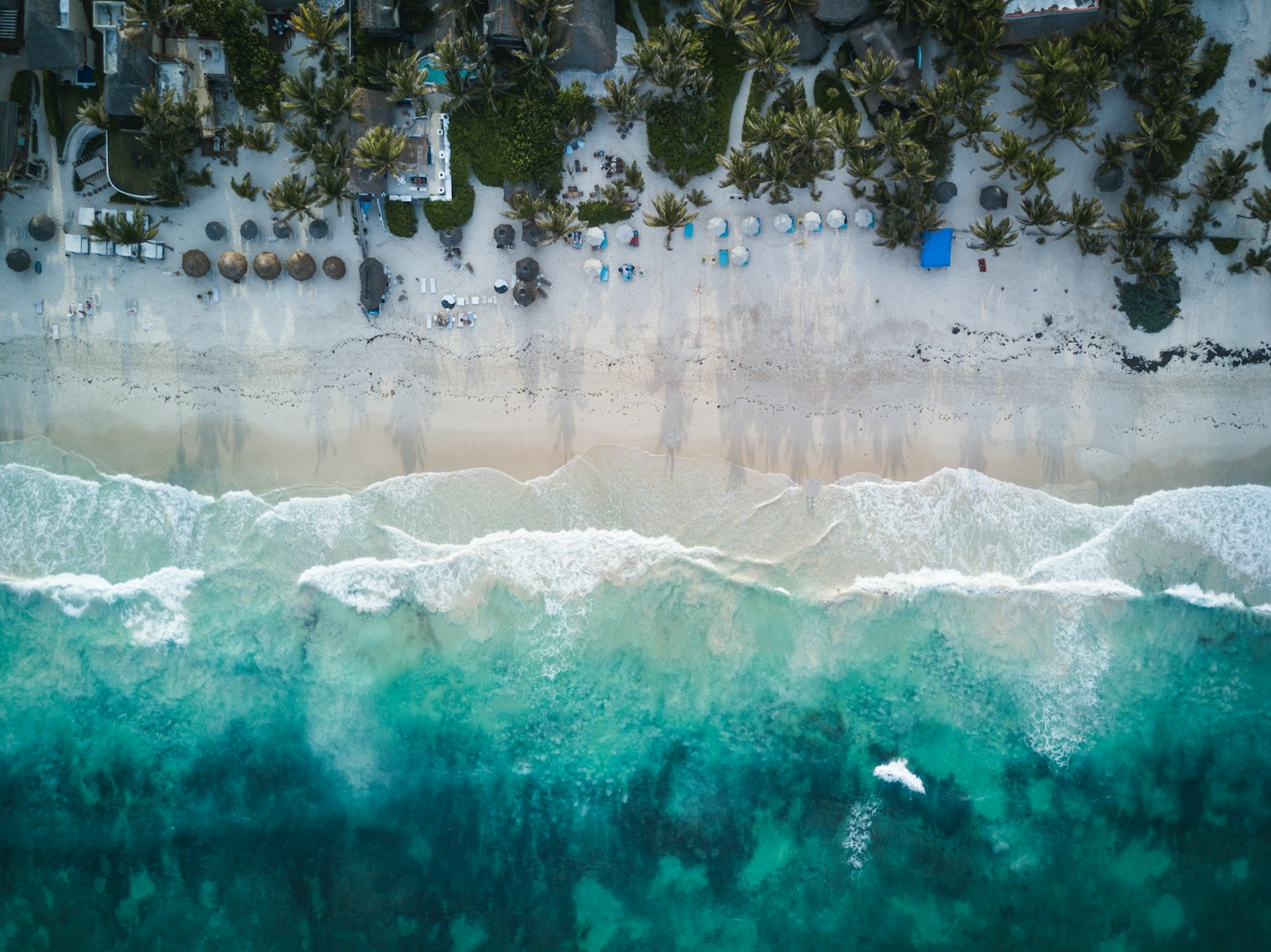
Day 8: Tulum Ruins, Beach & Departure
Pace: Flexible · Departure: Tulum or Cancún
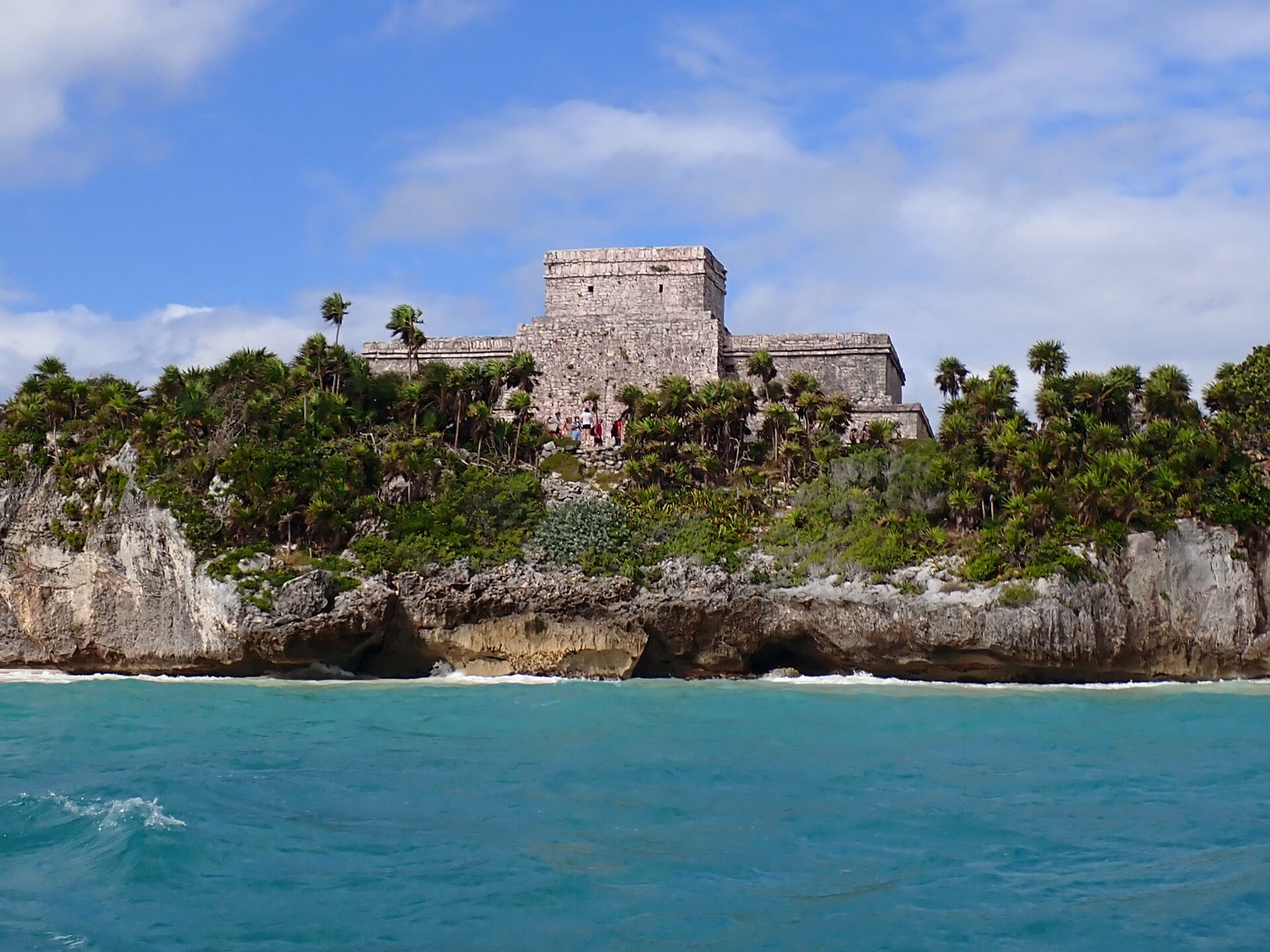
Start early with the Tulum archaeological zone. The ruins sit above the Caribbean and are one of the most visually striking archaeological settings on the route. An early visit helps with the heat.
After the ruins, head toward Playa Pescadores or another nearby beach for a final swim and lunch. If time allows, return to Tulum Pueblo for a final walk and meal before departure.
For a Tulum Airport flight, allow a substantial buffer beyond the normal driving time. If flying from Cancún International Airport, the drive is considerably longer, so an early flight may make an airport-area overnight preferable to leaving Tulum at dawn.
Note: The official INAH information lists the archaeological zone as opening at 8:00 a.m., with last entry at 3:30 p.m. and closing at 5:00 p.m. Hours can change, so check the latest information before your visit on the INAH Tulum page.

Estimated Budget
Plan on approximately $130–$250 per person per day, excluding international flights. Your actual cost will depend heavily on accommodation, rental-car category and insurance, attractions, dining style and how many paid cenote or lagoon experiences you choose.
Useful Booking & Travel Links
Prompts to Try in Honge
- Plan a family-friendly Yucatán road trip.
- Find the best cenotes around Valladolid.
- What are the best Yucatecan foods to try in Mérida?
- Build a relaxed Bacalar itinerary.
- Find the best places to stay near Bacalar Lagoon.
- Plan my Tulum days around my flight time.
- Find the best local food stops along this route.
- Help me choose between Uxmal and a cenote from Mérida.
FAQs
Is eight days enough for a Yucatán road trip?
Yes. The route gives you two nights in Mérida, two around Valladolid, two in Bacalar and a final night in Tulum without adding unnecessary detours.
Do I need a rental car?
A rental car is recommended for this particular route because it gives you flexibility for Uxmal, cenotes and the intercity drives.
Is Mérida walkable?
The Historic Center and many major sights are. A car is more useful for day trips than for sightseeing downtown.
Should I visit Chichén Itzá early?
Yes. Early morning means cooler temperatures and generally fewer visitors than later in the day.
Should I hire a guide at Chichén Itzá?
It is worth considering if you want more historical context rather than simply seeing the major structures.
What can I do in Bacalar besides the lagoon?
Visit Fort San Felipe, explore the town and consider Cenote Azul or another nearby cenote.
Can I finish in Cancún instead of Tulum?
Yes. The route can finish in Tulum or continue north to Cancún depending on your flight schedule.
Do I need Spanish?
English is common in major tourist areas, but basic Spanish is useful, particularly in smaller towns and local markets.
Should I carry Mexican pesos?
Yes. Keep cash available for smaller restaurants, markets, parking, tolls and local experiences.
Make This Trip Yours
Build your Yucatán journey around the experiences you enjoy most. Spend more time in Mérida for food and culture, slow down in Bacalar for the lagoon, or give Tulum more beach time. Adjust the stops, choose your preferred bases and shape the route around your own pace.
Ready to plan your adventure?
Customize this itinerary with AI
Turn this Yucatán road trip into a route that fits you — adjust nights in Mérida, Valladolid, Bacalar and Tulum, add cenotes, and plan around your flight times.
Related itineraries
- 7 Days in the Dolomites: The Ultimate Italian Alps Road Trip
- 7-Day San Diego Itinerary: Beaches, Neighborhoods & Southern California
- 10-Day Bhutan Itinerary: Paro, Thimphu, Punakha & Phobjikha
- 7-Day Czech Republic Itinerary: Prague, Kutná Hora & Český Krumlov
- 8-Day Canadian Rockies Road Trip: Calgary, Banff & Jasper
- 10-Day Mexico City Itinerary: World Cup, Food & Culture
Written by
This blog was contributed by Sheba M, a travel enthusiast and writer. Sheba can be reached at shebaranjitha@gmail.com.
About Honge
Honge is an AI travel planning platform focused on practical, experience-led itineraries with realistic pacing and logistics. All blog content is edited and published by Honge. Our Yucatán research draws on updated practical logistics as of September 2026. © Honge. All rights reserved.
Image credits: Route map illustration created for this Honge itinerary. Photographs by Marco Murakami, Alvaro Rosado, Hongbin, Camila Vázquez and Spencer Watson on Unsplash; David Cabrera and Randal Sheppard on Wikimedia Commons (CC BY-SA 2.0); Alejandro Hernández Osuna and Nosferattus on Wikimedia Commons (CC0). Copyright remains with the respective photographers and rights holders. Unsplash and Wikimedia Commons images are used under their applicable license terms.
Travel disclaimer
This itinerary is intended as general travel inspiration and planning guidance only — not as personalised travel, safety, driving or medical advice. Conditions change. Before you travel, check current entry requirements, visa rules and any travel advisories issued by your government for Mexico. Review weather and hurricane forecasts for your dates, confirm opening hours, tickets and access rules for archaeological sites (including Chichén Itzá and Tulum) directly with INAH and site operators, and take out comprehensive travel insurance that covers medical care, cancellation and disruption. Rental-car terms, insurance, parking and driving conditions vary; follow local traffic rules and posted site instructions. Cenotes, lagoons, beaches and archaeological zones involve risk; follow local operators, lifeguards, signs and staff. Suggested hotels and stay styles in this article are samples only and depend on availability; in the Honge app they may appear as booking options when offered by our vendors at the time of your search. Honge is not responsible for decisions made based on this guide or for changes to places, prices, access, services or experiences after the date of publication.