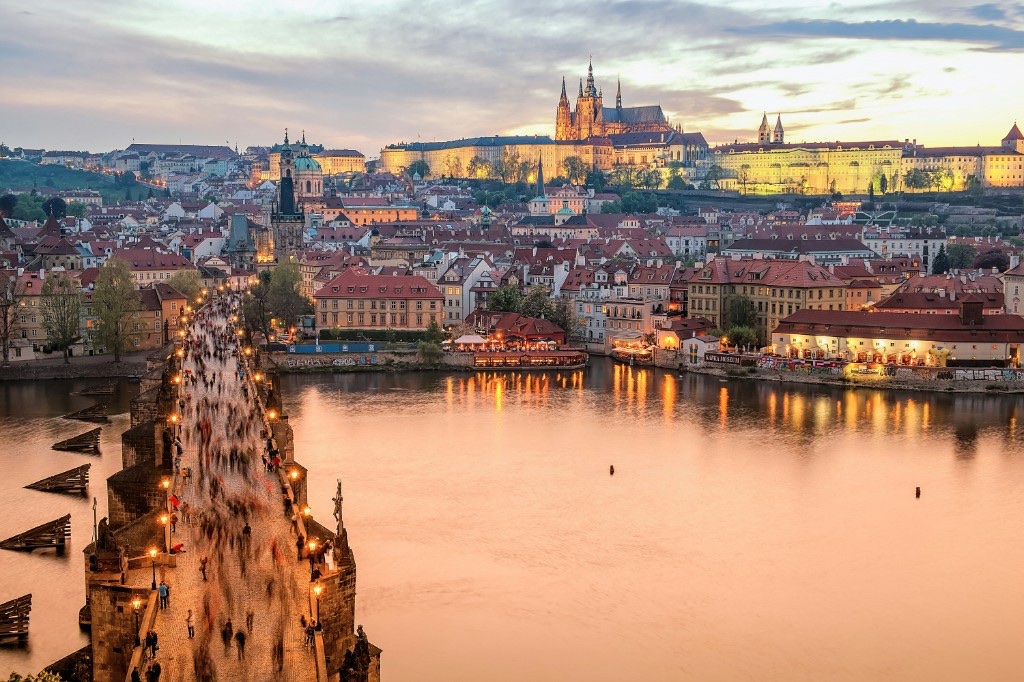
This itinerary splits the week evenly: four days in Prague, three days beyond it.
Prague’s medieval core is the reason most people book the trip. The castles, silver towns, and river valleys beyond it are the reason to stay a full week instead of a long weekend. Four days cover the sights that define Prague’s skyline; three more cover the countryside that explains why the Czech Republic has held onto its castles, its beer halls, and its small-town cathedrals for the better part of a thousand years.
Getting There & Getting Around
Václav Havel Airport sits 17 km from the city centre. Bus 119 connects to Nádraží Veleslavín metro station in about 20 minutes; a taxi or Uber into the centre runs 30–45 minutes depending on traffic.
Prague’s public transport system covers metro, tram, and bus on a single ticket. Fares rose in January 2026: a 30-minute ticket now costs 36 CZK via the PID Lítačka app (39 CZK on paper), a 90-minute ticket 46 CZK app / 50 CZK paper, and a 24-hour pass 140 CZK app / 150 CZK paper. Tickets are validated once at the start of a journey and cover transfers between all three modes. Trams are usually the fastest way to reach neighbourhoods outside the historic core, including Karlín and Holešovice, and run every 5–10 minutes on major routes.
For day trips, Czech Railways (České dráhy) and the private operator RegioJet run frequent regional trains from Prague’s main stations — Hlavní nádraží and Masarykovo nádraží. Tickets are inexpensive, bookable online or at station counters, and rarely need to be reserved more than a day ahead outside major holidays.
Best Time to Visit
April, May, September, and October bring mild temperatures and noticeably thinner crowds than peak summer. July and August are the busiest and hottest months, with Charles Bridge and Old Town Square at their most congested by mid-morning. December draws visitors for the Christmas markets in Old Town Square and Náměstí Republiky, though daylight is short and temperatures often sit near freezing.
Where to Stay
Suggested hotels are samples only and depend on availability; in the Honge app they may appear as booking options when offered by our vendors. Base yourself in Prague for nights 1–6 — day trips return easily by evening.
- Old Town / Josefov — Walking distance to the major sights, priced highest of any district.
- Malá Strana — Quieter streets, castle views, a short walk across Charles Bridge.
- Karlín or Vinohrady — Residential, tram-connected to the centre, generally 20–30% cheaper than Old Town.
Journey Overview
| Day | Route & Highlights | Stay |
|---|---|---|
| Day 1 | Old Town Square → Charles Bridge → Jewish Quarter (Josefov) → svíčková dinner | Prague |
| Day 2 | Prague Castle → Malá Strana → Wallenstein Garden → Petřín Tower | Prague |
| Day 3 | Vyšehrad → Letná Park sunset → Café Louvre / Café Slavia | Prague |
| Day 4 | Karlín → Holešovice (DOX, Prague Market) → craft brewery | Prague |
| Day 5 | Day trip: Kutná Hora — St. Barbara’s, Sedlec Ossuary, St. James’ Church | Prague |
| Day 6 | Day trip: Karlštejn Castle — guided tour & village lunch | Prague |
| Day 7 | Český Krumlov (or Karlovy Vary) → final Czech meal; optional Krumlov overnight | Prague |
Days 1–4: Prague
Day 1 — Old Town, Charles Bridge & the Jewish Quarter
Pace: Easy · Overnight: Prague
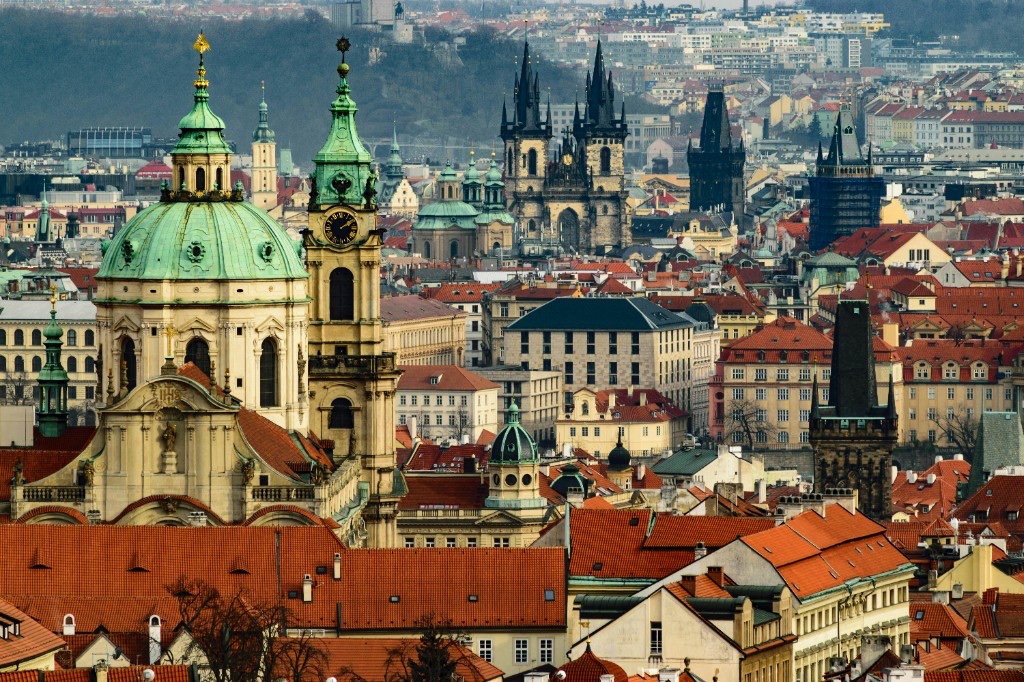
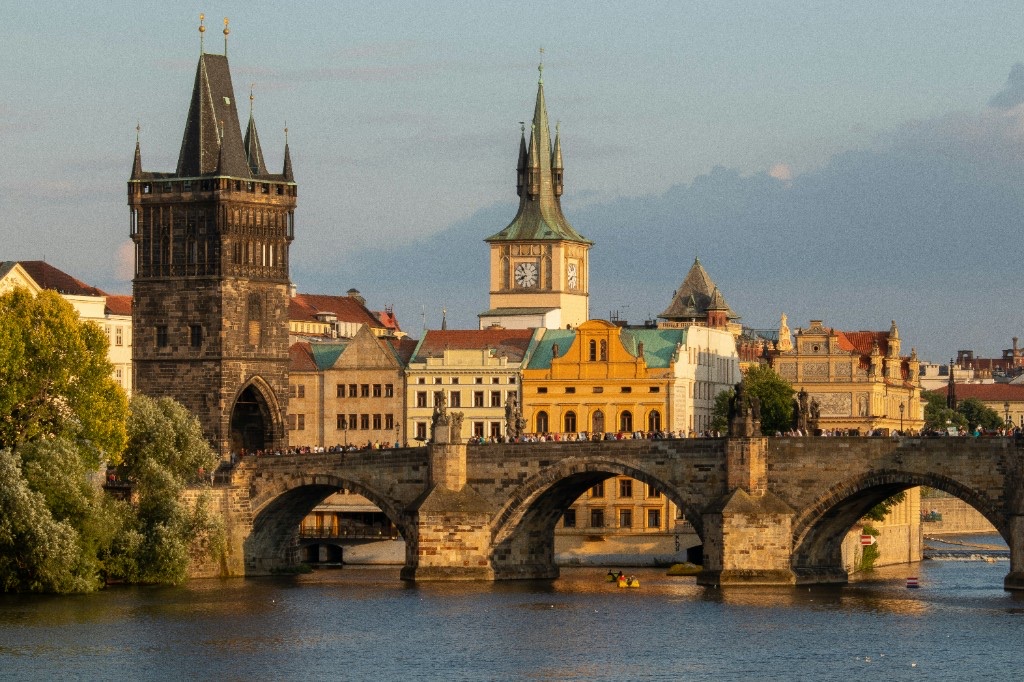
Start in Old Town Square. The Astronomical Clock draws a crowd on the hour; arrive at :55 to get a clear view of the walk of the apostles. Týn Church rises behind the square, and the Church of St. Nicholas anchors its western side. From there, walk toward Charles Bridge — before 8am or after 9pm avoids the densest crowds and street vendors. The bridge’s 30 baroque statues date to the early 18th century; the statue of St. John of Nepomuk marks the spot where he was reportedly thrown into the Vltava in 1393.
Spend the afternoon in the Jewish Quarter, Josefov. The Old Jewish Cemetery holds more than 12,000 visible gravestones layered in place since the 15th century. Pinkas Synagogue lists the names of roughly 80,000 Czech Holocaust victims on its interior walls. A combined ticket covers five sites in the quarter — Pinkas Synagogue, Maisel Synagogue, Spanish Synagogue, Ceremonial Hall, and the Old Jewish Cemetery — for around 550 CZK; the Old-New Synagogue is managed separately and requires an additional ticket of roughly 200 CZK.
For dinner, order svíčková — beef sirloin in a creamy root-vegetable sauce, served with bread dumplings and cranberry compote — paired with a Pilsner Urquell, brewed since 1842 in Plzeň, 90 km southwest of Prague.
Day 2 — Prague Castle & Malá Strana
Pace: Moderate · Overnight: Prague
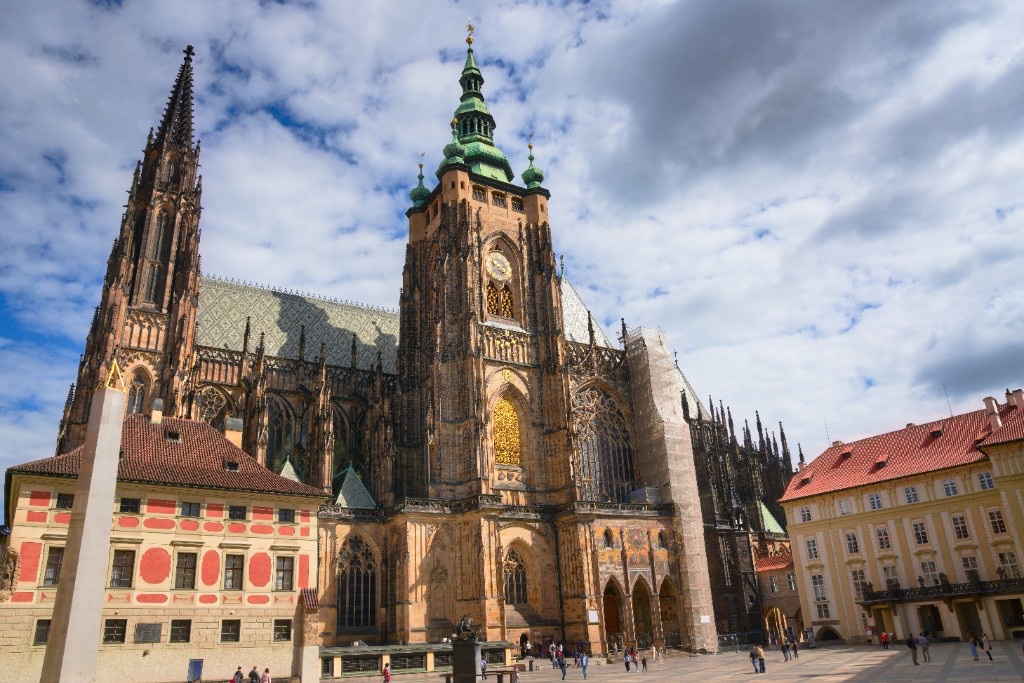
Prague Castle covers roughly 70,000 square meters and has been the seat of Czech power since the 9th century. St. Vitus Cathedral sits at its centre; its Gothic spires took nearly 600 years to complete, finishing only in 1929. The Old Royal Palace, St. George’s Basilica, and Golden Lane — once home to goldsmiths, later to Franz Kafka’s sister — are included on Circuit A, one of several circuit ticket options covering different combinations of sites, so check which circuit includes what you want to see before buying.
Walk downhill into Malá Strana. Wallenstein Garden, with its peacocks and dripstone wall, is free to enter from April through October. Nerudova Street, lined with baroque house signs instead of building numbers, climbs back toward the castle steps.
Stop for lunch at a traditional pivnice and order goulash with dumplings, a dish that reflects Prague’s long ties to Hungary. In the evening, take the funicular or walk up Petřín Hill. The 63.5-meter Petřín Tower, built in 1891 as a quarter-scale echo of the Eiffel Tower, gives a clear view over the city’s red rooftops.
Day 3 — Vyšehrad, Letná Park & Café Culture
Pace: Easy · Overnight: Prague
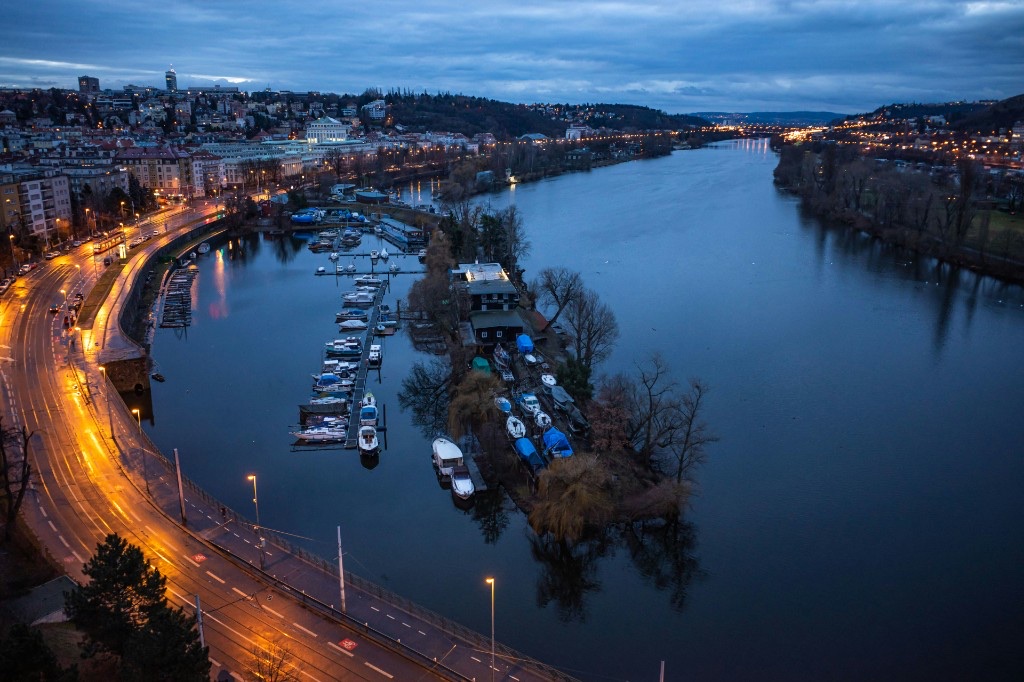
Vyšehrad draws a fraction of Prague Castle’s visitors despite comparable views. The fortress sits on a rock above the Vltava, with the neo-Gothic Basilica of St. Peter and St. Paul at its centre. The Vyšehrad Cemetery holds the graves of Antonín Dvořák and Alphonse Mucha. Entry to the grounds is free.
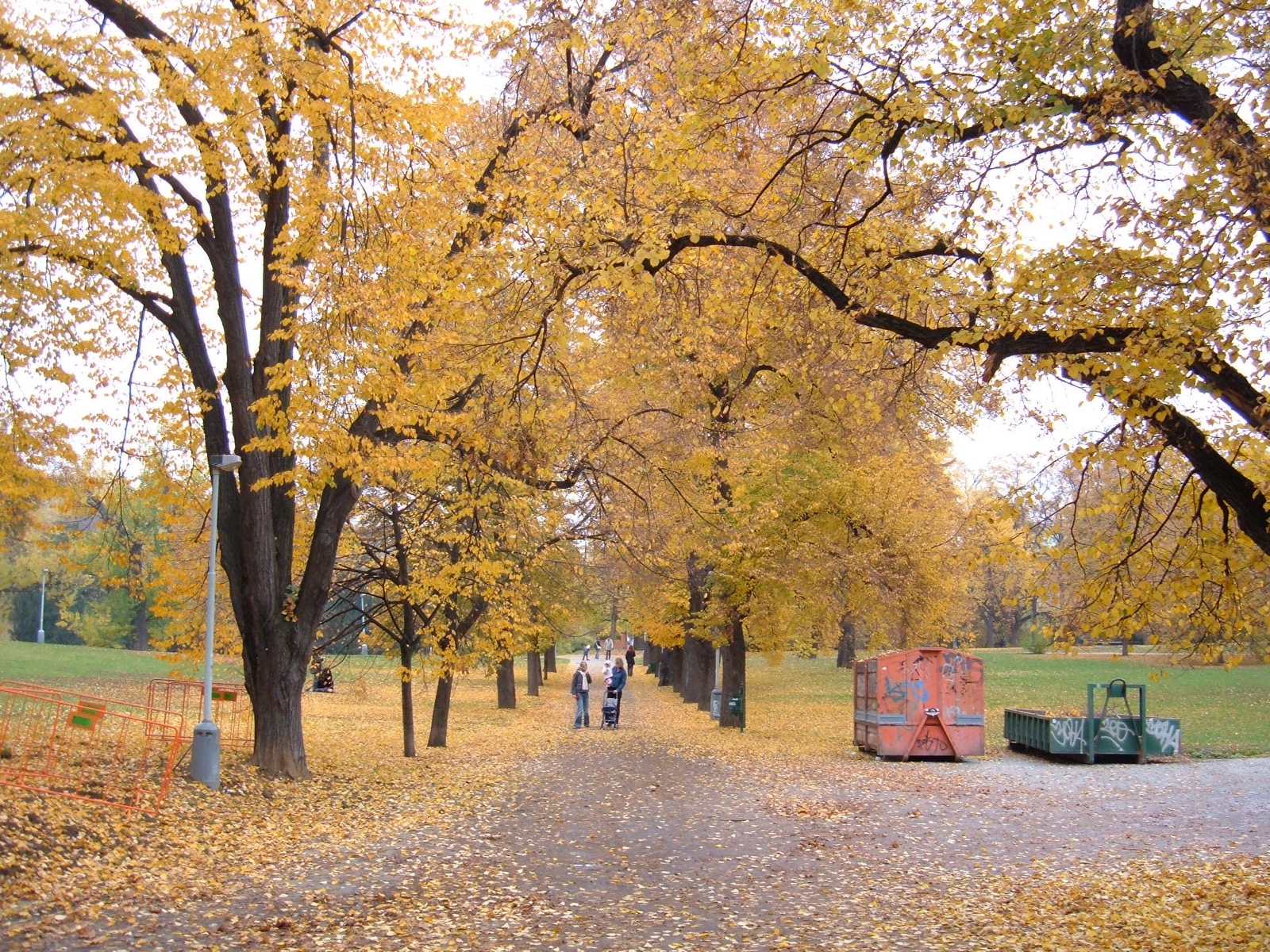
Cross the river north in the afternoon to Letná Park. A giant metronome stands where a statue of Stalin once did, and the terrace beneath it is a popular sunset spot overlooking the Vltava and Charles Bridge. A seasonal beer garden operates nearby, where a cup of Czech lager costs less than bottled water in Old Town.
Prague’s café culture runs deep. Café Louvre and Café Slavia have served coffee since the early 1900s, both once frequented by writers and academics. Order coffee alongside medovník (honey cake) or buchty, sweet filled buns.
Day 4 — Karlín & Holešovice
Pace: Easy · Overnight: Prague
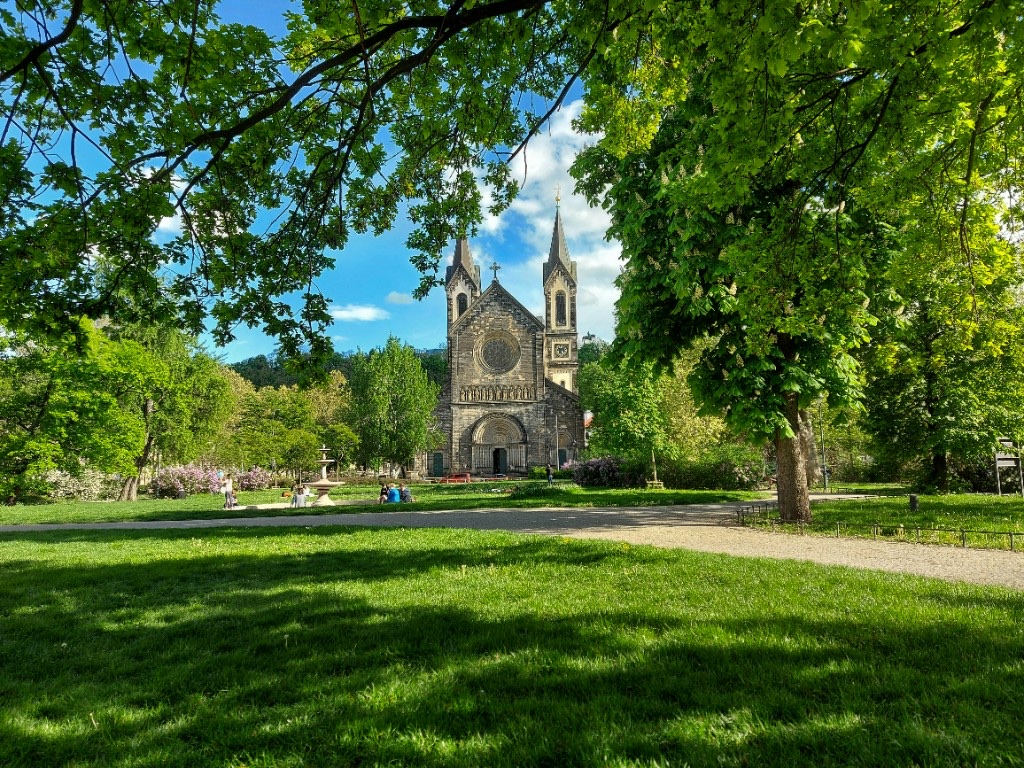
Karlín and Holešovice show a different side of Prague — former industrial buildings converted into offices, galleries, and specialty coffee roasters, with little of the tourist traffic from the historic core. Karlín centres on Karlínské náměstí, a leafy square ringed by Art Nouveau buildings and neighbourhood restaurants. Holešovice is home to the DOX Centre for Contemporary Art and the Prague Market, a former slaughterhouse complex now used for food stalls and weekend markets.
Try trdelník in the afternoon — dough wrapped around a spit, grilled over coals, and rolled in sugar and walnuts. It’s sold across Prague’s tourist areas, though it’s a Slovak import rather than a historically Czech dish.
In the evening, visit one of Holešovice’s craft breweries. Unlike the mass-produced pilsners found in Old Town, these rotate small-batch IPAs, sours, and dark lagers.
Days 5–7: Beyond Prague
Day 5 — Kutná Hora
Pace: Moderate · Overnight: Prague
Kutná Hora sits about an hour from Prague by direct train from Hlavní nádraží, with departures roughly every hour. Trains arrive at Kutná Hora hlavní nádraží, which is about 2 km from the historic centre — catch the short connecting local train to Kutná Hora město, or take a bus or taxi, rather than expecting to walk straight into town. The town grew wealthy on silver mining in the 14th century and still shows it: St. Barbara’s Cathedral, a Gothic structure funded by the miners’ guild, took nearly 500 years to complete.
The Sedlec Ossuary — the Bone Church — sits about 10 minutes from the town centre by local bus, or a 20-minute walk. Bones from an estimated 40,000 to 70,000 people were arranged into chandeliers, garlands, and a coat of arms by woodcarver František Rint in 1870. Tickets are timed and should be booked in advance during peak season.
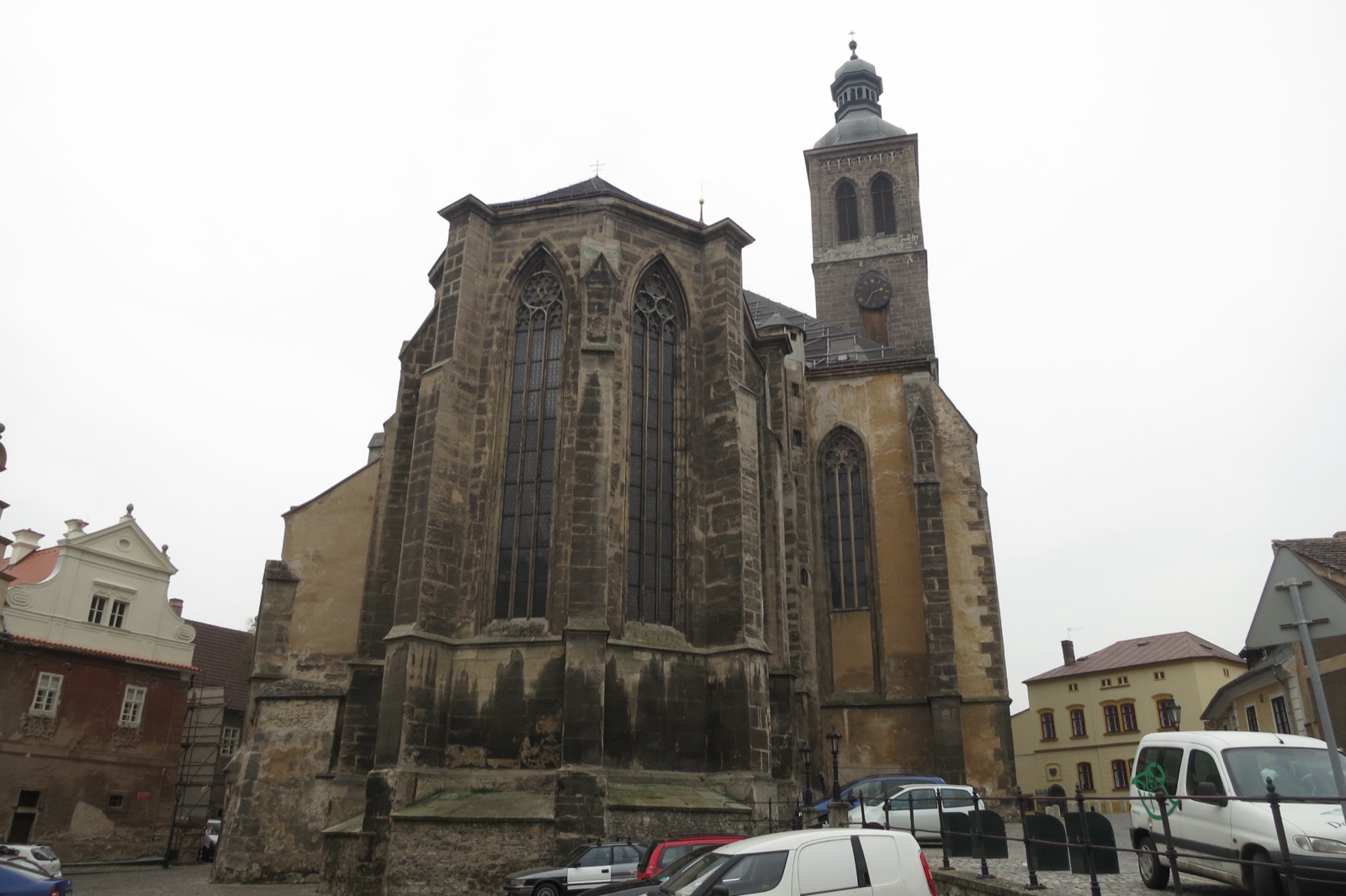
Back in the town centre, St. James’ Church stands beside St. Barbara’s as Kutná Hora’s other major landmark, its single Gothic tower visible from most of the old town. The interior holds a Baroque altar and a set of dark, ornately framed 17th- and 18th-century paintings, a contrast to the pale stone Gothic exterior. It’s a shorter, quieter stop than the cathedral and pairs well with the walk between the historic centre and the ossuary.
Return to Prague by early evening. Kutná Hora works well as a single, unhurried day trip and doesn’t require an overnight stay.
Day 6 — Karlštejn Castle
Pace: Moderate · Overnight: Prague
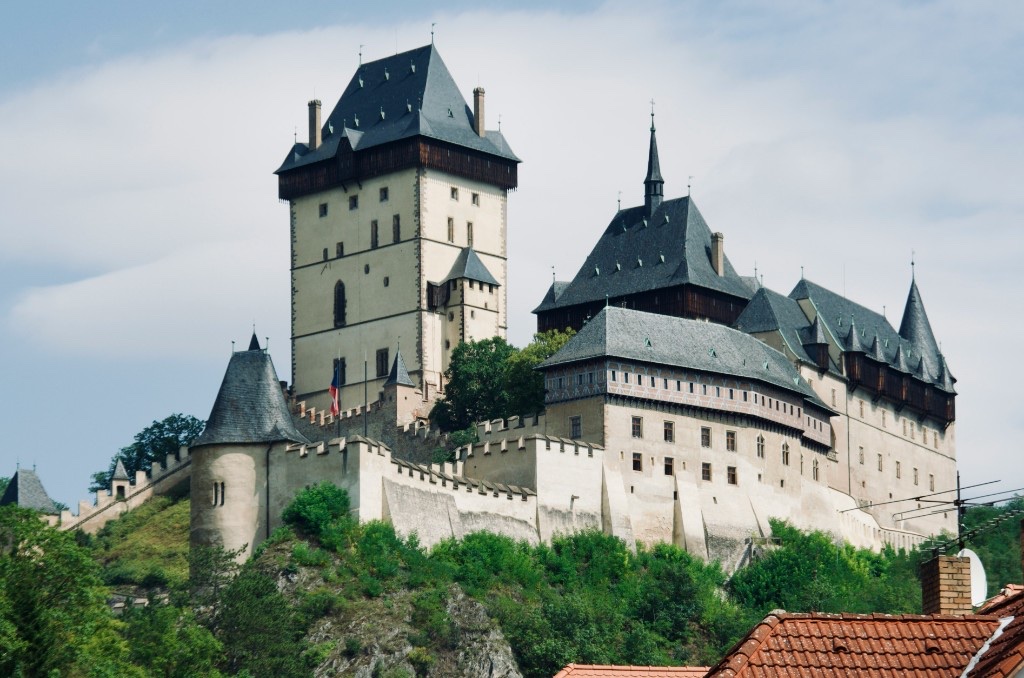
Karlštejn Castle is roughly 40 minutes from Prague by regional train to Karlštejn station, followed by a 20–25 minute uphill walk to the castle gates. Founded by Holy Roman Emperor Charles IV in 1348 to house the imperial crown jewels and religious relics, it remains one of the most visited castles in the country.
The interior is accessible only by guided tour. The Chapel of the Holy Cross, covered floor to ceiling in gilded panels and semi-precious stones, requires a separate, limited-capacity tour booked well in advance. Standard interior tours run more frequently and cover the Imperial Palace and Great Tower.
The village below the castle has a handful of restaurants serving roast duck with red cabbage and bread or potato dumplings — a heartier alternative to svíčková. Trains back to Prague run until late evening, leaving the afternoon open.
Day 7 — Český Krumlov (or Karlovy Vary)
Pace: Full day · Overnight: Prague, or optional Český Krumlov overnight
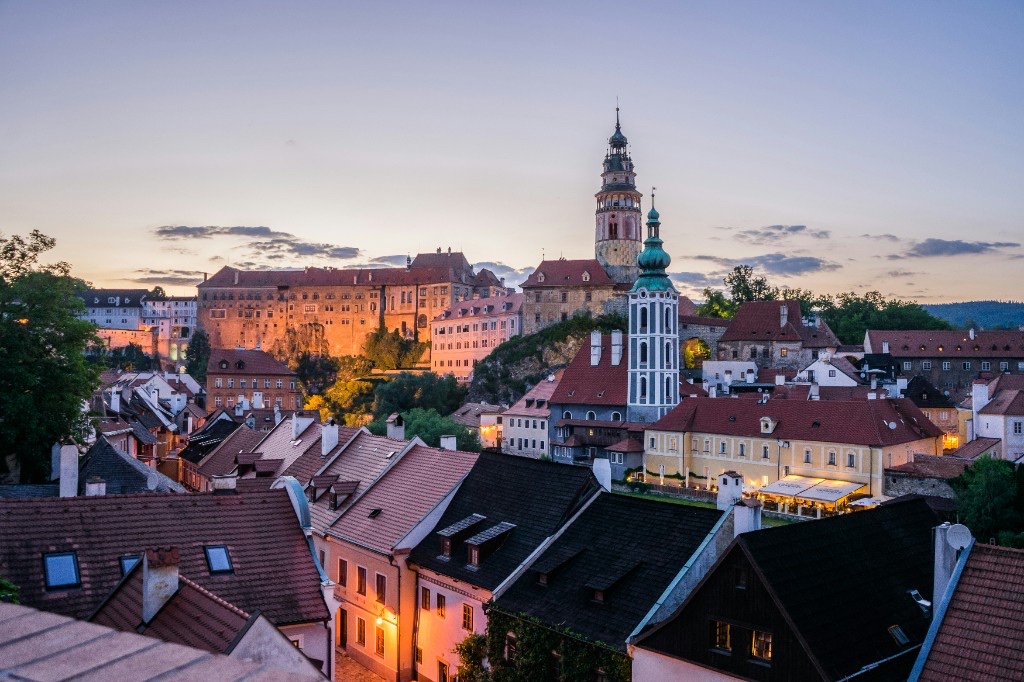
Český Krumlov is about 2.5 to 3 hours from Prague by direct bus (RegioJet or FlixBus) or by train with a change in České Budějovice. The medieval centre sits inside a horseshoe bend of the Vltava, with Český Krumlov Castle — the second largest castle complex in the country after Prague Castle — rising above the rooftops. Climb the castle tower for a view over the terracotta roofs, then walk the cobbled streets below, largely closed to cars.
A single day trip is workable but tight, given four to six hours of round-trip travel. An overnight stay allows time to see the castle without rushing and to walk the town after the day-trip crowds leave — worth building into the itinerary as an eighth day for travellers with the flexibility.
Travellers who prefer a shorter trip can substitute Karlovy Vary, about two hours from Prague by direct bus. The spa town is known for its colonnades, thermal springs, and Moser crystal, and suits a single unhurried day rather than an overnight.
Close the trip with a final Czech meal — trdelník or a slice of štrúdl, with a last Pilsner Urquell or Budweiser Budvar before the return to Prague.
Estimated Budget
Approximate cost per person, per day:
- Budget: €30–40 — hostel dorm, tram-and-foot sightseeing, pivnice meals.
- Mid-range: €60–90 — 3-star hotel, museum tickets, one sit-down meal with beer.
- Higher-end: €120+ — 4-star hotel, guided castle tours, wine or cocktail bars.
Day-trip transport adds roughly 150–400 CZK per person for Kutná Hora or Karlštejn, and 400–700 CZK for Český Krumlov or Karlovy Vary, depending on the operator and how far in advance tickets are booked.
Why It’s Worth the Extra Days
Prague’s medieval core is the reason most people book the trip. The castles, silver towns, and river valleys beyond it are the reason to stay a full week instead of a long weekend. Four days cover the sights that define Prague’s skyline; three more cover the countryside that explains why the Czech Republic has held onto its castles, its beer halls, and its small-town cathedrals for the better part of a thousand years.
Useful Links
Prompts to Try in Honge
- Plan a 7-day Czech Republic trip with four days in Prague and three day trips.
- Create a Prague itinerary focused on quieter neighbourhoods and café culture.
- Build a day trip from Prague to Kutná Hora including the Sedlec Ossuary.
- Plan a Karlštejn Castle visit with train timings and lunch suggestions.
- Compare Český Krumlov as a day trip versus an overnight stay.
- Suggest a food-and-beer focused Prague itinerary.
- Create a winter Prague itinerary around Christmas markets.
- Plan a shorter Karlovy Vary day trip instead of Český Krumlov.
FAQs
How many days do I need in Prague?
Four days is enough to move past the main landmarks into quieter squares, parks and neighbourhoods. Three more days take you beyond the capital to Kutná Hora, Karlštejn and Český Krumlov.
Do I need a car for this Czech Republic itinerary?
No. Prague’s metro, tram and bus system covers the city, and Czech Railways and RegioJet handle day trips to Kutná Hora, Karlštejn and Český Krumlov.
What is the best time to visit Prague?
April, May, September and October bring mild temperatures and thinner crowds than peak summer. December is popular for Christmas markets, though daylight is short and temperatures often sit near freezing.
Is Český Krumlov doable as a day trip from Prague?
Yes, but it is tight given four to six hours of round-trip travel. An overnight stay lets you see the castle without rushing and walk the town after day-trip crowds leave.
What should I eat in Prague?
Try svíčková with dumplings, goulash, roast duck with red cabbage, medovník honey cake, buchty, trdelník, and a Pilsner Urquell or Budweiser Budvar.
Where should I stay in Prague?
Old Town and Josefov are closest to the major sights but priced highest. Malá Strana is quieter with castle views. Karlín and Vinohrady are residential, tram-connected and generally 20–30% cheaper than Old Town.
Make This Trip Yours
Use this week as a starting point — linger longer in Malá Strana, swap Český Krumlov for Karlovy Vary, or add an eighth night in the river town — then remix the route in Honge around your pace and travel style.
Four days cover the skyline that draws everyone to Prague; three more days explain the castles, beer halls and small-town cathedrals beyond it.
Ready to plan your adventure?
Customize this itinerary with AI
Turn your Prague and Czech Republic plans into a trip that fits you — personalise your route, discover places to stay, and build activities around your interests, travel style and pace.
Related itineraries
- 8 Days in the Yucatán: Mérida, Chichén Itzá, Bacalar & Tulum
- 7-Day Denmark Itinerary: Copenhagen, Castles & the Coast
- 7-Day Bulgaria Itinerary: Sofia, Rila, Plovdiv & the Pirin Mountains
- 10-Day Budapest to Vienna Road Trip: Balaton, Hallstatt & Salzburg
- 10-Day Berlin & Munich Itinerary: Wall, Museums & Oktoberfest
- 7-Day Iceland Ring Road Itinerary for First-Timers
Written by
This blog was contributed by Ishita Minia, a travel enthusiast and writer. Ishita can be reached at ishitaminia@gmail.com.
About Honge
Honge is an AI travel planning platform focused on practical, experience-led itineraries with realistic pacing and logistics. All blog content is edited and published by Honge. Our Czech Republic research draws on updated practical logistics as of September 2026. © Honge. All rights reserved.
Image credits: Photos are sourced from Unsplash and Wikimedia Commons. Copyright remains with their respective photographers and rights holders. Unsplash images are used according to the Unsplash License. Wikimedia Commons images are used according to their applicable CC BY-SA 4.0 license terms.
Travel disclaimer
This itinerary is intended as general travel inspiration and planning guidance only — not as personalised travel advice. Conditions change. Before you travel, check the current entry requirements, visa rules, and any travel advisories issued by your government for the Czech Republic. Confirm train and bus schedules (including České dráhy, RegioJet and FlixBus), castle and attraction opening hours and tickets (including Prague Castle, Sedlec Ossuary and Karlštejn guided tours), weather, and airport connections directly with operators and official sources, and take out comprehensive travel insurance that covers medical, cancellation, and disruption. Suggested hotels and stay styles in this article are samples only and depend on availability; in the Honge app they may appear as booking options when they are offered by our vendors at the time of your search. Transport, weather, and attraction conditions can change. Honge is not responsible for any changes to conditions, services, or experiences described in this article after the date of publication.