
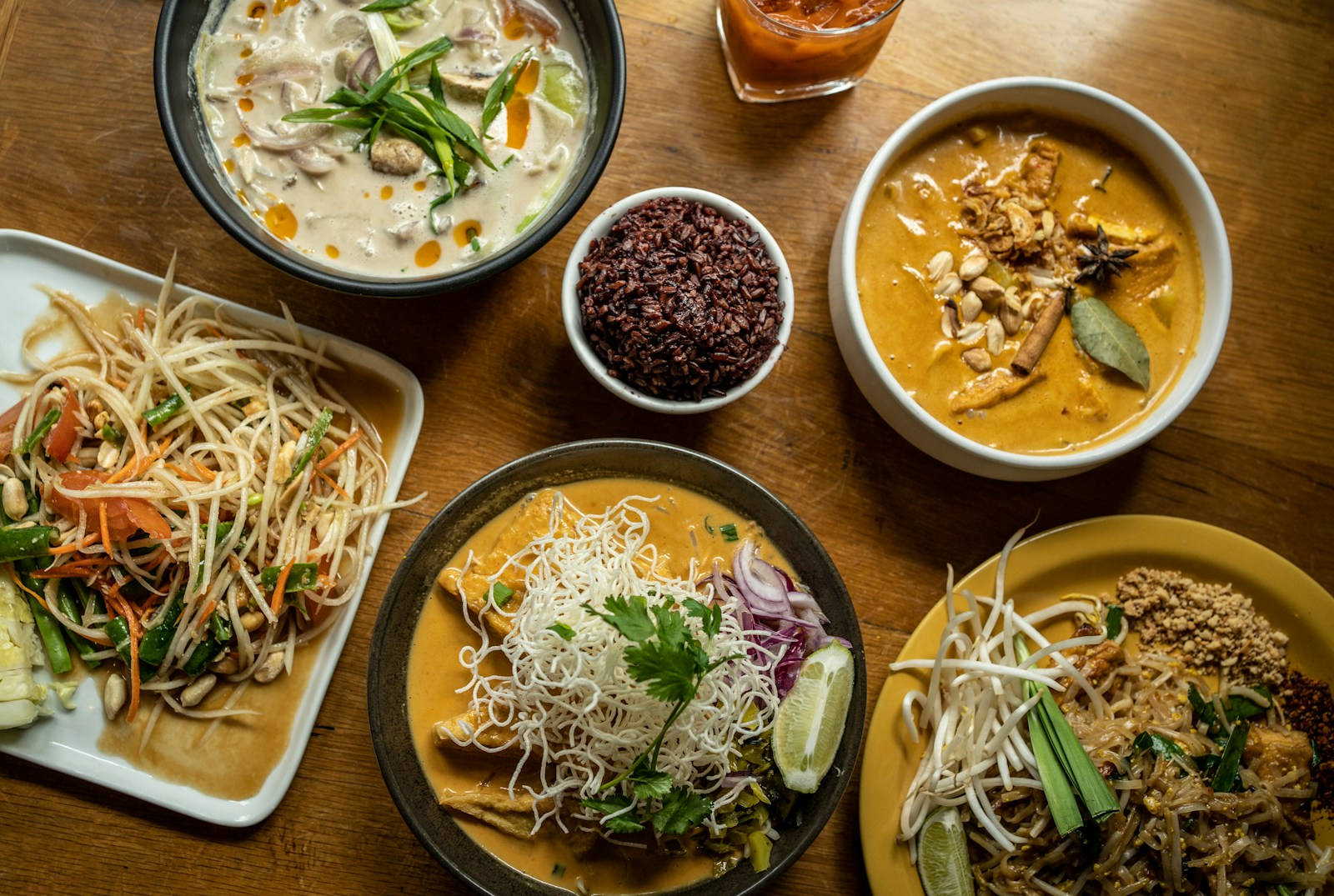
Thailand is one of those destinations where a family holiday can become several completely different trips rolled into one.
Start with this itinerary
Open this vegan Thailand route in Honge as your starting point, then shape the days, stays, and food priorities around how your family travels.
You can wake up in Bangkok to the sound of boats moving along the Chao Phraya River, spend the afternoon exploring glittering temple complexes and end the evening around a table covered with curries, noodles, mango sticky rice and dishes everyone keeps reaching across to share. A short flight north changes the scenery completely, bringing you to Chiang Mai's old city, mountain backdrop and northern Thai cooking. A few days later, another flight carries you south, where limestone cliffs rise directly from turquoise water and long-tail boats replace tuk-tuks as part of the daily scenery.
For vegan travellers, Thailand is equally exciting, but it requires a little more knowledge than the abundance of vegetables and coconut milk might initially suggest.
Thai cuisine uses an extraordinary variety of herbs, fruit, vegetables, rice, noodles, tofu and coconut products, which means plant-based meals can be excellent. At the same time, dishes that appear completely vegetarian may contain fish sauce, oyster sauce, shrimp paste, dried shrimp, egg or meat-based stock. A plate of vegetable fried rice isn't necessarily vegan simply because there is no visible meat on top.
The route is designed for families, but not in the sense that every activity is specifically aimed at children. Instead, the days are paced realistically. Temple visits aren't stacked one after another for six hours. There is time to return to the hotel when the afternoon heat becomes exhausting. Beach days actually contain enough time to enjoy the beach, and travel days aren't disguised as full sightseeing days.
The result is a trip that feels full without feeling relentless.
Quick Take
- Best For: Vegan and plant-based families, first-time Thailand visitors, food-loving travellers and families who want cities, temples and beaches within one trip.
- Duration: 9 days, with an overnight in Bangkok after returning from the south before flying home on Day 10.
- Route: Bangkok → Chiang Mai → Krabi/Ao Nang → Railay → Koh Lanta → Bangkok
- Food Focus: Thai vegan street food, plant-based curries, northern Thai cuisine, vegan khao soi, tropical fruit, coconut-based dishes and practical strategies for ordering vegan food.
- Culture: Bangkok's historic temples and river neighbourhoods followed by Chiang Mai's Old City and northern Thai traditions.
- Beach Time: Ao Nang, Railay, Phra Nang and Koh Lanta.
- Best For Children: Boat rides, cooking experiences, markets, beaches, tropical fruit, relaxed hotel afternoons and activities that don't require hours of continuous sightseeing.
- Transport: Domestic flights + taxis/transfers + local transport + long-tail boats + road/ferry transfer to Koh Lanta.
- Pace: Moderate. There are several travel days, but the itinerary deliberately avoids filling those days with ambitious sightseeing.
The 9-Day Vegan Thailand Route
| Day | Destination | Main Plan | Overnight |
|---|---|---|---|
| Day 1 | Bangkok | Arrive, settle in, neighbourhood exploring + first vegan Thai dinner | Bangkok |
| Day 2 | Bangkok | Major temples, river travel + vegan-friendly market/street-food experience | Bangkok |
| Day 3 | Bangkok → Chiang Mai | Fly north, Old City introduction + northern Thai vegan dinner | Chiang Mai |
| Day 4 | Chiang Mai | Old City temples, neighbourhoods + vegan khao soi | Chiang Mai |
| Day 5 | Chiang Mai | Market/cooking experience + flexible family afternoon | Chiang Mai |
| Day 6 | Chiang Mai → Krabi | Fly south, transfer to Ao Nang + easy beach evening | Ao Nang |
| Day 7 | Railay | Long-tail boat, Railay + Phra Nang Beach | Ao Nang |
| Day 8 | Krabi → Koh Lanta | Transfer south, check-in + relaxed island afternoon | Koh Lanta |
| Day 9 | Koh Lanta → Bangkok | Beach morning + lunch, transfer to Krabi Airport + evening flight | Bangkok |
The journey begins in Bangkok before moving north to Chiang Mai and south to Thailand's beautiful Andaman coast.

Why This Thailand Route Works for Nine Days
Nine days is enough to combine central, northern and southern Thailand, but only if you're selective.
A common mistake is treating a first Thailand holiday as an opportunity to collect destinations. Bangkok becomes two days, Chiang Mai becomes two days, then Phuket, Phi Phi, Krabi and two additional islands somehow need to fit into the remaining five.
Technically, you can move that quickly. Whether you'll enjoy doing it with a family is another question.
This itinerary uses Bangkok and Chiang Mai as the two main cultural and food destinations, then treats the Andaman coast differently. Rather than sleeping separately in Ao Nang and Railay, you'll use Ao Nang as the Krabi base and visit Railay by long-tail boat. That removes an unnecessary hotel change while still giving the family the dramatic limestone scenery and beaches that make Railay worthwhile.
Koh Lanta then becomes the only proper island stay. That distinction matters.
Instead of moving between three island hotels, you get the experience of arriving somewhere by road and ferry, settling beside the sea and allowing the final section of the trip to become noticeably easier.
Is Thailand Easy for Vegan Travellers?
Thailand can be excellent for vegan travellers, but easy depends heavily on where and how you're eating. Dedicated vegan and vegetarian restaurants are straightforward. The bigger challenge comes when eating at markets, small restaurants or street-food stalls where recipes aren't designed specifically for plant-based diners.
A dish containing tofu isn't automatically vegan. Vegetable noodles may still be fried with fish sauce or oyster sauce. Curry paste can contain shrimp paste. Soup that appears to contain only vegetables may have been prepared using meat stock. Fried rice commonly contains egg unless you ask for it without.
That shouldn't discourage you from eating outside dedicated vegan restaurants. It simply means communication matters.
Understanding “Je or Jay” Food in Thailand
One word you'll encounter repeatedly when researching vegan food in Thailand is:
เจ — Jay, Je
The Thai Jay food tradition is associated with religious dietary practices and excludes meat and animal products. It also traditionally avoids certain strong-smelling vegetables, including garlic and onion.
For vegan travellers, spotting the เจ symbol can therefore be extremely useful because jay restaurants and food stalls can provide a level of confidence that an ordinary dish labelled simply "vegetarian" may not.
However, don't assume that every restaurant understands the English word vegan in exactly the way you use it at home. Learning a few specific phrases and naming ingredients you don't eat can be much more effective.
We'll cover those properly later in the article, including phrases you can save as a screenshot on your phone.
Vegan Ingredients to Watch For
| Ingredient | Why It Matters | Where It May Appear |
|---|---|---|
| Fish sauce | Common seasoning in Thai cooking | Stir-fries, salads, noodles, sauces |
| Oyster sauce | Frequently used in stir-fried dishes | Vegetable and tofu stir-fries |
| Shrimp paste | Can be included in curry pastes | Curries, dips and sauces |
| Dried shrimp | Easy to overlook | Som tam and some salads |
| Egg | Common addition | Fried rice, pad Thai, noodles |
| Meat stock | May not be visually obvious | Soups and noodle dishes |
| Condensed/evaporated milk | Not vegan | Thai tea, coffee and desserts |
What About Vegan Street Food?
Street food should still be part of the trip. The solution isn't to tell vegan families to avoid markets and eat every meal in specialist cafés. That would remove one of the most enjoyable parts of travelling through Thailand. Instead, approach street food selectively.
Fresh fruit is an obvious starting point. Thailand's markets are filled with mango, pineapple, watermelon, dragon fruit, rambutan, mangosteen and other tropical fruits depending on the season.
Mango sticky rice can often be vegan because the classic combination is built around mango, glutinous rice and coconut milk, but recipes and toppings vary, so it's still worth checking.
Grilled corn, simple rice dishes and certain snacks may also work, while cooked-to-order stalls can sometimes prepare noodles or stir-fries without animal-derived sauces when the ingredients and communication allow it.
The more complicated the sauce or curry paste, the more questions you need to ask.
Best Time for This 9-Day Thailand Itinerary
Because the route combines Bangkok, Chiang Mai and Thailand's Andaman coast, weather deserves more attention than it would on a single-destination holiday.
For the route as written, roughly November through February generally offers the easiest overall combination. Bangkok and Chiang Mai tend to experience more comfortable conditions than during the hottest months, while the Andaman coast is typically in its more favourable beach season.
December and January are also popular, which means accommodation prices and visitor numbers can rise.
March and April bring much hotter conditions, particularly in Bangkok and Chiang Mai. Northern Thailand can also experience seasonal smoke and poor air quality during the burning season, so families planning Chiang Mai travel during this period should check current conditions carefully.
The Andaman coast experiences a wetter monsoon period during part of the year, and boat operations can be affected by sea conditions.
For an itinerary involving children, temples, outdoor markets and multiple beach days, weather can influence the experience significantly.
Bangkok – Temples & River Boats
Bangkok is an exciting place to begin this trip because it introduces almost everything that makes Thailand memorable at once.
Day 1 is about arriving, eating well and getting everyone comfortable. Day 2 takes you into historic Bangkok for the major temples and river experience, but even then the itinerary leaves space for a proper lunch and an easier afternoon.
For vegan travellers, these first two days also provide a useful introduction to eating in Thailand. You'll begin recognising which dishes need questions, which ingredients require particular attention and why a simple phrase such as "no meat" doesn't necessarily make a Thai dish vegan.
By the time you leave for Chiang Mai, ordering food should already feel considerably easier.
Where to Stay in Bangkok with a Family
For this itinerary, prioritise easy transport, nearby food and a comfortable hotel over staying in the most atmospheric neighbourhood possible.
Bangkok is enormous. Choosing accommodation that requires an hour of difficult transport every time you want to return for a rest can make the city considerably more tiring, especially with younger children.
Areas around Sukhumvit can work well because of their access to the BTS Skytrain, broad choice of accommodation and enormous number of restaurants. Staying near a BTS station is more important than choosing one particular Sukhumvit neighbourhood.
Another possibility is the riverside, particularly if the budget allows for a hotel with good facilities and convenient boat access. The river creates a very different Bangkok experience and can be particularly enjoyable for families because boat journeys become part of the sightseeing.
If your main priority is the historic centre, staying closer to Rattanakosin, where the Grand Palace and Wat Pho are located, reduces travel time on your main sightseeing day. The trade-off is that BTS access is less convenient than in Bangkok's modern commercial districts.
Whichever area you choose, a swimming pool is worth considering.
Day 1 – Arrive in Bangkok, Settle In & Start Eating
Base: Bangkok
Pacing: Very easy arrival day
If your flight arrives early, immigration, baggage collection, the journey into Bangkok and hotel check-in can consume a substantial part of the day. Add jet lag and tropical heat, and an ambitious sightseeing plan becomes unnecessary pressure.
Check in first. Let everyone shower and change. If the hotel has a pool, use it and chill through.
The first afternoon can be spent exploring the neighbourhood around your accommodation, finding fresh fruit or a café and allow children some time to adjust to the noise, traffic and temperature.
Your First Vegan Meal in Thailand
For the first proper meal, I'd choose a dedicated vegan or jay restaurant rather than immediately testing everyone's Thai vocabulary at a busy street-food stall.
A specialist restaurant gives the family an opportunity to taste several Thai dishes while knowing that the kitchen understands plant-based requirements. More importantly, it helps you learn what the dishes are supposed to taste like before you begin looking for vegan adaptations elsewhere.
A vegetable curry, tofu stir-fry, rice, a noodle dish and something fresh or spicy on the side gives everyone the opportunity to taste several flavours without committing to an unfamiliar full portion.
If children aren't used to chilli, ask for food “mai phet” - (Not spicy) or explain that the dish is for a child.
A Useful Thai Phrase: “Mai Phet”
ไม่เผ็ด — mai phet — not spicy
This may become one of the most frequently used phrases of the entire family trip.
Thai cuisine doesn't need to be intensely spicy, and many dishes can be prepared more mildly. However, some sauces and curry pastes are prepared in advance, meaning the heat level can't always simply be removed at the end.
For children or adults with a low tolerance for chilli, ask before ordering rather than waiting until the dish arrives.
Bangkok Street Food as a Vegan Family
The easiest choices are foods where the ingredients are visible and relatively simple. Freshly cut tropical fruit, grilled corn and certain coconut or rice-based sweets can be easier to assess than a curry containing a paste prepared elsewhere.
Cooked-to-order stalls can sometimes be excellent because you can watch the ingredients being added and request changes. A vegetable stir-fry or noodle dish may be adaptable if the cook can omit egg and animal-derived sauces.
The challenge is that fish sauce and oyster sauce are basic seasonings in many Thai kitchens. They may be added automatically in the same way another cook might reach for salt.
Can Vegans Eat Pad Thai in Thailand?
Yes, but don't assume a standard pad Thai is vegan. Traditional versions commonly contain egg and fish sauce, while dried shrimp or other seafood-derived ingredients may also be used depending on the recipe.
At a vegan restaurant, the problem disappears. At a cooked-to-order stall or ordinary restaurant, you'll need to ask whether the dish can be prepared without egg, fish sauce, oyster sauce and shrimp.
A properly adapted vegan pad Thai can still contain the elements that make the dish enjoyable: rice noodles, tamarind, tofu, bean sprouts, peanuts, lime and the characteristic balance between sour, sweet and savoury flavours.
What About Som Tam?
Som tam, Thailand's famous green papaya salad, looks like it should be one of the easiest vegan street foods. Shredded green papaya, tomato, beans, chilli, lime and peanuts certainly sound plant-based. Traditional versions, however, commonly contain fish sauce and dried shrimp, while regional variations may introduce other non-vegan ingredients.
The advantage is that som tam is often prepared to order using a mortar and pestle. When communication is clear, a vegan version can sometimes be made without those ingredients.
It can also be extremely spicy. If you're ordering for children or spice-sensitive adults, communicate both requirements: vegan and mild.
Mango Sticky Rice: The Family Crowd-Pleaser
If there's one Thai dish likely to require very little persuasion from children, it's khao niao mamuang—mango sticky rice.
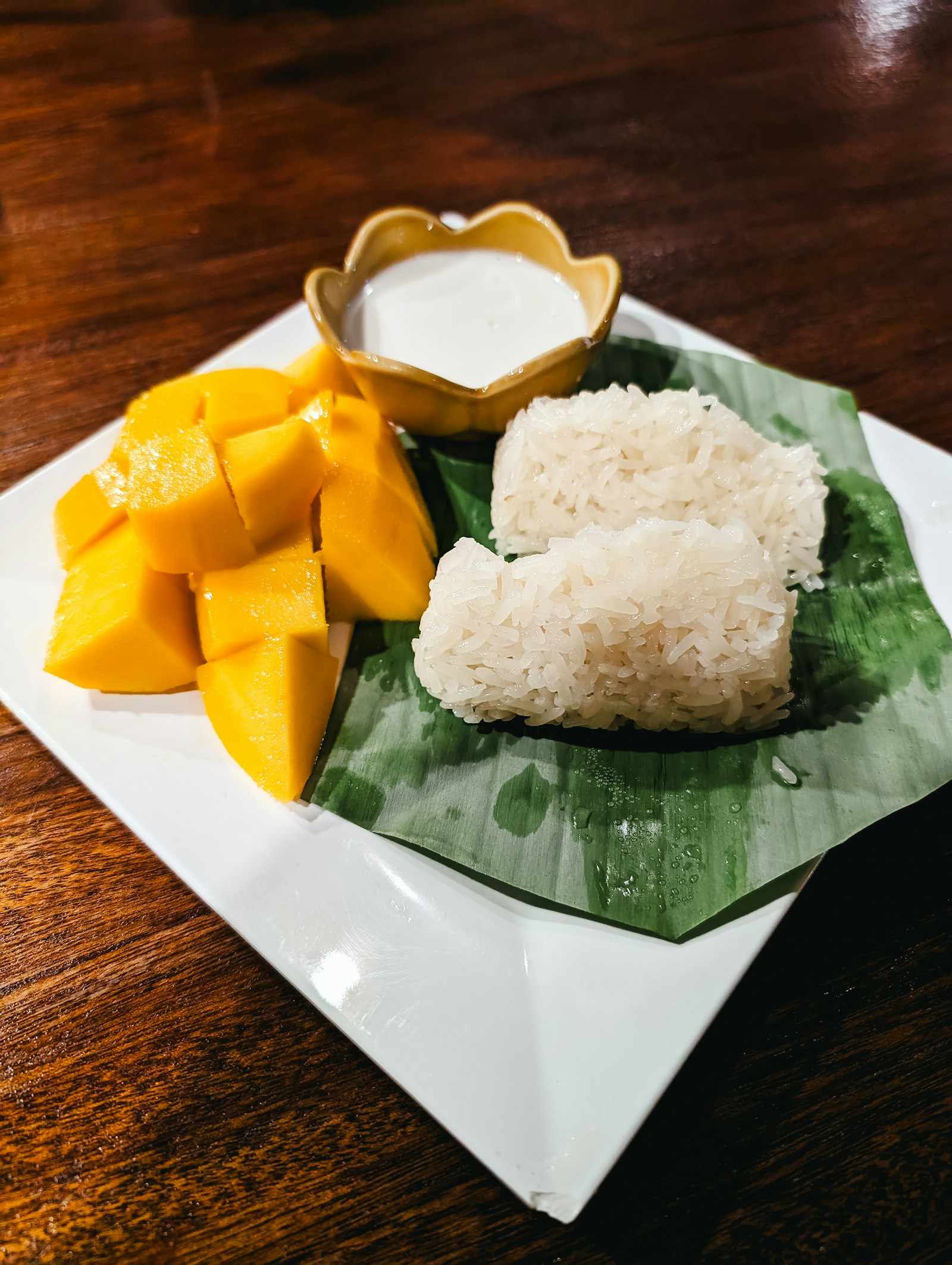
Ripe mango is served alongside sweet glutinous rice enriched with coconut milk, producing something that sits somewhere between a snack and dessert. Many versions are plant-based, but don't treat that as an absolute rule. Recipes and toppings can vary, so confirm when you're unsure.
When mangoes are in season, you'll see the combination repeatedly at markets and dessert stalls. You may also discover that the children who claimed not to be hungry five minutes earlier are suddenly capable of eating an entire portion.
Plan accordingly.
A Relaxed First Evening
Have dinner, walk around the immediate neighbourhood and perhaps stop for fruit or dessert before returning to the hotel. If everyone still has energy, Bangkok's evening atmosphere can be fascinating simply to observe. Street stalls become busier, commuters fill transport stations and restaurants that seemed quiet during the afternoon suddenly come alive.
But tomorrow is your major sightseeing day.
Day 2 – The Grand Palace, Wat Pho & Bangkok by River
Base: Bangkok
Pacing: Active morning, long lunch and flexible afternoon
Start early today. Bangkok's historic centre contains some of Thailand's most important and visually impressive sights, but the combination of crowds and midday heat can become tiring quickly.
Morning – The Grand Palace & Wat Phra Kaew
Begin with the Grand Palace, the historic royal complex established when Bangkok became the capital in 1782.
Within the grounds you'll find Wat Phra Kaew, the Temple of the Emerald Buddha, one of Thailand's most sacred Buddhist sites. The temple's Emerald Buddha image has enormous religious and cultural significance, and the complex surrounding it is filled with elaborate roofs, gilded surfaces, murals and architectural details.
For children, the visual scale of the place can be much more engaging than a conventional museum. There are guardian figures, glittering mosaics, enormous structures and enough colour to keep the experience interesting even when they don't understand every historical detail.
Temple Etiquette
Dress respectfully, follow posted clothing requirements and remove shoes where instructed.
Adults should also remind children not to climb on religious structures, shout inside worship areas or treat Buddha images as props for funny photographs. You don't need to make children anxious about visiting a temple.
Continue to Wat Pho
From the Grand Palace area, continue towards Wat Pho, famous for its enormous Reclining Buddha. The gilded figure stretches approximately 46 metres in length and is one of those sights whose scale photographs don't communicate particularly well.
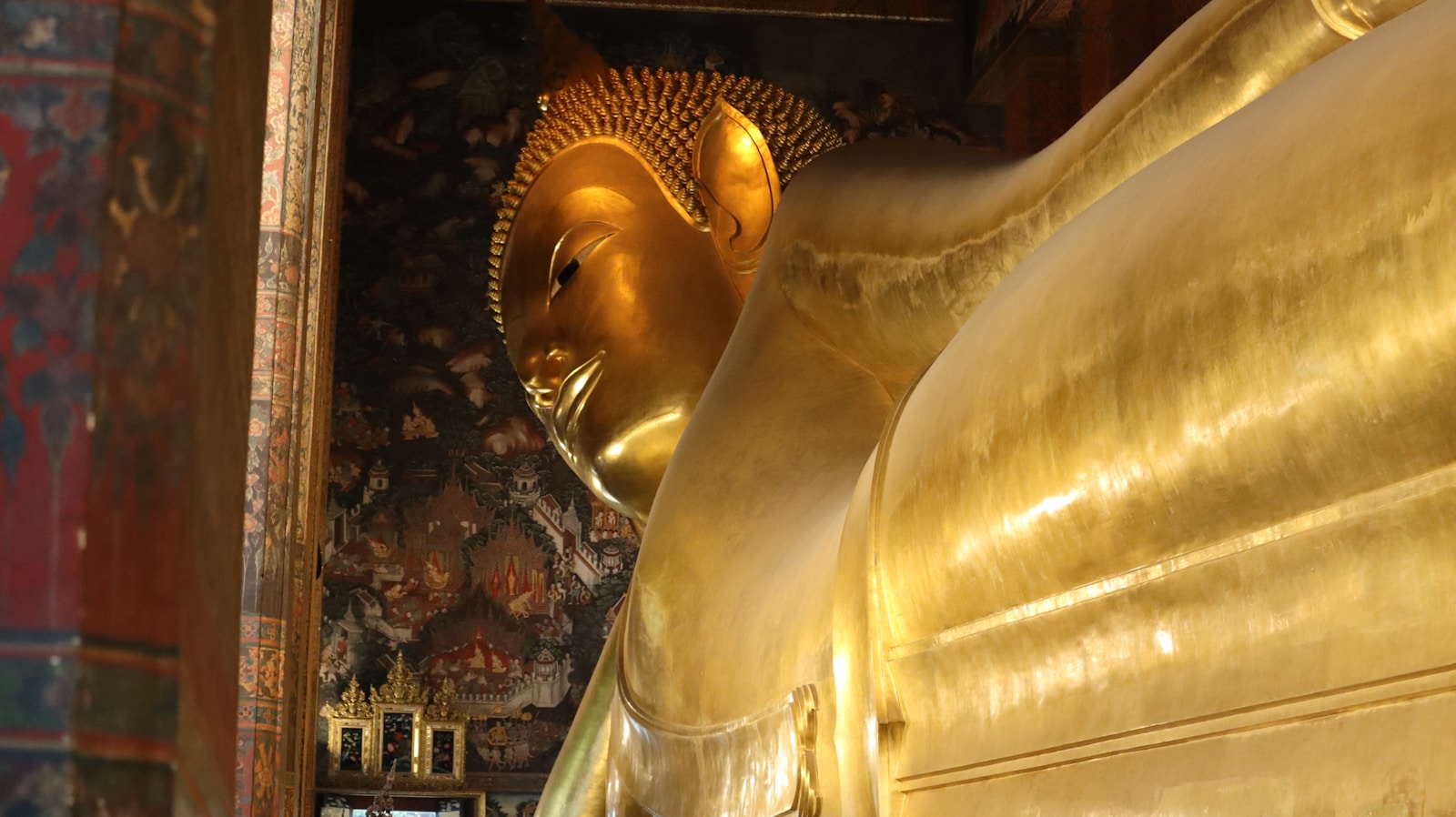
The wider temple complex contains stupas, courtyards and beautifully decorated structures, and the site is closely associated with the history of traditional Thai massage and education. After the visual intensity of the Grand Palace, Wat Pho can feel slightly easier to explore at your own pace.
If children are beginning to lose interest, don't insist on inspecting every corner. The river is next, and boats usually restore enthusiasm surprisingly quickly.
Use the Chao Phraya River as Transport
One of the best ways to experience Bangkok is from the Chao Phraya River. Instead of treating the river as another attraction requiring a separate cruise, use public or tourist boat services as part of the day's transport when they suit your route.
From the water, Bangkok reveals a different side of itself. Temple roofs rise above the riverbanks, modern towers appear behind older neighbourhoods, ferries cross between piers and long-tail boats move rapidly across the water.
For children, the boat journey provides a welcome change after a morning spent walking around temple complexes. For adults, it's simply one of the nicest ways to see Bangkok.
Should You Visit Wat Arun?
If everyone still has energy, Wat Arun, the Temple of Dawn, makes a logical next stop. Located on the opposite bank of the Chao Phraya, its central prang rises dramatically above the river and is decorated with intricate ceramic and porcelain details.
A short cross-river ferry makes getting there part of the fun. However, this is where family pacing matters. If you've already spent several hours at the Grand Palace and Wat Pho and everybody is hungry, go to lunch first.
By lunchtime, you're ready to move beyond the safety of last night's specialist vegan restaurant. Choose somewhere with cooked-to-order dishes and use the meal to practise communicating what you eat. One useful approach is to explain that you eat jay:
กินเจ — gin jay
However, jay food has a specific religious and culinary meaning in Thailand and traditionally excludes some pungent ingredients such as garlic and onion as well as animal products.
If what you specifically want is a vegan adaptation of an ordinary Thai dish, clearly naming the ingredients you don't eat can prevent misunderstandings.
For example, you'll often want to communicate:
- No fish sauce.
- No oyster sauce.
- No shrimp paste.
- No egg.
- No milk.
What Should You Order?
Look for dishes that can realistically be adapted rather than asking a cook to reconstruct something whose flavour depends entirely on a meat broth or pre-made seafood-containing paste.
A tofu and vegetable stir-fry with rice can be an excellent simple option when prepared without oyster or fish sauce. Pad kra pao, a basil stir-fry usually made with meat, can sometimes be prepared using tofu or mushrooms instead. Again, the sauce needs attention, and you'll want to request no fish or oyster sauce and no fried egg.
A vegetable pad see ew may also be adaptable, although sauces need to be checked. For children, simple tofu, vegetables and rice can be much easier than insisting that every meal be adventurous.
Afternoon
After lunch, if everyone still feels good and you skipped Wat Arun earlier, visit it now. If the heat has become oppressive, return to the hotel for a few hours and use the pool.
Another option is to explore a market or neighbourhood later in the afternoon when temperatures begin to ease. This is also a good opportunity to introduce children to Bangkok's extraordinary fruit selection.
Depending on season and availability, you might encounter mangosteen, rambutan, longan, dragon fruit, rose apple, pomelo, pineapple and several varieties of mango. Durian will inevitably attract attention too.
Evening
Tonight is a good opportunity to experience a Bangkok evening market or food-focused neighbourhood, but vegan families should approach it differently from travellers who can eat anything being cooked. The goal is to experience Bangkok's food culture confidently—not recklessly.
Don't Leave Bangkok Without Trying
Before flying north, try a proper vegan pad Thai or pad kra pao, mango sticky rice, tropical fruit and at least one Thai curry prepared by a kitchen that can confirm the curry paste and sauces are plant-based.
Thai curries deserve particular attention because coconut milk doesn't automatically make them vegan. Traditional curry pastes may contain shrimp paste, while the finished curry can include fish sauce.
Cultural Insight
When visiting Buddhist temples, you'll often see Thai visitors making offerings, lighting incense or sitting quietly before Buddha images.
Give worshippers space and avoid positioning yourself between someone praying and the Buddha image merely to take a photograph.
Another useful custom to remember is that feet are traditionally considered the lowest and least respectful part of the body. Avoid pointing the soles of your feet towards Buddha images or people when sitting inside temple buildings.
Getting Around Bangkok
Bangkok has several transport systems, and you'll probably use a combination rather than relying on one. The BTS Skytrain is extremely useful in modern Bangkok, particularly around Sukhumvit, Siam and Silom. The MRT underground/metro network extends access to many other areas, while river boats are particularly useful and enjoyable around historic Bangkok.
Metered taxis and ride-hailing services can make sense for families when the alternative involves several changes, although Bangkok traffic can dramatically increase journey times.
Tuk-tuks are fun to experience once, but don't assume they're automatically the cheapest or most practical transport option simply because they're iconic.
Chiang Mai – Old City Temples, Vegan Khao Soi & Northern Thai Flavours
Bangkok introduces you to Thai food. Chiang Mai gives you the time to understand it. The change becomes noticeable almost as soon as you arrive. Bangkok's enormous roads, skyscrapers and river traffic give way to a smaller northern city surrounded by mountains, with the historic centre contained within an old moat. Temples appear between cafés and family-run restaurants, markets become easier to explore without covering huge distances, and the entire city feels more manageable after two energetic days in the capital.
For a vegan family, Chiang Mai is particularly rewarding. The city has a well-established vegetarian and plant-based food scene, but the real reason to spend three nights here isn't simply the number of vegan restaurants. Northern Thai cuisine introduces flavours and dishes that are different from those you've encountered in Bangkok, while markets and cooking experiences make it easier to understand the ingredients behind them.
This is also where you'll meet one of the most memorable dishes of the trip: khao soi, the rich northern noodle curry closely associated with Chiang Mai.
Traditionally, it isn't vegan. Fortunately, Chiang Mai is one of the best places to discover how good a thoughtfully prepared plant-based version can be.
Where to Stay in Chiang Mai with a Family
For a first visit, Chiang Mai Old City is the easiest base. The historic centre sits within a roughly square moat, and staying inside or close to it places temples, restaurants, cafés and markets within relatively easy reach. You can walk more than you could in Bangkok, although the midday heat still makes taxis and local transport useful.
The areas around the east side of the Old City and Tha Phae Gate are particularly convenient if you want restaurants and evening activity nearby. Families looking for something quieter can stay around the northern or western portions of the Old City, while Nimmanhaemin, usually shortened to Nimman, offers a more contemporary neighbourhood filled with cafés, restaurants and modern accommodation.
For this particular itinerary, however, I'd choose the Old City or immediately outside its eastern edge. You're only here for three nights, and being able to walk to dinner or reach the temples quickly is more useful than staying farther away for a slightly trendier neighbourhood. A pool is once again worth having. Chiang Mai may feel calmer than Bangkok, but afternoon temperatures can still drain everyone's enthusiasm remarkably quickly.
Day 3 – Fly to Chiang Mai, Explore the Old City & Find Your First Vegan Khao Soi
Base: Chiang Mai Old City
Pacing: Easy travel day with afternoon exploring
Take a morning flight from Bangkok to Chiang Mai if practical.
Once you've reached the hotel, leave the luggage, have lunch and allow everyone to settle before beginning your introduction to the city. Unlike Bangkok, Chiang Mai's Old City lends itself beautifully to wandering.
Walk through the quieter streets through the afternoon, stop when you see an interesting temple and give children some time to notice the differences between Bangkok and northern Thailand rather than immediately beginning another formal sightseeing tour.
One temple is enough for your first afternoon, and Wat Chedi Luang is a particularly good choice. The temple complex is dominated by the remains of an enormous historic chedi whose partially ruined form gives it a very different appearance from the glittering temple buildings you saw in Bangkok.
Construction of the chedi began centuries ago, and although earthquakes and later changes damaged the structure, its scale remains impressive. Children who have already seen several immaculate golden temples may actually find this one more interesting because its age is visually obvious. The brick structure feels monumental without requiring a long explanation.
Spend some time exploring the wider complex, but don't rush from building to building trying to identify every architectural feature. Chiang Mai has hundreds of temples.
Your First Northern Thai Dinner – Vegan Khao Soi
Tonight, seek out vegan khao soi. If there's one dish that should anchor the Chiang Mai portion of this Vegan Thailand Itinerary, this is it.
Khao soi is a northern Thai noodle dish usually built around a rich curry-like broth, soft noodles and crispy noodles piled on top. It is commonly served with accompaniments such as lime, pickled mustard greens and shallots, allowing you to adjust the balance of sourness and texture as you eat.
Traditional versions usually contain meat, and the broth or curry paste may contain animal-derived ingredients.
At a dedicated vegan restaurant, those ingredients can be replaced without reducing the dish to noodles floating in coconut milk. Mushrooms, tofu, vegetables, plant-based curry pastes and carefully developed broths can produce a deeply flavoured vegan version that still gives you the contrast between creamy curry, noodles, crunchy topping, acidity and spice that makes khao soi so satisfying.
If everyone still has energy, take an easy walk through the Old City after dinner. Depending on the day of the week, you may encounter one of Chiang Mai's major walking-street markets. These can be enjoyable places to browse handicrafts, snacks and local products, but they can also become extremely busy.
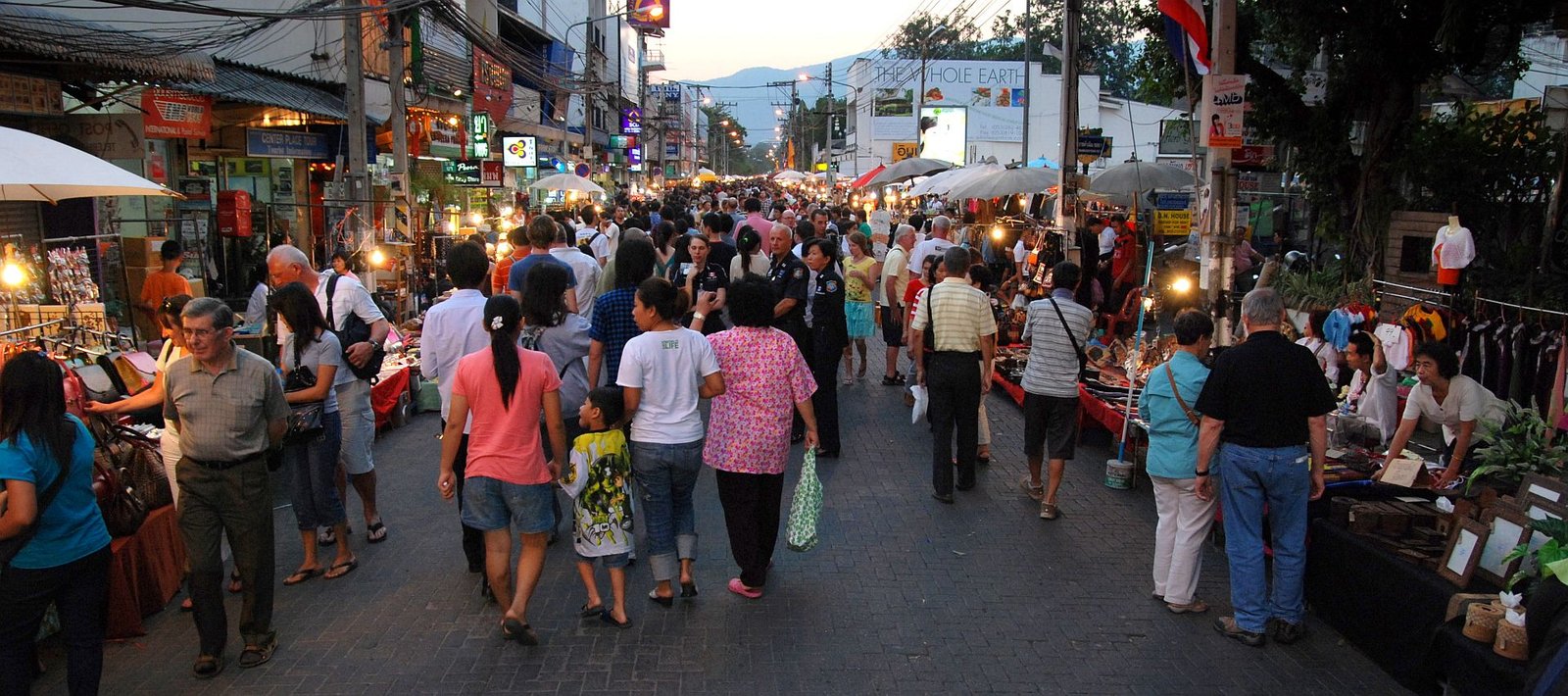

Don't make a night market mandatory after a travel day. If the children are tired, buy some fruit or dessert and go back to the hotel.
Day 4 – Wat Phra Singh, Doi Suthep & Northern Thai Food
Base: Chiang Mai
Pacing: Cultural morning, mountain temple later in the day
Today gives you a fuller look at Chiang Mai's religious and cultural landscape, but it still shouldn't become a race through temples. Start after breakfast with Wat Phra Singh, one of the Old City's most important temple complexes.
Its architecture provides a good introduction to the religious traditions of northern Thailand, and the complex is active rather than functioning simply as a historic monument. That distinction matters when visiting with children. Monks and local worshippers may be moving through the grounds, people may be making offerings, and religious ceremonies can take place regardless of your sightseeing plans. Move respectfully and give people space.
Spend enough time here to appreciate the complex, but don't follow it immediately with four more temples simply because they're within walking distance.
After Wat Phra Singh, walk through the Old City instead. Stop for coffee or fresh juice or browse a small shop.
Lunch – Beyond Vegan Pad Thai
By now, you've probably established that vegan pad Thai is easy enough to find. Chiang Mai is the place to move beyond it.
Look for a vegan or vegetarian restaurant serving northern Thai dishes, and order several things for the table.
Return to the hotel after lunch if the day is hot. The next stop involves travelling uphill into the mountains west of Chiang Mai, and everyone will enjoy it considerably more after an hour beside the pool or in an air-conditioned room.
For families with younger children, this break can be particularly valuable because Doi Suthep involves steps, walking and another temple environment.
Late Afternoon – Wat Phra That Doi Suthep
High above Chiang Mai on Doi Suthep mountain stands Wat Phra That Doi Suthep, one of northern Thailand's best-known Buddhist temples.
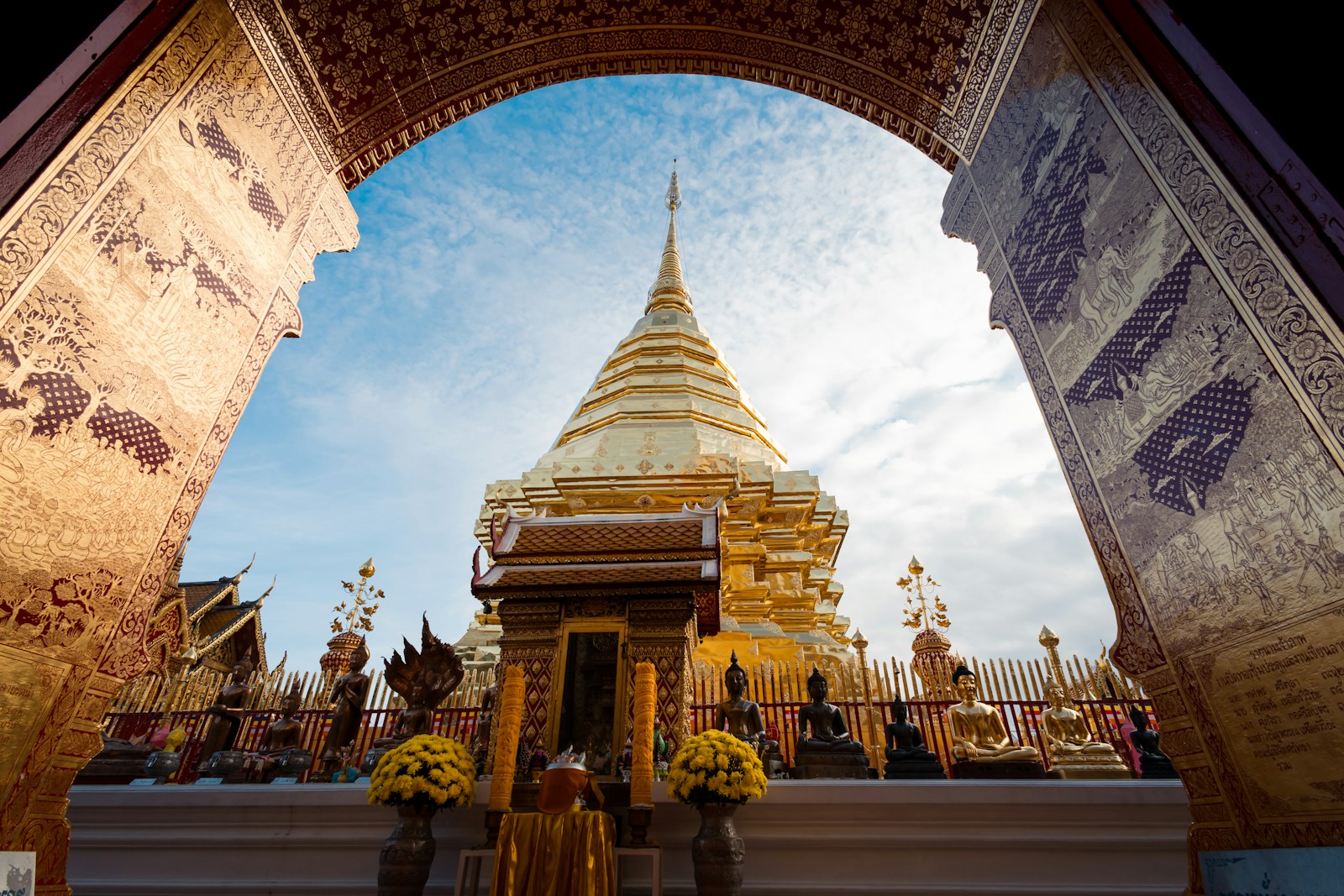
The journey up the mountain is part of the experience. As you leave the city behind, roads climb through greener surroundings and temperatures can begin to feel slightly different from those below.
On arrival, the famous staircase leads towards the temple complex. If the stairs aren't suitable for someone in the family, check the available funicular arrangements rather than assuming everyone needs to climb. At the top, the atmosphere changes again.
The temple's golden chedi forms the spiritual heart of the complex, while viewpoints can offer broad perspectives across Chiang Mai when weather and visibility cooperate. Try to visit with enough time that you aren't rushing through the site before closing or darkness.
Cultural Insight – Why Doi Suthep Matters
The Chiang Mai significance is much deeper for the residents. The temple has long held an important place in the religious identity of the city and surrounding region. Visiting it after spending time in the Old City also helps you understand how Chiang Mai sits geographically: an urban centre bordered by mountains and forest.
Dinner
After Doi Suthep, don't make dinner complicated. Return towards the Old City and choose somewhere reliable.
This might be another dedicated vegan restaurant, a vegetarian place with clearly marked vegan dishes or a Thai restaurant where the staff can confidently adapt food.
Day 5 – Market Visit, Vegan Cooking Class & Flexible Afternoon
Base: Chiang Mai
Pacing: Hands-on morning, completely flexible afternoon
Day 5 is deliberately different from the previous sightseeing days. Instead of looking at another major landmark, spend the morning learning about Thai food.
A vegan-friendly Thai cooking class can be one of the best family activities of the entire itinerary, particularly if the children are old enough to participate comfortably. Many cooking experiences begin with a market visit, where an instructor introduces herbs, vegetables, noodles, curry ingredients and tropical produce before everyone begins cooking.
For vegan travellers, choose the class carefully. Don't simply book a standard cooking class and write "vegan" in the comments box five minutes before arriving. Confirm beforehand that the school can provide a fully plant-based cooking experience, including vegan curry pastes, sauces and stocks.
Start at a Local Market
A guided market visit is especially useful after several days of eating Thai food because suddenly ingredients you've encountered on the plate begin appearing in their original form.
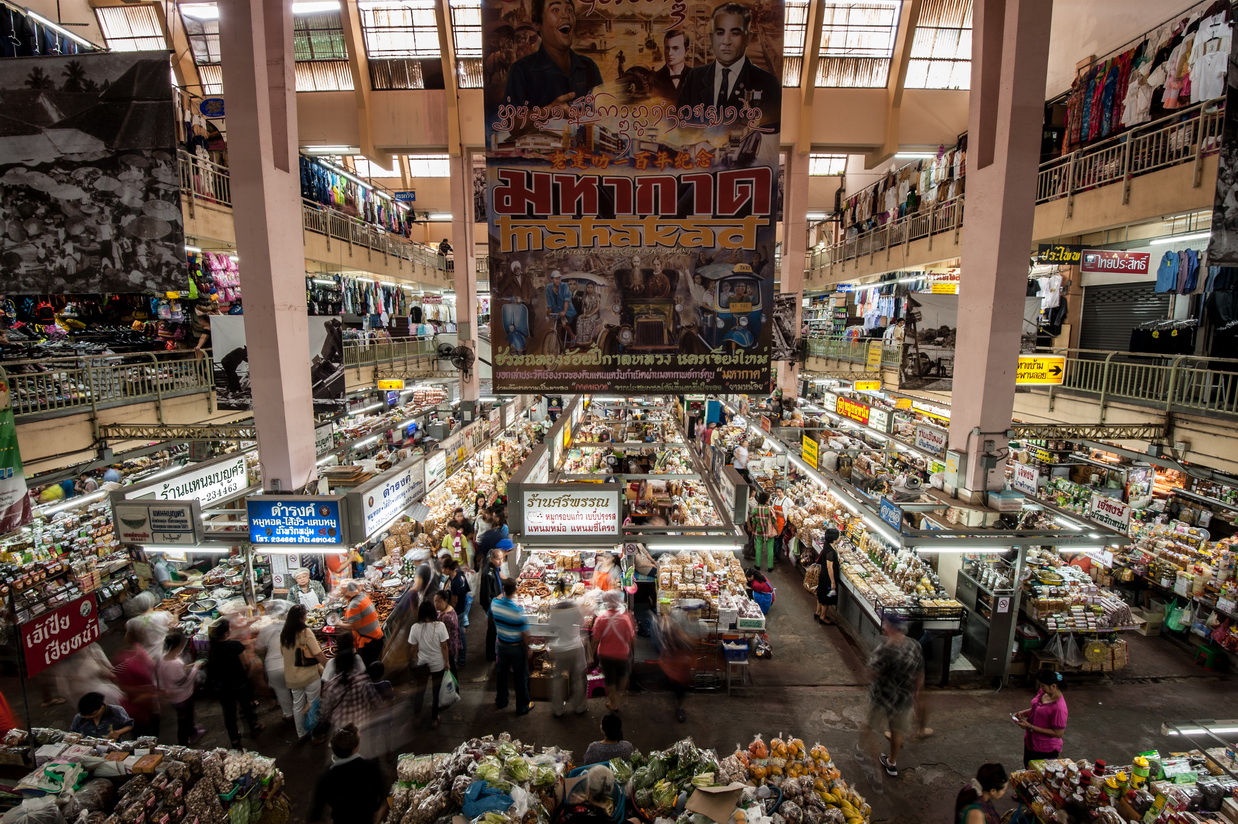

You'll likely see bundles of fresh herbs, different varieties of eggplant, chillies, mushrooms, limes, lemongrass, galangal and other ingredients used throughout Thai cooking.
What Should You Learn to Cook?
If the class allows you to select dishes, choose recipes you'll realistically want to make again at home. A vegan curry is particularly useful because learning to make the curry paste teaches you why checking curry ingredients matters so much when eating elsewhere in Thailand.
A tofu stir-fry or noodle dish can demonstrate how fish sauce and oyster sauce are replaced while maintaining savoury flavour. And if vegan khao soi is offered, choose it. You've eaten the finished dish and now you get to see how its layers of flavour are constructed.
Cooking also helps children understand that Thai food isn't simply synonymous with chilli. Sweetness, saltiness, acidity, aromatics, texture and richness all play roles, and heat can often be adjusted.
Why a Cooking Class Works So Well for Families
Museums ask children to look. Cooking asks them to do something. They're chopping, mixing, smelling, tasting and eventually eating something they've made themselves. Even children who are cautious eaters may become more interested in unfamiliar food when they've been involved in preparing it.
Afternoon
After the cooking experience, leave the afternoon open. Go back to the hotel pool or visit a cafe and just relax through the old city.
Optional Afternoon – Explore Nimman
If everyone wants to go somewhere, head towards Nimmanhaemin, west of the Old City.
Nimman shows you a much more contemporary side of Chiang Mai, with modern cafés, shops, restaurants and creative businesses concentrated around the neighbourhood.
For vegan travellers, it can also be useful simply because you'll find contemporary cafés and plant-based food options alongside Thai restaurants.
Walk around, have coffee, find dessert and enjoy seeing a side of Chiang Mai that looks completely different from this morning's market or yesterday's mountain temple.
Final Chiang Mai Dinner
Tonight is the meal to revisit whatever you've enjoyed most. If somebody discovered a particular northern curry during the cooking class, look for a vegan version.
If the children have reached the point where they desperately want plain rice and tofu, order that too. Tomorrow, the cuisine and scenery shift again. You're flying south towards the Andaman coast.
What Vegan Travellers Should Know About Northern Thai Food
Northern Thai cuisine contains several dishes that may appear vegetable-heavy while still relying on animal-derived ingredients.
Chiang Mai's advantage is that vegan dining is established enough that you don't need to spend the entire trip requesting complicated modifications.
Use dedicated vegan restaurants for some meals and the carefully selected ordinary restaurants for others.
Family Note: Chiang Mai is where I'd deliberately include the cooking class rather than another full-day excursion. It creates a break from sightseeing while still giving the family a meaningful cultural experience. It also allows children to participate rather than simply follow adults around another attraction.
What About an Elephant Experience?
Chiang Mai is heavily associated with elephant tourism, and families researching the city will encounter countless tours.
If seeing elephants is important to your family, research the welfare practices of any facility very carefully rather than choosing based on photographs or marketing language. Avoid experiences centred on riding elephants, forced performances or close-contact activities designed primarily for tourist photographs.
Because you only have three nights in Chiang Mai, adding an elephant experience also means removing something else rather than simply squeezing another half-day into the itinerary.
For this food-and-culture-focused trip, I'd keep the market and cooking experience.
Krabi & Railay – Limestone Cliffs, Long-Tail Boats & Vegan Beach Days
After five days of markets, temples, city streets and some very serious eating, southern Thailand arrives at exactly the right moment. The change from Chiang Mai to Krabi is dramatic. Northern mountains give way to the warm Andaman coast, limestone formations rise almost vertically from the landscape, and the itinerary suddenly requires considerably fewer decisions about which temple to visit next.
For Days 6 and 7, Ao Nang provides the practical base. It has a broad range of family accommodation, restaurants, shops and transport services, while long-tail boats make it easy to reach the spectacular Railay peninsula without packing another suitcase. You'll spend the first afternoon settling into the coast, then give Railay most of Day 7 rather than attempting to combine it with several additional islands.
Day 6 – Fly from Chiang Mai to Krabi & Settle Into Ao Nang
Base: Ao Nang, Krabi
Pacing: Travel morning followed by a very easy afternoon
Take a morning flight from Chiang Mai to Krabi International Airport when schedules allow. Flight availability can vary by date and season, so check the current options when booking rather than building the itinerary around a particular departure months in advance. If a convenient nonstop flight is operating, it avoids the unnecessary backtracking of connecting through Bangkok.
Once you've landed in Krabi, continue by taxi, private transfer or other suitable airport transport towards Ao Nang. As you approach the coast, the limestone formations that define much of Krabi's landscape begin appearing around you. These enormous karst cliffs give the region a visual identity unlike anything you've seen during the first five days.
Where to Stay in Ao Nang with a Family
Choose accommodation within reasonably easy reach of Ao Nang Beach, but don't assume you need to be directly on the busiest section of the beachfront. A slightly quieter hotel within walking distance—or a short local ride—can provide a better balance for families who want access to restaurants without hearing the busiest parts of town late into the evening.
If you're travelling with younger children, also check whether the hotel is located on a steep road. A property described as "only ten minutes from the beach" can feel considerably farther away when the final section involves pushing a stroller uphill in tropical heat.
For this short stay, prioritise location and ease over finding the most secluded resort. Koh Lanta will provide the slower island atmosphere later.
Afternoon
Once you've checked in, do very little. Change into swimwear and head towards the beach or hotel pool. Ao Nang Beach is useful for an arrival afternoon because it doesn't require another journey. You can walk along the shore, watch long-tail boats moving across the water and get your first proper look at the limestone scenery surrounding the coast.
By now, you should feel more confident reading menus and asking questions, but don't become complacent simply because you're beside the sea.
In fact, southern Thai cooking can make communication especially important because seafood ingredients and fish-based seasonings are common.
Curries deserve particular attention. Coconut milk may make a curry look immediately vegan-friendly, but the curry paste can contain shrimp paste, while fish sauce may be added during cooking.
For the first Ao Nang lunch, keep things easy. A clearly vegan tofu-and-vegetable dish with rice, noodles prepared without egg and animal-derived sauces, or a meal at a plant-based restaurant gives everyone a comfortable introduction to southern Thailand.
Beach days are an ideal time to lean into Thailand's fruit. Cold watermelon, pineapple and mango are particularly welcome in the heat, while coconut water provides an easy drink between meals.
Depending on the season, you may also find mangosteen, rambutan, longan and other fruit you've already encountered in Bangkok or Chiang Mai.
As the strongest heat begins to ease, walk along the beachfront. This is when Ao Nang becomes particularly enjoyable. Long-tail boats move in and out, the limestone cliffs become softer in the evening light, and restaurants gradually begin filling as people return from day trips.
After several days of temples and scheduled activities, an evening without an attraction is exactly what the itinerary needs.
Dinner
For dinner, find somewhere where the staff can clearly communicate which dishes are vegan or choose a dedicated plant-based restaurant if you'd rather remove the uncertainty. This is a good evening for tofu with cashews and vegetables, a vegan curry prepared with plant-based paste, rice and perhaps another som tam made without fish sauce and dried shrimp.
If the children have become fond of pad Thai, order a vegan version for the table.
Day 7 – Long-Tail Boat to Railay & Phra Nang Beach
Base: Ao Nang
Pacing: Full beach day with light exploring
Today is one of the easiest days of the itinerary to get excited about. You're getting into a long-tail boat and heading for Railay.
Although Railay is attached to mainland Thailand, dramatic limestone cliffs cut it off from the surrounding road network. As a result, boats provide the practical way in and out, giving the peninsula the atmosphere of an island despite technically not being one.
Morning
Head towards the appropriate boat departure point after breakfast and arrange your trip according to the day's operating conditions. Long-tail boats commonly connect the Ao Nang area with Railay, but departure points, operating arrangements and sea conditions can change, particularly with weather and seasonal conditions.
Don't treat an online timetable as an absolute promise. Ask locally the evening before or that morning.
If you're travelling with small children, keep everyone's sandals or water shoes accessible because boarding long-tail boats can sometimes involve stepping through shallow water rather than walking neatly along a conventional pier. Pack lightly.
For a Railay day, you mainly need swimwear, towels, sunscreen, hats, drinking water, phones/cameras and whatever essentials the children require.
Arriving at Railay West
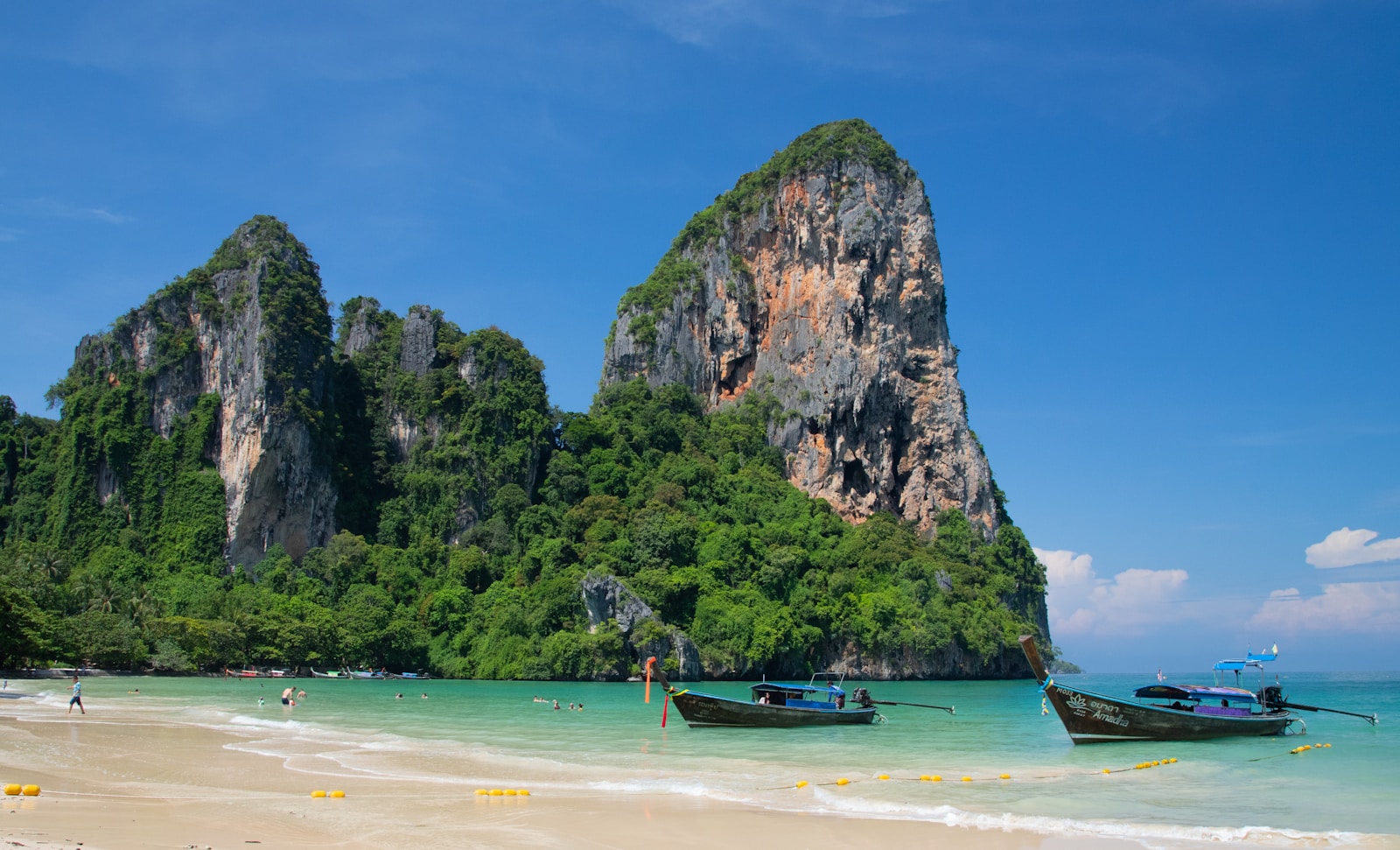
The approach to Railay West is one of those moments when southern Thailand looks exactly like the photographs that convinced you to come. Pale sand curves beneath enormous limestone cliffs, long-tail boats sit in shallow water and the sea stretches towards a horizon dotted with rocky formations. Find your bearings, let the children get their feet into the water and enjoy the fact that today's main agenda is essentially beach, walk, lunch, another beach.
Railay West or Railay East?
The two sides of Railay serve quite different purposes.
Railay West is the classic swimming-and-sand side, framed by limestone cliffs and particularly attractive when conditions are calm. Railay East is more mangrove-lined and functions as an important arrival and walking area rather than being the peninsula's main swimming beach.
Paths connect the different sections, so you'll probably see both during the day. The peninsula is compact enough that walking between its main areas is part of the experience.
Walk Towards Phra Nang Beach
From Railay, continue on foot towards Phra Nang Beach. The walk itself is part of the fun, passing beneath dramatic limestone formations and through sections where the cliffs seem to rise directly above the pathway.
Depending on conditions, you may see climbers on the rock faces. Railay is internationally known for rock climbing, and watching experienced climbers moving across the limestone can be fascinating even if your family's own climbing ambitions extend no further than getting onto the long-tail boat without dropping a flip-flop.
Eventually, the path opens towards Phra Nang. And this is where you can spend a substantial part of the day.
A Cultural Note About Princess Cave
At one end of Phra Nang Beach you'll encounter Princess Cave, locally associated with beliefs and offerings connected to fertility and protection. Visitors may notice distinctive offerings inside and around the cave. Treat the site respectfully.
Lunch on Railay
Lunch is where planning ahead can make a vegan family's day easier. Railay has restaurants and food options, but you don't have the enormous selection available in Bangkok or Chiang Mai. Check menus carefully rather than assuming a vegetable curry or tofu dish is vegan.
The same rules still apply: If you find a restaurant that clearly understands vegan requirements, use it rather than continuing to walk around in midday heat searching for a theoretically more exciting option. It can also be sensible to carry a few snacks from Ao Nang.
Should You Add a Four-Island Tour Today?
I wouldn't.
Krabi's Four Islands excursions are popular and can include beautiful scenery, swimming and snorkelling. But combining Railay, Phra Nang and several additional island stops into one day changes the character of the itinerary.
Instead of having time to swim and enjoy Railay, you're constantly watching the clock because another boat departure is approaching.
For adults trying to see as much as possible in a short visit, that may be worthwhile. For this family-focused nine-day itinerary, keep Railay as the destination.
What About Rock Climbing?
Railay is one of Thailand's best-known rock-climbing destinations, and families with older children or teenagers may be interested in trying it. If climbing is genuinely important to your family, book with a reputable professional operator offering instruction appropriate to everyone's age and experience.
However, don't add a climbing session simply because Railay is famous for it. A beginner climbing activity plus Railay exploration plus Phra Nang plus swimming can easily turn a relaxed day into another tightly scheduled excursion.
For most families following this itinerary, I'd keep the day focused on walking, scenery and the water.
Afternoon – Back to Railay West
Later in the afternoon, make your way back towards Railay West. Have a drink or something to eat, swim again if conditions are suitable and allow enough time to organise the return journey without rushing.
Back in Ao Nang
Once you've returned to Ao Nang, go back to the hotel. Shower, rest and give the children some downtime before dinner.
If the hotel pool somehow still seems appealing after an entire day around the sea, accept that children operate according to different laws of water consumption and let them swim again.
Tonight is your last evening in Krabi before continuing to Koh Lanta. If you've been eating mostly Thai dishes, this can also be the evening when children choose something more familiar from a vegan-friendly international menu.
Don't Leave Krabi Without Trying
Look for a vegan southern-style curry prepared with a confirmed plant-based curry paste, particularly if you enjoy stronger flavours.
Southern Thai food can be bold and aromatic, but traditional recipes frequently include seafood-derived seasonings, so dedicated vegan restaurants provide the simplest way to explore these flavours confidently.
Also keep enjoying fresh tropical fruit and coconut-based dishes. By this point, you don't need every meal to prove how adventurous you are. A plate of excellent mango beside the beach can be every bit as memorable as a complicated curry.
Heat & Sun Note: The combination of tropical sun, reflective water and sea breeze can make it easy to underestimate sun exposure. Use high-SPF broad-spectrum sunscreen, hats and protective clothing where appropriate, and reapply sunscreen after swimming according to product directions. Encourage children to drink regularly rather than waiting until they say they're thirsty.
Long-Tail Boat Note: Traditional long-tail boats are one of the defining sights of southern Thailand and using one can be a memorable family experience. However, boarding may involve uneven surfaces, wet steps or shallow water depending on the location and tide. Keep electronics protected, use suitable footwear and follow crew instructions. Families travelling with very young children should check life-jacket availability and sizing before departure rather than assuming appropriate equipment will automatically be available.
Koh Lanta – Quiet Beaches, Vegan Island Food & a Relaxed Final Day
Bangkok was energetic and slightly overwhelming in the best possible way. Chiang Mai slowed things down enough for markets, temples and northern Thai cooking. Krabi then replaced city streets with limestone cliffs, long-tail boats and the first proper beach day. Koh Lanta is where you stop trying to add something new every few hours.
The island is larger than the tiny tropical islands people sometimes imagine when planning Thailand, but that works particularly well for families. There is space for longer beaches, quieter accommodation and evenings that revolve around sunset and dinner rather than finding the next attraction.
You only have one night here, but importantly, you have most of two days. Arrive around the middle of Day 8, keep that afternoon completely free, then enjoy the beach again on Day 9 before beginning the journey towards Krabi Airport for your evening flight to Bangkok.
Day 8 – Ao Nang to Koh Lanta
Base: Koh Lanta
Pacing: Transfer followed by beach time
Have breakfast in Ao Nang and aim to leave during the morning.
There are different ways of travelling between the Krabi area and Koh Lanta, and available services can vary with the season. Road transfers using the vehicle ferry provide one practical option, particularly for families travelling with luggage, while seasonal passenger boat services may also operate from parts of the Krabi region.
For this itinerary, I would favour a pre-arranged door-to-door transfer if the budget allows. It may not be the cheapest option, but this is one of those occasions where convenience has genuine value. Rather than moving children and suitcases between several separate stages, you can leave the Ao Nang hotel and continue towards your Koh Lanta accommodation with considerably less effort.
Allow several hours for the journey rather than treating the transfer as something you can squeeze neatly between breakfast and an early lunch. Traffic, ferry queues and local conditions can all affect timing.
Which Part of Koh Lanta Is Best for Families?
Koh Lanta stretches much farther north to south than first-time visitors sometimes realise, so choosing the right beach matters when you only have one night. For this itinerary, stay in the northern or northwestern part of Koh Lanta Yai rather than travelling all the way towards the island's far south.
Klong Dao Beach is one of the easiest choices for families. Its long sandy coastline, relatively convenient location and nearby restaurants and accommodation make it practical for such a short stay. Long Beach, also known as Phra Ae, is another strong option. As its name suggests, the beach extends over a considerable distance, providing plenty of room and a relaxed atmosphere without placing you too far south.
Once you've checked in, don't go sightseeing, rather rest and explore around the hotel.
Afternoon at Klong Dao or Long Beach
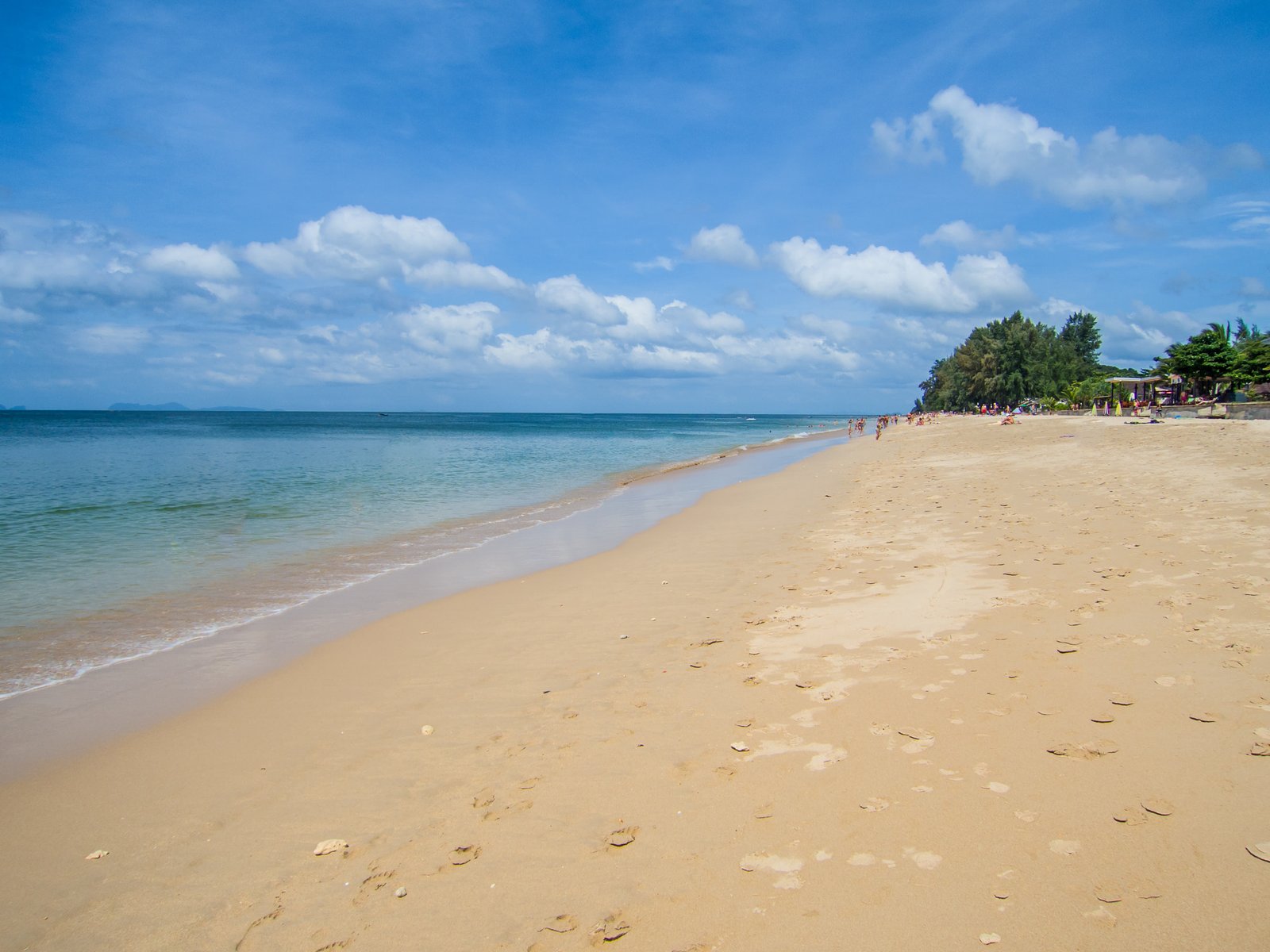
The west coast is where you'll spend the remainder of the day. If you're staying around Klong Dao, walk directly towards the beach and find somewhere comfortable. The broad shoreline works well for an easy family afternoon because nobody needs to travel somewhere else to start enjoying the island.
.jpeg)
If you've chosen Long Beach, do much the same. Swim when conditions are suitable, walk along the sand, find shade when the sun becomes intense and allow children to decide how ambitious the afternoon should become.
After Railay's towering cliffs and dramatic scenery, Koh Lanta may initially feel less spectacular.
Lunch
Depending on your arrival time, lunch may happen before you reach Koh Lanta or shortly after checking in. Either is fine. If you're eating on the island, this is a good moment to return to uncomplicated Thai food: rice, vegetables, tofu and clearly vegan dishes prepared by a kitchen that understands your requirements.
Koh Lanta has developed a varied food scene serving both Thai and international visitors, but don't interpret a menu full of vegetarian options as proof that every dish is vegan.
Vegan Island Eating Doesn't Have to Mean Smoothie Bowls
Beach destinations often develop a particular style of plant-based café: smoothie bowls, avocado toast, granola, plant milks and Western-style vegan dishes. After a week of Thai curries and noodles, somebody in the family may be delighted to see toast.
But don't let the abundance of international vegan cafés convince you that plant-based island eating has to become disconnected from Thai food. Look for kitchens that can prepare vegan Thai curries using plant-based curry paste, tofu and vegetable stir-fries without fish or oyster sauce, and fresh salads without dried shrimp or fish sauce.
Rice and coconut remain central to countless dishes, while fresh fruit provides the easiest snack imaginable.
Should You Explore Lanta Old Town?
Koh Lanta has more to offer than beaches, including Lanta Old Town on the island's eastern side. Its wooden buildings, waterfront setting and multicultural history reveal a side of Koh Lanta that is very different from the west-coast resorts.
On a longer stay, I'd absolutely consider including it. Not today as you have travelled from Ao Nang, checked into another hotel and finally reached the most relaxed part of the itinerary. Driving across the island immediately after arriving simply because an attraction exists would defeat the purpose of coming here.
Save Lanta Old Town for a future trip—or for travellers extending this itinerary by another two or three nights.
Late Afternoon – Stay for Sunset
The west coast gives you a natural way to end Day 8. Stay near the beach as the light begins to soften. Choose dinner somewhere close enough that nobody needs another significant journey.
If there's a vegan or clearly vegan-friendly Thai restaurant nearby, use it. Otherwise, choose a restaurant where communication is straightforward and the kitchen can confirm ingredients.
This is a good night to order several dishes for the table.
Day 9 – One Last Beach Morning & Evening Flight to Bangkok
Base tonight: Bangkok
Pacing: Relaxed morning followed by a deliberately cautious airport transfer
Morning
Have breakfast, return to the beach and enjoy the fact that nobody needs to visit anything. If you're staying around Klong Dao or Long Beach, the morning can be wonderfully simple.
An Early Lunch Before Leaving
Have lunch before beginning the transfer. This is particularly important with children because the journey to the airport becomes much easier when nobody is immediately hungry. Choose somewhere reliable and keep the meal relatively simple.
If there's a vegan dish everyone has loved during the trip, this is a good time for one last version.
Koh Lanta to Krabi Airport
This is the most time-sensitive transfer in the itinerary.
Arrange it in advance, ideally through a reputable transfer company, your accommodation or another provider whose pickup arrangements are clear. Depending on the service and current infrastructure, the journey may involve road travel and ferry connections before continuing towards Krabi International Airport.
Travel times vary, so confirm the realistic pickup time locally rather than relying on a generic estimate. For an evening domestic flight, I'd rather spend additional time having a drink at Krabi Airport than spend the final hour of Koh Lanta repeatedly checking the clock from the back of a vehicle.
Evening – Fly Krabi to Bangkok
From Krabi, take an evening domestic flight back to Bangkok.
Pay close attention to the airport code when booking. Bangkok has two major airports: Suvarnabhumi Airport – BKK and Don Mueang International Airport – DMK.
If your international flight on Day 10 departs from Suvarnabhumi, a domestic flight arriving at BKK can simplify the final overnight considerably. If the best flight arrives at Don Mueang, that's still workable—but remember that BKK and DMK are completely separate airports on different sides of the metropolitan area.
What If You Want More Time on Koh Lanta?
If you have 11 or 12 days instead of nine, I'd strongly consider adding two extra nights here. That changes Koh Lanta from a relaxing final stop into a destination you can actually explore.
With more time, you could visit Lanta Old Town, spend full days on different beaches, consider a responsible snorkelling or boat excursion, explore more of the island and still retain an afternoon when nobody does anything. The additional nights also make the effort required to reach Koh Lanta feel more proportionate.
Is Koh Lanta Worth It for Only One Night?
If your family dislikes changing hotels or prefers the simplest possible trip, you could absolutely remain in Ao Nang for Day 8, take another easy coastal day and fly Krabi to Bangkok on Day 9. That would be the more efficient itinerary. But Koh Lanta adds something Ao Nang doesn't. It gives the trip a genuine island stay and a quieter final atmosphere after Railay's day-trip energy. Whether that's worth the additional transfer depends on your family.
For travellers who enjoy movement and want to experience several sides of Thailand, keep Koh Lanta. For families with toddlers, substantial luggage or anyone who finds transfers particularly tiring, I'd seriously consider adding another Ao Nang night instead.
The Alternative: Stay in Ao Nang
If you decide against Koh Lanta, the final section becomes extremely simple. Spend Day 8 around Ao Nang, choose a nearby beach or have a hotel-pool day, enjoy another vegan dinner and sleep in the same hotel. On Day 9, have a relaxed morning before transferring directly to Krabi Airport for the Bangkok flight.
Don't Leave Koh Lanta Without Trying
Use your final island meals to explore Thai dishes made with ingredients that suit the coastal setting: fresh vegetables, tofu, rice, tropical fruit and coconut-based curries prepared with confirmed vegan curry paste.
Transfer Note: For the Koh Lanta → Krabi Airport journey, confirm your transfer arrangements and realistic journey time with a current local provider shortly before travelling. Season, traffic, ferry arrangements and local conditions can influence timing. Build a generous buffer.
The Vegan Thai Language Card to Save on Your Phone
Don't depend entirely on pronunciation. Thai is a tonal language, and a phrase that looks easy when written phonetically may not sound as clear when spoken by somebody who has never studied Thai.
For dietary requirements, showing written Thai on your phone can be extremely useful.
The following phrases provide a practical starting point:
| English | Thai | Approximate Pronunciation |
|---|---|---|
| I eat vegan/jay food | ฉันกินเจ / ผมกินเจ | chan gin jay / phom gin jay |
| No meat | ไม่ใส่เนื้อสัตว์ | mai sai nuea sat |
| No fish sauce | ไม่ใส่น้ำปลา | mai sai nam pla |
| No oyster sauce | ไม่ใส่น้ำมันหอย | mai sai nam man hoi |
| No shrimp paste | ไม่ใส่กะปิ | mai sai kapi |
| No egg | ไม่ใส่ไข่ | mai sai khai |
| No milk | ไม่ใส่นม | mai sai nom |
| Not spicy | ไม่เผ็ด | mai phet |
Pronunciation guides are only approximations. If communication becomes difficult, show the Thai text rather than repeating the English word "vegan" more loudly.
A Simple Vegan Message to Screenshot
If your family follows a strict vegan diet, save a written message on everyone's phone rather than keeping it only on one device.
A practical card can communicate that you don't eat animal-derived ingredients and specifically flag the ingredients most likely to create confusion.
VEGAN / PLANT-BASED
ฉันกินเจ / ผมกินเจ
ไม่ใส่เนื้อสัตว์ – No meat
ไม่ใส่ปลาและอาหารทะเล – No fish or seafood
ไม่ใส่น้ำปลา – No fish sauce
ไม่ใส่น้ำมันหอย – No oyster sauce
ไม่ใส่กะปิ – No shrimp paste
ไม่ใส่ไข่ – No egg
ไม่ใส่นม – No milk
Show the card before the food is prepared, not after it arrives.
If you're dealing with a serious food allergy rather than veganism as a dietary choice, don't rely on this general card. Allergy communication requires more specific wording and attention to cross-contact.
The Hidden Ingredients Vegan Travellers Need to Remember
Fish Sauce
Fish sauce is a fundamental seasoning in many Thai dishes and can be added even when the visible ingredients are entirely vegetables. Ask about it in stir-fries, noodle dishes, salads and sauces.
Oyster Sauce
A plate of tofu and vegetables may look like the safest meal imaginable and still have oyster sauce in the stir-fry sauce. Don't assume tofu means vegan.
Shrimp Paste
This is especially important with curry pastes. Removing meat from the finished curry doesn't help if shrimp paste was already incorporated into the paste.
Egg
Pad Thai, fried rice and other noodle or rice dishes commonly contain egg. Fortunately, egg can often be omitted from dishes prepared individually, provided the rest of the sauce is suitable.
Meat-Based Broth
Soup can be more difficult to assess visually because vegetables and noodles may arrive in broth prepared using animal products. Ask about the stock rather than simply looking at what's floating in the bowl.
Dairy
Traditional Thai cooking uses coconut milk extensively, which is excellent news for vegan travellers, but dairy still appears in drinks, desserts and modern recipes. Thai tea, for example, commonly contains dairy ingredients unless specifically prepared with a plant-based alternative.
What Thai Dishes Should Vegan Travellers Look For?
Rather than creating a rigid list of dishes that are supposedly "safe," it's better to understand which foods can be excellent when prepared vegan.
| Dish | What Makes It Appealing | What to Check |
|---|---|---|
| Pad Thai | Rice noodles, tofu, tamarind, lime and peanuts | Egg, fish sauce, dried shrimp |
| Som Tam | Fresh green papaya salad with lime and chilli | Fish sauce, dried shrimp |
| Pad Kra Pao | Fragrant Thai basil stir-fry | Meat, fish sauce, oyster sauce, egg |
| Khao Soi | Rich northern curry noodles | Broth, meat, curry paste |
| Thai Curries | Coconut-rich and aromatic | Shrimp paste in curry paste, fish sauce |
| Vegetable Stir-Fry | Easy family meal with rice | Oyster sauce and fish sauce |
| Fried Rice | Familiar option for children | Egg, fish/oyster sauce |
| Mango Sticky Rice | Mango, glutinous rice and coconut | Check recipe/toppings if uncertain |
What Should Vegan Parents Pack for Children?
What you want is a small emergency snack supply for the moments when travel schedules and children's appetites don't cooperate.
Bring familiar shelf-stable snacks your children reliably eat, particularly for airports, road transfers and boat days. A few snack bars, crackers or similar favourites can be extremely useful when the family arrives somewhere between meals.
Reusable water bottles are useful where safe refill options are available, while small reusable containers can help with snacks.
Also consider carrying:
- Reef-conscious/high-SPF sunscreen appropriate for your family
- Hats and lightweight sun-protective clothing
- Comfortable temple-appropriate clothing
- Closed shoes for city walking and temples
- Sandals or water-friendly footwear for beach days
- Small daypack
- Waterproof pouch for boat trips
- Basic travel medical supplies
- Copies of important documents
- Power bank
- The vegan Thai language card saved offline
For children, keep at least one complete change of clothing accessible on travel days.
Do not place everything useful in checked luggage. A delayed suitcase shouldn't mean a child has no suitable clothes, medication or essential supplies.
How Much Should a Family Budget?
Thailand can accommodate very different travel budgets, so a single daily figure isn't particularly helpful.
The same itinerary can involve modest family guesthouses and simple restaurants or luxury riverside hotels, private transfers and high-end island resorts.
Instead, divide the budget into the expenses that matter most:
- Accommodation will vary enormously between Bangkok, Chiang Mai and beach destinations, and peak-season island stays can be substantially more expensive than expected.
- Domestic flights should be booked early enough to secure useful schedules rather than selecting purely by the lowest fare.
- Transfers are one area where families may deliberately spend more. A private or door-to-door transfer can be worth the additional cost when moving luggage and children between Ao Nang and Koh Lanta.
- Food can remain relatively affordable when eating local Thai food, but specialist cafés and international restaurants will increase costs.
- Activities are flexible. Temples and walking days cost relatively little compared with cooking classes, private tours and boat excursions.
The best approach is to price the actual flights and hotels for your dates before setting a final trip budget. Thailand's seasonal demand varies too much for a generic number to remain reliable.
Change for Families with Very Young Children
If you're travelling with babies, toddlers or preschool-age children, I'd simplify the itinerary further. The easiest destination to remove is Koh Lanta. Keep the extra night in Ao Nang instead. That eliminates the Day 8 hotel change and means Day 9 begins much closer to Krabi Airport.
You still get southern Thailand, Railay, beaches and long-tail boats without the additional island transfer.
Change for Teenagers
With teenagers, you can move in the opposite direction. Railay rock climbing with professional instruction could become a serious option. A longer cooking class may be more engaging.
Older children may also enjoy having some control over the food journey: give each person responsibility for choosing one restaurant or unfamiliar fruit during the trip. On Koh Lanta, an additional night would create room for snorkelling or further island exploration.
Frequently Asked Questions About a Vegan Thailand Family Trip
1. Is Thailand genuinely easy for vegans?
Thailand can be an excellent destination for vegan travellers, particularly in Bangkok and Chiang Mai, where dedicated plant-based and vegetarian restaurants are widely available.
The challenge comes with ordinary Thai cooking. Fish sauce, oyster sauce, shrimp paste, egg and animal-based broths can appear in dishes that visually seem vegetarian. Once you understand those ingredients and carry written Thai phrases, ordering becomes much easier.
2. Does “vegetarian” mean vegan in Thailand?
No.
A vegetarian dish may contain egg or dairy, and communication around ingredients such as fish sauce can vary between restaurants. The Thai เจ (jay) tradition can be useful for vegan travellers because its dietary rules exclude animal products, although jay food has its own religious and cultural context and additional restrictions. Thailand's Vegetarian Festival, for example, is a religious observance rather than simply a vegan food festival.
If you're uncertain, ask about individual ingredients.
3. Can vegans eat Thai street food?
Absolutely, but select carefully.
Fresh fruit is the easiest option, while some cooked-to-order dishes can be adapted if the cook understands your requirements. The biggest mistake is assuming vegetable or tofu dishes are automatically vegan. Fish sauce and oyster sauce can be added during cooking even when no meat is visible.
Keep a few reliable vegan restaurants saved as backup options so street-food exploration remains enjoyable rather than stressful.
4. Is nine days enough for Bangkok, Chiang Mai and southern Thailand?
Yes, but this is about the maximum amount of movement I'd recommend for a nine-day family itinerary. The route works because Bangkok receives two focused days, Chiang Mai receives three, and Ao Nang serves as the base for Railay rather than requiring another hotel change.
Koh Lanta is the optional pressure point. Families who dislike transfers should remain in Ao Nang for Day 8 and travel directly to Krabi Airport on Day 9.
5. Is Koh Lanta worth visiting for only one night?
For families who enjoy variety, yes—but only because this itinerary gives you much of Day 8 and the morning of Day 9. Koh Lanta creates a quieter island ending that feels different from Ao Nang and Railay. For families who value simplicity more than seeing another destination, skip it.
Adding another Ao Nang night produces an equally valid and easier nine-day itinerary.
6. What is the best part of Thailand for vegan food?
Along this route, Chiang Mai is the standout. Its established vegetarian and vegan scene combines particularly well with the city's distinctive northern Thai cuisine. Vegan khao soi alone makes the destination important to a food-first itinerary.
Bangkok provides greater overall variety, while the southern destinations still offer good plant-based options but may require more careful communication in ordinary Thai restaurants.
7. Is Thai food too spicy for children?
It doesn't have to be. Ask for ไม่เผ็ด (mai phet) when you want a dish prepared without chilli heat, although some pre-made pastes and sauces may already contain chilli.
Keep one or two mild dishes on the table rather than expecting every child to eat exactly what the adults order. Rice, tofu, vegetables, noodles and fruit can provide familiar anchors while children experiment with other dishes at their own pace.
8. When is the best time for this itinerary?
For a route combining Bangkok, Chiang Mai and the Andaman coast, the broadly favourable period is typically around November through February, when conditions are often more comfortable for city sightseeing and the Andaman coast is generally in its stronger beach season.
Always check current weather, air-quality and sea conditions close to your actual travel dates.
Ready to make it yours?
Customize this itinerary with AI
Now that you've seen the full vegan Thailand route, use Honge to tailor stays, food priorities, and day-by-day pacing to your family.
Related itineraries
- 7 Days in Malaysia: Kuala Lumpur, Penang & Langkawi
- 7-Day Montenegro Road Trip: Kotor, Durmitor & the Adriatic Coast
- 10-Day China Itinerary: Beijing, Xi’an & Shanghai
- 7-Day Hong Kong & Macau Itinerary: City Lights, Culture & Coastal Beauty
- 10-Day Laos & Cambodia Itinerary: Luang Prabang, Vang Vieng & Angkor
- Bali or Thailand? How to Choose Your First Southeast Asia Trip
- Vegetarian Japan Itinerary: 10 Days Through Tokyo, Kyoto & Osaka
- Vegan South Korea Itinerary: 7 Days Through Seoul, Jeonju & Busan
- 10-Day Australia Family Wildlife Itinerary: Sydney to Great Ocean Road
- 9-Day Greek Islands Itinerary: Santorini, Naxos & Paros
- 5-Day Singapore Family Itinerary: Gardens, Attractions & Easy Transit
Written by
This blog was contributed by B. Sai Nikita, a travel enthusiast and writer. B. Sai Nikita can be reached at bsainikita10@gmail.com.
About Honge
Honge is an AI travel planning platform that helps travelers turn destination ideas into realistic, customizable itineraries.
Image credits: Photos are sourced from Unsplash and Wikimedia Commons. Copyright remains with the photographers and rights holders. Unsplash images are used under the Unsplash License. Wikimedia Commons images are used under their applicable Creative Commons license terms.
Travel disclaimer
This itinerary is intended as general travel inspiration and planning guidance only — not as personalized travel advice. Conditions change. Before you travel, check the current entry requirements, visa rules, and any travel advisories issued by your government for your destination. Review weather forecasts for your specific travel dates, confirm opening hours and ticket availability for attractions directly, and take out comprehensive travel insurance that covers medical, cancellation, and disruption. Honge is not responsible for any changes to conditions, services, or experiences described in this article after the date of publication.