
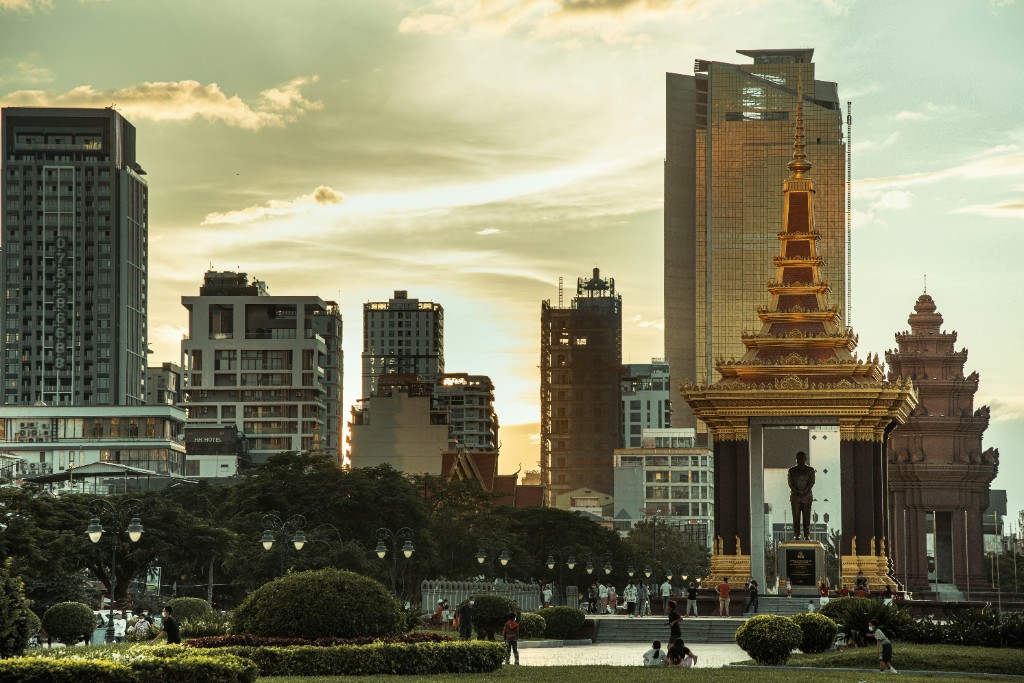
There are some journeys where the places between the famous sights become just as memorable as the sights themselves — and a trip through Laos and Cambodia is particularly well suited to that kind of travel.
Instead of rushing from one landmark to the next, you can spend a morning wandering through the golden temples of Luang Prabang, drift along the Mekong in the afternoon, wake up among the limestone mountains of Vang Vieng a few days later, and eventually find yourself standing beneath the enormous towers of Angkor Wat as the first light reaches across the Cambodian sky. This 10-day itinerary is designed around that slower rhythm.
Who This Trip Is For
This itinerary is particularly suited to solo travellers, couples, friends and culturally curious first-time visitors who want to combine Southeast Asian history, Buddhist traditions, dramatic natural scenery, local food and relaxed exploration without spending the entire holiday changing hotels.
This is a particularly good journey for travellers who enjoy having a little structure without wanting their holiday to feel completely programmed. If you like waking early for a beautiful temple, spending the afternoon beside a river, stopping at a market when something catches your eye and choosing dinner based on what smells good rather than what the itinerary says you should eat, this route leaves enough space for that kind of travel.
It also works well for people who want a mixture of culture and nature rather than a trip dominated by either one. Luang Prabang gives you a gentle introduction to Laos through its temples, food, Buddhist traditions and Mekong setting, while Vang Vieng changes the mood with caves, hiking trails, kayaking and enormous limestone formations. Once you reach Siem Reap, the focus shifts again towards Khmer history and the extraordinary temples of Angkor, but the itinerary deliberately makes room for markets, local food and village experiences so that Cambodia does not become simply a three-day temple tour.
It is also a good option for travellers who prefer slow travel over destination collecting. You could certainly squeeze more places into ten days, but every additional destination would come with another transfer, another check-in and another morning spent packing a suitcase. Here, each stop has a clear purpose, and there is enough time to appreciate the differences between them. Phnom Penh can be incorporated if you have additional time, or substituted for part of the Siem Reap stay if the capital is a priority, but it should not be forced into the itinerary simply for the sake of adding another destination.
Best Time to Visit Laos and Cambodia
For a journey that combines outdoor activities, temple exploration and plenty of walking, the cooler and generally drier months from around November through February are among the most comfortable times to travel. Temperatures can still be warm during the day, but early-morning temple visits and outdoor excursions tend to be easier than during the hottest part of the year.
This is also a popular travel period, particularly around Luang Prabang and Angkor, so accommodation and popular activities can be more expensive or book up sooner. The warmer months can still be rewarding if you are comfortable with heat and plan your activities around the morning and late afternoon. The rainy season has its own appeal, too, because landscapes become lush and waterfalls can be particularly impressive, although heavy rain can affect road conditions and outdoor activities.
There is no single perfect month for everyone, so consider what matters most to you. If comfortable sightseeing and hiking are the priority, lean towards the cooler season. If you prefer greener landscapes and fewer visitors, the shoulder or wet seasons may appeal more. Because weather patterns and travel conditions can change, check current information close to departure rather than relying entirely on a historical climate chart.
Where to Stay
One of the easiest ways to keep this itinerary relaxed is to choose accommodation that becomes part of the destination rather than simply somewhere to sleep. Suggested stay styles are samples only and depend on availability; in the Honge app they may appear as booking options when offered by our vendors.
Luang Prabang
Look for a heritage-style boutique hotel, traditional guesthouse or riverside property within easy reach of the historic centre. Being able to walk to temples, restaurants and the night market means you can explore spontaneously without arranging transport every time you want to leave your room. A property with a courtyard, garden or quiet terrace is particularly appealing here because Luang Prabang is a destination where the atmosphere matters as much as the room itself.
Vang Vieng
The landscape is the attraction, so a riverside or mountain-facing property can make a noticeable difference to the experience. You do not necessarily need the most luxurious accommodation in town; having somewhere peaceful to sit and watch the limestone mountains change colour in the evening can be far more memorable.
Siem Reap
Choose somewhere that makes it easy to reach both Angkor and the town’s restaurants and markets. A comfortable boutique hotel or resort with a pool can be especially useful because the temple days begin early and can become hot, making an afternoon swim or quiet hour in the shade feel wonderfully restorative.
How to Get Around
The route works best when you combine different forms of transportation rather than trying to use one method for everything.
For the journey between Luang Prabang and Vang Vieng, the railway is generally the most efficient option when a suitable service is available. The Laos-China Railway has dramatically reduced the travel time between destinations that once required long road journeys, making it possible to spend more of your holiday actually exploring. Within Luang Prabang and Vang Vieng, tuk-tuks are useful for short trips, while private drivers can be arranged for day excursions when you want greater flexibility.
The more important transportation decision comes when moving from Laos to Cambodia. Vang Vieng has no operating airport, so you'll need to reach one first — and backtracking to Luang Prabang for its direct flight to Siem Reap is usually faster overall than continuing on to Vientiane, which has no direct Siem Reap flights and typically means a longer connection via Bangkok or Pakse. Although it is possible to travel overland, a land crossing can consume a substantial amount of time once road transfers, border procedures and onward transportation are taken into account. Always check current flight schedules before confirming your accommodation, as regional routes can change seasonally.
Entry, Visa and Border Planning
Entry requirements depend on your nationality and can change, so this is one area where official sources are much more useful than old travel articles or social-media posts.
For Cambodia, use the government’s official e-Visa platform if you require a visa and check the country’s official e-Arrival system before travelling. Avoid websites that look like government portals but add unnecessary processing fees.
- Cambodia Official e-Visa
- Cambodia Official e-Arrival
- Lao Tourism – Official Website
- Angkor Enterprise – Official Website
For Laos, check the current entry requirements applicable to your nationality through official Lao government or immigration resources before departure. If your flight routing requires you to enter Cambodia through a different airport than originally planned, check whether your visa or arrival arrangements remain valid for that entry point. Most importantly, don’t assume that because another traveller entered easily six months ago, the same procedure will necessarily apply to you. Visa rules, forms and border procedures can change.
Day 1 — Arrive in Luang Prabang and Settle Into the Mekong Rhythm
Pace: Easy and unhurried
After a long international journey, your first day in Laos should feel more like an exhale than the beginning of a sightseeing marathon. Luang Prabang is wonderfully suited to that approach because the historic centre is compact, atmospheric and easy to explore at walking pace, allowing you to absorb your surroundings without immediately organising another transfer.
Once you arrive at Luang Prabang International Airport, arrange your transfer to your accommodation and take some time to settle in. If you arrive in the afternoon, resist the temptation to build a complicated schedule around your remaining daylight. Your first impressions of Laos will probably come from simple things: the architecture of the old town, the sound of scooters passing through narrow streets, the smell of food cooking at roadside stalls and the sight of golden temple roofs appearing between traditional buildings.
Late Afternoon: Follow the Mekong
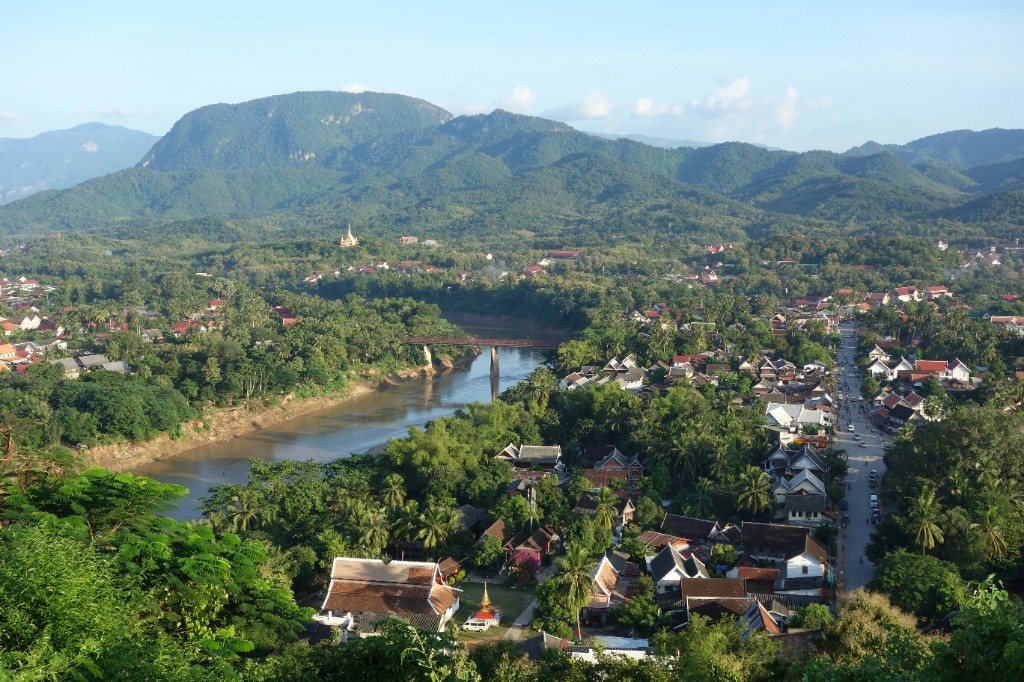
Once you’ve checked in, make your way towards the Mekong as the worst of the afternoon heat begins to fade. The river is such an important part of Luang Prabang’s identity that it is worth seeing early in the trip, not simply because it is scenic but because it gives you an immediate sense of how closely the town remains connected to the water. Find a riverside café or a quiet place where you can sit for a while and watch boats moving along the river. Across the water, the landscape rises into green hills, and as the sun begins to lower, the whole scene takes on a softer quality.
Evening: Explore the Night Market
After sunset, wander through Luang Prabang’s night market, where stalls display textiles, handicrafts, artwork, souvenirs and food. You don’t need to buy anything, and there is no reason to hurry through it; browsing slowly is part of the experience. If you do want to purchase something, look for locally made products and take the opportunity to support small businesses and artisans rather than treating the market as a place to bargain aggressively over every purchase.
When hunger catches up with you, settle into a local restaurant and begin exploring Lao cuisine. Try laap, sticky rice, grilled meat or fish, tam mak hoong, or a simple noodle dish. Lao food has a wonderful balance of fresh herbs, chilli, sourness and savoury flavours, and the best meals often arrive as several dishes intended to be shared.
Food note: Your first Lao dinner should be an introduction rather than a challenge, so choose a few local dishes that allow you to explore the country’s flavours without ordering more than you can comfortably eat. Sticky rice is an excellent accompaniment to grilled meats and dips, while laap offers a particularly good introduction to the herbs and seasonings that make Lao cuisine distinctive.
Do not miss: Take a walk beside the Mekong around sunset before heading into the night market, because seeing the river, temples and surrounding hills soften in the evening light is one of the easiest ways to understand why Luang Prabang has such a strong sense of place.
Logistics: Luang Prabang is compact enough that you can walk around much of the historic centre, so there is little reason to arrange a private vehicle for ordinary sightseeing. For your airport arrival, however, pre-arranging a hotel transfer can make the first hour of the trip much easier, particularly if you arrive after dark. Keep some local currency available for small market purchases and food stalls, while storing larger amounts securely. When visiting temples, dress modestly and remember that Luang Prabang is a living religious community rather than a collection of attractions created solely for visitors.
Lao Tourism – Official Website
Day 2 — Luang Prabang: Temples, Kuang Si Waterfalls and an Evening in Town
Pace: Moderate, with an early start and a relaxed afternoon
Your second day introduces two of Luang Prabang’s most famous experiences, but the idea is to enjoy them without turning the day into a race. Start with the city’s Buddhist temples while the streets are relatively quiet, then travel into the surrounding countryside for Kuang Si Waterfalls before returning to town for a slower evening. The contrast between the golden architecture of the old town and the vivid turquoise pools of Kuang Si is one of the reasons Luang Prabang makes such a rewarding first stop.
Morning: Explore the Temples
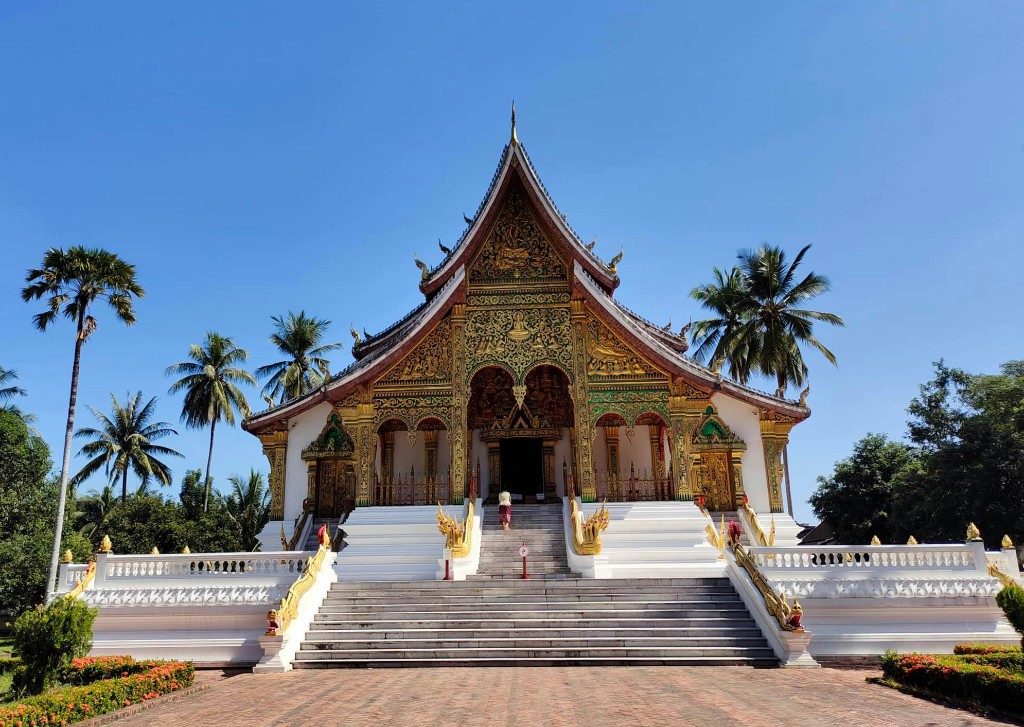
Begin your morning early and walk through the old town while the air is still relatively cool. Luang Prabang is home to numerous temples and monasteries, but you do not need to see all of them to appreciate the city’s religious character. Wat Xieng Thong is one of the most significant temples to include if it is open and accessible during your visit, with its intricate decoration and distinctive architecture offering a glimpse into the artistic traditions of historic Luang Prabang.
Take your time rather than rushing from one temple entrance to another. Look at the carved details, the murals and the quiet courtyards, and remember that these remain places of worship where people come for religious reasons every day.
Late Morning: Travel to Kuang Si Waterfalls
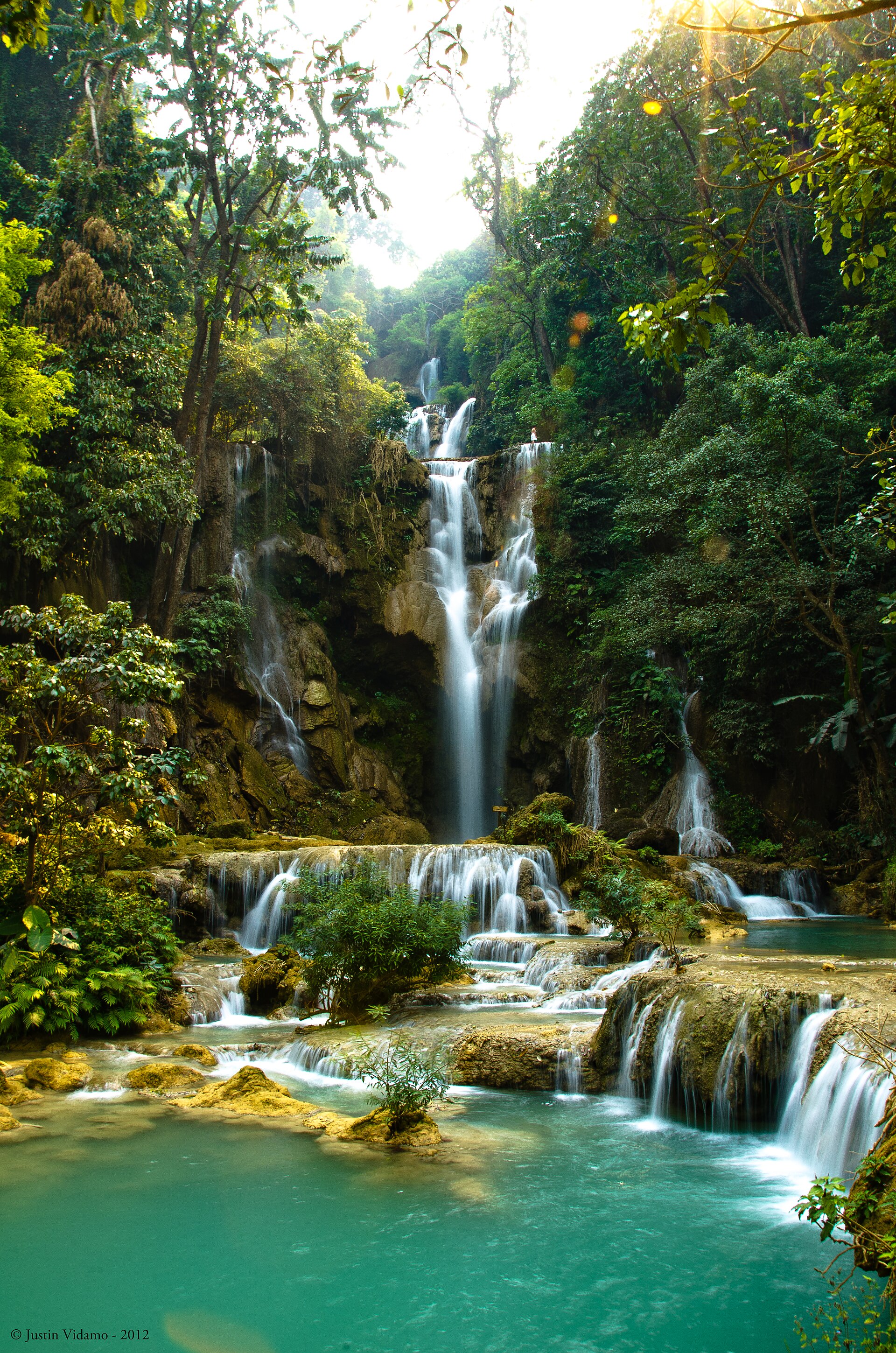
After breakfast, arrange transport to Kuang Si Waterfalls, located outside the town. The journey takes you into a greener landscape, and the change becomes noticeable as the buildings of Luang Prabang gradually give way to forest and countryside. Once you arrive, allow enough time to explore rather than simply visiting the first viewpoint and leaving. The waterfall system includes several pools and forested sections, and the vivid blue-green water can look almost unreal under the right conditions.
If swimming is permitted in the designated areas when you visit, this is a wonderful place to cool off, although you should always follow current local signs and instructions because water conditions can change, particularly after heavy rain.
Afternoon: Return to Luang Prabang and Slow Down
After lunch, return to town and leave the rest of the afternoon open. You might take a massage, sit at your hotel, find a quiet café or simply wander through streets you didn’t notice yesterday. This is not wasted time. In fact, it is one of the reasons the itinerary gives you several nights in Luang Prabang rather than treating the city as an overnight stop. By now, you may also begin noticing how different the pace feels compared with a major Southeast Asian capital.
Evening: Another Night in Luang Prabang
Return to the night market if you enjoyed it yesterday, or choose a quieter restaurant near the Mekong for dinner. You could also attend a traditional cultural performance if one is operating and the experience genuinely interests you. Whatever you choose, keep the evening comfortable. Tomorrow will give you a more flexible day for the Mekong and local experiences.
Food note: Today is a good opportunity to move beyond your first Lao dinner and try something different, perhaps grilled river fish, a noodle soup, vegetable dishes with sticky rice or another local speciality recommended by your restaurant. If you enjoy spicy food, ask about the chilli level before ordering, as Lao cuisine can become considerably hotter than visitors expect.
Do not miss: Give yourself enough time at Kuang Si Waterfalls to walk through the surrounding forest and enjoy the pools rather than treating the attraction as a single viewpoint, because the setting becomes much more memorable when you slow down and explore it properly.
Logistics: Kuang Si can be reached by tuk-tuk, shared transport or private vehicle, and the best choice depends on whether you value flexibility or lower cost. Leaving earlier in the day generally helps with heat and visitor numbers, although no time guarantees an empty experience. Wear footwear suitable for uneven and potentially slippery paths, carry water and follow all current swimming restrictions. If you are arranging a private driver or tuk-tuk, confirm whether waiting time is included before setting out.
A Note on Almsgiving in Luang Prabang
One of Luang Prabang’s most visible traditions is the early-morning almsgiving ceremony, when monks from local monasteries walk through the streets receiving offerings from members of the community.
For visitors, this can be a meaningful cultural experience, but it is important to understand that it is a genuine religious practice rather than a performance arranged for tourists. If you want to participate, learn the appropriate etiquette beforehand, dress conservatively, remain quiet and follow local guidance about where to stand and how to make an offering. Photography should never take priority over the ceremony itself. If you are uncertain about whether participation is appropriate, observing quietly from a respectful distance is completely acceptable and may, in fact, be the more considerate choice.
Day 3 — Luang Prabang: Mekong Views, Local Food and a Slower Side of the City
Pace: Easy and flexible
Morning: Explore the Old Town at Your Own Pace
Start with a relaxed breakfast and then head back into the historic centre. Because you have already spent some time here, you can wander without feeling that you need to find every major landmark. Look more closely at the traditional houses, small workshops and temple courtyards that line the streets, and if you discover a café or shop that interests you, give yourself permission to stay longer than originally planned. If there is a temple you particularly enjoyed earlier in the trip, this is also a good time to return. Seeing it without the pressure of a first-time visit can make you notice details that passed you by before.
Late Morning: Spend Time on the Mekong
The Mekong deserves more than a photograph from the riverbank, so consider taking a short daytime cruise if the weather and river conditions are suitable. From the water, Luang Prabang’s relationship with the river becomes much clearer. The town gradually recedes behind you, while forested hills, riverside homes and passing boats become the dominant scenery. The experience doesn’t have to take an entire day; a shorter cruise can provide the perspective you are looking for without turning the itinerary into another major excursion.
If you would rather remain on land, simply find a quiet riverside café and watch the boats pass. Both options capture the same idea: allowing the Mekong to become part of the journey rather than treating it as another attraction to tick off.
Lunch: Let Lao Food Take Centre Stage
Today is an excellent opportunity to explore Lao cuisine more deliberately. Look for a small restaurant recommended by locals or your accommodation and order a few dishes to share if you are travelling with companions. Laap, sticky rice, grilled meats, river fish, fresh herbs and spicy salads are all worth trying, while noodle soups make a good choice if you want something lighter. Lao cuisine often uses fermented ingredients, herbs and chilli in ways that can be unfamiliar at first, so don’t hesitate to ask the restaurant about a dish before ordering.
Afternoon: Choose Your Own Experience
Keep the afternoon open enough to follow your interests. You could join a cooking class that begins with a local market visit, browse shops selling Lao textiles and handicrafts, visit another temple or simply return to your hotel for a few hours of rest. If you haven’t yet visited Mount Phousi, late afternoon can be a good time to make the climb. The steps are more demanding than the name of a “viewpoint” might suggest, but the panorama from the top gives you an excellent sense of how Luang Prabang sits between the Mekong and Nam Khan rivers, surrounded by green mountains.
Evening: Your Final Night in Luang Prabang
For your last evening, return to whichever part of the city you enjoyed most. You might browse the night market again, choose a restaurant overlooking the Mekong or find a quieter local establishment away from the busiest streets.
Food note: If you have enjoyed Lao food so far, ask your restaurant to recommend a dish that is less familiar to visitors. This is often how you discover the regional soups, herb-heavy salads, grilled dishes and seasonal ingredients that don’t necessarily appear on every tourist menu.
Logistics: If you decide to take a Mekong cruise, confirm the route, duration and return arrangements before booking, as offerings range from short sightseeing trips to much longer journeys. For a cooking class, look for an experience that includes a local market visit if possible, because learning about the ingredients can be just as interesting as preparing the final dishes. If you climb Mount Phousi, wear comfortable footwear and carry water, particularly during the hotter months. Keep the rest of the evening flexible because tomorrow involves a train journey and a change of accommodation.
Day 4 — Luang Prabang to Vang Vieng: Into Laos’ Limestone Country
Pace: Easy to moderate
Morning: One Last Breakfast in Luang Prabang
Have breakfast at your accommodation and take one final walk through the old town if your train schedule allows. If you have found a favourite bakery, café or market stall during your stay, this is your chance for one last visit before collecting your luggage. Once you check out, keep your passport, train details, accommodation information and anything you need during the journey in your day bag.
Late Morning: Travel to Luang Prabang Railway Station
The railway station is outside the historic centre, so arrange a tuk-tuk or hotel transfer rather than assuming you can walk there with luggage. Allow enough time for the transfer and station procedures, particularly if you are unfamiliar with the local railway system. The Laos-China Railway has transformed travel between several destinations in Laos, but services and booking arrangements can change, so check the current timetable and ticketing information before travelling rather than relying on an old schedule.
Midday: Train to Vang Vieng
Once aboard, settle into the journey and watch the landscape change through the windows. The railway is primarily a practical way of travelling, so don’t expect a dedicated sightseeing train, but the scenery becomes increasingly interesting as the route moves through rural landscapes and towards the mountainous areas around Vang Vieng. The journey itself is also a useful reminder that Laos is larger and more geographically varied than the peaceful streets of Luang Prabang might initially suggest.
Afternoon: Arrive in Vang Vieng
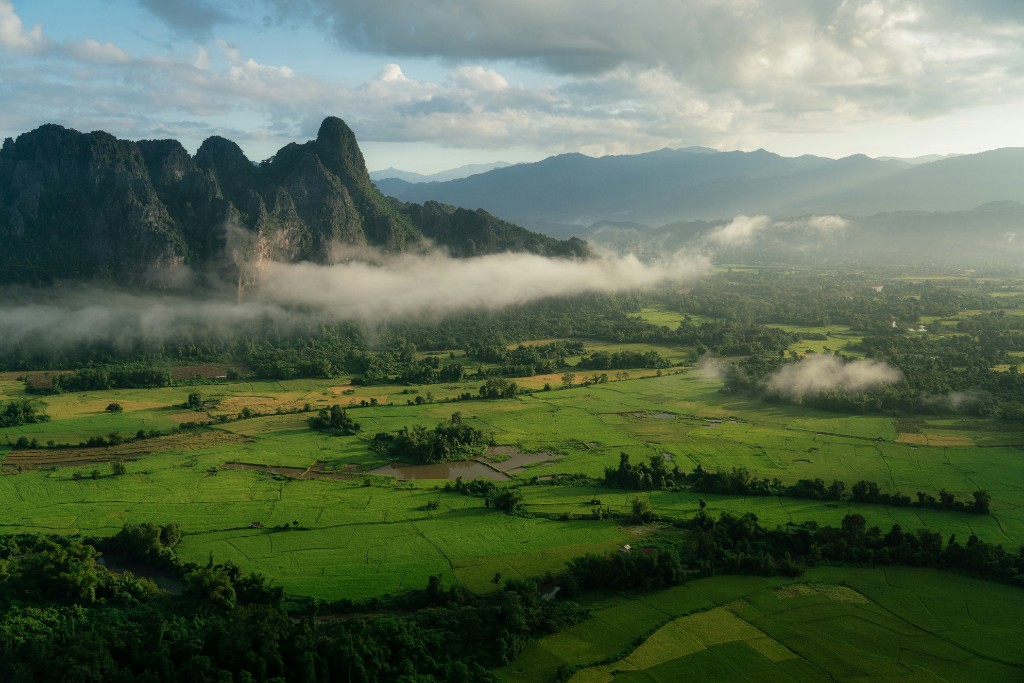
After arriving, transfer to your accommodation and take some time to settle in. Your first impression will probably be the mountains. Vang Vieng is surrounded by enormous limestone formations that rise dramatically from the surrounding countryside, and after several days of temples and Mekong scenery, the landscape can feel almost like you’ve arrived somewhere completely different.
As the heat begins to ease, walk towards the river and find somewhere to sit. Kayakers and small boats may be moving along the water, while the limestone cliffs become increasingly atmospheric as the afternoon light changes. If the weather is clear, this is also a wonderful time to take photographs because the low sunlight brings out the texture of the mountains.
Evening: Dinner With a Mountain View
Choose a restaurant with an outdoor terrace if possible and enjoy the landscape while you eat. Vang Vieng has a more traveller-oriented food scene than Luang Prabang, but there are still plenty of opportunities to eat Lao dishes such as grilled meats, river fish, noodle soups, sticky rice and spicy salads. After dinner, take a relaxed walk through town and get an early night if you’re planning an active day tomorrow.
Food note: Continue exploring Lao cuisine rather than immediately returning to familiar international dishes. Grilled river fish, sticky rice, herb-heavy salads and noodle soups work particularly well after a day of travel, and many restaurants offer outdoor seating where you can enjoy the surrounding landscape at the same time.
Logistics: Book your train ticket in advance, particularly if you are travelling during a busy period, and confirm the latest departure information before leaving Luang Prabang. Your accommodation can usually help arrange a tuk-tuk to the station, although you should agree on the fare before setting off. Once in Vang Vieng, tuk-tuks are useful for excursions and short journeys, while bicycles can work well for travellers who want to explore at a slower pace. Motorbike rental is another option for experienced and appropriately licensed riders, but it should not be treated casually; unfamiliar roads, traffic and changing conditions can create unnecessary risks on holiday. For most visitors, arranging a local driver for longer excursions is the simpler choice.
Day 5 — Vang Vieng: Limestone Mountains, Caves, Kayaking and Scenic Views
Pace: Moderate to active
Morning: Start Early With a Viewpoint
Begin early, particularly during the warmer months, because the temperature can rise quickly once the sun is fully above the mountains. After breakfast, head towards one of the area’s established viewpoints, choosing one that matches your fitness level and the amount of time you want to spend hiking. The climb may be steeper than you expect, and some trails involve uneven ground, rocks and exposed sections, so proper footwear is worthwhile. The reward, however, is the opportunity to see Vang Vieng from above, with the Nam Song River winding through the valley and enormous limestone formations rising from the green landscape in every direction. Take your time at the top rather than treating the viewpoint as somewhere to photograph for five minutes before immediately starting the descent.
Late Morning: Explore a Cave
After your hike, continue to one of the region’s caves if you are comfortable exploring underground environments. Some caves are relatively easy to access, while others involve uneven surfaces, narrow passages or sections where you may need to move carefully, so choosing an established site with appropriate local guidance is important. Inside, the temperature can feel noticeably cooler than outside, and the darkness creates an interesting contrast with the bright landscape you have just left behind.
Midday: Take a Proper Lunch Break
By lunchtime, you will have already had a fairly active morning, so find somewhere comfortable and allow yourself a genuine break. A local restaurant overlooking the river or countryside is ideal, particularly if you can order a few Lao dishes and take your time eating them.
Afternoon: Kayak Along the River
If the weather and river conditions are suitable, spend the afternoon kayaking along the Nam Song River. Moving through the landscape at water level gives you a completely different perspective from the morning viewpoint, as the limestone cliffs appear to rise directly from the valley around you. Use an established operator and follow the safety instructions provided by your guide. Conditions can vary, and the river should be treated with respect even when sections appear calm. If kayaking isn’t something you enjoy, replace it with a slower afternoon beside the river, a café overlooking the mountains or some time at your accommodation.
Alternative: Take to the Sky
For travellers who want a more scenic and less strenuous experience, a hot-air balloon flight can be an unforgettable way to see the Vang Vieng landscape. An early-morning flight is generally the most atmospheric, when the light is softer and the mountains can appear almost hazy in the distance. However, balloon flights depend entirely on suitable weather and operational conditions, so they should never be treated as a guaranteed part of the itinerary. If this is your preferred experience, you can replace the morning hike with the balloon flight and use the afternoon for a cave visit or relaxed riverside exploration.
Late Afternoon and Evening: Your Last Night in Laos
Whatever combination you choose, leave the late afternoon open enough to return to your accommodation, shower and rest. Tomorrow is a travel day. For your final Lao dinner, choose something you haven’t tried yet or return to a dish that became a favourite during the first part of your trip. The mountains can look particularly beautiful as the last daylight disappears, and sitting outside with dinner and a drink is a fitting way to end the Laos section of the journey.
Food note: Vang Vieng is a good place to continue exploring Lao food, particularly grilled meats, river fish, sticky rice and spicy salads. If you’re travelling with someone, ordering several dishes to share gives you a better sense of the cuisine than choosing a single large meal, while solo travellers can ask the restaurant for smaller portions or a combination of local dishes.
Do not miss: Choose at least one viewpoint and allow yourself enough time to sit there and absorb the landscape, because the scale of Vang Vieng’s limestone country is far more impressive when you experience it without immediately rushing towards the next activity.
Logistics: Start outdoor activities early and carry plenty of water, especially during the hotter months. Wear proper shoes for hiking and caves, and bring sun protection even if the morning begins cloudy. For kayaking, caves and other adventure activities, use established local operators and check what is included in the price, particularly equipment, transport and guides. Weather can affect river conditions and balloon flights, so leave enough flexibility in your plans to change activities if necessary. If you are considering renting a scooter, make sure you have the appropriate licence, insurance and experience before doing so. For most visitors, a tuk-tuk or local driver is the easier and safer option for excursions outside town.
Day 6 — Vang Vieng to Siem Reap: From Laos’ Mountains to Cambodia’s Ancient World
Pace: Easy and travel-focused
Morning: A Final Look at Vang Vieng
Have breakfast overlooking the mountains if your accommodation allows it, and take a final walk around town if you have time before your transfer. Collect your luggage, check that you have your passport and travel documents easily accessible, and confirm your onward transportation before leaving the hotel.
Late Morning: Begin the Journey Towards Cambodia
Vang Vieng itself has no operating airport, so your first task is getting to one that does. Two options exist, and they are not equivalent: backtracking to Luang Prabang by rail (around an hour on the same Laos-China Railway used on Day 4) usually gives you access to a direct flight to Siem Reap, while continuing onward to Vientiane's Wattay Airport typically means a connecting flight via Bangkok or Pakse that can run considerably longer door to door. Check both routings for your actual travel dates before booking, since regional schedules shift, but treat Luang Prabang as the routing to check first rather than defaulting to whichever city is "next" on the map. For a ten-day itinerary, the important consideration is the amount of time the complete journey consumes rather than simply the length of the flight itself. If a particular routing involves a very long layover or an additional land transfer, compare it with alternatives before booking. The purpose of flying is to preserve time for Cambodia, not simply to replace one complicated travel day with another.
Afternoon: Arrive in Cambodia
Once you arrive in Cambodia, complete the necessary immigration and arrival procedures before continuing towards Siem Reap. Check your entry requirements before departure and use official government systems for visas and arrival forms wherever possible.
Late Afternoon: Check Into Your Siem Reap Accommodation
Siem Reap's airport sits roughly 45-50km east of town, and the transfer into the city takes about 45-60 minutes on the airport highway rather than the short hop older travel advice may lead you to expect, so build that into your arrival-day timing. Once you reach Siem Reap, check into your hotel and take some time to recover from the journey. If you have chosen accommodation with a pool, this is an excellent opportunity to use it. Otherwise, a quiet hour in your room or a slow drink at the hotel can be enough to reset before dinner. You are about to enter the busiest sightseeing section of the trip, so there is real value in protecting your energy tonight.
Evening: Discover Khmer Cuisine
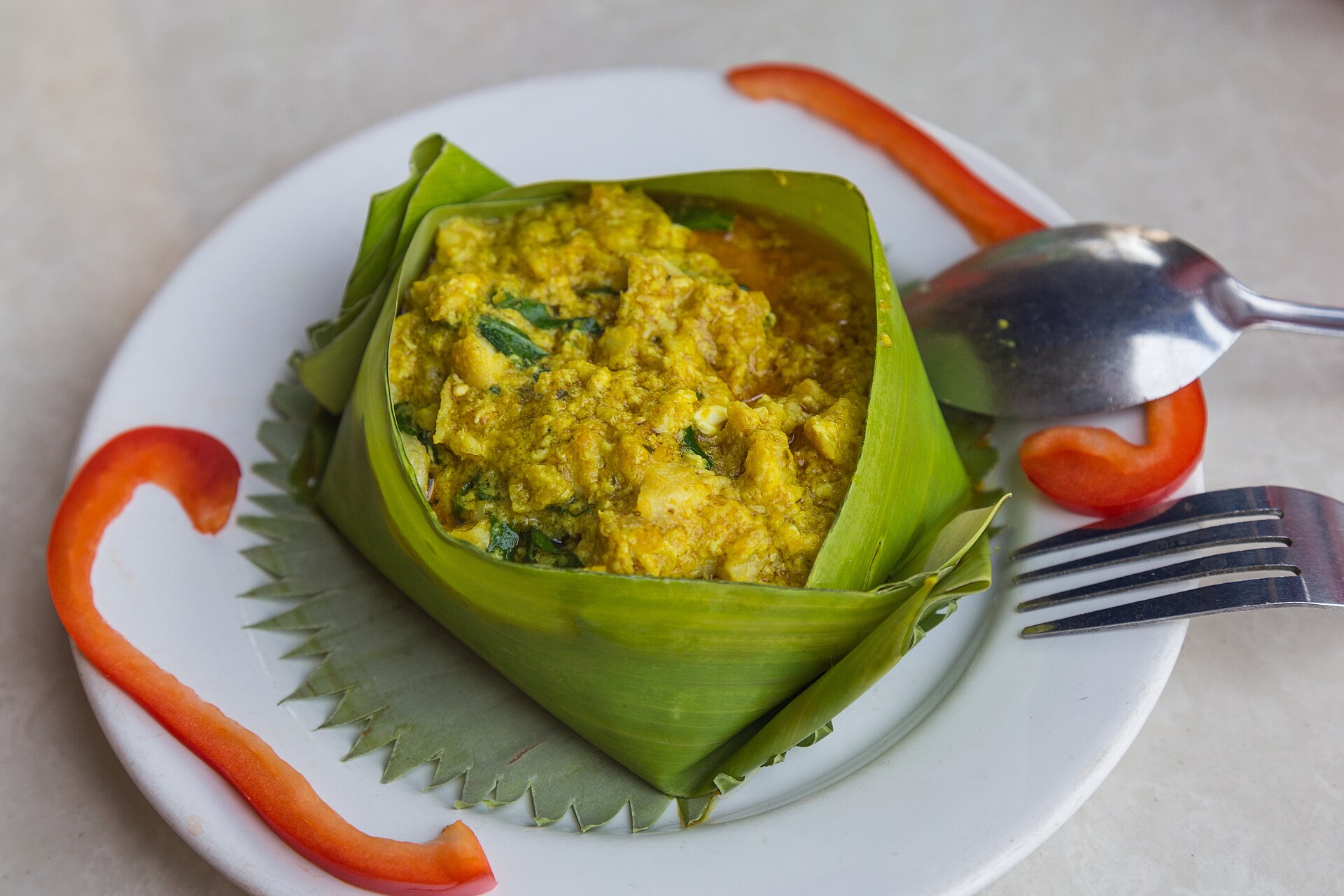
For your first Cambodian dinner, look for a restaurant that focuses on Khmer cuisine rather than immediately choosing familiar international food. Fish amok is an obvious starting point, with fish traditionally prepared in a fragrant, gently spiced curry mixture and often served with rice. Lok lak, usually made with marinated beef, is another popular dish, while kuy teav offers a lighter introduction to Cambodian noodle soups.
After Dinner: A Gentle Introduction to Siem Reap
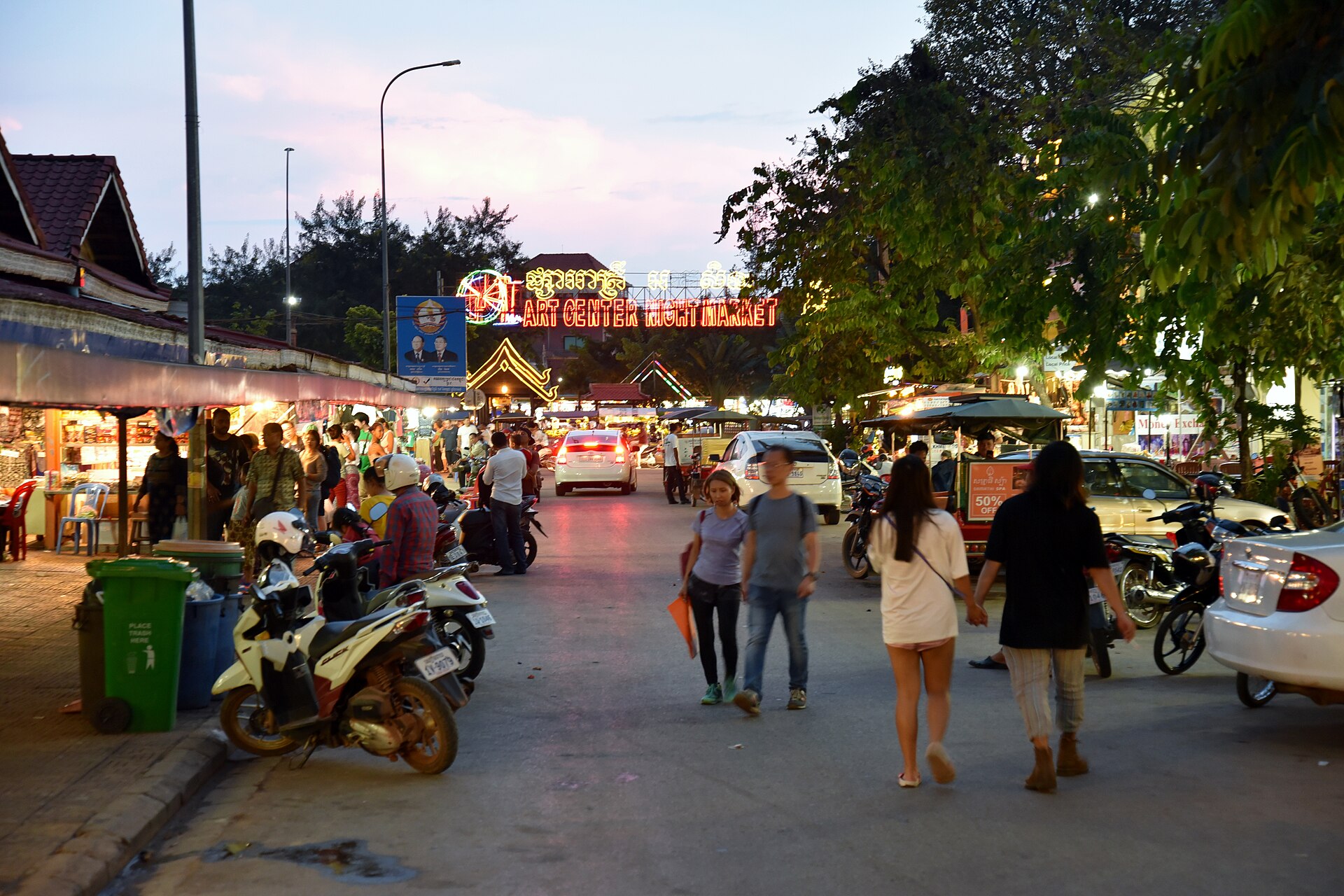
If you still have energy, take a short evening walk through the central part of Siem Reap and browse some of the markets and small shops. The town has grown significantly around Angkor tourism, but it remains enjoyable when explored at an unhurried pace. You will find restaurants, cafés, handicraft shops and lively streets that provide a useful contrast to the quieter atmosphere of Luang Prabang and Vang Vieng.
Food note: Use your first evening in Cambodia to try something genuinely Khmer, whether that means fish amok, lok lak, kuy teav or a traditional curry. If you’re unsure where to eat, ask your accommodation for a locally respected restaurant rather than choosing solely on the basis of the busiest tourist street.
Do not miss: Go to bed early enough to be ready for your first Angkor morning, because seeing the towers of Angkor Wat emerge as the sky changes colour is one of the experiences that gives this entire Laos-and-Cambodia journey its sense of occasion.
Logistics: Confirm your Angkor sightseeing transportation tonight. A private tuk-tuk with a driver is one of the easiest ways to explore the archaeological park because you can move between temples without worrying about navigation or finding transport after each visit. A private car can be more comfortable during very hot or rainy periods, while a knowledgeable local guide can add considerable value by explaining the history, symbolism and architecture that can otherwise be difficult to understand simply by walking through the ruins.
Angkor Enterprise – Official Website
Buy your temple pass through the official system or through a clearly authorised arrangement, and check the current ticket requirements before your visit.
Preparing for Your First Angkor Morning
Tomorrow will be one of the earliest starts of the trip, but it is also likely to be one of the most memorable. If you want to see Angkor Wat at sunrise, arrange your tuk-tuk or car the evening before and confirm the pickup time. Bring water, comfortable shoes and something to protect you from the sun once it rises. Dress respectfully, remembering that Angkor is an archaeological site but also an important cultural and religious landscape. Some areas have specific clothing requirements, so shoulders and knees should be appropriately covered.
Day 7 — Angkor Wat at Sunrise, Angkor Thom and Bayon
Pace: Active, early-starting and immersive
Before Sunrise: Make Your Way to Angkor Wat
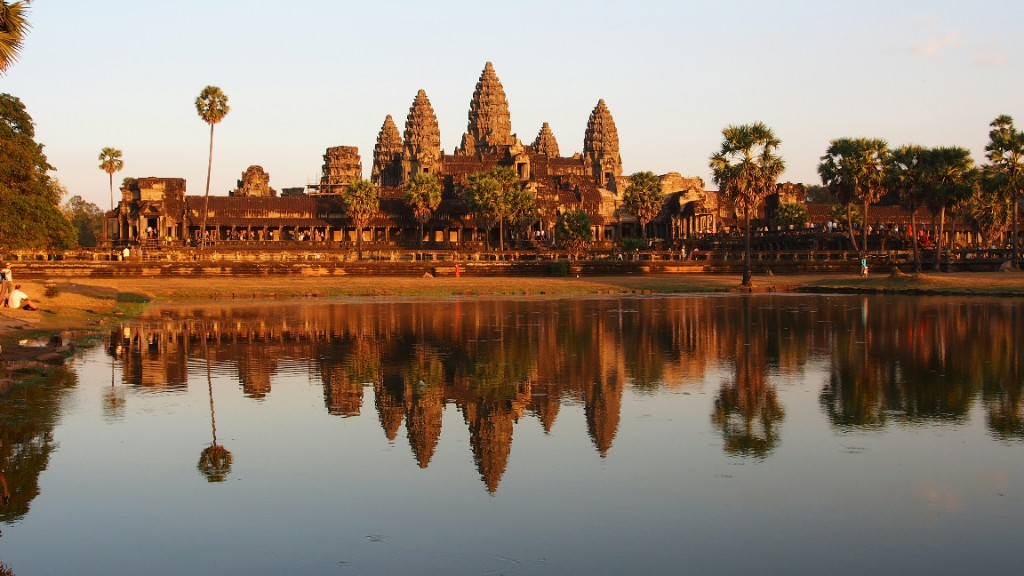
The alarm will probably go off while it is still completely dark, and for a few minutes you may wonder why you willingly chose a holiday that involves leaving your hotel at such an unreasonable hour. Once you reach Angkor Wat and see the first hints of light appearing behind its towers, however, the early start begins to feel worthwhile. Sunrise is one of the most popular experiences at Angkor, so expect other visitors and do not imagine that you will have the reflecting pools entirely to yourself. Even so, there is something special about watching the temple gradually emerge from darkness as the sky changes from deep blue to pink, orange and gold.
Morning: Explore Angkor Wat
Spend the morning exploring the temple complex, including its galleries, courtyards, towers and detailed bas-reliefs. Built during the reign of King Suryavarman II in the early 12th century, Angkor Wat was originally dedicated to Vishnu and represents one of the great achievements of Khmer architecture. A knowledgeable local guide can add considerable depth here, particularly when explaining the stories depicted in the bas-reliefs and the symbolism behind the temple’s layout. Even if you are not normally someone who hires guides, Angkor is one destination where the historical context can transform what you are seeing.
Late Morning: Continue Towards Angkor Thom
After exploring Angkor Wat, continue towards Angkor Thom, the enormous walled city that became one of the most important centres of the Khmer Empire. The monumental entrance gates immediately give you a sense of the scale of what lies ahead. Rather than being a single temple complex, Angkor Thom was a vast urban and ceremonial centre, and understanding that distinction helps explain why the area feels so much larger than the individual monuments you have already seen.
Midday: Bayon and Its Stone Faces
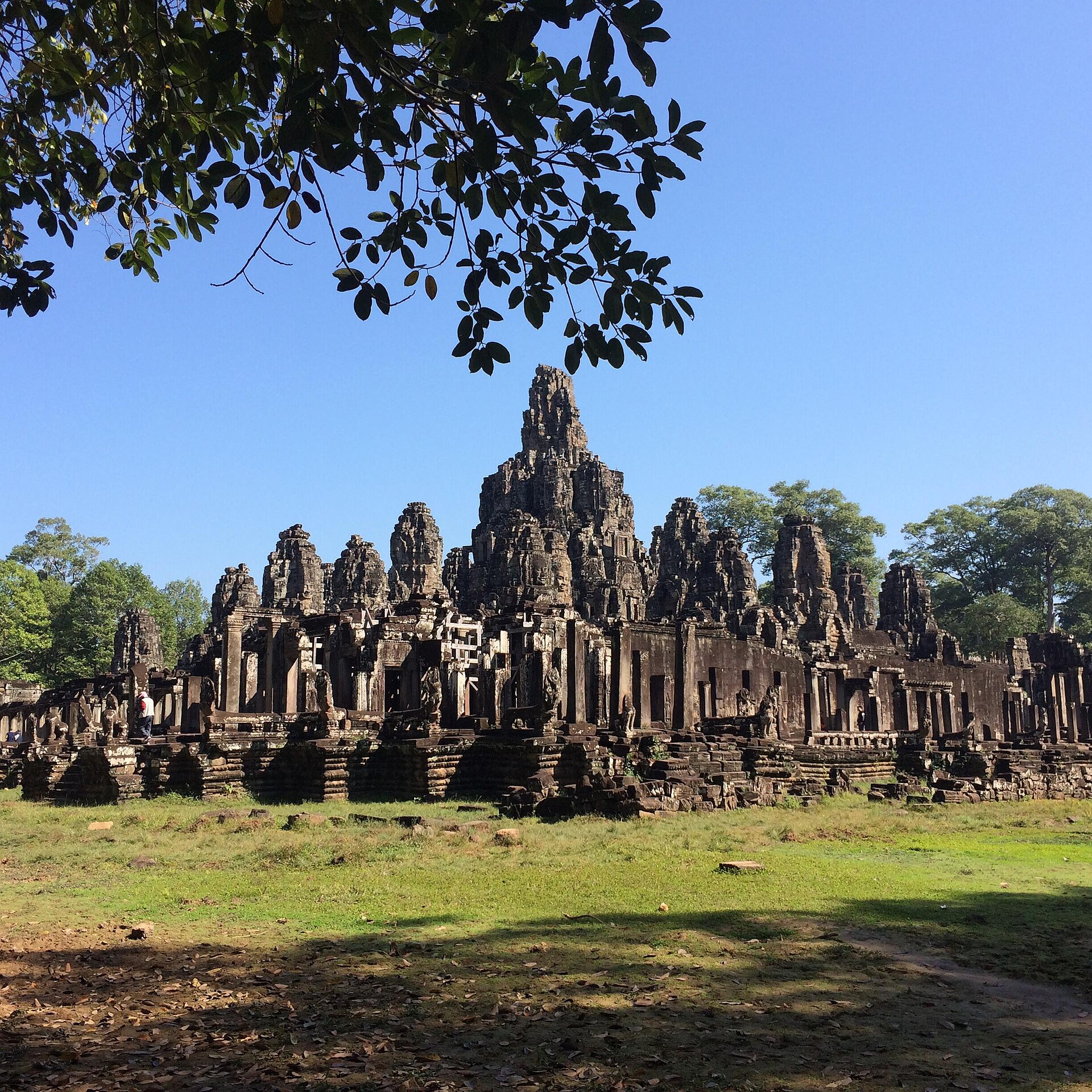
At the heart of Angkor Thom stands Bayon, one of the most recognisable temples in Cambodia because of the enormous faces carved into its towers. The temple has an almost dreamlike quality, with faces appearing from different levels as you move through its corridors and galleries. Depending on the light and the angle, the expressions can seem calm, mysterious or almost watchful.
Lunch: Escape the Heat
By now you will have been awake for several hours, so take a proper lunch break rather than treating food as something to fit between temples. Choose somewhere shaded and comfortable, drink plenty of water and give yourself time to sit down. Angkor can become extremely hot as the day progresses, and the combination of early waking, walking and tropical temperatures can catch up with you surprisingly quickly. After lunch, you have a choice: if you still feel energetic, you can visit another nearby monument with your driver or guide; if you feel tired, return to the hotel for a few hours of rest.
Evening: Khmer Dinner in Siem Reap
Return to town for dinner and choose a restaurant that allows you to explore more of Cambodia’s food culture. You might try lok lak, a marinated beef dish generally served with rice and fresh vegetables, or explore one of the country’s traditional curries. If you prefer something lighter after a long day, Cambodian noodle soups and fresh vegetable dishes are good alternatives. If you still have energy, consider attending a traditional Cambodian dance or cultural performance, but don’t feel obliged to stay out late.
Food note: After an early start and several hours in the archaeological park, a proper Khmer lunch is much more useful than relying on snacks throughout the morning. In the evening, try a Cambodian dish you haven’t yet ordered, and ask the restaurant about regional or seasonal specialities rather than limiting yourself to the dishes most familiar to international visitors.
Do not miss: Stay inside Angkor Wat after the sunrise crowds begin to disperse and spend time exploring the temple itself, because the galleries, carvings and architectural details are far more significant than the photograph.
Logistics: Arrange your tuk-tuk or private car and driver the evening before and confirm your pickup time. If you are using a guide, agree in advance on which temples you want to prioritise and how much flexibility you would like during the day. Purchase your Angkor pass through Angkor Enterprise, the official ticketing authority. Carry water, sunscreen and comfortable footwear, and dress appropriately for religious and cultural sites. Do not climb on restricted structures or touch fragile carvings, even if you see other visitors doing so.
Angkor Enterprise – Official Website
Day 8 — Ta Prohm, Quieter Temples and an Evening in Siem Reap
Pace: Moderate and more flexible than Day 7
Morning: Ta Prohm and the Jungle
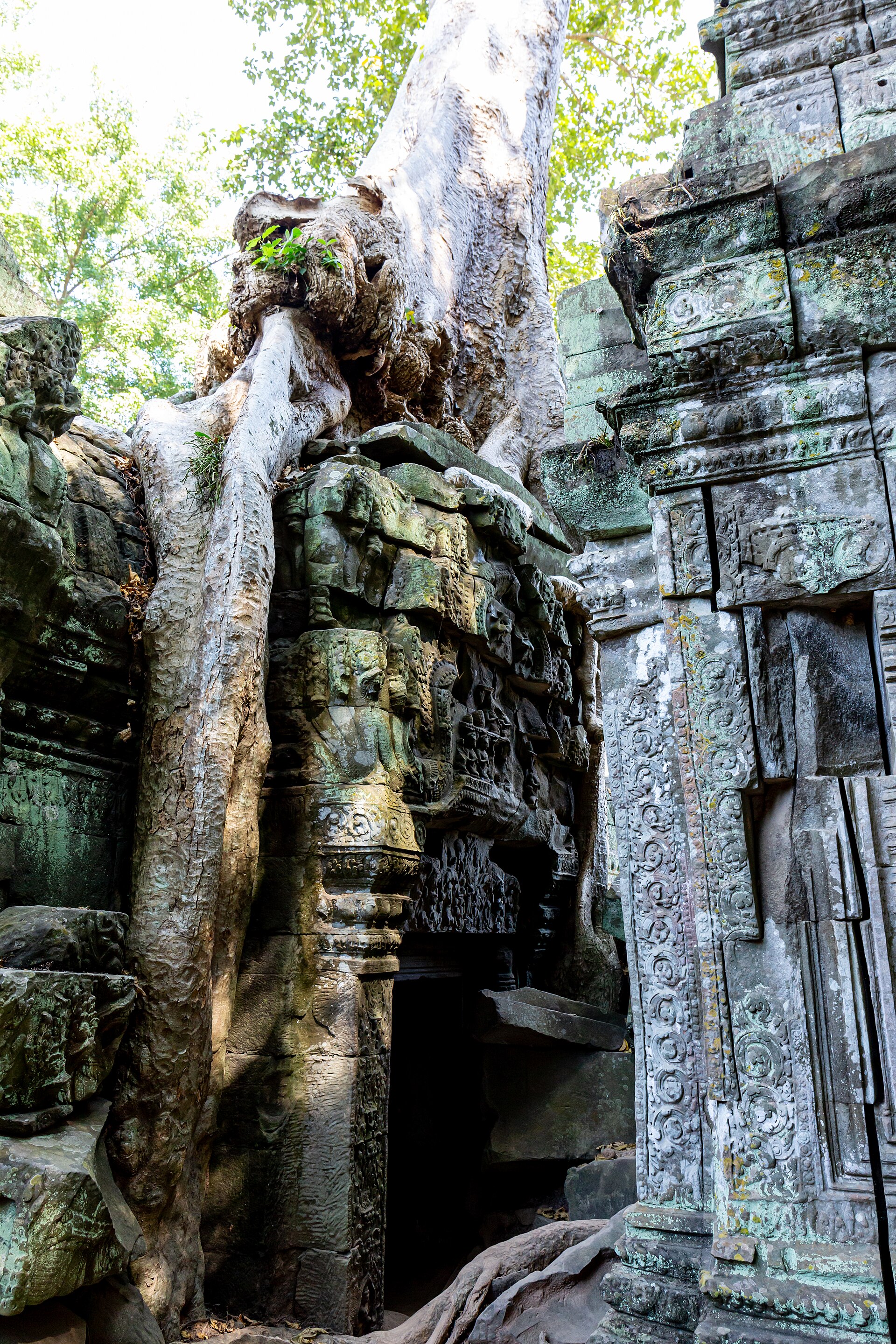
Start the morning with Ta Prohm, the temple famously associated with jungle-covered ruins and enormous tree roots growing around ancient stonework. The temple was built during the reign of Jayavarman VII and was originally known as Rajavihara. Its relationship with the surrounding forest has become one of the most recognisable images of Angkor, and its appearance in Lara Croft: Tomb Raider helped make it even more famous internationally. The film connection is fun, but it should not overshadow the site’s actual history.
Late Morning: Explore a Lesser-Known Temple
After Ta Prohm, ask your guide or driver to take you to one or two quieter temples within the wider archaeological area. The exact choice can depend on current access, conservation work and your interests, but including a less-visited monument changes the experience considerably. Instead of moving constantly through crowds, you may find yourself with more space to appreciate the architecture and the surrounding landscape. This is one of the best ways to make your Angkor experience feel personal.
Midday: Return to Siem Reap for Lunch
By lunchtime, return towards Siem Reap and choose a local restaurant. This is a good point in the trip to try a more everyday Cambodian meal rather than another restaurant specifically designed around tourists visiting Angkor. Ask your server what local people commonly order and be open to something you haven’t researched beforehand.
Afternoon: Slow Down in the City
The afternoon belongs to Siem Reap. Visit a local market, browse shops selling Cambodian handicrafts or spend some time in one of the city’s cafés. If you are interested in traditional crafts, look for organisations and businesses that provide transparent information about how products are made and how local communities benefit. You could also book a traditional Cambodian massage, which can be particularly welcome after two days of walking around temples. The important thing is that this afternoon should feel completely different from the archaeological mornings.
Evening: Khmer Food and Traditional Performance
Tonight is a good opportunity to experience Cambodian culture through food and performance. Depending on what is available during your visit, consider attending a traditional dance performance or another established cultural show. Choose a reputable venue that presents Cambodian traditions respectfully rather than a staged attraction built entirely around tourist expectations. Before or after the performance, have a relaxed Khmer dinner and perhaps return to the market for another look. Siem Reap becomes especially atmospheric after dark, when the heat drops and the streets fill with diners, vendors and travellers.
Food note: Use today to explore Cambodian food beyond the most famous dishes. Try a Khmer curry, kuy teav, grilled fish, fresh spring rolls or a vegetable dish flavoured with local herbs, and consider asking your restaurant which dishes are traditionally eaten in Cambodian homes.
Logistics: The Angkor complex covers a large area, so continue using a tuk-tuk, car and driver or organised tour rather than attempting to walk between distant temples. Carry water even if the morning begins comfortably, and use the afternoon in Siem Reap as a chance to escape the strongest heat. If you want to book a traditional performance, ask your accommodation for a reputable option and confirm what is included before paying. For shopping, prioritise legitimate local businesses and artisan organisations where possible.
Angkor Enterprise – Official Website
Day 9 — Siem Reap Beyond the Temples: Villages, Markets and Khmer Life
Pace: Easy to moderate and highly customizable
Morning: Choose Between More Angkor or Rural Cambodia
If history has been the highlight of your trip, ask your guide to recommend another temple based on your interests. There are enough monuments across the Angkor area to make another half-day worthwhile, particularly if you prefer smaller and quieter sites to the headline attractions. If you have had enough temples, take the opposite approach and leave the archaeological park behind. A countryside experience can introduce rice fields, traditional homes, local agriculture and everyday rural life around Siem Reap. The key is choosing an experience that works with local communities rather than treating villages as a backdrop for photographs.
Midday: Eat Somewhere Local
Return to Siem Reap for lunch or eat at a locally run establishment during your excursion. Cambodian food becomes even more interesting when you stop thinking of it as a list of dishes and start paying attention to how meals are actually eaten. Rice, fresh vegetables, herbs, soups, grilled meats and fish often appear together, creating a meal that is varied without necessarily being complicated.
Afternoon: Markets, Cafés and Time to Yourself
Keep the afternoon open. You might browse the Old Market area for souvenirs, find a café and write a few notes about your trip, enjoy a massage or simply spend time at the hotel pool. If you are travelling with a camera, this can also be a good opportunity to organise your photographs before leaving. The best travel memories are not always the most spectacular ones. Sometimes you will remember the small restaurant where you were shown how to eat sticky rice, the tuk-tuk driver who recommended a quiet temple or the afternoon rain that forced you into a café for an hour.
Evening: A Final Cambodian Night
For your final full evening in Siem Reap, choose somewhere special for dinner. It does not have to be expensive. A memorable meal could be a small local restaurant serving traditional dishes, a contemporary Khmer restaurant or a market where you can try several different foods.
Do not miss: Spend at least part of your final evening somewhere that feels genuinely local rather than somewhere chosen solely because it appears on a tourist list, because the everyday atmosphere of Siem Reap is an important part of understanding Cambodia beyond Angkor.
Logistics: If you choose a village experience, research the operator carefully and favour programmes that clearly explain how local communities benefit. Avoid tours that encourage visitors to photograph children or enter private homes without meaningful consent. For additional temple visits, confirm opening arrangements and ticket requirements with your guide or Angkor Enterprise. Keep the final evening relatively easy because tomorrow’s schedule depends on your flight time.
What About Phnom Penh?
Phnom Penh deserves consideration, but it should be handled honestly within a ten-day itinerary. The Cambodian capital offers a very different experience from Siem Reap, with the Royal Palace, National Museum, riverside promenades, markets and important historical museums providing a deeper introduction to the country’s more recent history and modern urban life.
If Phnom Penh is particularly important to you, there are two sensible ways to include it. The first is to extend the trip by two or three days, which is the option I would recommend if your schedule allows it. This gives you enough time to travel there, explore properly and return or continue to your international departure without turning the final part of the trip into a logistical puzzle. The second is to substitute Phnom Penh for part of the Siem Reap experience. This works if you are more interested in Cambodia’s modern history and capital-city atmosphere than in spending multiple days exploring Angkor.
A Note on Responsible Cultural Experiences
The more popular a destination becomes, the more important it is to think carefully about how you experience it. Angkor is an obvious example. Millions of people have travelled through these temples, and conservation depends partly on visitors respecting the archaeological environment. Do not climb where access is restricted, touch delicate carvings unnecessarily or ignore barriers for a better photograph. When visiting active religious spaces, keep your voice low and dress appropriately, particularly when people are worshipping.
If you visit a village, remember that you are entering someone’s community rather than walking through an attraction. Ask permission before taking photographs, don’t hand money or sweets directly to children simply because they ask, and choose experiences that provide clear and fair benefits to local residents.
Day 10 — Siem Reap: A Slow Final Morning and Departure
Pace: Easy and flexible
Morning: Breakfast and One Last Walk
Start with a relaxed breakfast and, if time allows, take a final walk around the area near your accommodation. You may want to return to a café you enjoyed earlier in the trip, browse a market for last-minute souvenirs or simply sit somewhere quiet and think about the journey. After nine days of changing scenery, there is something quite pleasant about having no major landmark left to chase. If you have not yet bought souvenirs, this is also a good time to look for Cambodian handicrafts, textiles, spices or locally produced items. Whenever possible, choose established local businesses and artisan organisations that can explain where their products come from.
Late Morning: Check Out and Head Towards the Airport
Return to your hotel, collect your luggage and check out with plenty of time remaining before your flight. Allow a generous buffer for the airport transfer, particularly if your departure falls during a busy period. Your accommodation can advise you about current traffic and the appropriate departure time. Keep your passport, boarding information and any required travel documents easily accessible rather than placing them in checked luggage.
Before You Leave: One Final Cambodian Meal
If your flight schedule allows, have one last Cambodian meal before leaving Siem Reap. Perhaps you will order the dish that became your favourite during the trip, or perhaps you will choose something you never got around to trying.
Afternoon or Evening: Departure
Make your way to the airport with enough time for check-in, security and any departure procedures. As you leave Siem Reap, the journey may feel surprisingly full despite having covered only three main destinations. That is the advantage of choosing depth over distance.
Do not miss: Leave yourself enough quiet time on the final morning to reflect on the journey, because the contrast between the Mekong, Vang Vieng’s mountains and Angkor’s ancient temples is likely to be one of the things you remember long after the individual sightseeing stops begin to blur together.
Logistics: Confirm your airport transfer and flight details the evening before departure. If you are travelling internationally, allow a comfortable amount of time at the airport rather than relying on the minimum recommended arrival window. For current airport and travel information, check your airline and the relevant official airport resources close to departure.
How Much Should You Budget for Laos and Cambodia?
One of the appealing things about this itinerary is that it can be adapted to several different budgets without changing the overall route. Laos and Cambodia can both be travelled relatively affordably, but your total cost will depend heavily on the standard of accommodation you choose, how often you use private transportation and how many guided experiences you include.
For this particular itinerary, the largest expenses are likely to be international and regional flights, accommodation, transportation between destinations, Angkor admission, private guides or drivers and organised activities such as kayaking, river cruises or village experiences. Food remains relatively affordable compared with many Western destinations, particularly if you eat at local restaurants and markets. Even in Siem Reap, you can choose between inexpensive Khmer meals and more polished restaurants, allowing you to adjust spending according to your priorities.
A useful way to approach the budget is to decide where comfort matters most. If you want a beautiful riverside room in Luang Prabang, you might choose simpler accommodation in Vang Vieng. If a private driver and guide are important to you at Angkor, you could save money by choosing a mid-range hotel rather than an upscale resort.
Where to Spend More and Where to Save
If you are working with a moderate budget, prioritise spending on location, transportation and knowledgeable local guides rather than automatically choosing the most expensive hotel. A well-located hotel in Luang Prabang means you can walk to restaurants and temples instead of constantly arranging tuk-tuks. A private driver or experienced guide around Angkor can make the archaeological experience significantly more rewarding because you will understand what you are looking at rather than simply moving between famous monuments. A comfortable room with air conditioning and a pool in Siem Reap is also a worthwhile upgrade because the temple days begin early and can be hot.
Where you can save is on unnecessary private transfers, international-style restaurants and accommodation that offers facilities you won’t have time to use.
Transportation Guide for the Complete Journey
The easiest way to think about transportation is to divide the trip into three sections.
Luang Prabang
Use walking and tuk-tuks within the old town, with a private or shared vehicle for Kuang Si Waterfalls and other excursions outside the centre.
Luang Prabang to Vang Vieng
Use the Laos-China Railway where the current timetable works with your itinerary. It is significantly more efficient than spending most of the day on a winding road.
Vang Vieng
Tuk-tuks, local drivers, bicycles and organised excursion transport are the main practical options. Motorbikes can provide independence for experienced riders, but only use one if you are properly licensed, insured and comfortable with the local conditions.
Laos to Cambodia
For a ten-day trip, favour the most efficient available regional flight connection rather than building the itinerary around an overland border crossing.
Siem Reap and Angkor
Use a private tuk-tuk or car and driver for temple days. The distances between monuments are too great to make walking practical, and having transport waiting for you makes it much easier to adjust the itinerary according to the heat and your energy.
Siem Reap Town
Walking and tuk-tuks are usually sufficient for restaurants, markets and evening exploration.
Official Websites and Useful Travel Resources
Because visa requirements, railway schedules, airport procedures and entry forms can change, use official sources for the parts of the journey that involve formal travel requirements.
- Lao Tourism – Official Website — destination information and general tourism planning
- Ministry of Tourism of Cambodia – Official Website — destination information and broader travel planning
- Official Cambodia e-Visa Portal — use this rather than third-party visa websites that may charge additional processing fees
- Official Cambodia e-Arrival — check current requirements before your trip, as arrival procedures can change
- Angkor Enterprise – Official Website — official information concerning Angkor Archaeological Park admission and tickets
For flights, always check the airline’s own website for current schedules, baggage rules and connection requirements rather than relying on an old itinerary or third-party listing.
Money and Everyday Spending
Carry some local currency in each country for small restaurants, markets, tuk-tuks and other everyday purchases. Cards are increasingly accepted in hotels, established restaurants and larger businesses, particularly in tourist areas, but you should not assume that every small establishment will accept them. ATMs are available in the main tourist destinations, although having a backup payment method is sensible. For markets and small purchases, modest negotiation may be part of the local shopping culture, but there is little value in arguing aggressively over a small amount of money. If a price is reasonable and the seller is operating a small local business, paying fairly is often a better travel experience than trying to save the equivalent of a few coins.
Frequently Asked Questions
Is 10 days enough for Laos and Cambodia?
Ten days is enough to create a rewarding first journey through the two countries if you keep the route focused. Luang Prabang, Vang Vieng and Siem Reap provide a strong combination of culture, nature and history without requiring you to spend every other day travelling.
Should I travel from Laos to Cambodia by land or fly?
For this particular ten-day itinerary, flying is generally the more practical choice when a suitable regional connection is available. Since Vang Vieng has no airport of its own, most travellers backtrack to Luang Prabang, which has a direct flight to Siem Reap and is usually faster overall than continuing on to Vientiane. An overland crossing can be interesting for travellers with more time, but the combination of road travel, border formalities and onward transportation can take too much time from a short holiday.
How many days should I spend in Luang Prabang?
Three nights is a good minimum for this itinerary because it gives you time for temples, Kuang Si Waterfalls, the Mekong and some unstructured exploration. If you have more time, adding another night is worthwhile rather than immediately adding another destination.
Is Vang Vieng worth visiting?
Yes, particularly if you enjoy natural scenery and outdoor activities. Its limestone mountains, caves, river and viewpoints provide a completely different experience from Luang Prabang and create a useful change of pace before the archaeological focus of Siem Reap.
How many days do I need for Angkor Wat?
For a first visit, two full sightseeing days provide a good balance. One day can cover Angkor Wat, Angkor Thom and Bayon, while another can focus on Ta Prohm and quieter temples. Trying to see every major monument in one day is possible, but it usually makes the experience exhausting rather than enjoyable.
Is the Angkor Wat sunrise worth waking up for?
Yes, provided you understand that you will not have the site to yourself. Sunrise is popular, but watching the temple gradually emerge as the sky brightens is still a memorable experience, and you can make the early start more worthwhile by staying afterwards to explore Angkor Wat itself.
Can I include Phnom Penh in a 10-day trip?
You can, but I would treat it as a substitution rather than an automatic addition. If Phnom Penh is important to you, consider reducing the time spent in Siem Reap or, preferably, extending the trip by several days so you can experience the capital without rushing.
What is the best time to visit Laos and Cambodia?
The cooler, generally drier period from around November to February is among the most comfortable for combining temple sightseeing, hiking and outdoor activities. Other seasons can also be rewarding, particularly if you prefer greener landscapes and fewer visitors, but weather conditions can affect some activities.
What should I wear when visiting temples?
Choose clothing that covers your shoulders and knees and follow any specific requirements displayed at individual religious sites. Lightweight, breathable clothing works particularly well in the tropical climate, while comfortable shoes are important because temple visits involve considerable walking.
Is this itinerary suitable for solo travellers?
Yes. Luang Prabang and Siem Reap are particularly easy destinations for independent travellers, while organised excursions can make activities such as kayaking, cave visits and village experiences more straightforward in Vang Vieng. Using reputable local drivers and guides also gives solo travellers flexibility without requiring them to navigate every transfer alone.
Is Laos or Cambodia more expensive?
Both can be travelled on a relatively moderate budget, although costs vary depending on accommodation and transportation choices. Private drivers, guides, boutique hotels and organised experiences will increase the budget, while local restaurants, guesthouses and shared transportation can keep costs considerably lower.
Do I need a guide for Laos?
You do not need a guide for ordinary sightseeing in Luang Prabang or Vang Vieng, and many travellers will enjoy exploring those destinations independently. A guide becomes more useful for specialised experiences such as caves, cultural activities or complex historical sites, while Angkor is the place where professional historical guidance can make the biggest difference.
Final Take: Depth Over Distance
So use this itinerary as a starting point rather than a set of rules. Customize the route, change the pace, add a night where you fall in love with a place or swap an activity that doesn’t suit your travel style. You can also remix the journey with Honge to create a version built around your own interests, budget and preferred pace.
The contrast between the Mekong, Vang Vieng’s mountains and Angkor’s ancient temples is likely to be one of the things you remember long after the individual sightseeing stops begin to blur together.
Ready to make it yours?
Customize this itinerary with AI
Tailor Luang Prabang nights, Vang Vieng activities and Angkor days to your Laos and Cambodia trip.
Related itineraries
- 7-Day Montenegro Road Trip: Kotor, Durmitor & the Adriatic Coast
- 7-Day Bulgaria Itinerary: Sofia, Rila, Plovdiv & the Pirin Mountains
- 10-Day Sri Lanka Itinerary: Beaches, Tea Country & Wildlife Safari
- 10-Day Philippines Island-Hopping Itinerary: El Nido, Coron & Bohol
- Bali or Thailand? How to Choose Your First Southeast Asia Trip
- 9-Day Vegan Thailand Itinerary: Bangkok, Chiang Mai & Islands
- Family Vietnam Itinerary: Hanoi, Halong Bay & Ho Chi Minh City
- 8-Day Eastern India Itinerary: Kolkata, Odisha Temples & Darjeeling Tea
Written by
This blog was contributed by B. Sai Nikita, a travel enthusiast and writer. B. Sai Nikita can be reached at bsainikita10@gmail.com.
About Honge
Honge is an AI travel planning platform focused on practical, experience-led itineraries with realistic pacing and logistics. All blog content is edited and published by Honge. Our Laos and Cambodia research draws on updated practical logistics as of September 2026. © Honge. All rights reserved.
Image credits: Photos are sourced from Unsplash and Wikimedia Commons. Copyright remains with their respective photographers and rights holders. Unsplash images are used according to the Unsplash License. Wikimedia Commons images are used according to their applicable CC BY-SA 4.0 license terms.
Travel disclaimer
This itinerary is intended as general travel inspiration and planning guidance only — not as personalised travel advice. Conditions change. Before you travel, check the current entry requirements, visa and e-Visa rules, and any travel advisories issued by your government for Laos and Cambodia. Complete any required e-Visa, e-Arrival or immigration steps on official government portals, review weather and road or river conditions for your specific dates, confirm railway schedules and reservations on the Laos-China Railway, regional flight connections into Siem Reap, Angkor Archaeological Park ticket rules via Angkor Enterprise, temple dress codes and visiting hours, private-driver and tuk-tuk arrangements, hotel transfer arrangements, and airport transfer times directly with operators and official sources, and take out comprehensive travel insurance that covers medical, cancellation, and disruption. Suggested hotels and stay styles in this article are samples only and depend on availability; in the Honge app they may appear as booking options when they are offered by our vendors at the time of your search. Road, weather, temple, rail, flight, and attraction conditions can change. Honge is not responsible for any changes to conditions, services, or experiences described in this article after the date of publication.