
Before I went to South Korea, almost every warning I got sounded the same.
Start with this itinerary
Open this route in Honge as your starting point, then shape the days, stays, and pace around how you travel.
“Vegan food will be difficult.”
“Everything has fish sauce.”
“You’ll spend the week explaining your diet.”
Honestly, I expected the trip to feel exhausting.
I imagined constantly checking ingredients, awkward restaurant conversations, and surviving mostly on plain rice and convenience-store snacks.
Instead, something unexpected happened.
Within two or three days, the country started making sense to me.
Not perfectly. Not effortlessly. There were definitely moments of confusion — standing in front of convenience store shelves translating ingredient labels one by one, realizing too late that a “vegetable” soup still contained anchovy broth, or awkwardly repeating “no egg, no fish, no meat” while restaurant staff stared back uncertainly.
But once I settled into the rhythm of the trip, South Korea became far easier — and far more rewarding — than I had imagined.
I stopped trying to force the country to adapt to me and instead learned how to move through it differently.
Morning convenience-store coffee runs.
Late-night vegan ramyeon.
Neighborhood cafés hidden above staircases.
Temple meals that felt calm and restorative after chaotic city days.
Tiny restaurants where the menu had only four items but somehow everything tasted deeply comforting.
As a solo traveler, I also expected the trip to feel lonely at times.
Surprisingly, it rarely did.
Seoul especially has this strange energy where people mostly leave you alone, yet you never really feel isolated. The cafés stay open late, the streets remain active deep into the night, and even solo dining slowly starts feeling normal instead of uncomfortable.
Some evenings, I spent hours simply wandering through neighborhoods like Hongdae or Seongsu without any real plan — drifting between bakeries, design stores, underground shopping arcades, and cafés while K-pop music echoed from side streets.
And then there were the smaller moments that stayed with me unexpectedly:
warming my hands around hot convenience-store sweet potatoes during a cold evening,
watching rain fall through the windows of a hanok café in Ikseon-dong,
or sitting silently on a KTX train while Korean countryside scenery blurred past outside.
South Korea did require planning as a vegan traveler.
But it never felt impossible.
What it required more than anything was awareness, patience, and a willingness to occasionally slow down instead of expecting every meal to be convenient.
Once I accepted that, the trip stopped feeling stressful and started feeling immersive.
When To Visit South Korea
South Korea feels very seasonal, especially if you spend time walking through neighborhoods and outdoor markets the way I did.
Spring and autumn are easily the most comfortable seasons.
Spring brings cherry blossoms and mild temperatures, while autumn covers Seoul and Busan in golden leaves and cooler evenings that make wandering through café districts feel almost cinematic.
Summer, on the other hand, can become intensely humid. A few locals told me that July and August often feel sticky and exhausting even for them, and after experiencing several unexpectedly humid afternoons in Seoul, I understood why.
Winter looked beautiful in photos, especially around palace districts and hanok villages, but I was also grateful not to be carrying vegan convenience-store breakfasts through freezing temperatures every morning.
Getting Around South Korea — KTX Trains, T-Money Cards & Intercity Travel
Before arriving in South Korea, I assumed transportation would be one of the stressful parts of the trip.
Instead, it became one of the things I ended up enjoying most.
The country is incredibly well connected. Between the subway systems, KTX high-speed trains, buses, and transportation cards, moving between cities quickly became surprisingly easy — even as a solo traveler.
The biggest difference compared to Japan was that Korea felt slightly less polished and slightly more chaotic at times, but also more relaxed. I missed subway exits more than once in Seoul, accidentally boarded the wrong side of a station at one point near Gangnam, and definitely stood staring at ticket machines longer than I would like to admit.
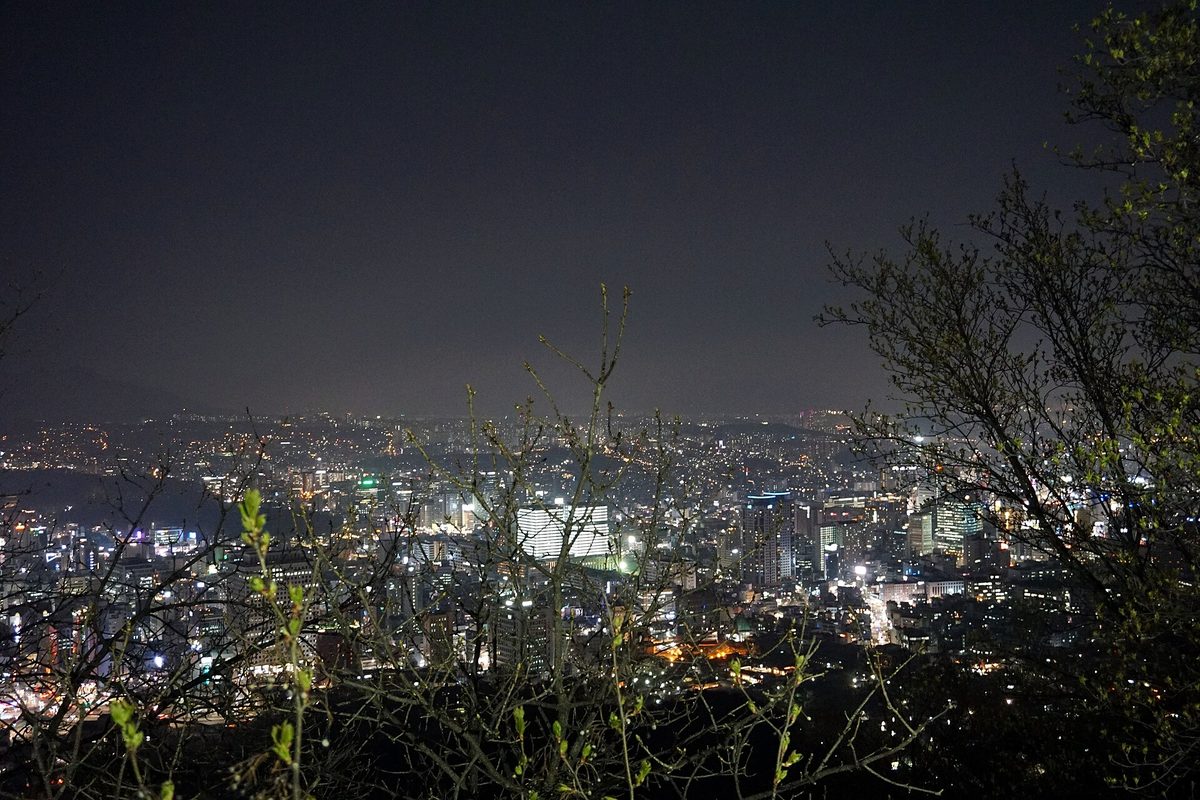
But somehow the system still felt manageable very quickly.
The KTX high-speed train ended up becoming one of my favorite parts of travelling through Korea. Watching Seoul slowly disappear into countryside scenery while drinking convenience-store coffee and eating triangle kimbap somehow made the travel days feel peaceful instead of tiring.
For routes like:
- Seoul → Jeonju
- Seoul → Busan
- Busan → Seoul
the KTX was easily the best option.
Tickets can be booked online through the official English KORAIL website:
KORAIL Official Booking Website
Direct reservation page:
I booked most of my tickets a few days in advance, although for busy weekends and holidays, earlier booking is definitely safer because popular train timings can sell out quickly.
The trains themselves were clean, quiet, comfortable, and significantly easier to navigate than I had expected before the trip.
Inside the cities, though, the real lifesaver was the T-Money card.
After buying it, I stopped thinking about transportation almost entirely.
Instead of purchasing subway tickets repeatedly, I could simply tap into:
- subways,
- buses,
- convenience stores,
- some vending machines,
- and even taxis.
That tiny convenience made solo travel dramatically easier.
I bought my T-Money card shortly after arriving, and honestly I would recommend getting one immediately at the airport if possible.
T-Money cards are commonly available at:
- Incheon Airport
- subway stations
- convenience stores like GS25, CU, and 7-Eleven throughout Korea.
Official tourism information:
Visit Korea Transportation Card Guide
Official T-Money information:
One thing I appreciated about Korea was how quickly transportation started feeling routine.
The first day felt confusing.
By the third or fourth day, I was instinctively tapping through subway gates, transferring lines, grabbing late-night snacks at stations, and navigating Seoul almost without thinking.
That shift — from uncertainty to familiarity — became one of the most satisfying parts of the trip itself.
Korean Dishes That Can Usually Be Veganized
One thing that made the trip dramatically easier was learning which Korean dishes could realistically be veganized without completely changing the experience.
At first, Korean menus felt intimidating because so many dishes quietly include:
fish sauce,
anchovy broth,
egg,
or small meat additions that are not immediately obvious.
But after a few days, I started recognizing patterns and identifying dishes that restaurants could usually adapt fairly easily if I asked clearly.
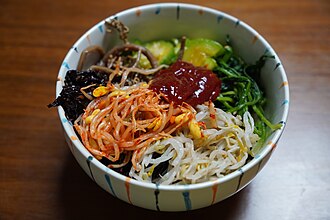
Bibimbap (비빔밥) quickly became one of the safest and most reliable meals throughout the trip. At its core, it is simply a warm rice bowl topped with seasoned vegetables like spinach, mushrooms, bean sprouts, carrots, and greens, mixed together with spicy gochujang sauce. The important thing was always asking for no egg and no meat. Once adjusted, it became one of my favorite comfort meals in Korea — filling, balanced, warm, and easy to find almost everywhere from Seoul to Jeonju.
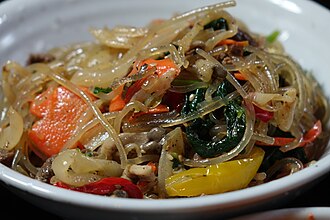
Japchae (잡채) also turned out to be surprisingly vegan-friendly in many places. The dish uses chewy sweet potato glass noodles stir-fried with vegetables, sesame oil, mushrooms, onions, and soy sauce. Some restaurants add beef by default, but several cafés and smaller restaurants were happy to prepare a vegetable-only version once I asked. After long walking days, the slightly sweet, savory noodles felt incredibly comforting.
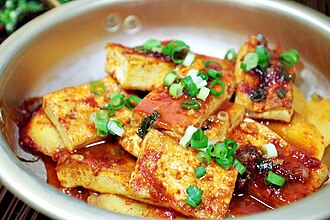
One dish I ended up ordering repeatedly was Dubu Jorim (두부조림), which is braised tofu cooked in a deeply savory soy-based sauce with garlic, sesame, scallions, and chili. When made without seafood-based stock or fish sauce, it became one of the richest and most satisfying vegan dishes I found in Korea. Paired with rice and a few vegetable side dishes, it often became a simple but perfect meal.
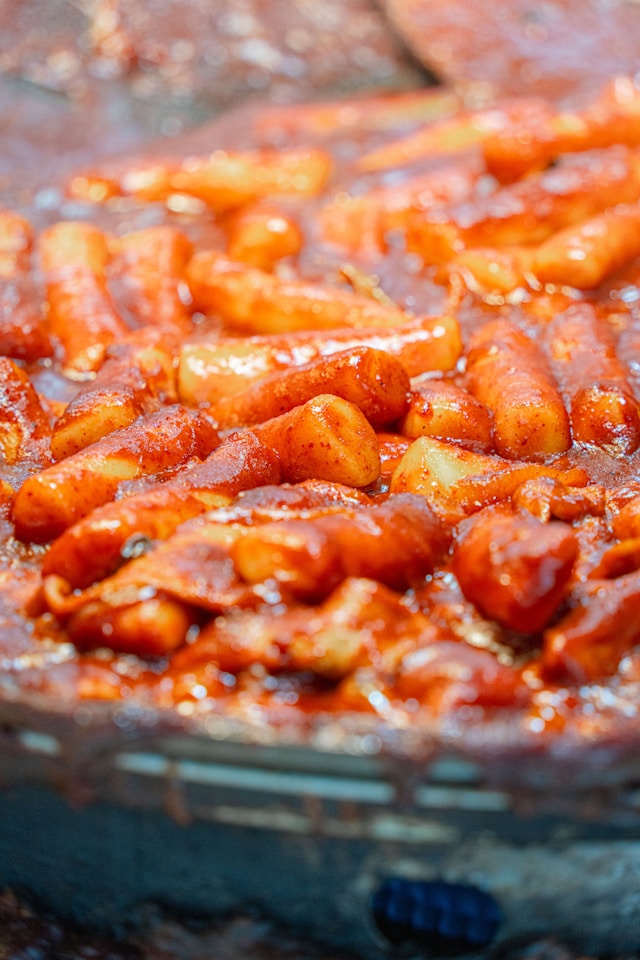
Tteokbokki (떡볶이) was slightly trickier. The chewy rice cakes themselves are usually vegan, but many traditional street versions include fish cakes or use fish-based broth in the sauce. In vegan cafés or more modern food spots, though, I found excellent plant-based versions that still delivered the same spicy, addictive comfort-food feeling. A cold evening in Busan with vegan tteokbokki and hot soup ended up becoming one of my favorite food memories from the trip.
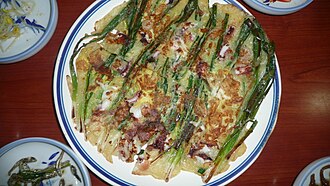
Pajeon (파전), the classic Korean scallion pancake, required a little more caution because some versions rely heavily on egg batter or seafood additions. But in vegan-friendly cafés, I found lighter vegetable versions that were crisp, savory, and perfect to share alongside soup or tea during rainy afternoons.
What surprised me most by the end of the trip was realizing that vegan travel in Korea was less about finding completely separate “vegan food” and more about understanding which dishes could naturally adapt once communication became easier.
Day 1 — Arrival in Seoul
I landed in Seoul slightly anxious and very hungry. Immigration was fast, but by the time I reached Hongdae after navigating the airport train system with my luggage, I was exhausted and honestly questioning whether I had overestimated how easy this trip would be.
The first hour in Seoul felt overwhelming.
Bright signs everywhere.
Subway exits in every direction.
People moving quickly around me.
Korean conversations I could not understand at all.
At one point, I walked into the wrong café entirely because I misread the entrance sign and awkwardly backed out after realizing it was a photo studio.
But somewhere between the confusion and the exhaustion, the city also started feeling exciting.
I checked into my hotel near Hongdae, dropped my bags, and went outside with only one goal:
find dinner and stop overthinking everything.
That first vegan bibimbap bowl changed my mood almost immediately.
Warm rice.
Crisp vegetables.
Sesame oil.
Spicy gochujang.
No ingredient uncertainty.
It felt like a quiet personal victory on day one.
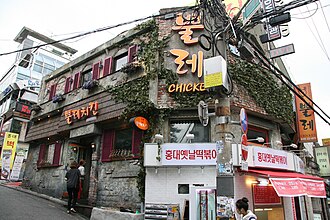
Later that night, I wandered through Hongdae while street performers danced in crowded plazas, K-pop music spilled from storefronts, and cafés remained busy long after midnight. The neighborhood felt youthful, chaotic, creative, and constantly alive.
Even walking alone, I never really felt unsafe.
Day 2 — Seoul Neighborhoods, Palaces & Café Hopping
I started the morning near Gyeongbokgung Palace before the larger crowds arrived. Watching people walk through palace courtyards wearing rented hanbok dresses while mountains rose behind Seoul’s skyline created one of my first real “I’m actually in Korea” moments.
Compared to Tokyo or Osaka, Seoul constantly felt more dramatic visually — steep hills, giant avenues, glass towers, palace gates, neon signs, and mountains somehow existing together within the same city.
After the palace, I wandered through Bukchon Hanok Village and eventually toward Ikseon-dong, which became one of my favorite neighborhoods in Seoul.
Tiny hanok cafés hid behind wooden doors, narrow alleys twisted unexpectedly between old buildings, and every few minutes I seemed to discover another bakery or tea shop filled with people photographing desserts near the windows.
It was also where I had one of the more frustrating moments of the trip.
I ordered what I thought was a safe vegetable noodle dish, only to realize halfway through that the broth tasted unmistakably fish-based. Nobody had intentionally misled me — I simply had not asked carefully enough.
That small mistake honestly shook my confidence for a while.
After that meal, I became much more specific whenever ordering food:
no meat,
no fish,
no anchovy,
no egg,
no oyster sauce.
By afternoon, I moved toward Seongsu, which felt like Seoul’s creative side turned outward:
industrial cafés,
design stores,
minimalist bakeries,
pop-up fashion spaces,
and endless espresso bars.
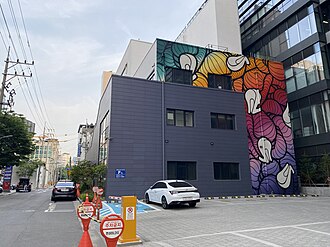
The contrast between traditional Bukchon and ultra-modern Seongsu within the same day somehow captured Seoul perfectly.
Day 3 — Temple Cuisine & A Slower Seoul Day
After two busy days in Seoul, I intentionally gave myself permission to slow down.
That ended up becoming one of the best decisions of the trip.
I spent the morning exploring the area around Jogyesa Temple, where lanterns swayed gently above quiet courtyards while office towers rose in the distance behind them.
That contrast became something I noticed repeatedly in Korea:
moments of calm somehow surviving inside incredibly busy cities.
Later that afternoon, I booked a temple cuisine lunch, and it became one of the most memorable meals I had in Korea. If you want practical options: Balwoo Gongyang is usually the most budget-friendly at around ₩30,000 for lunch; Sanchon is often around ₩36,000–₩45,000 with a more performance-and-atmosphere style in Insadong; and Bium in Cheongdam is a premium Michelin-recognized tasting experience (about ₩160,000 lunch / ₩280,000 dinner), typically booked in advance.
The dishes were subtle but incredibly layered:
lotus root,
mountain greens,
seasonal vegetables,
tofu,
fermented sauces,
mushroom broths,
and delicate side dishes arranged almost like artwork.
Nothing felt heavy.
Nothing tried too hard.
The meal reminded me that vegan food in Korea is not simply a modern trend — it has deep Buddhist and historical roots once you know where to look.
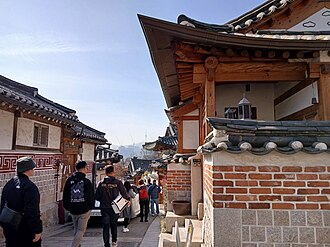
That evening, rain started falling while I sat inside a café near Bukchon Hanok Village drinking hot tea and watching people hurry through narrow alleyways under umbrellas.
It was one of the quietest moments of the trip, and somehow one of the ones I remember most clearly.
Day 4 — KTX to Jeonju
Taking the KTX to Jeonju felt like a reset.
Seoul’s skyscrapers slowly disappeared outside the train window and were replaced by quieter towns, farmland, and softer landscapes.
I spent most of the ride eating convenience-store snacks and watching scenery pass by while trying not to fall asleep.
Jeonju immediately felt slower than Seoul.
The hanok village was touristy in places, but still beautiful — traditional rooftops, narrow walking streets, lanterns, tea houses, calligraphy shops, and small local restaurants tucked between souvenir stores.
Compared to Seoul’s intensity, Jeonju felt softer and more relaxed.
I spent hours simply wandering through the village without much structure, occasionally stopping for tea or snacks whenever something looked interesting.
Jeonju is famous for bibimbap, and vegan versions were surprisingly easy to find once I clearly explained no meat, fish, or egg.
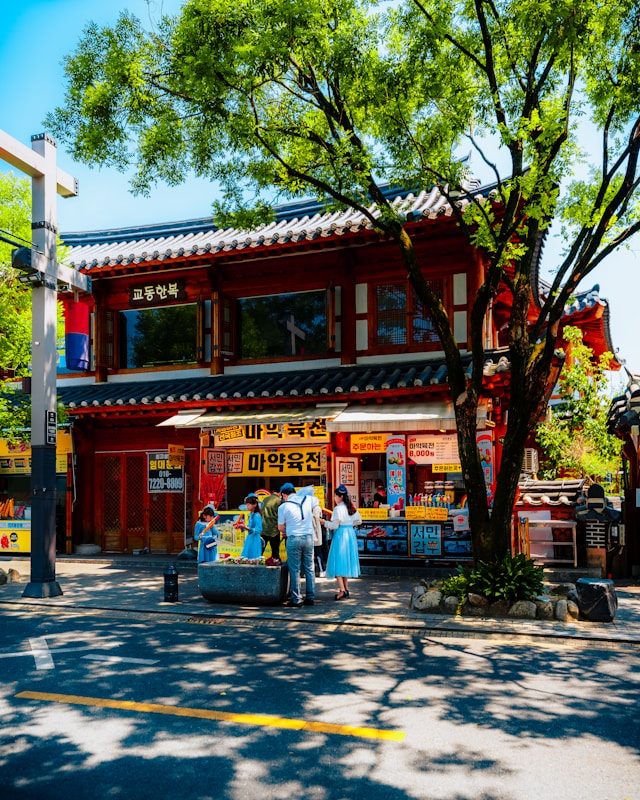
Dinner that evening became one of the biggest meals of the trip:
japchae,
grilled mushrooms,
pickled vegetables,
braised tofu,
seasoned greens,
and vegan-friendly makgeolli alternatives.
For the first time during the trip, I stopped feeling like I was “managing” vegan travel and simply started enjoying Korea.
Day 5 — Jeonju to Busan
The train to Busan felt different from every previous travel day.
Somehow lighter.
More relaxed.
By this point, Korea no longer felt unfamiliar.
I checked into a hotel near Seomyeon and immediately noticed how different Busan’s atmosphere felt compared to Seoul.
Seoul feels vertical and intense.
Busan feels open.
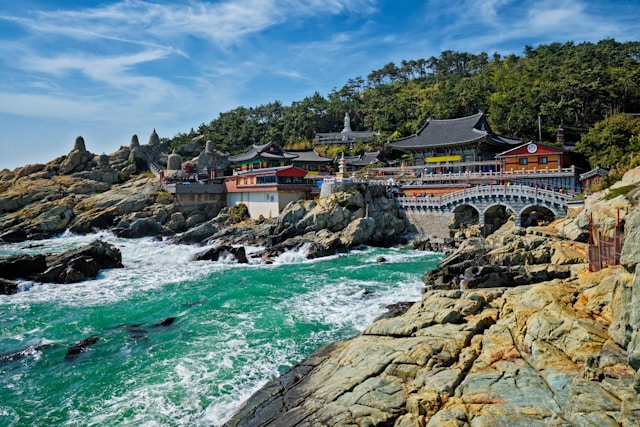
The air felt different near the coast, the pace seemed slower, and people somehow felt more relaxed.
That evening, I explored Haeundae Beach just before sunset while waves rolled in beneath glowing skyscrapers and couples sat quietly along the waterfront.
Compared to Tokyo or Seoul, Busan felt less overwhelming and more breathable.
Dinner that night was at a vegan-friendly restaurant serving tteokbokki, kimbap, and hot noodle soup. After a long train ride, the spicy broth and warm rice cakes felt incredibly comforting.
Later that night, I wandered through Seomyeon with absolutely no plan, drifting through shopping streets, arcades, underground walkways, and late-night cafés while neon lights reflected off wet pavement after a brief rain shower.
Busan became very easy to love very quickly.
Day 6 — Busan Markets & Sea Views
I started the morning near Jagalchi Market knowing it would probably be one of the more challenging food days of the trip.
The market atmosphere was fascinating:
seafood tanks,
vendors shouting,
steam rising from food stalls,
narrow alleyways packed with locals.
But vegan options there definitely required more effort.
I mostly relied on fruit, roasted sweet potatoes, convenience-store snacks, and a few vegetable-based street foods while carefully checking ingredients.
At one point I bought what looked like a safe vegetable pancake from a street stall only to discover tiny seafood pieces mixed into the batter after the first bite.
That moment was frustrating, mostly because it reminded me that vegan travel in Korea still requires constant awareness in traditional markets.
Later in the afternoon, I walked through the colorful hillside streets near Gamcheon Culture Village. Murals, staircases, tiny cafés, ocean views, and painted houses stacked across the hills made the area feel completely different from central Busan.
That evening completely redeemed the day.
I had vegan sundubu-jjigae with extra mushrooms, tofu, and seaweed rice at a small restaurant near Gwangalli Beach, and it ended up becoming one of my favorite comfort meals of the trip.
After dinner, I walked along Gwangalli while the bridge lights reflected across the water and cold ocean wind rolled through the beach paths.
Compared to Seoul’s intensity, Busan felt calmer and more breathable.
Day 7 — Final Seoul Return & Reflections
I returned to Seoul for my final day feeling strangely comfortable with routines that had felt intimidating only a week earlier.
By then:
I understood subway transfers,
I recognized convenience-store vegan snacks,
I knew how to explain dietary restrictions,
and I had stopped feeling nervous before entering restaurants.
I spent the final morning slowly moving between cafés near Hongdae, buying pastries for the flight, and doing one last convenience-store snack run before heading toward the airport train.
The biggest shift by the end of the trip was confidence.
South Korea did require planning as a vegan solo traveler — but not stress-level planning.
Once I understood the rhythm of the country, the trip became deeply rewarding instead of difficult.
And honestly, some of my favorite memories were not the major attractions at all.
They were:
quiet KTX train rides,
late-night convenience-store dinners,
rainy café windows,
small conversations with restaurant staff,
and wandering through Seoul neighborhoods without any particular destination in mind.
South Korea challenged me more than Japan did.
But in some ways, that made the experience feel even more personal.
FAQ
Is South Korea vegan friendly for first-time travelers?
It is increasingly vegan-friendly in major cities, especially Seoul and Busan, but ingredient awareness is still essential because fish-based condiments are common.
What is the biggest vegan challenge in Korean food?
Hidden animal ingredients in broths and sauces. Anchovy stock, fish sauce, and oyster sauce can appear in dishes that seem vegetarian at first glance.
Is 7 days enough for Seoul, Jeonju, and Busan?
Yes. Seven days is enough for a balanced pace if you use KTX and avoid overpacking each day with too many attractions.
Which Korean city is easiest for vegan solo dining?
Seoul usually offers the widest variety and easiest discovery, while Jeonju and Busan are rewarding once you know what to ask for.
Is solo travel in South Korea safe for women?
Many solo women travelers find South Korea comfortable and well connected, especially in major city areas with active public transit and late-night street activity.
Ready to make it yours?
Customize this itinerary with AI
Now that you've seen the full route, use Honge to tailor stays, activities, and day-by-day pacing to your trip.
Related itineraries
- 9-Day Vegan Thailand Itinerary: Bangkok, Chiang Mai & Islands
- Vegetarian Japan Itinerary: 10 Days Through Tokyo, Kyoto & Osaka
- 5-Day Croatia Itinerary for Solo Travelers
- 5-Day Panama City & San Blas Itinerary: Canal, Casco Viejo & Islands
- 8-Day London and Southern England Itinerary: Museums, Cricket, Bath & Jurassic Coast
About The Author
Honge is a travel planning platform focused on practical, experience-led itineraries. Our editorial travel stories combine first-person route context, local friction, and planning realism so readers can convert inspiration into workable plans. We prioritize grounded detail over checklist-style travel content.
Image credits: Photos are sourced from Wikimedia Commons and Unsplash. Copyright remains with the respective photographers and rights holders. Images from Wikimedia Commons are used in accordance with their applicable licensing terms, including the Creative Commons Attribution-Share Alike 4.0 International license where noted. Unsplash images are used in accordance with the Unsplash License.
Travel disclaimer
This itinerary is intended as general travel inspiration and planning guidance only — not as personalised travel advice. Conditions change. Before you travel, check the current entry requirements, visa rules, and any travel advisories issued by your government for your destination. Review weather forecasts for your specific travel dates, confirm opening hours and ticket availability for attractions directly, and take out comprehensive travel insurance that covers medical, cancellation, and disruption. Honge is not responsible for any changes to conditions, services, or experiences described in this article after the date of publication.