
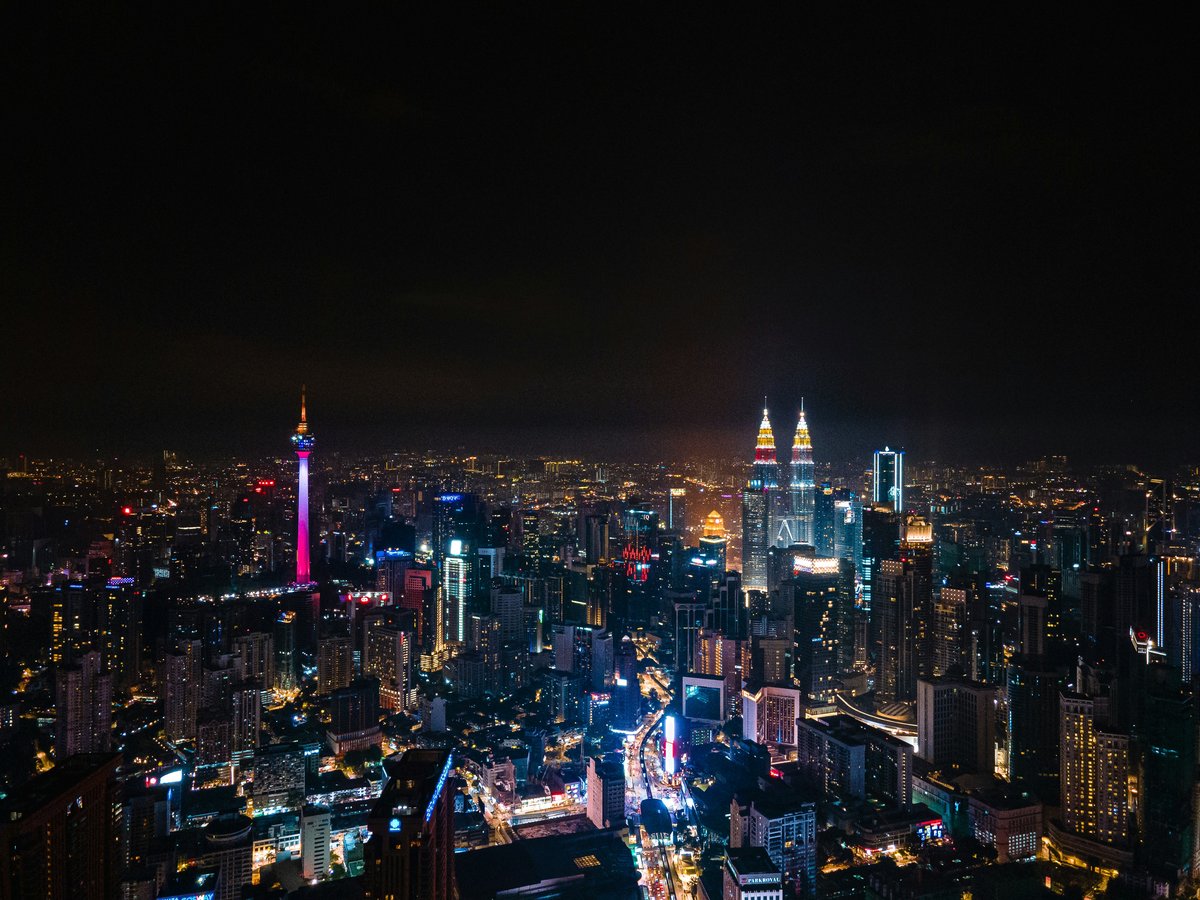
City, culture, history, food, nature and island relaxation — without spending the entire holiday rushing from one attraction to another.
Start with this itinerary
Open this Malaysia route in Honge as your starting point, then shape the flights, hawker stops and Langkawi downtime around how you travel.
Introduction
Malaysia is one of those destinations where a single week can take you through several completely different versions of the country. You can begin beneath the glass-and-steel skyline of Kuala Lumpur, spend an afternoon wandering past century-old shophouses and temples in George Town, eat your way through some of Southeast Asia's most exciting street-food stalls, and then end the trip barefoot on a beach in Langkawi as the sun disappears over the Andaman Sea.
That variety is exactly what makes Malaysia such a rewarding first-time destination, but it also creates one small problem: there is a lot to choose from. With only seven days, trying to add too many cities or islands quickly turns the trip into a sequence of airports, hotel check-ins and hurried sightseeing. A better approach is to let the country reveal itself gradually.
This itinerary does exactly that, following a simple Kuala Lumpur → Penang → Langkawi route. Spend two nights in Kuala Lumpur getting to know the country's modern, multicultural side, move north to Penang for two nights of heritage streets, temples and legendary hawker food, and then finish with three nights in Langkawi, where the pace deliberately slows down.
Kuala Lumpur gives you skyscrapers, historic neighbourhoods, markets and some of the country's most diverse food. Penang changes the mood with George Town's UNESCO-listed heritage streets, colourful murals, clan houses and temples, while its hawker culture gives you a very good reason to keep wandering even after you've already eaten. Langkawi then provides the exhale at the end of the journey: beaches, rainforest, limestone landscapes, mangroves, viewpoints and long evenings when there is nowhere you particularly need to be.
For a first visit, that combination gives you a remarkably complete introduction to Malaysia in just seven days — city, culture, history, food, nature and island relaxation, without spending the entire holiday rushing from one attraction to another.
Who This Malaysia Trip Is For
First-time visitors: This itinerary is especially well suited to travellers visiting Malaysia for the first time. Instead of trying to cover too many destinations, it focuses on three places that offer very different experiences: Kuala Lumpur for modern city life and multicultural neighbourhoods, Penang for heritage and food, and Langkawi for beaches, nature and relaxation.
Food lovers: Malaysia is an excellent destination for travellers who plan their days around what they are going to eat. Kuala Lumpur brings together Malay, Chinese and Indian influences, while Penang takes the food experience even further with its hawker centres, street stalls and neighbourhood eateries.
Couples and friends: The route has a natural rhythm for couples and groups of friends. Kuala Lumpur offers lively evenings, restaurants and plenty of places to explore together, George Town is ideal for wandering through heritage streets at your own pace, and Langkawi gives you three nights to slow down, enjoy the beach or resort, take a boat trip and simply spend time together without a packed schedule.
Culture and history travellers: This trip works well for travellers who prefer discovering a destination through its streets and neighbourhoods rather than spending every day inside museums. George Town's temples, clan houses, shophouses and street art reveal the cultural influences that have shaped Penang, while Kuala Lumpur's historic centre offers a different perspective on Malaysia's past alongside its modern skyline.
Nature lovers: Langkawi adds a completely different side of Malaysia to the trip. After the urban energy of Kuala Lumpur and the heritage streets of Penang, you have time to experience beaches, rainforest-covered hills, mangroves, limestone landscapes and scenic viewpoints without having to rush from one natural attraction to another.
Slow travellers: If you prefer having breathing room rather than squeezing fifteen attractions into every day, this itinerary is designed with you in mind. There are plenty of things to see, but there is also time to stop for coffee, linger over a meal, wander down a street because something catches your attention or simply sit beside the sea in Langkawi without feeling that you are missing out.
Journey Overview
| Day | Route | Pace | Main highlights |
|---|---|---|---|
| Day 1 | Kuala Lumpur | Easy to moderate | Petronas Twin Towers, Bukit Bintang, Jalan Alor |
| Day 2 | Kuala Lumpur | Moderate | Batu Caves, Merdeka Square, Chinatown, Central Market |
| Day 3 | Kuala Lumpur → George Town | Moderate | Heritage streets, street art, Clan Jetties, hawker dinner |
| Day 4 | George Town | Moderate | Khoo Kongsi, Penang Hill, Penang's biggest food day |
| Day 5 | Penang → Langkawi | Easy | Check in, beach, first sunset |
| Day 6 | Langkawi | Moderate | SkyCab, Sky Bridge, beach or pool downtime |
| Day 7 | Langkawi | Slow | Mangrove and geopark tour, final sunset |
Kuala Lumpur (2 nights) → George Town, Penang (2 nights) → Langkawi (3 nights)
Day 1 — Kuala Lumpur: Arrive, Look Up, Then Go Wandering
Pace: Easy to moderate
Your first glimpse of Kuala Lumpur is likely to be a city of contrasts. Glass towers rise above older neighbourhoods, shopping districts sit close to historic streets, and the smell of food can pull you away from whatever landmark you were originally heading toward. It is a city that makes more sense when you resist the temptation to understand it all immediately.
For the first day, keep things relatively simple. After checking into your hotel, spend the afternoon getting oriented rather than trying to conquer the entire city. If you are staying around KLCC, Bukit Bintang or Chinatown, you will already be within easy reach of several of the places that make Kuala Lumpur such an interesting introduction to Malaysia.
If you are staying around KLCC, make the Petronas Twin Towers your first major landmark. They are the image most closely associated with Kuala Lumpur, and seeing them in person gives the city a different scale from the one you get in photographs. During the day, the surrounding KLCC area is polished and modern, with the towers dominating the skyline and the park providing a welcome break from the surrounding buildings.
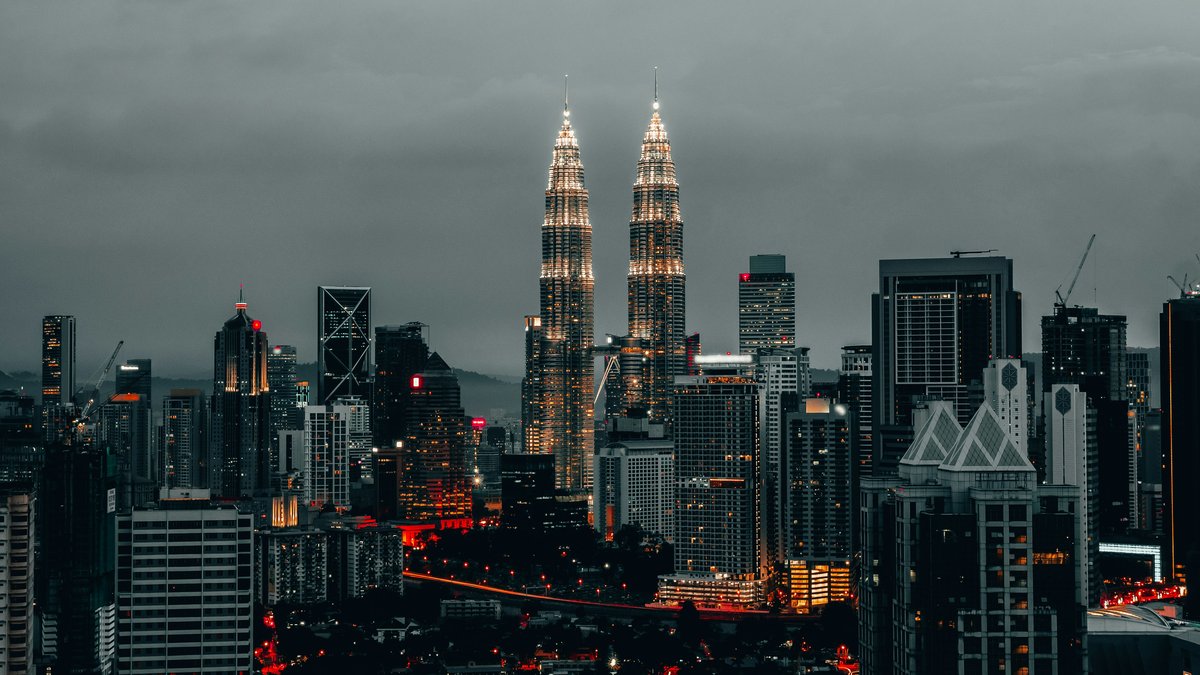
If visiting the towers themselves is important to you, it is worth arranging your entry in advance through the Petronas Twin Towers website rather than assuming you can simply turn up whenever you like. The experience is most rewarding when you can take your time around the observation areas and enjoy the changing perspective of the city below.
Afterwards, resist the urge to spend the rest of the afternoon inside a shopping mall. Kuala Lumpur becomes more interesting when you start moving through its neighbourhoods. Depending on where you are staying, make your way toward Bukit Bintang and Chinatown, using the city's rail system or ride-hailing services when the heat or traffic makes walking less appealing.
By evening, the city changes character again. Head toward Jalan Alor, one of Kuala Lumpur's best-known food streets, where the atmosphere becomes louder, brighter and considerably more appetising after dark. Tables spill toward the street, grills are working constantly and menus seem to cover everything from noodles and seafood to satay and local favourites.
If you still have energy afterwards, Kuala Lumpur is particularly enjoyable at night. The illuminated skyline, busy streets and mixture of old and new architecture give you a very different impression of the city from what you saw during the afternoon.
Food note: Use your first evening to start exploring Malaysian food rather than trying to find one “must-eat” restaurant. Jalan Alor is a convenient introduction, but keep an eye out for satay, nasi lemak, roti canai, noodles and local grilled dishes.
Do not miss: Seeing the Petronas Twin Towers illuminated after dark is one of those simple Kuala Lumpur moments that is worth making time for, even if you have already visited during the day.
Logistics: Stay around KLCC, Bukit Bintang or Chinatown if you want easy access to sightseeing, restaurants and transport. Kuala Lumpur's MRT and LRT networks are useful for covering longer distances, while ride-hailing is convenient when you are travelling at night or when the weather is hot. Allow extra time for traffic if you are travelling by road during busy periods.
Day 2 — Batu Caves, Merdeka Square & Old Kuala Lumpur
Pace: Moderate
If Day 1 introduced you to Kuala Lumpur's modern face, Day 2 is about understanding where that modern city came from. Start outside the centre at Batu Caves, where a towering golden statue and a long flight of colourful steps lead toward the limestone caves above.
Batu Caves is one of those places where the scale is difficult to appreciate until you are standing at the bottom of the staircase. The surrounding limestone formations are impressive in themselves, but the combination of the religious complex, colourful steps, temples and natural setting makes the visit particularly memorable.
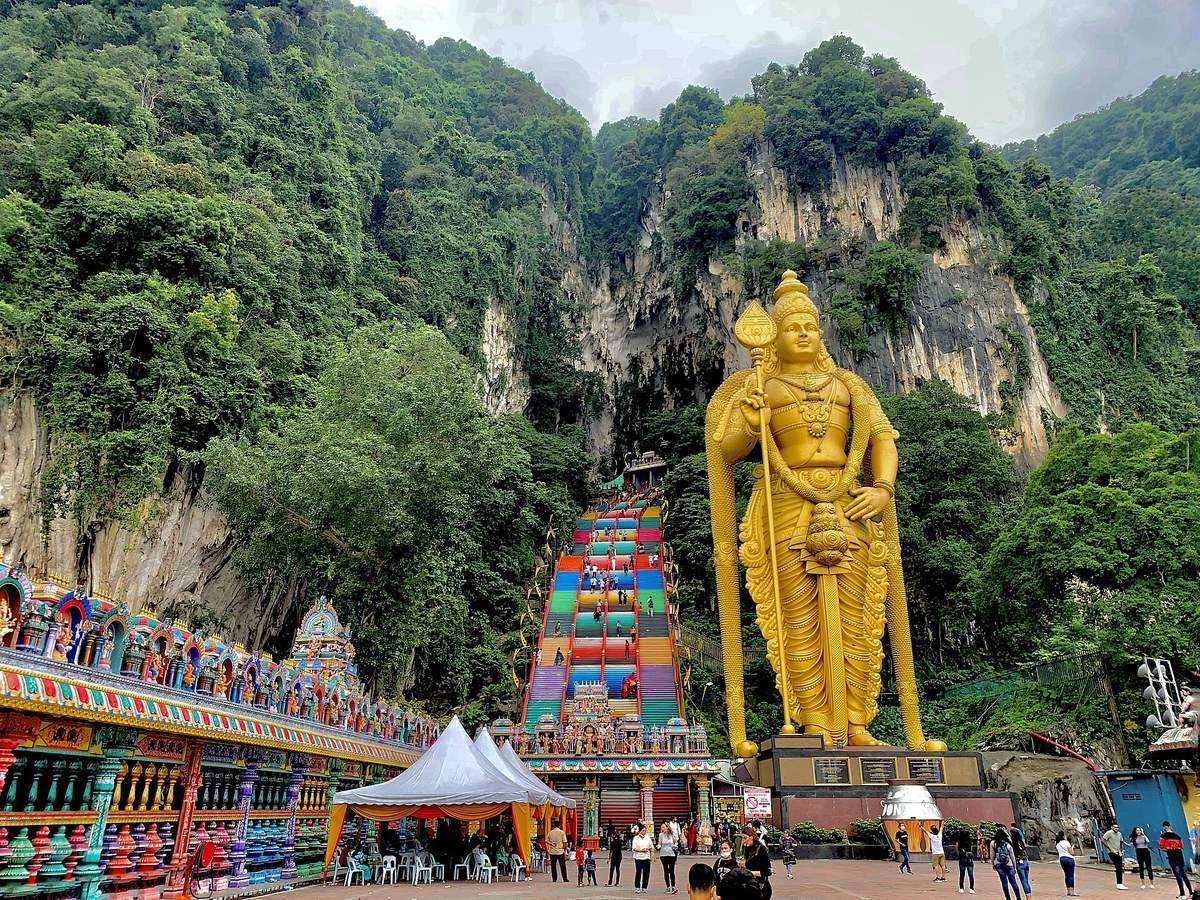
Go relatively early if you can. The heat becomes noticeable as the morning progresses, and the site can become busy. Dress respectfully because this is an important Hindu religious site, and be prepared for the climb rather than treating it as a quick photo stop.
Once you have returned to the city, shift your attention toward Merdeka Square, where Kuala Lumpur's history feels much more visible. The square is surrounded by colonial-era architecture and important civic buildings, including the striking Sultan Abdul Samad Building. It is a very different visual experience from the Petronas Towers, which is precisely why it belongs in the itinerary.
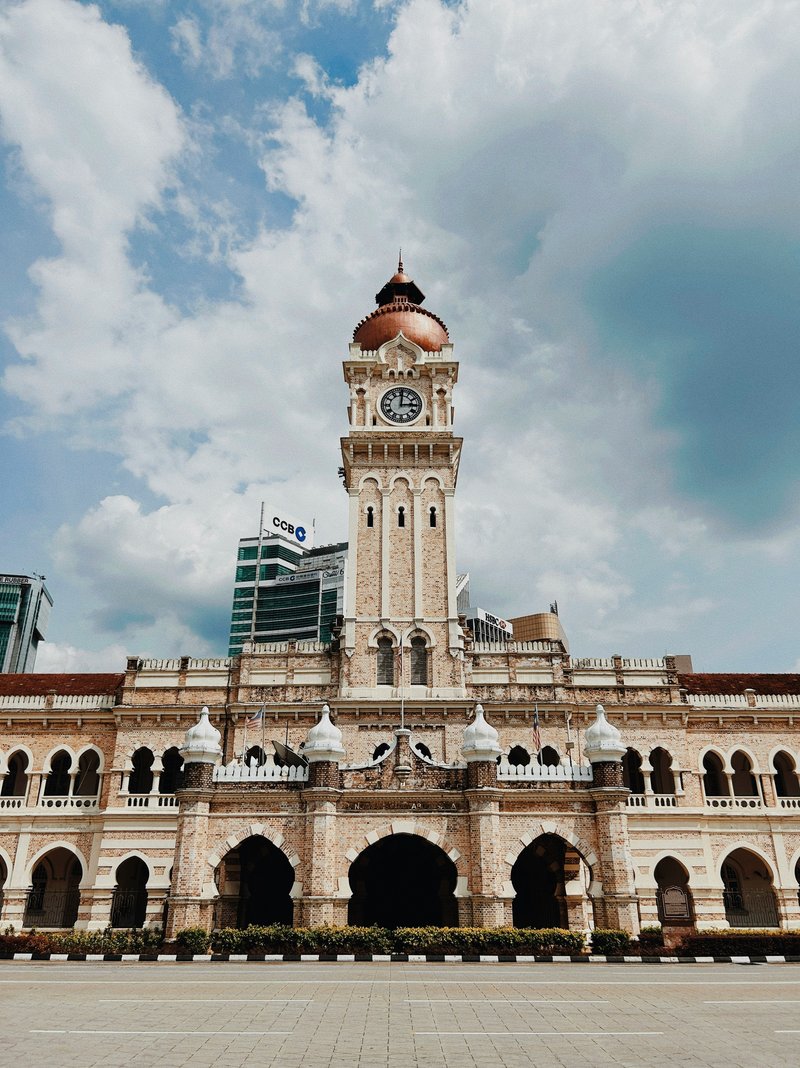
Spend some time walking rather than simply stopping for photographs. The surrounding area gives you a better sense of the layers of Kuala Lumpur, where colonial architecture, religious buildings, old commercial streets and modern development exist within relatively short distances of one another.
From here, continue toward Chinatown and Petaling Street. This is a good place to slow the afternoon down, browse small shops, look for street food and explore the lanes around the main market area. Nearby Central Market is another useful stop if you are interested in Malaysian crafts, souvenirs and local design.
By evening, you can return toward Bukit Bintang or explore another local food neighbourhood. If you still have energy, this is also a good night to try a proper Malaysian dinner rather than simply grazing at a market.
Food note: Today is a good day to explore nasi lemak, roti canai, satay or Malaysian-Chinese noodle dishes. If you are visiting Central Market and Chinatown, use the area as an opportunity to try small snacks rather than waiting for one large meal.
Do not miss: Take time around Merdeka Square and the Sultan Abdul Samad Building rather than treating them as a quick photograph between Batu Caves and Chinatown. This is one of the best parts of the itinerary for seeing the historical layers of Kuala Lumpur.
Logistics: Batu Caves is roughly 30–45 minutes from central Kuala Lumpur, depending on traffic and your starting point. The KTM Komuter train can be useful for reaching the caves, while ride-hailing gives you more flexibility. Wear comfortable shoes and carry water. For the rest of the day, the historic centre and Chinatown are best explored at a slower walking pace, with short ride-hailing trips when necessary.
Day 3 — Kuala Lumpur to Penang: Into George Town
Pace: Moderate
Today marks the first real change of atmosphere. Kuala Lumpur's skyline begins to disappear behind you, and the trip moves toward Penang, where the focus shifts from modern city life to heritage, food and neighbourhood exploration.
There are several ways to make the journey. A flight from Kuala Lumpur is the quickest option, with the flight itself taking roughly an hour, while travelling by road or bus generally takes around four to five hours depending on traffic. The train is another possibility, usually involving travel toward Butterworth before continuing across to Penang.
For a seven-day itinerary, flying can save valuable time, particularly if you have booked accommodation in George Town and want most of the afternoon available for exploring.
Once you arrive in Penang, check into your accommodation in or around George Town's heritage core. This is one destination where location makes a noticeable difference. Staying within walking distance of the old streets means you can explore early in the morning, return to your hotel during the hottest part of the afternoon, and head out again in the evening without constantly arranging transport. The city is known for its UNESCO-listed historic centre, but its appeal goes beyond the formal heritage designation. Old shophouses sit beside temples, cafés occupy restored buildings, scooters weave through narrow streets and colourful murals appear unexpectedly around corners.
Spend the afternoon simply walking.
You will encounter some of George Town's famous street art, but do not turn the experience into a hunt for photographs alone. The more interesting part is seeing how the artwork interacts with the old architecture and everyday life around it.

Continue toward the Clan Jetties, where traditional waterfront settlements extend over the water. The area offers another glimpse into Penang's multicultural history and the communities that have shaped the island.
By late afternoon, you will probably be thinking about food.
That is convenient, because Penang is one of those places where dinner deserves to be treated as an event. Rather than choosing a single expensive restaurant, make the evening a small food tour. Look for char kway teow, Penang Hokkien mee, assam laksa, oyster omelette, chee cheong fun, rojak and nasi kandar. You do not need to eat all of them in one sitting; the better strategy is to share dishes and keep wandering.
Penang's food culture is one of the reasons this itinerary gives the island two full nights. You could spend an entire day exploring George Town and still feel like you have barely started eating.
Food note: Tonight is your introduction to Penang's hawker culture, so go hungry. Start with one or two dishes and share where possible. Char kway teow, Penang Hokkien mee, assam laksa and nasi kandar are among the dishes worth putting on your list.
Do not miss: Take a slow evening walk through George Town's heritage streets after the daytime heat has eased. The combination of old shophouses, temples, street art and food stalls is one of the defining experiences of Penang.
Logistics: A flight from Kuala Lumpur to Penang takes roughly one hour, while road travel generally takes around four to five hours. If using the train, check the current service and onward connection through Butterworth with KTM Berhad before travelling. Once in George Town, walking and ride-hailing are usually the easiest ways to get around.
Day 4 — George Town, Penang Hill & a Day Built Around Food
Pace: Moderate
Start the morning in the George Town heritage area, when the streets are still relatively quiet and the heat has not yet reached its afternoon intensity. This is the best time to appreciate the details that can easily get lost later in the day. Restored shophouses sit beside buildings that show their age, ornate Chinese temples appear between rows of shops, and narrow streets lead into courtyards and small neighbourhoods that feel surprisingly removed from the busy roads.
One of the places worth making time for is Khoo Kongsi, an elaborate Chinese clanhouse that gives you a sense of the wealth, community networks and traditions that shaped historic Penang. The architecture is intricate enough to reward a slower visit, particularly if you are interested in the way Chinese immigrant communities established themselves and built institutions in George Town.
From there, continue through the heritage streets, allowing yourself to take a slightly wandering route rather than following a rigid list of attractions. George Town is one of those cities where the spaces between the major sights are often just as interesting. You may pass a small shrine, a traditional shopfront, a courtyard café or another piece of street art that was never on your original plan.
Later in the morning, make your way toward Penang Hill.
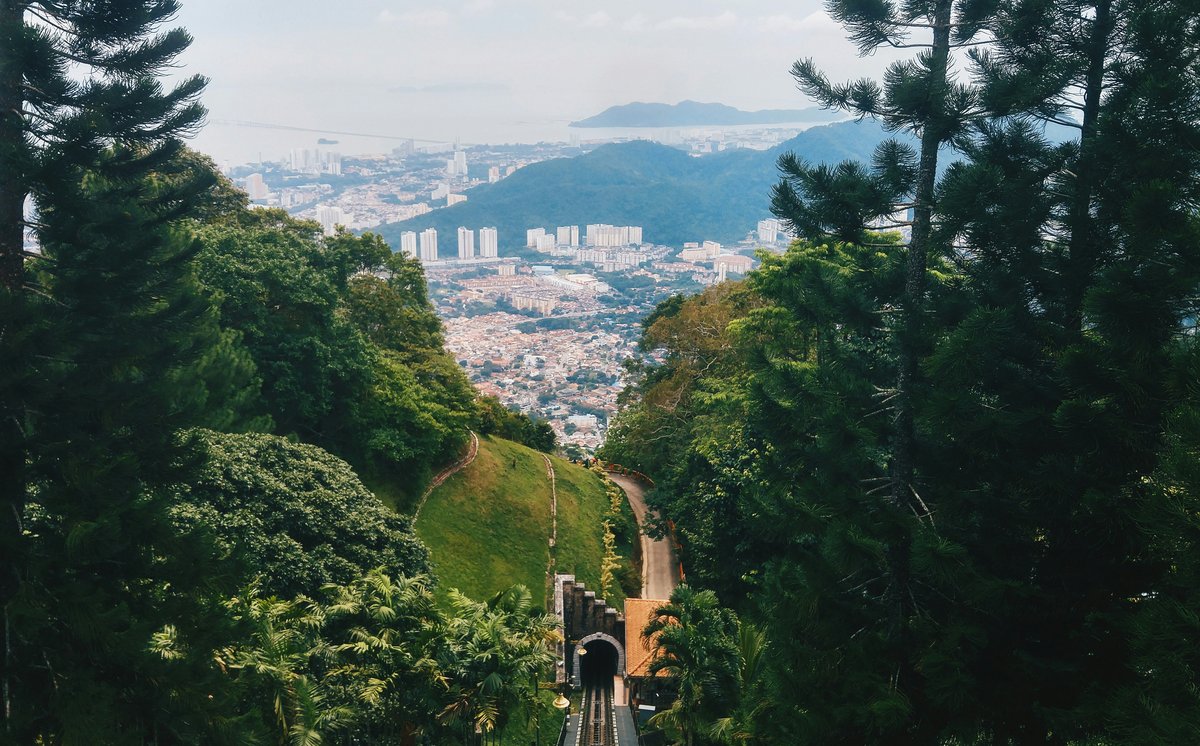
The change is dramatic. After spending much of the previous day among shophouses and narrow streets, you suddenly find yourself surrounded by greenery and looking down over a large part of the island. The funicular railway makes the climb relatively straightforward, and the cooler conditions at the top can be a welcome break from George Town's heat and humidity.
The views are the main attraction, but do not rush straight back down. Give yourself time to walk around, take in the landscape and enjoy the fact that Penang is not only a heritage city and food destination. The island's natural setting is a major part of its character, and Penang Hill gives you a chance to appreciate that wider landscape.
Weather can affect visibility, particularly during periods of cloud or rain, so keep a little flexibility in your schedule. If the conditions are not ideal, there is no need to turn the day into a race to fit in another attraction. George Town itself offers more than enough to fill the time.
By the time you return to the city, it is time for the most important part of the day. Lunch.
Penang is famous for hawker food for a reason, and this is the day to embrace it fully. Rather than looking for one restaurant that serves everything, think of the city as a collection of food stops. Try char kway teow, with its smoky wok flavour and flat rice noodles, or a bowl of Penang Hokkien mee, rich with its characteristic prawn-based broth. If you have not tried assam laksa yet, this is the place to do it — its sour, spicy and aromatic character is very different from the creamy laksa varieties found elsewhere.
Then there is nasi kandar, oyster omelette, chee cheong fun, rojak and the endless range of small desserts and drinks that appear across the city's food stalls.
Spend your final evening in George Town at an easy pace. You might return to a street you enjoyed the previous night, find a small restaurant away from the busiest tourist areas or simply sit down with a cold drink and watch the city move around you.
Food note: Make today your biggest food day of the trip. Try several dishes rather than filling yourself with one large meal, and do not be afraid of small hawker stalls. Char kway teow, assam laksa, Penang Hokkien mee, nasi kandar and oyster omelette should all be on your radar, but leave enough room for whatever catches your attention.
Do not miss: The combination of George Town in the morning and Penang Hill later in the day is what makes this day work so well. You get heritage, architecture and food on the ground before seeing the island from above.
Logistics: Start early for the most comfortable walking conditions. Penang Hill is best approached with some flexibility because cloud, rain and visibility can affect the experience. Comfortable shoes, water and sun protection are essential. George Town's central heritage area is very walkable, although ride-hailing is useful when the heat becomes tiring.
Day 5 — Penang to Langkawi: From Heritage Streets to Island Time
Pace: Easy
Today is about getting to Langkawi, checking into your accommodation and resisting the very understandable temptation to immediately fill the afternoon with activities.
The easiest option for most travellers is a short flight from Penang to Langkawi. The journey itself is brief, which means you can move from George Town to a tropical island without losing an entire day to transportation.
Once you arrive, check in and slow down. Where you stay in Langkawi makes a noticeable difference to the experience. Pantai Cenang is the practical choice if you want restaurants, shops, beach access and a livelier atmosphere close at hand. It is convenient and easy for first-time visitors, particularly if you do not plan to rent a car.
If your priority is quiet beaches, a more secluded setting and a resort-focused experience, areas around Tanjung Rhu offer a very different atmosphere. You will generally have fewer casual dining and shopping options immediately outside your accommodation, but that is partly the point.
For this itinerary, either works. The choice simply depends on whether you want Langkawi to feel like a convenient beach base or a proper escape. Once you have checked in, spend the afternoon doing very little.
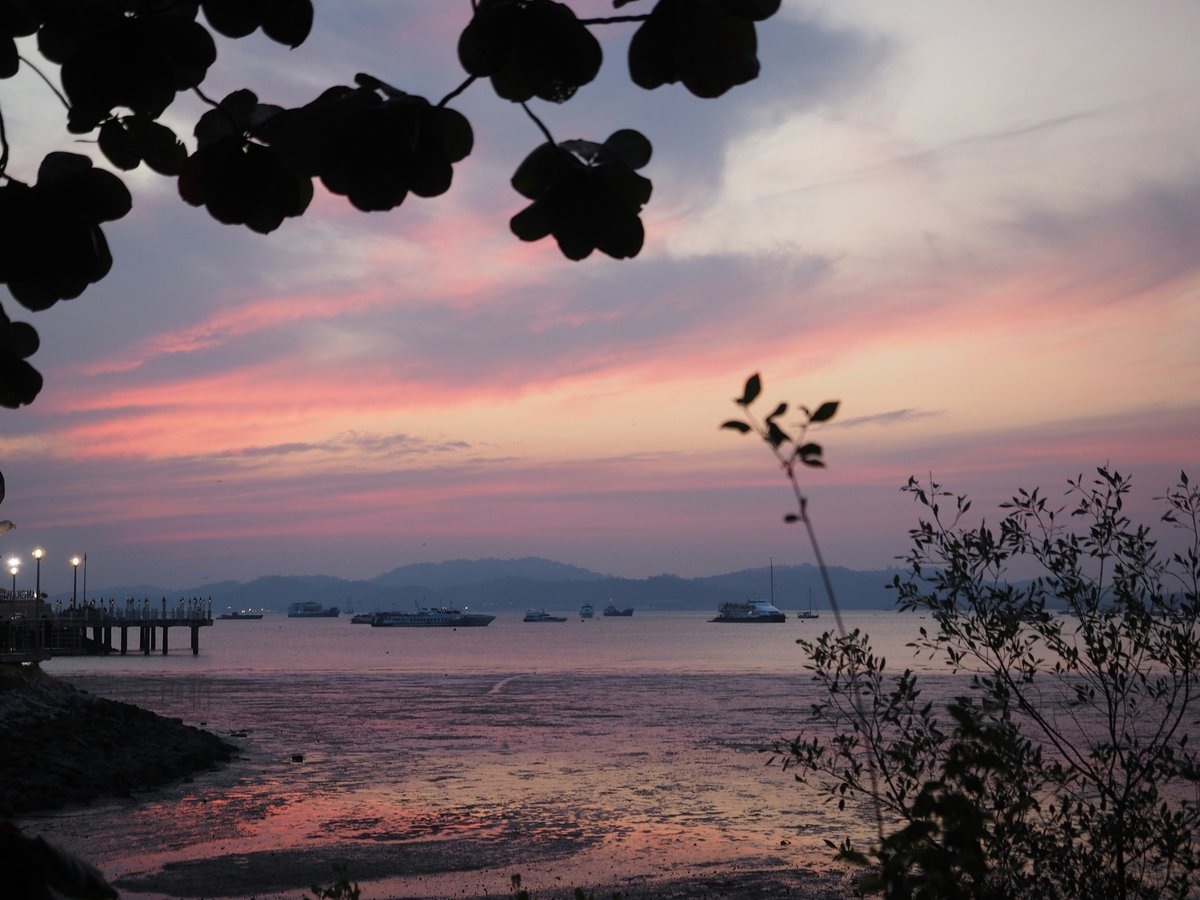
Walk along the beach. Find a café. Go for a swim if the conditions are suitable. Sit by the pool. Read a book you have been carrying since Kuala Lumpur. After four days of sightseeing, doing less is not wasted time; it is part of the itinerary.
As evening approaches, find somewhere along the western side of the island to watch the sunset. Langkawi's evenings are one of the reasons it works so well as the final destination. The landscape is broad and open, the sea catches the changing light, and the atmosphere feels a world away from the traffic and towers of Kuala Lumpur.
Food note: Langkawi is a good place to shift toward Malay dishes and fresh seafood, particularly if you enjoy grilled fish, prawns and other local preparations. You will find plenty of restaurants around Pantai Cenang, while resort areas offer a wider range of dining options on-site.
Do not miss: Make time for your first Langkawi sunset. You have spent the first four days moving through cities and heritage streets, so the contrast of ending the day beside the sea is part of what makes the route feel complete.
Logistics: The flight from Penang to Langkawi is short, but always check the current schedule when planning your trip. Once on the island, a rental car can be useful if you want to explore independently, while taxis, ride-hailing where available and private transfers can work well if you prefer not to drive.
Day 6 — Langkawi: Cable Car, Sky Bridge & Rainforest Views
Pace: Moderate
After two days of cities and heritage, Langkawi's landscape takes centre stage. Ride the Langkawi SkyCab up toward Gunung Mat Cincang. At the top, make your way toward the Langkawi Sky Bridge and spend some time simply taking in the view. On a clear day, the combination of green mountains, islands and sea is spectacular, and it provides a completely different visual experience from the beaches below.
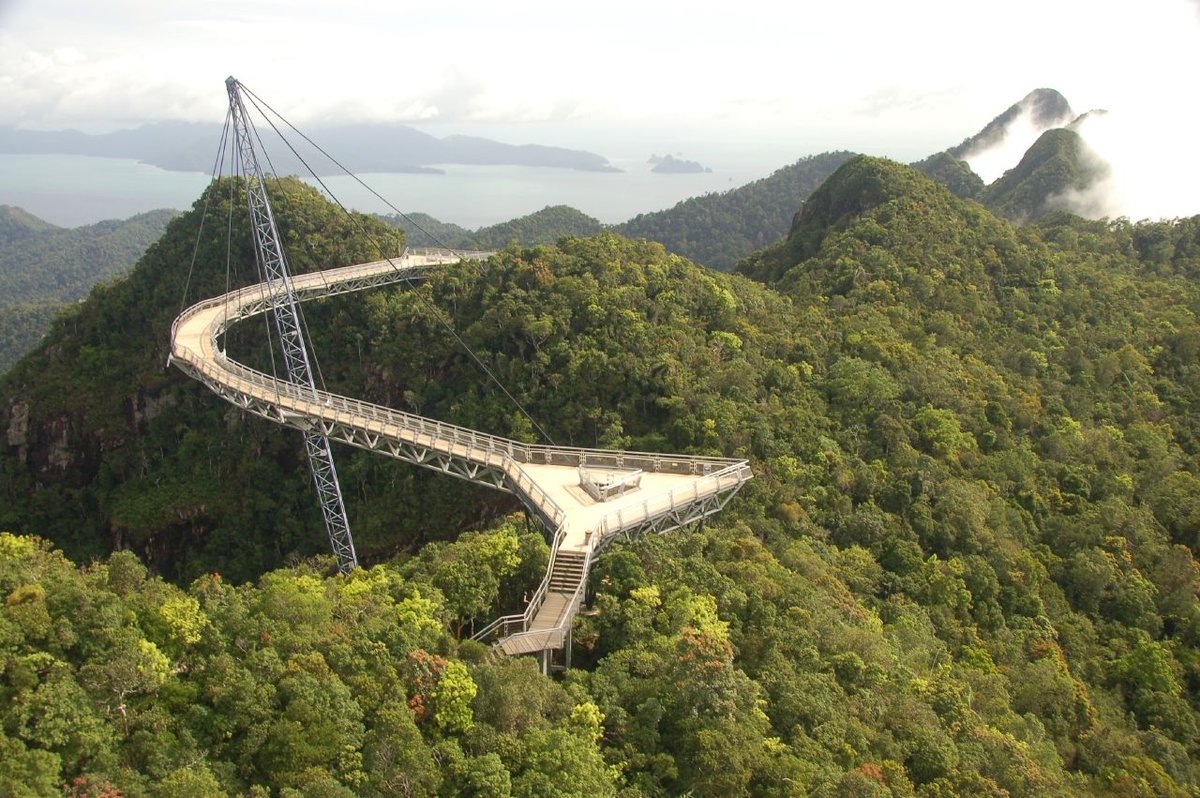
Do not be disappointed if the weather does not cooperate perfectly. Langkawi is tropical, and cloud can move quickly across the mountains. The cable car and viewpoints are weather-dependent, so this is one experience where checking conditions before setting out is genuinely worthwhile.
Once you have finished at the mountain, avoid packing the rest of the day too tightly. Explore a little more of the western side of the island, stop for lunch and then return to your accommodation for some downtime. If you have chosen a resort with a pool or beach access, this is the afternoon to actually use it.
One of the common mistakes on a short trip is assuming that every hour needs to produce another attraction. By this point, you have already done enough sightseeing to justify slowing down. The point of having three nights in Langkawi rather than one or two is precisely to give the final part of the trip a different rhythm.
If you still want to explore in the afternoon, look for one of the island's quieter viewpoints or beaches rather than trying to tick off every famous location. Langkawi is large enough that getting away from the busiest areas can be surprisingly rewarding.
Come evening, return to the coast. You can have dinner near Pantai Cenang, eat at your resort or seek out a more local restaurant depending on where you are staying. There is no need to make tonight complicated. The most memorable part of the day may simply be watching the light change over the water after a day in the mountains.
Food note: After the heavier food focus of Penang, keep today relaxed. Try local Malay dishes, grilled seafood, rice-based meals and tropical fruit, and save some appetite for an evening drink or dessert by the coast.
Do not miss: The Langkawi SkyCab and Sky Bridge are the major experiences today, but give yourself enough time to enjoy the views rather than rushing through them for photographs.
Logistics: The SkyCab is weather-dependent, so check operating conditions before setting out. Start earlier in the day when practical, particularly during busier periods. Bring water, sun protection and comfortable shoes, and carry a light layer if you are sensitive to cooler or windy conditions at higher elevations.
Day 7 — Langkawi: Mangroves, Beaches & One Last Sunset
Pace: Slow
A mangrove and geopark tour is one of the best ways to see another side of Langkawi. The island is not simply a beach destination; its landscape includes mangrove forests, limestone formations, waterways and distinctive coastal ecosystems. The Langkawi UNESCO Global Geopark covers much of this landscape, including the limestone cliffs of Kilim.
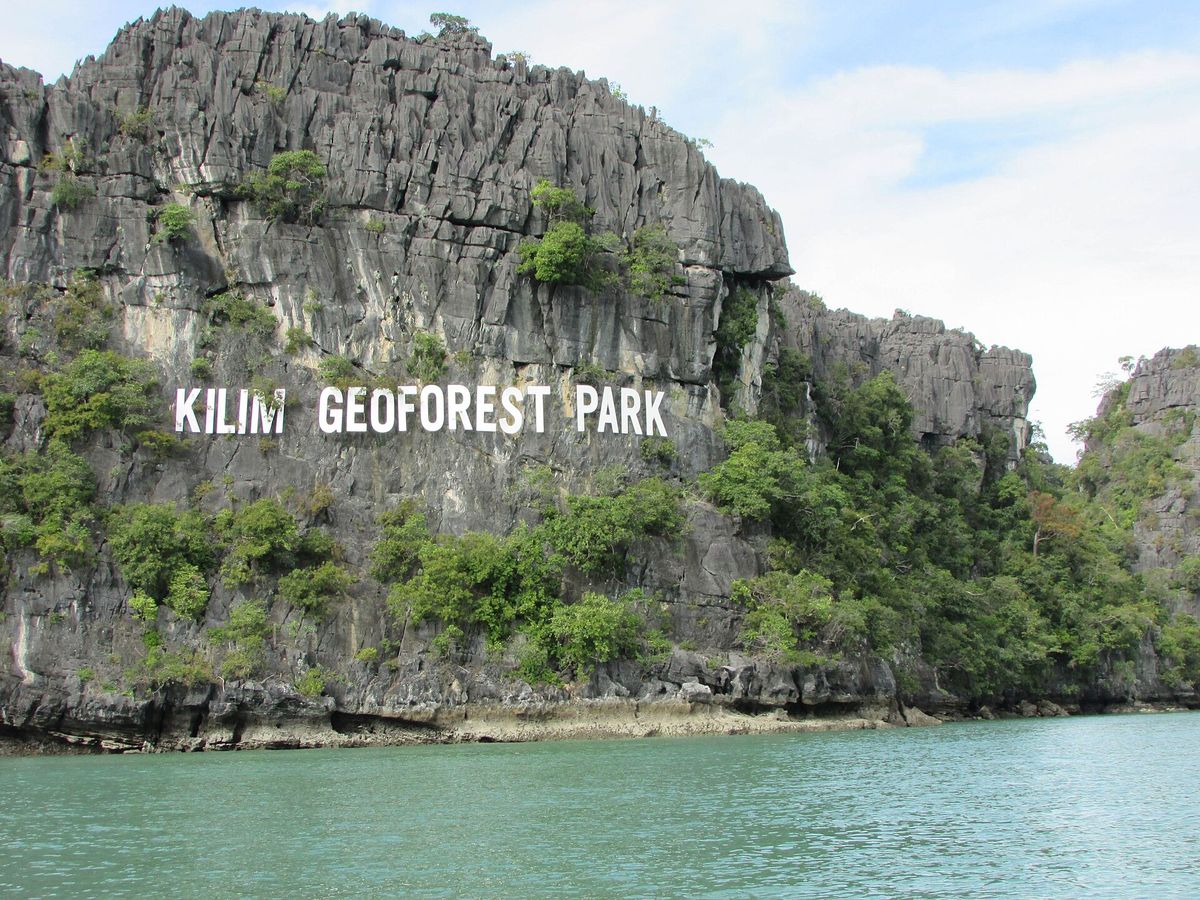
A boat trip through the mangroves can reveal a quieter, more natural side of the island and provides a useful contrast with the mountain views from the previous day. The exact experience depends on the tour you choose, but the appeal is less about ticking off individual wildlife sightings and more about seeing how the island's natural environment fits together. Weather and sea conditions can influence boat trips, so keep expectations flexible.
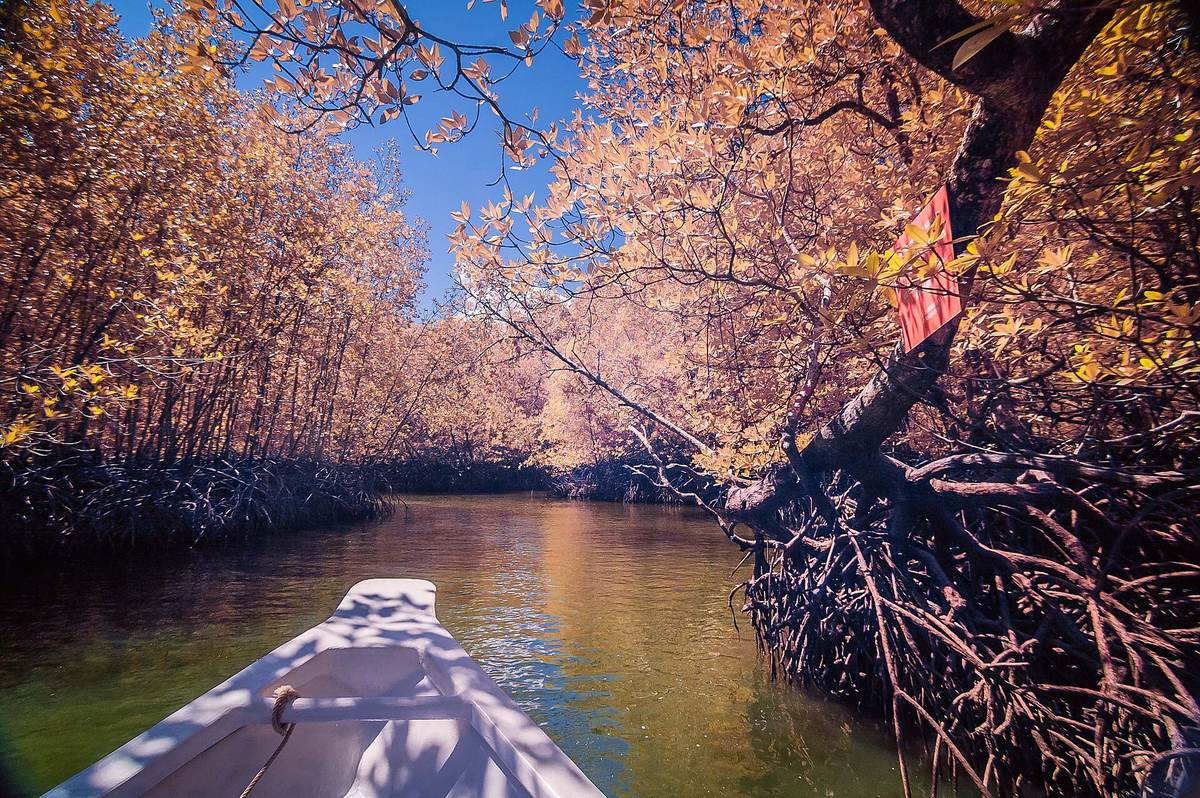
After the tour, make the rest of the day deliberately easy. Return to the beach. Have a long lunch. Spend a few hours by the pool. Take a final swim. Wander through the shops around Pantai Cenang if you are staying nearby. Or, if your resort is more secluded, simply stay there and enjoy the quiet.
As the afternoon turns toward evening, find your final sunset spot. Langkawi's sunsets provide the perfect closing scene for the journey because the trip has gradually moved from the intensity of Kuala Lumpur to the heritage lanes of Penang and finally to this slower island landscape.
Think back to the beginning of the week: the Petronas Towers rising above Kuala Lumpur, the steps of Batu Caves, the old streets of George Town, the smells of Penang's hawker stalls and the views from Penang Hill.
Food note: For your final day, choose something you genuinely want rather than trying to complete a food checklist. A relaxed seafood dinner, a Malay meal or a final beachside dinner can be a better ending than chasing one last “must-eat” dish.
Do not miss: If you have the chance, make your last evening in Langkawi a sunset evening. Find a quiet stretch of beach or a restaurant with a good view and let the trip end slowly.
Logistics: Boat and mangrove tours are weather-dependent, so keep the final day flexible. If you are flying out later in the day, allow generous transfer time and confirm your transport arrangements in advance. If your international flight departs from Kuala Lumpur, remember to account for the additional domestic journey back to the capital rather than treating Langkawi as your final airport without checking the routing.
Where to Stay in Malaysia
Where you stay can subtly change the character of this trip, particularly because each of the three destinations has such a different personality. The good news is that you do not need to spend a fortune to stay somewhere well located, and choosing the right neighbourhood is often more important than choosing the most luxurious hotel.
| Nights | Base | Best areas |
|---|---|---|
| Nights 1–2 | Kuala Lumpur | KLCC, Bukit Bintang or Chinatown |
| Nights 3–4 | George Town, Penang | In or close to the heritage core |
| Nights 5–7 | Langkawi | Pantai Cenang for convenience, Tanjung Rhu for seclusion |
Kuala Lumpur
Three areas make particularly good bases for a first visit: KLCC, Bukit Bintang and Chinatown. KLCC is the obvious choice if you want to be close to the Petronas Towers and the city's modern centre, with shopping, restaurants and plenty of transport nearby. Bukit Bintang has a livelier, more energetic atmosphere and works particularly well for travellers who enjoy restaurants, nightlife and easy access to different parts of the city. Chinatown is a little more atmospheric, putting you closer to historic streets, markets, temples and some excellent casual food.
For a first visit, there is no need to stay directly beside every attraction. Kuala Lumpur's transport network means that being close to a convenient MRT or LRT station can be just as useful as being in the immediate tourist centre.
George Town
Location becomes even more important here. Staying within or close to the heritage core means you can walk to many of the places that make Penang special. You can head out early before the streets become hot, return to your hotel during the afternoon, and then go back out for dinner without needing to organise transport every time.
This is also where boutique hotels and restored heritage properties can add something to the experience. A beautifully converted shophouse or small heritage hotel can feel much more connected to George Town than a generic modern hotel on the outskirts.
Langkawi
The decision is more about the type of holiday you want. Pantai Cenang is convenient, lively and easy for first-time visitors. There are restaurants, cafés, shops and beach access close together, which means you can do much of your evening exploring on foot.
If you want the final three days to feel more secluded, Tanjung Rhu offers a quieter resort atmosphere. You will generally be more dependent on your hotel, a car or arranged transport, but the trade-off is a greater sense of escape.
How to Get Around Malaysia on This Route
One of the reasons this itinerary works so well is that the transportation between destinations is relatively straightforward.
Within Kuala Lumpur, you can combine the Rapid KL MRT and LRT networks with walking and ride-hailing. The rail system is particularly useful for avoiding traffic when travelling between major areas, while ride-hailing is convenient when you are carrying luggage or travelling somewhere not directly served by rail.
Do not underestimate the heat, though. Kuala Lumpur can be very walkable on a map and considerably less appealing on foot in the middle of a humid afternoon. There is nothing wrong with using a car for a short journey when the weather is working against you.
In George Town, walking is one of the best ways to experience the city. The heritage streets are compact enough that many of the major sights can be linked together on foot, and walking gives you the chance to notice the small details that disappear when you are moving between attractions in a vehicle. For longer distances, ride-hailing is practical.
Between Kuala Lumpur and Penang, you have several choices. Flying is the fastest and generally makes the most sense when time is the priority. The road journey takes longer but can work if you prefer ground travel. The train is another option, usually involving arrival at Butterworth before continuing to George Town. For this seven-day trip, there is no need to make transportation unnecessarily complicated. Choose the option that gives you the most usable time at your destination.
Between Penang and Langkawi, flying is generally the simplest option for this itinerary. Ferry services have existed on this route, but schedules and operating conditions can change, so travellers considering the ferry should check current services before building their itinerary around it.
Once you reach Langkawi, having a car can be useful if you want to explore independently. The island is much more spread out than George Town, and attractions are not concentrated in one walkable centre. If you would rather not drive, taxis, arranged transfers and available ride-hailing options can also work, particularly if you are staying in a convenient area.
| Leg | Best option | Approx. time |
|---|---|---|
| Central Kuala Lumpur → Batu Caves | KTM Komuter or ride-hailing | ~30–45 min |
| Kuala Lumpur → Penang | Flight | ~1 hr flight |
| Kuala Lumpur → Penang | Road or bus | ~4–5 hrs |
| Kuala Lumpur → Penang | Train via Butterworth | Check current service |
| Penang → Langkawi | Flight | Short flight |
| Penang → Langkawi | Ferry | Check current schedules |
Malaysia 7-Day Budget: What Should You Expect to Spend?
Malaysia can work for a surprisingly wide range of budgets, which is another reason it suits a first Southeast Asian trip. You can eat extremely well without spending much money, while accommodation and private experiences give you plenty of opportunities to increase the overall comfort level.
For a rough planning guide, excluding international flights, you could think in terms of:
- Budget travel: around RM 1,500–2,200 per person for seven days.
- Comfortable mid-range travel: around RM 2,500–4,000 per person.
- Higher-end travel: RM 5,000+ per person, depending heavily on accommodation, resorts, private tours and dining.
These are broad planning ranges rather than fixed prices, and your actual total can vary considerably depending on when you travel and how far ahead you book.
Accommodation will usually be the largest variable. In Kuala Lumpur and George Town, comfortable mid-range rooms can often be found around the RM 150–300 per night range for a double room, although prices can rise during busy periods. Langkawi has an even wider range, with simple accommodation available at relatively modest prices and resorts extending considerably higher.
Food is where Malaysia becomes particularly budget-friendly. Hawker meals can often be found around RM 6–15, while a casual restaurant meal might be closer to RM 15–35, depending on the restaurant and dish. A traveller eating a mixture of hawker food, cafés and casual restaurants could reasonably plan around RM 50–100 per person per day for food, with higher spending if you choose more upscale restaurants or resort dining.
Transport is another area where you can control your spending. Kuala Lumpur's public transport keeps local costs manageable, while Penang's walkability means you may spend very little getting around George Town. Langkawi is where your transport budget can increase, particularly if you rent a car or use private transfers.
Attractions and tours are worth treating separately. The Petronas Towers, Penang Hill, Langkawi SkyCab and a mangrove tour can add a meaningful amount to the trip, but these are also the experiences that give the itinerary its character.
For a mid-range couple, a rough seven-day example might look something like this:
| Expense (two people) | Approximate cost |
|---|---|
| Hotels | RM 1,500–2,500 |
| Food | RM 700–1,200 |
| Domestic / intercity travel | RM 500–1,000 |
| Local transport | RM 250–500 |
| Attractions and tours | RM 400–800 |
| Miscellaneous spending | RM 200–400 |
| Estimated total | RM 3,550–6,400 |
That gives a broad total of roughly RM 3,550–6,400 for two people, excluding international flights.
Where to Save and Where to Spend
If you want to keep the trip affordable, Penang is probably the easiest place to save money without sacrificing the experience. Some of the best meals on the itinerary come from hawker stalls rather than expensive restaurants, and George Town is highly walkable.
Kuala Lumpur also makes it easy to save on transport. Use the rail system when convenient, walk when the weather is comfortable and use ride-hailing strategically rather than automatically taking a car everywhere. Langkawi is where it can make sense to spend a little more.
If the island is the part of the trip you have been looking forward to most, putting more of the accommodation budget toward a good resort or a well-located hotel can make a noticeable difference. Three nights in Langkawi gives you enough time to actually enjoy your accommodation rather than treating it as somewhere to sleep between excursions.
The same principle applies to experiences. You do not need to book every available tour. Choose a few that genuinely interest you — perhaps the Petronas Towers, Penang Hill and a Langkawi mangrove or geopark tour — and leave the rest of the itinerary open.
What to Book Ahead
You do not need to pre-book every hour of this trip. In fact, doing so would work against the relaxed rhythm that makes the itinerary enjoyable. There are, however, a few things worth arranging in advance.
- Your accommodation should be booked before the trip, particularly if you are travelling during a busy period or have a specific hotel or resort in mind.
- If visiting the Petronas Twin Towers is important to you, check the current ticketing arrangements and consider booking ahead rather than relying on same-day availability.
- Your Kuala Lumpur–Penang and Penang–Langkawi transportation should also be arranged once your dates are fixed, especially if you are relying on flights to keep the itinerary within seven days.
- In Langkawi, book any mangrove, geopark or private boat experience that is particularly important to you. Smaller tours can have limited capacity, and weather may affect departures.
Everything else can remain relatively spontaneous.
First-Time Visitor Tips for Malaysia
- Plan around the weather: Malaysia is hot and humid, so start sightseeing early, stay hydrated and take breaks during the hottest part of the day.
- Allow extra time in Kuala Lumpur: Traffic can be unpredictable, so give yourself a little buffer when travelling by car. The MRT and LRT are useful alternatives for many journeys.
- Wear comfortable shoes: George Town is best explored on foot, so comfortable shoes are essential, especially with the heat and uneven streets.
- Keep Langkawi flexible: Rain and cloud can affect the cable car, mountain views and boat tours. Keep your plans flexible and have a backup option.
- Dress respectfully: Cover up appropriately when visiting mosques, temples and other religious sites, and follow local photography and footwear guidelines.
- Carry some cash: Cards are widely accepted, but cash is still useful at hawker centres, markets and smaller food stalls.
- Eat locally: Some of Malaysia's best food can be found at simple hawker centres and neighbourhood stalls, so do not plan every meal around restaurants.
- Carry a small day bag: Keep water, sunscreen, sunglasses, your phone, a power bank and a light rain layer handy. In Langkawi, insect repellent is also useful.
- Stay flexible: Some of the best travel moments happen unexpectedly, so leave enough room in the itinerary to wander, discover and change plans when something catches your attention.
Before You Go: Malaysia at a Glance
- Currency: Malaysian Ringgit (MYR/RM). Cards are widely accepted, but keep some cash for hawker centres, markets and small local stalls.
- Language: Malay is the official language, while English is widely spoken in tourist areas, hotels and restaurants.
- Time zone: Malaysia uses MYT (UTC+8). Kuala Lumpur, Penang and Langkawi are all in the same time zone.
- Plug type: Malaysia uses the Type G three-pin plug. Carry a universal adapter if needed.
- Driving: Malaysia drives on the left. A car is unnecessary in Kuala Lumpur and George Town but can be useful in Langkawi.
- Getting around: Use public transport and ride-hailing in Kuala Lumpur, walk around George Town, and consider a car or transfers in Langkawi.
- Weather: Malaysia is tropical, with heat, humidity and occasional rain. December to March is generally a good period for this west-coast route, although weather can vary.
- What to pack: Lightweight clothing, comfortable shoes, sunscreen, a light rain layer, respectful clothing for religious sites and swimwear for Langkawi.
- Connectivity: A local SIM or eSIM is useful for maps, ride-hailing and travel information.
- Trip length: Seven days works well for this route because it focuses on three complementary destinations rather than trying to cover too much of Malaysia.
Useful Booking & Travel Links
Official Malaysia travel & entry
- Malaysia Truly Asia — Tourism Malaysia
- Immigration Department of Malaysia
- Malaysia Airports
- Ministry of Foreign Affairs Malaysia
Kuala Lumpur
Penang
- Penang Global Tourism
- George Town World Heritage Incorporated
- Penang Hill
- Department of Wildlife and National Parks (Penang National Park)
Langkawi
Transport
Prompts to Try in Honge
- Plan a 7-day Malaysia trip from Kuala Lumpur to Penang and Langkawi.
- Build a George Town hawker food crawl for one evening.
- Should I stay in Pantai Cenang or Tanjung Rhu in Langkawi?
- Find the best way to get from Kuala Lumpur to Batu Caves early in the morning.
- Plan a rainy-day backup for Penang Hill and the Langkawi SkyCab.
- Suggest a relaxed mangrove tour day in Langkawi.
Frequently Asked Questions About a 7-Day Malaysia Trip
Is 7 days enough to visit Malaysia?
Seven days is enough for a well-planned first trip, but not enough to see the entire country. Kuala Lumpur, Penang and Langkawi make a good combination because they offer city life, culture, food, nature and beaches without requiring too many long travel days.
Is Kuala Lumpur, Penang and Langkawi a good route for first-time visitors?
Yes. The route offers three distinctly different experiences: Kuala Lumpur for modern city life, Penang for heritage and food, and Langkawi for beaches and relaxation. It also creates a natural progression from sightseeing to a slower island stay.
How many days should I spend in Kuala Lumpur, Penang and Langkawi?
For this itinerary, spend 2 days in Kuala Lumpur, 2 days in Penang and 3 days in Langkawi. This gives you enough time for the main highlights without making the trip feel rushed.
What is the best time to visit Malaysia?
For this west-coast itinerary, December to March is generally a popular period, particularly for Langkawi. Malaysia has a tropical climate, however, so rain and humidity are possible throughout the year.
How do I travel from Kuala Lumpur to Penang?
You can travel by flight, train, bus or car. Flying is the quickest option, while the train is a comfortable alternative. For a seven-day itinerary, flying can help maximise your time in Penang.
How do I travel from Penang to Langkawi?
A short domestic flight is generally the simplest option. Ferry services may also be available depending on current schedules, so check the latest services before planning around one.
Is Malaysia expensive for travellers?
Malaysia can suit a wide range of budgets. Hawker food and public transport can be very affordable, while accommodation, resorts, private tours and upscale dining can increase the overall cost. A comfortable mid-range trip can offer a good balance between convenience and value.
What food should I try in Malaysia?
Start with nasi lemak, roti canai and satay in Kuala Lumpur, then explore Penang's famous char kway teow, assam laksa, Penang Hokkien mee, nasi kandar and oyster omelette. In Langkawi, seafood and Malay dishes are particularly enjoyable.
Do I need a car in Malaysia?
You generally do not need a car in Kuala Lumpur or George Town, where public transport, walking and ride-hailing are practical. A car can be useful in Langkawi if you want to explore beaches and quieter parts of the island independently.
Where should I stay in Malaysia?
In Kuala Lumpur, KLCC, Bukit Bintang and Chinatown are convenient areas. In Penang, staying around George Town's heritage core makes sightseeing and food exploration easier. In Langkawi, choose Pantai Cenang for convenience and a livelier atmosphere or Tanjung Rhu for a quieter resort experience.
Conclusion
Seven days will never be enough to see all of Malaysia, and that is not the goal.
What this itinerary does instead is give you a carefully balanced introduction to three very different parts of the country. Kuala Lumpur shows you the energy and modernity of Malaysia, while still leaving room for its older neighbourhoods and extraordinary food culture. Penang slows the journey down and turns heritage, architecture and eating into the main event. Langkawi then brings the trip gently toward its conclusion with beaches, mountains, mangroves and sunsets.
Because somewhere between the towers of Kuala Lumpur, the food-filled streets of Penang and the beaches of Langkawi, you may discover that the perfect Malaysia trip was never really about seeing how much you could fit into seven days.
It was about enjoying the contrast between them. The city. The heritage. The food. The rainforest. The sea.
And if you want to make the journey truly your own, use this itinerary as a framework and customise or remix it with Honge around your preferred routes, budget, travel style and pace.
Ready for city, heritage and islands?
Customise your Malaysia trip with Honge
Keep Kuala Lumpur, George Town and Langkawi as bases, then shape the flights, food stops and beach days around your pace.
Related itineraries
- 8 Days Solo in Romania: Bucharest, Brașov, Sibiu & Dracula's Transylvania
- 9-Day Vegan Thailand Itinerary: Bangkok, Chiang Mai & Islands
- 10-Day Philippines Island-Hopping Itinerary: El Nido, Coron & Bohol
- 10-Day Laos & Cambodia Itinerary: Luang Prabang, Vang Vieng & Angkor
- 10-Day Sri Lanka Itinerary: Beaches, Tea Country & Wildlife Safari
Written by
This blog was contributed by B. Sai Nikita, a travel enthusiast and writer. B. Sai Nikita can be reached at bsainikita10@gmail.com.
About Honge
Honge is an AI travel planning platform focused on practical, experience-led itineraries with realistic pacing and logistics. All blog content is edited and published by Honge. Our Malaysia research draws on updated practical logistics as of September 2026. © Honge. All rights reserved.
Image credits: Photos are sourced from Unsplash and Wikimedia Commons. Copyright remains with their respective photographers and rights holders. Unsplash images are used according to the Unsplash License. Wikimedia Commons images are used according to their applicable CC BY-SA 4.0 license terms.
Travel disclaimer
This itinerary is intended as general travel inspiration and planning guidance only — not as personalised travel, safety or medical advice. Conditions change. Before you travel, check current entry requirements and any travel advisories, review weather and sea conditions, and confirm flight and ferry schedules, attraction hours, fees and timed-entry tickets (including the Petronas Twin Towers, Penang Hill and the Langkawi SkyCab) directly with official sources. Take out comprehensive travel insurance that covers medical care, cancellation and disruption. Respect dress codes and guidelines at religious sites. Boat tours, cable cars and mountain viewpoints are weather-dependent. If you rent a car, follow local traffic rules. Suggested hotels and stay styles in this article are samples only and depend on availability; in the Honge app they may appear as booking options when offered by our vendors at the time of your search. Honge is not responsible for decisions made based on this guide or for changes to places, prices, access, services or experiences after the date of publication.