
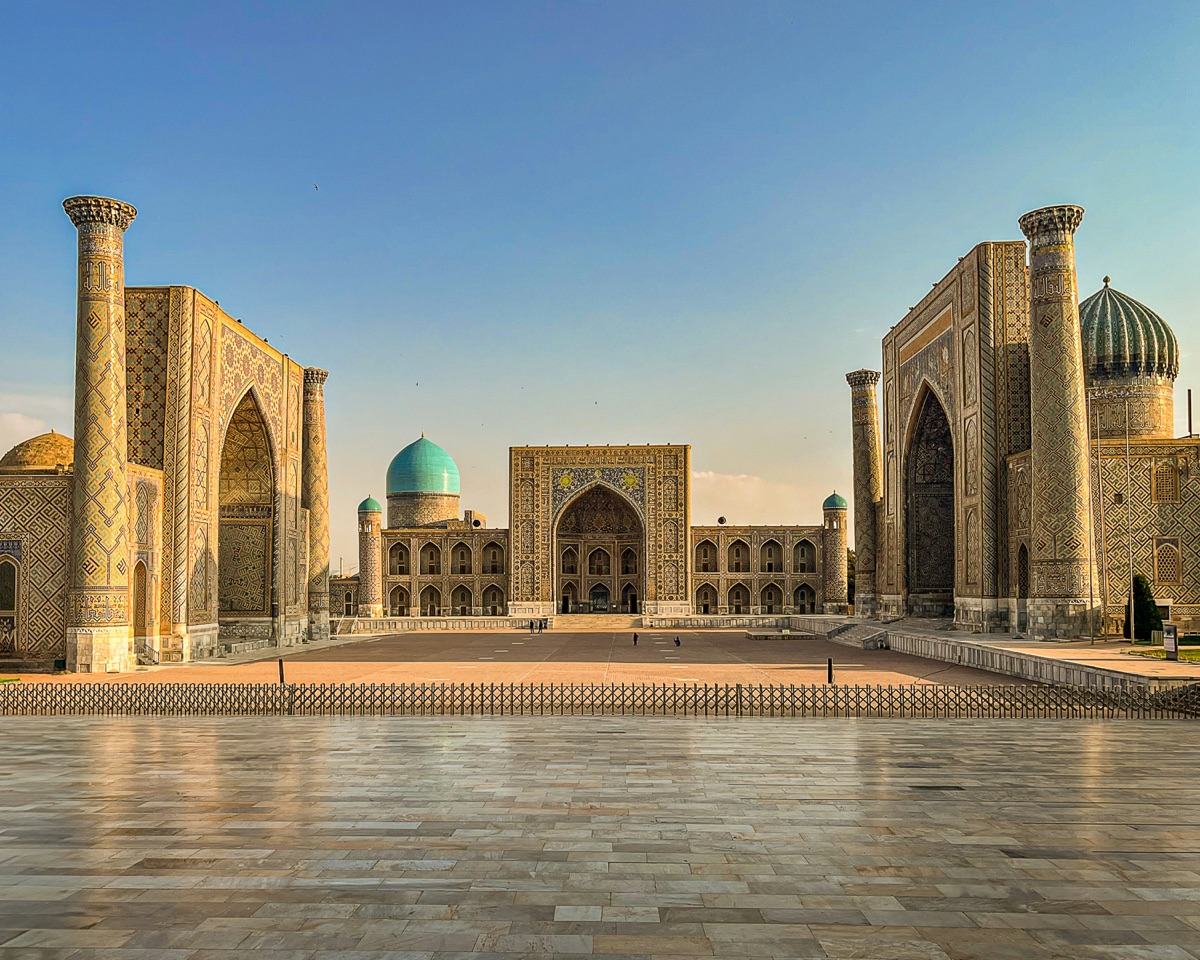
For centuries, the Silk Road connected East and West through the ancient cities of Uzbekistan.
Start with this itinerary
Open this route in Honge as your starting point, then shape the days, stays, and pace around how you travel.
From the turquoise domes of Samarkand to the centuries-old trading streets of Bukhara and the walled city of Khiva, every stop offers a glimpse into one of history's greatest trade routes. Today, modern high-speed trains make it easy to follow the same journey, connecting Tashkent, Samarkand, Bukhara, and Khiva in a single trip.
Designed at a comfortable pace, this itinerary balances iconic landmarks with authentic local experiences — UNESCO World Heritage sites, intricate Islamic architecture, lively markets, traditional Uzbek cuisine, and scenic rail journeys — allowing you to enjoy each destination without feeling rushed.
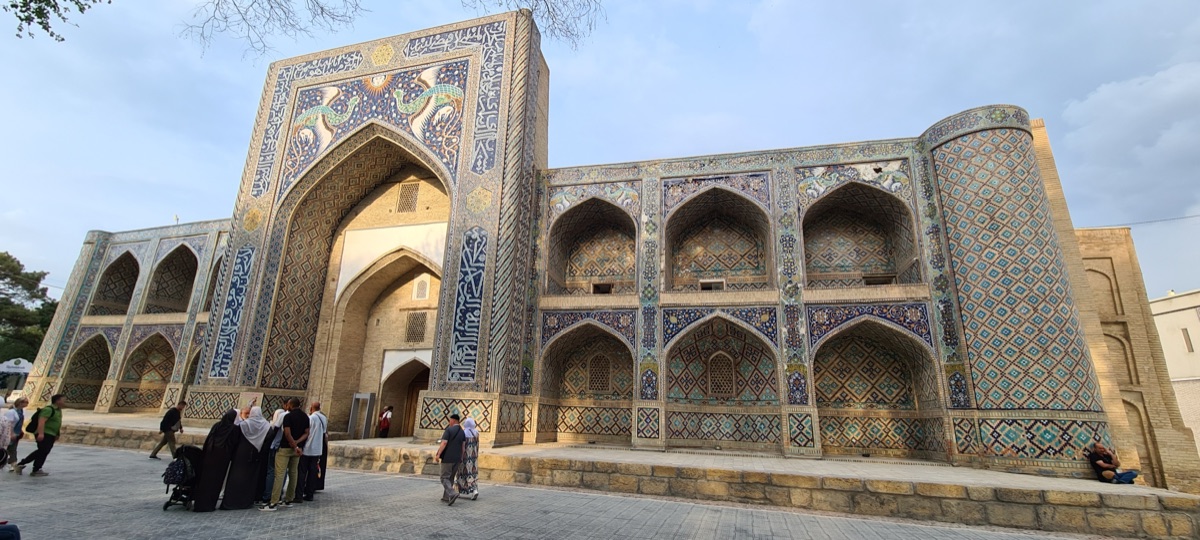
Is 8 Days Enough for Uzbekistan?
Yes. Eight days is ideal for exploring Uzbekistan's four most iconic Silk Road cities — Tashkent, Samarkand, Bukhara, and Khiva — at a comfortable pace. It allows time for UNESCO World Heritage sites, bustling bazaars, traditional cuisine, cultural performances, and high-speed train travel without feeling rushed.
Best Time to Visit Uzbekistan
Spring (April–May) and autumn (September–October) offer the most pleasant weather, with comfortable temperatures and clear skies. Summer can be extremely hot, particularly in desert regions such as Khiva and Bukhara, while winter is quieter but brings colder temperatures and occasional snowfall.
What to Book Before You Arrive
Reserve your Afrosiyob high-speed train tickets, accommodation, and domestic flights (if returning from Urgench to Tashkent) well in advance, especially during spring and autumn. Popular boutique hotels, cooking classes, and cultural performances such as the evening show at Registan Square can fill up quickly during peak travel seasons.
Book Afrosiyob tickets through the official portal: Uzbekistan Railways e-tickets. Domestic flights are available through Uzbekistan Airways.
Should You Travel by the Afrosiyob High-Speed Train?
Yes. The Afrosiyob is the fastest and most comfortable way to travel between Tashkent, Samarkand, and Bukhara. Book early — services often sell out during weekends and peak seasons. For Khiva, continue by domestic flight via Urgench or an overnight train.
Update: since May 2026, a new high-speed train called the Jaloliddin Manguberdi runs directly between Tashkent and Khiva in around 7 hours, replacing the old 14-hour overnight sleeper on that route. It doesn't stop in Bukhara, so it won't change the Bukhara-to-Khiva leg of this itinerary, but it's worth knowing about if you'd rather skip flights on your return to Tashkent at the end of the trip.
Where Should You Stay?
Tashkent: Near Amir Timur Square or the city centre. Hyatt Regency Tashkent or Courtyard by Marriott Tashkent.
Samarkand: Close to Registan Square or the Old Town. Hilton Samarkand Regency or Kosh Havuz Boutique Hotel.
Bukhara: Within or near the Old City. Mercure Bukhara Old Town or Amelia Boutique Hotel.
Khiva: Inside or just outside Itchan Kala. Farovon Khiva Hotel or Orient Star Khiva Hotel.
Why This Itinerary Works
- Covers Uzbekistan's four most iconic Silk Road cities in one logical route.
- Combines UNESCO World Heritage sites, local culture, traditional cuisine, and historic architecture.
- Includes memorable bazaar, workshop, and high-speed train experiences.
- Balances sightseeing with comfortable travel times and relaxed evenings.
Good to Know Before You Go
- Spring and autumn offer the best weather for this itinerary.
- The Afrosiyob train is the easiest way between major cities.
- Carry cash for markets and smaller cafés; cards work in larger hotels and restaurants.
- Dress modestly when visiting mosques, madrasas, and religious sites.
- Download offline maps or a translation app before travelling independently.
What to Skip If You Only Have 5 Days
Focus on Samarkand, Bukhara, and Tashkent while skipping Khiva. You'll still experience Uzbekistan's most famous Silk Road architecture and cultural highlights without excessive travel time.
8-Day Uzbekistan Route Overview
| Day | Highlights |
|---|---|
| 1 | Arrive Tashkent · Chorsu Bazaar · Hazrati Imam · Metro · Amir Timur Square |
| 2 | Afrosiyob to Samarkand · Registan · Gur-e-Amir · light show |
| 3 | Shah-i-Zinda · Bibi-Khanym · Siyob Bazaar · Observatory · Konigil paper workshop |
| 4 | Afrosiyob to Bukhara · Po-i-Kalyan · Trading Domes · Lyabi-Hauz |
| 5 | Ark of Bukhara · Bolo Hauz · Chor Minor · Old City evening walk |
| 6 | Flight to Khiva · Itchan Kala · Kalta Minor · Kunya Ark sunset |
| 7 | Tash Khauli Palace · Juma Mosque · Pahlavan Mahmoud · caravanserai |
| 8 | Depart Urgench or return to Tashkent |
Note: Many museums and historic sites have reduced hours on certain public holidays — check opening times before visiting.
Day 1: Arrive in Tashkent
Base: Tashkent
Begin in Tashkent, Uzbekistan's vibrant capital — a blend of historic landmarks, Soviet-era architecture, and modern boulevards. After checking in, visit the Hazrati Imam Complex, home to beautiful mosques, madrasas, and one of the world's oldest Qur'ans. Continue to Chorsu Bazaar, one of Central Asia's oldest markets, where stalls overflow with spices, dried fruits, crafts, and traditional Uzbek breads.
In the afternoon, explore the Tashkent Metro — each station features its own unique architectural style. Stroll through Amir Timur Square, then end with dinner at Besh Qozon Plov Centre, where giant cauldrons produce Uzbekistan's national dish throughout the day.
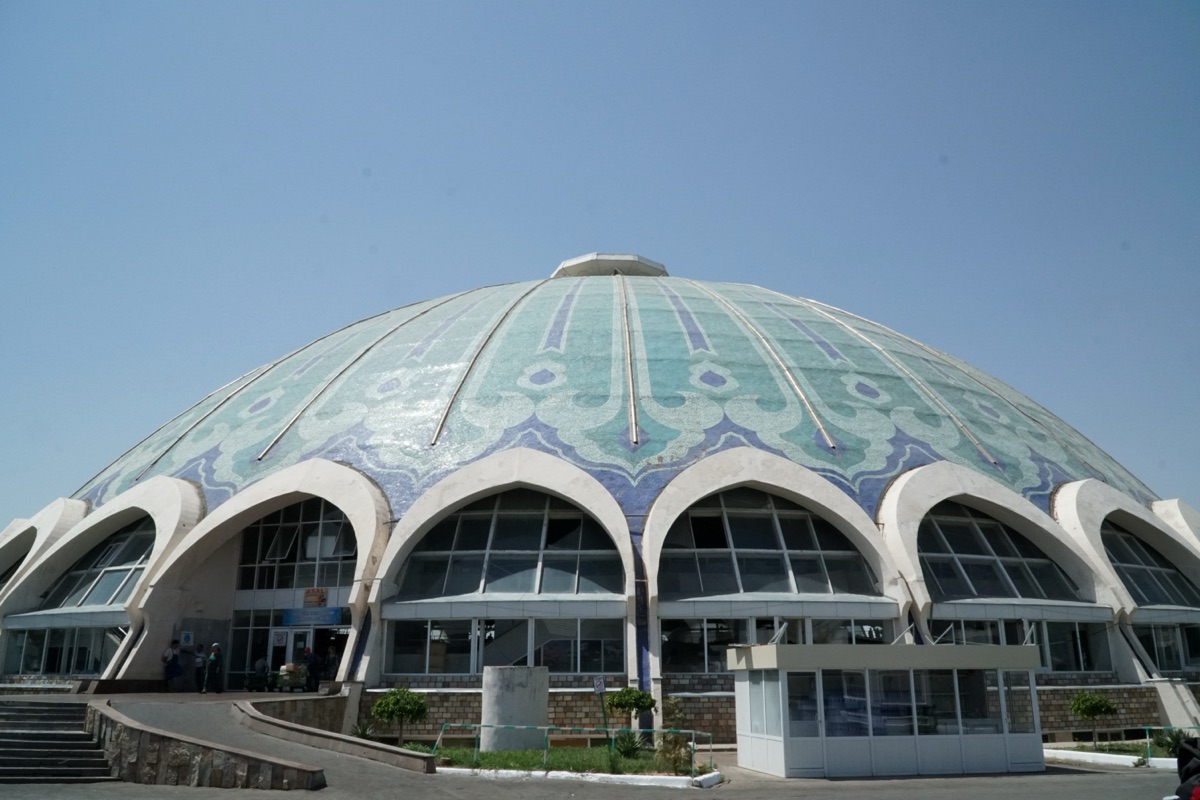
Pacing note: Today is intentionally relaxed — recover from your journey while introducing Uzbek culture before travelling deeper along the Silk Road.
Logistics: Most international flights arrive at Tashkent International Airport (TAS). Taxis and Yandex Go reach the city centre in 20–30 minutes.
Day 2: Afrosiyob to Samarkand & Registan Square
Base: Samarkand
Board the Afrosiyob High-Speed Train from Tashkent to Samarkand — just over two hours along one of the world's most famous trading routes. Once the capital of Timur's empire, Samarkand remains one of Central Asia's greatest cultural treasures.
Begin at Registan Square, surrounded by the Ulugh Beg, Sher-Dor, and Tilya-Kori madrasas. Continue to Gur-e-Amir Mausoleum, the final resting place of Amir Timur. As evening falls, return for the Registan light and sound show — one of Uzbekistan's most memorable experiences.
Logistics: Book Afrosiyob tickets at eticket.railway.uz. Most attractions are a short taxi ride or 15–20-minute walk from Registan.
Day 3: Samarkand's Silk Road Heritage
Base: Samarkand
Start early at Registan before the crowds. Visit Bibi-Khanym Mosque, then browse Siyob Bazaar for Samarkand non, dried fruits, and nuts. Continue to the breathtaking Shah-i-Zinda — an avenue of beautifully tiled mausoleums and one of Uzbekistan's finest architectural masterpieces.
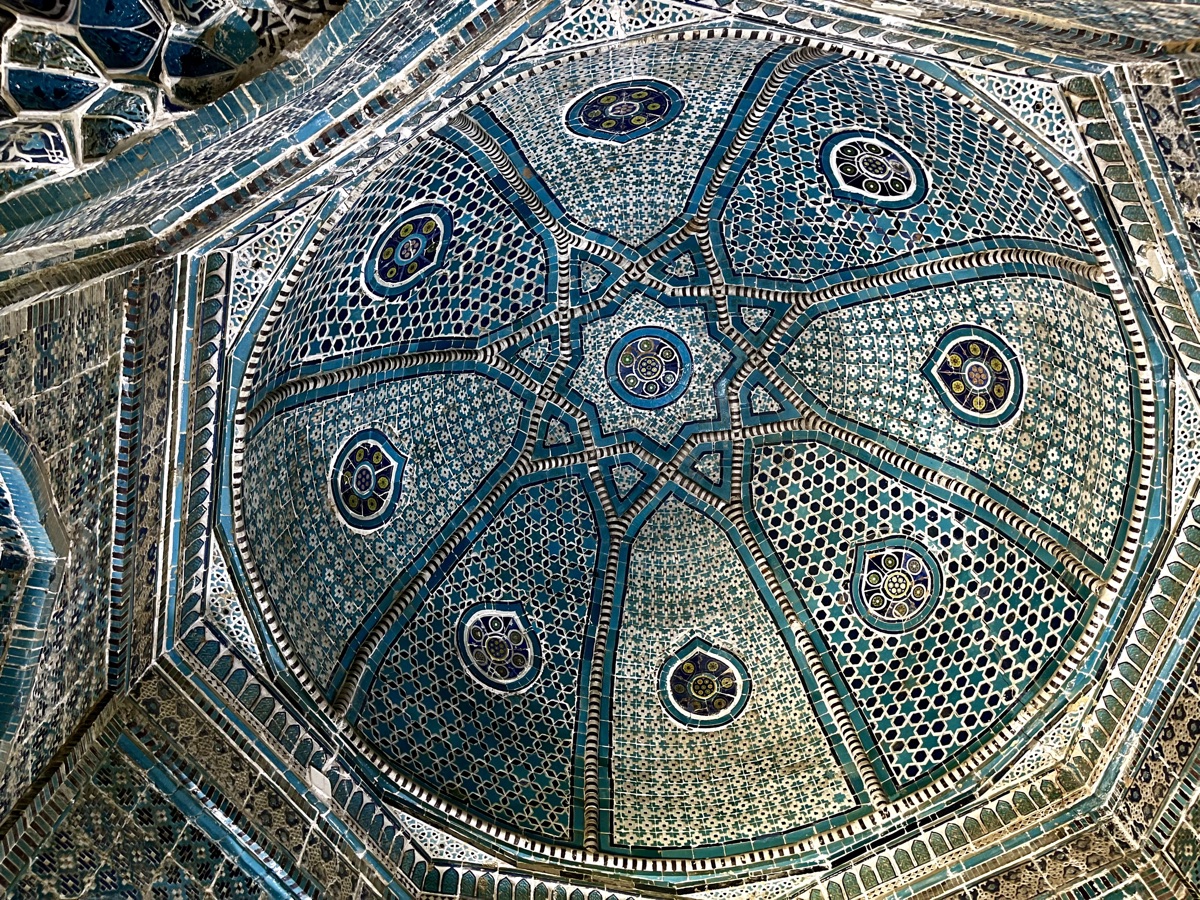
Visit the Ulugh Beg Observatory, where groundbreaking astronomical discoveries were made in the 15th century. End at Konigil Village, where artisans still produce handmade paper from mulberry bark using Silk Road techniques.
Day 4: Afrosiyob to Bukhara
Base: Bukhara
Take the Afrosiyob from Samarkand to Bukhara (~1.5 hours). Once one of the Silk Road's greatest centres of trade and scholarship, Bukhara is now a UNESCO World Heritage Site with a remarkably preserved Old City.
Head to the Po-i-Kalyan Complex — the Kalyan Minaret, Kalyan Mosque, and Mir-i-Arab Madrasa. Continue through the historic Trading Domes, then unwind at the Lyabi-Hauz Ensemble. End with dinner at a traditional teahouse.
Day 5: Historic Heart of Bukhara
Base: Bukhara
Start at the Ark of Bukhara, the ancient fortress that served as the residence of Bukhara's rulers for centuries. Continue to Bolo Hauz Mosque and the distinctive Chor Minor, famous for its four turquoise-domed towers.
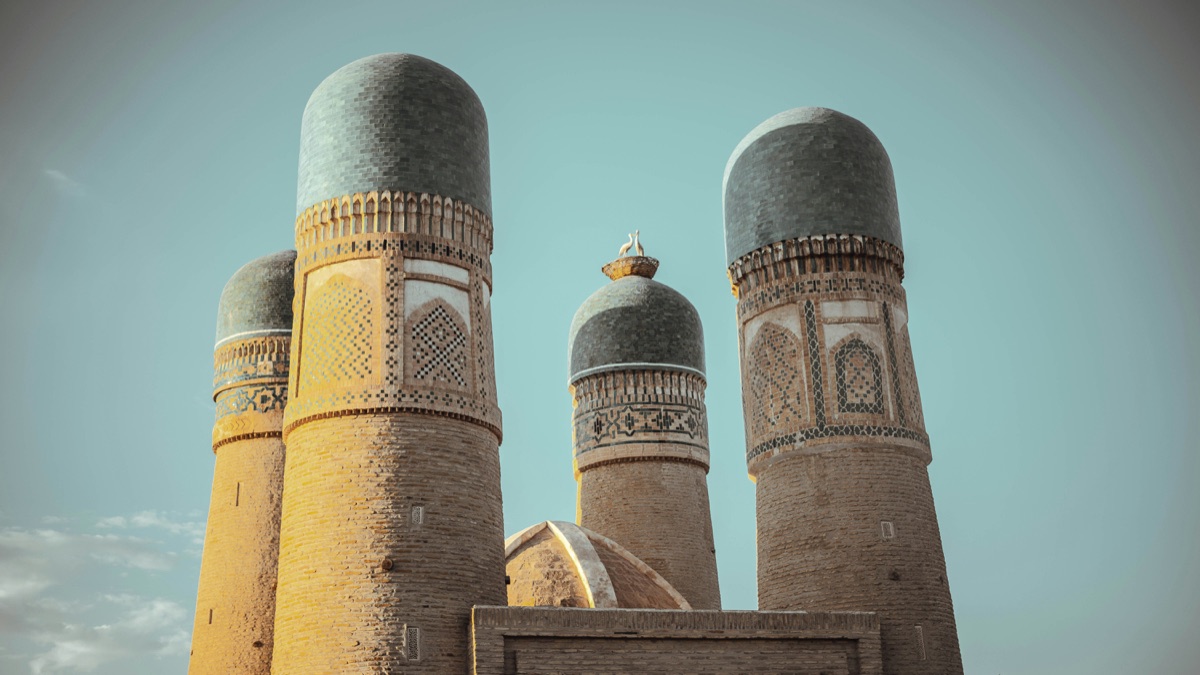
Wander the narrow lanes of the Old City, visiting artisan workshops and, if time permits, the Jewish Quarter. As evening approaches, return to Lyabi-Hauz or Po-i-Kalyan for illuminated monuments and a rooftop dinner overlooking the historic skyline.
Day 6: Journey to Khiva
Base: Khiva
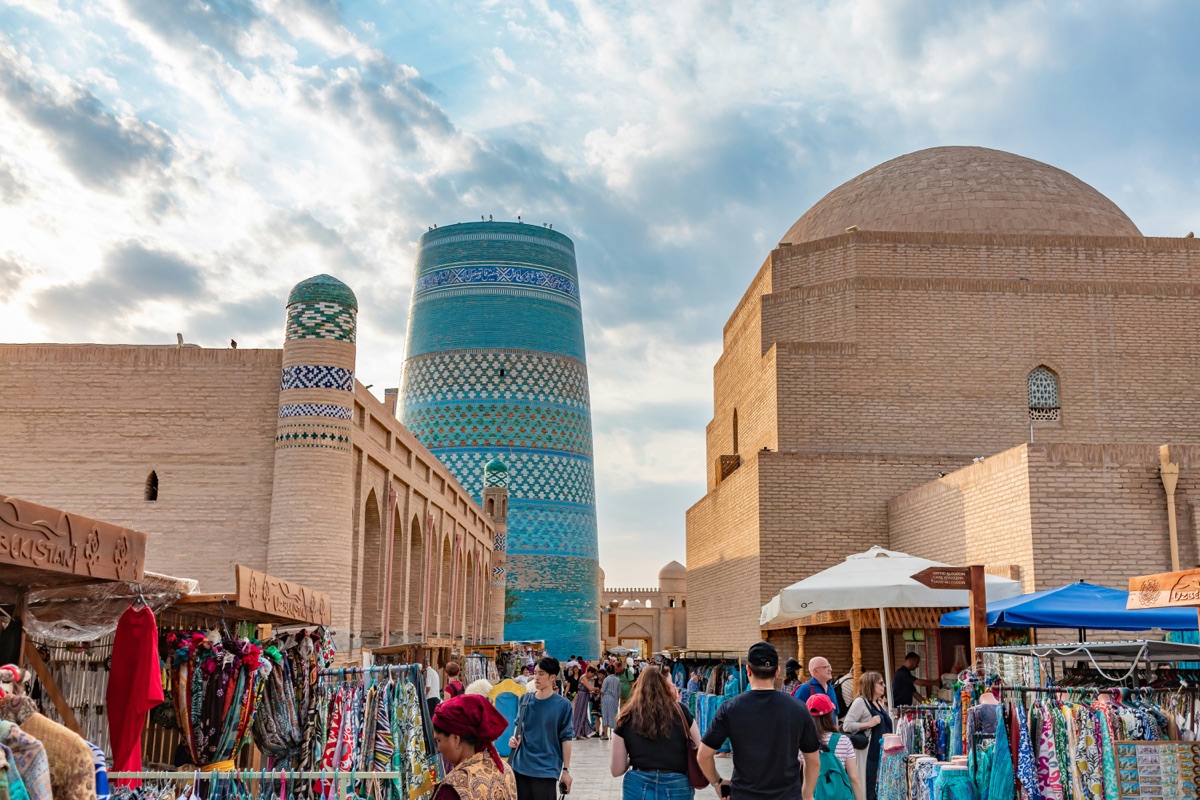
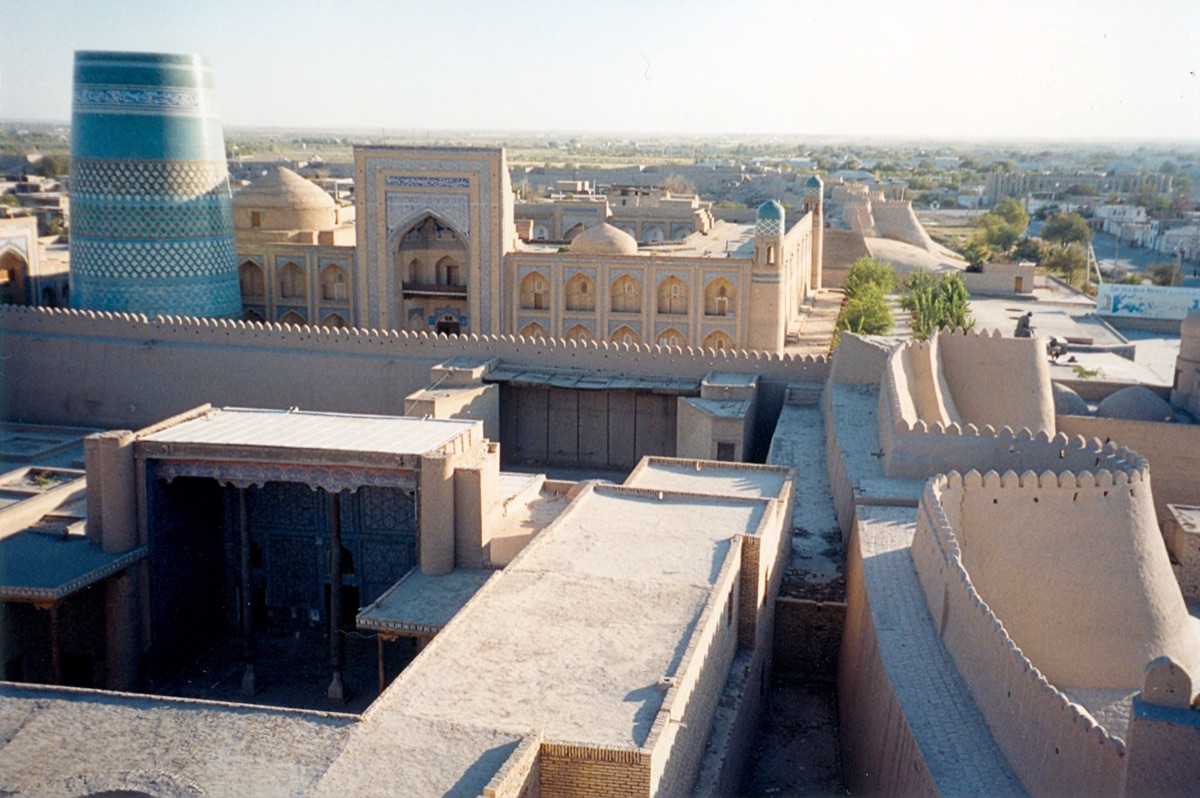
Fly from Bukhara to Urgench, then drive 35–40 minutes to Khiva. Surrounded by mud-brick walls, Itchan Kala feels like an open-air museum where centuries-old mosques, madrasas, and caravanserais remain remarkably intact.
Visit Kalta Minor, the Islam Khoja Minaret, and the Pahlavan Mahmoud Mausoleum. At sunset, head to Kunya Ark for panoramic views as golden light transforms the domes and minarets.
Day 7: Timeless Streets of Khiva
Base: Khiva
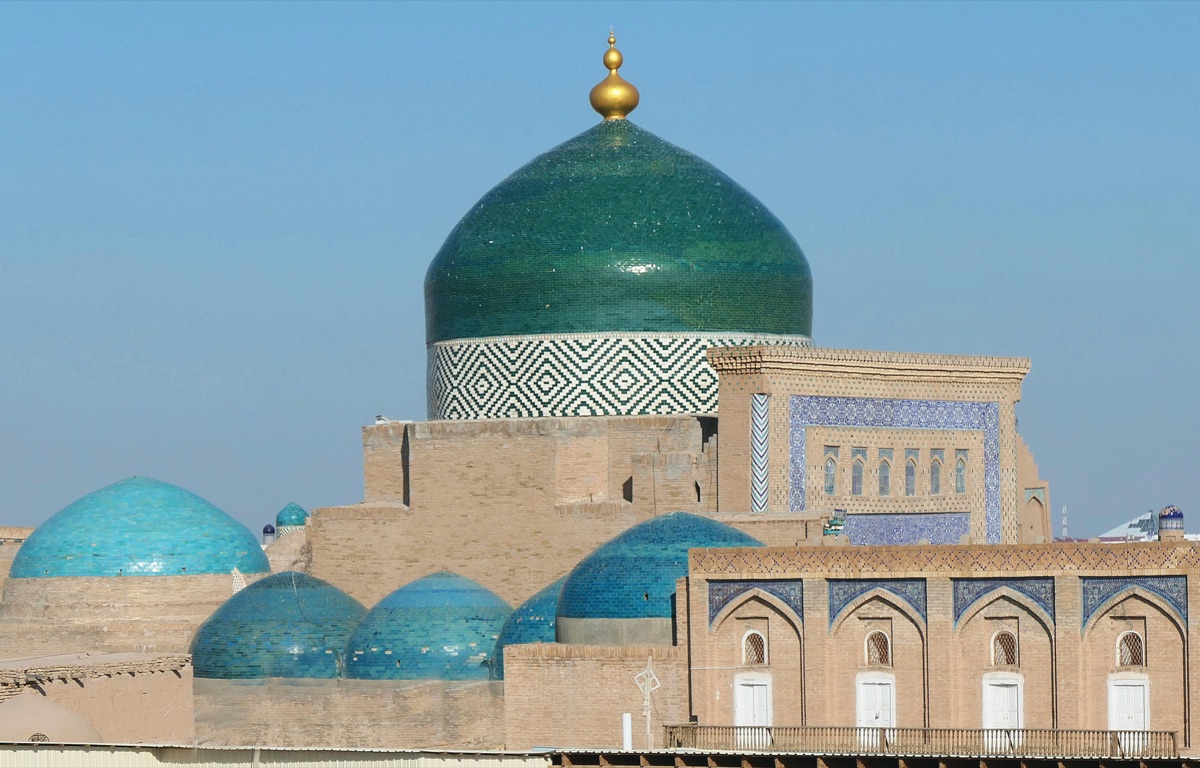
Start with a peaceful morning walk before the streets fill. Visit Tash Khauli Palace and the Juma Mosque, famous for its forest of more than 200 carved wooden columns. Browse the Allakuli Khan Caravanserai and Tim Market, then spend the afternoon wandering artisan workshops. End with dinner inside Itchan Kala and a final evening stroll along the city walls.
Day 8: Departure
Enjoy a relaxed morning in Khiva. Browse artisan shops for ceramics, textiles, or wood carvings. Transfer to Urgench International Airport (35–40 minutes) for your onward flight — either depart directly or take a domestic flight back to Tashkent before continuing home.
Budget Notes
- Budget (USD 900–1,300 for two): Guesthouses, regular trains, local cafés and markets.
- Mid-range (USD 1,500–2,800 for two): Boutique hotels, Afrosiyob trains, domestic flights, guided experiences.
- Luxury (USD 3,500+ for two): Heritage hotels, private guides, premium trains, fine dining.
Useful Booking & Travel Links
- Uzbekistan Railways (Afrosiyob timetables)
- Afrosiyob e-ticket booking
- Yandex Go (ride-hailing)
- Official Uzbekistan Tourism Portal
- UNESCO — Samarkand
- UNESCO — Historic Centre of Bukhara
- UNESCO — Itchan Kala, Khiva
- Airalo eSIM for Uzbekistan
Uzbekistan Prompts to Try in Honge
FAQ
Do you need a car for this itinerary?
No. Major cities are connected by the Afrosiyob train, domestic flights, and shared taxis. Within each city, most attractions are explored on foot, with Yandex Go for longer distances.
Do I need a visa to visit Uzbekistan?
Requirements depend on your nationality. Many countries can enter visa-free or obtain an e-visa. Check the latest entry requirements before booking.
How do I get to Khiva?
Fly from Bukhara to Urgench, then take a 35–40-minute taxi to Khiva. An overnight train is an alternative if you prefer rail travel.
What are the must-try foods?
Don't miss plov, samsa, lagman, manti, shashlik, and freshly baked non bread. Bazaars, tea houses, and traditional restaurants are the best places to start.
Can this be part of a longer Central Asia trip?
Absolutely. Uzbekistan combines well with Kazakhstan, Kyrgyzstan, and Tajikistan. Many travellers also extend with the Fergana Valley or nearby mountain regions.
Ready to make it yours?
Customize this itinerary with AI
Now that you've seen the full route, use Honge to tailor stays, activities, and day-by-day pacing to your trip.
Related itineraries
- 7-Day Hong Kong & Macau Itinerary: City Lights, Culture & Coastal Beauty
- Cappadocia Itinerary: Cave Hotels, Valleys & Hot Air Balloons
- India Monsoon Itinerary: Kerala to Meghalaya
- 6-Day Bolivia 4x4 Itinerary: Uyuni Salt Flats & Altiplano
- Ethiopia Coffee Trip Itinerary: Addis, Highlands & Coffee Ceremony
- 2-Week Georgia Itinerary: Tbilisi, Wine Country & Mountains
- 8-Day Morocco Cultural Itinerary: Casablanca, Fes, Chefchaouen & Marrakech
Written by
This blog was contributed by Sheba M, a travel enthusiast and writer. Sheba can be reached at shebaranjitha@gmail.com.
About Honge
Honge is an AI travel planning platform focused on practical, experience-led itineraries with realistic pacing and logistics. All blog content is edited and published by Honge. Our Uzbekistan research draws on updated practical logistics as of July 2026. © Honge. All rights reserved.
Image credits: Photos are sourced from Wikimedia Commons and Unsplash. Copyright remains with the respective photographers and rights holders. Images from Wikimedia Commons are used in accordance with their applicable licensing terms, including the Creative Commons Attribution-Share Alike 4.0 International license where noted. Unsplash images are used in accordance with the Unsplash License.
Travel disclaimer
This itinerary is intended as general travel inspiration and planning guidance only — not as personalized travel advice. Conditions change. Before you travel, check current entry requirements, visa rules, and any travel advisories issued by your government. Confirm train schedules, flight availability, and site opening hours directly. Honge is not responsible for changes to conditions or services described in this article after the date of publication.