
Some trips begin because flights are cheap or because there are unused vacation days sitting in a leave calendar.
Start with this itinerary
Open this route in Honge as your starting point, then shape the days, stays, and pace around how you travel.
This one began because of a book, and it eventually became our attempt at a grounded monsoon travel India route rather than a standard sightseeing plan.
Years ago, one of us listened to a long podcast conversation with Boyd Varty, who repeatedly mentioned Alexander Frater’s Chasing the Monsoon while talking about travel, instinct, weather, and journeys that stay with you long after they end. Eventually curiosity won and the book got ordered almost impulsively.
It did not read like ordinary travel writing.
The book wandered. It paused. It obsessed over clouds and forecasts and overheard conversations in railway stations. Entire chapters seemed less interested in destinations than in the emotional buildup toward rain itself.
And somewhere inside the book was an idea that quietly stayed with us: Frater believed India during monsoon season was actually more revealing than India during the comfortable tourist season.
Most travelers visit India in winter for blue skies, pleasant temperatures, predictable logistics, and easy sightseeing.
Frater intentionally rejected that version of the country; for him, the monsoon was not background scenery, it was the story itself.
The rains changed how cities behaved. People waited for them emotionally after months of heat. Conversations revolved around forecasts and delayed arrivals. Farmers depended on them. Entire regions psychologically prepared for them.
The monsoon disrupted normal life, but it also revealed it.
That idea became the foundation of this trip.
We never planned to recreate Frater’s original route exactly. His journey unfolded slowly across nearly two months through trains, delays, tea stalls, newspaper offices, conversations with strangers, and long stretches of uncertainty.
We had neither the time nor honestly the patience for that level of commitment, so we designed a condensed version of the same emotional progression through Kerala, Goa, Mumbai, Delhi, Kolkata, and finally Meghalaya.
Flights connected the major sections whenever needed, but emotionally the route still followed the same movement northward and eastward as the monsoon itself.
Oddly enough, once the journey started, the flights stopped mattering very much anyway.
The continuity came from the atmosphere.
Humidity deepened gradually from city to city. Skies darkened. Conversations increasingly revolved around rainfall predictions, delayed transport, flooded roads, and whether “the real rains” had properly arrived yet.
It became surprisingly easy to feel that we were following something alive.
Kerala — Where the India Monsoon Season Officially Arrives
Kerala carried a mood of anticipation before anything else.
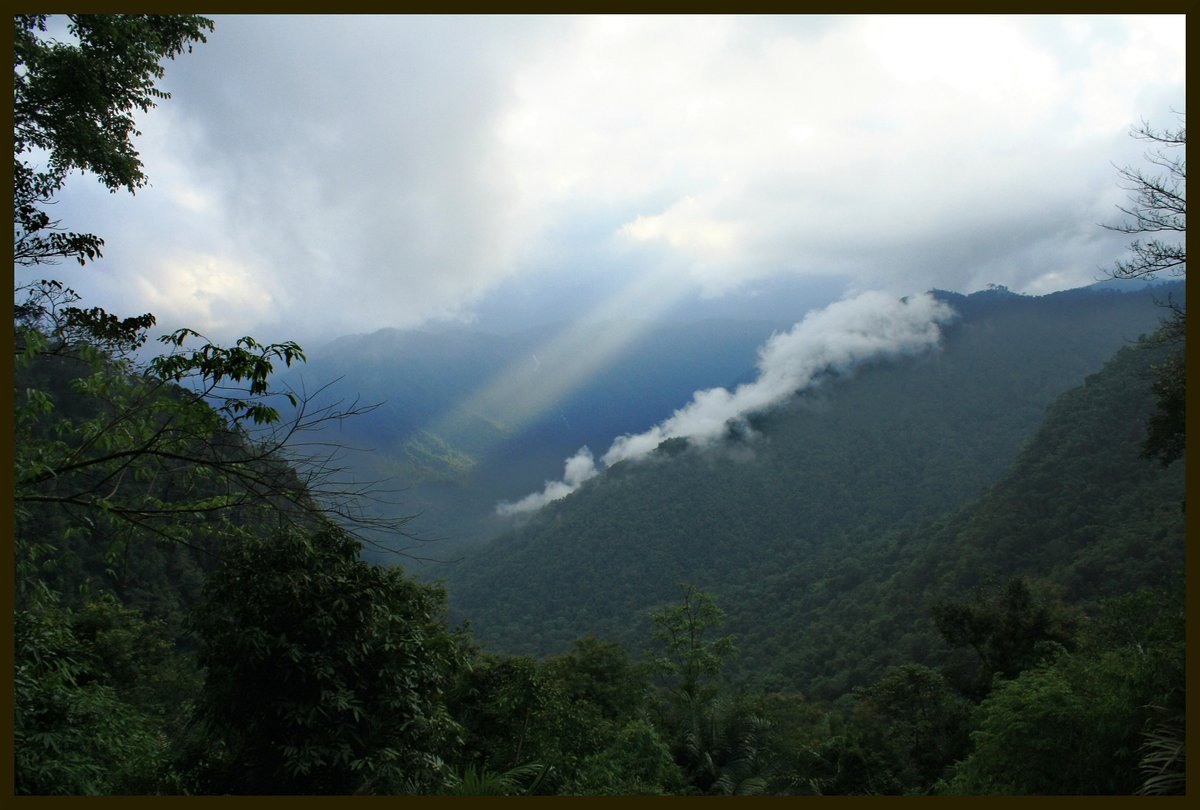
Even before the storms fully arrived, the air already carried that strange dense heaviness that appears before large monsoon systems break open. In Thiruvananthapuram, locals discussed cloud formations and wind direction over tea with the calm familiarity of people who had spent their entire lives reading the sky.
The rain itself finally arrived one evening with almost theatrical timing.
The sky darkened unnaturally fast. Palm trees bent sharply in the wind. Shopkeepers pulled plastic covers over storefronts with the speed and efficiency of people who had rehearsed this exact routine thousands of times before. Then suddenly the streets disappeared behind sheets of water thick enough to blur buildings across the road.
What stayed with us most was how little panic accompanied any of it.
People adjusted instantly. Motorbikes slowed. Tea stalls filled. Conversations continued.
The monsoon in India is not treated simply as bad weather. There is inconvenience, obviously. Traffic worsens. Laundry never dries properly. Flights delay. Roads flood.
But underneath all of that there is also relief, especially after enough weeks of Indian summer heat.
By the time we reached Cochin, the rhythm of monsoon travel had already started reshaping entire days. Outdoor plans became conditional, and cafés became operationally important because people spent hours inside them waiting out storms while watching rain hammer colonial streets outside. Even short ferry timings and local transfers started shifting around weather windows.
Fort Kochi during heavy rain somehow became even more atmospheric than usual. Fishing nets dripped continuously beside the waterfront while mist rolled through old Portuguese-era lanes lined with cafés, bookstores, and damp colonial buildings stained darker by moisture.
Even simple walks became slower because sudden downpours repeatedly forced everyone to stop under awnings beside strangers equally trapped by the weather.
And already the trip felt different from normal travel.
We were not trying to “avoid bad weather.”
The weather itself was the reason we were there.
Goa During Monsoon Feels Like a Different State Entirely
Goa in peak monsoon season barely resembles the version most travelers know.
The beaches empty out. Many shacks close for the season. The endless holiday atmosphere that defines Goa during winter almost completely disappears, and road movement slows quickly whenever visibility drops during heavy bursts.
Underneath all the tourism infrastructure, another quieter version of the state becomes visible, greener, slower, and deeply shaped by rain.
Roads through North Goa looked almost overgrown after heavy storms. Vegetation pressed aggressively toward the edges of highways while rivers turned brown and fast-moving beneath low bridges.
Entire afternoons disappeared inside cafés because the rain became too heavy to continue moving around comfortably.
One afternoon near Assagao we ended up trapped inside a tiny café for nearly two hours while rain hit the road outside so violently that normal conversation became difficult without raising voices.
Nobody seemed frustrated by this, and that was one of the strangest emotional adjustments the trip slowly imposed: the monsoon constantly forced surrender, schedules stopped feeling fully controllable, and adapting to that unpredictability eventually became calming.
Traveling during “proper tourist season” would probably have made Goa easier, but it also would have hidden this version completely, because the monsoon stripped away performance and left behind something slower and more local.
Mumbai — The Monsoon at Full Volume
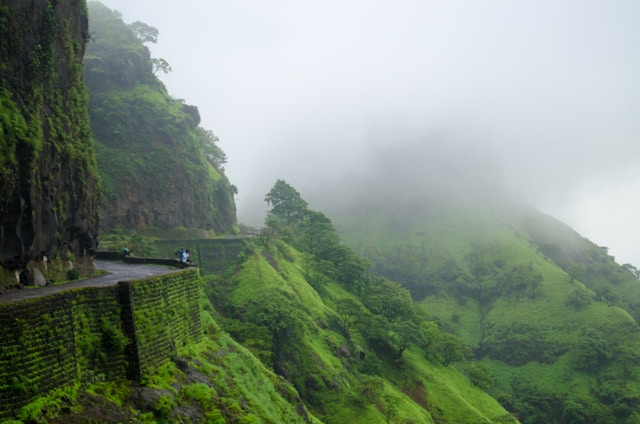
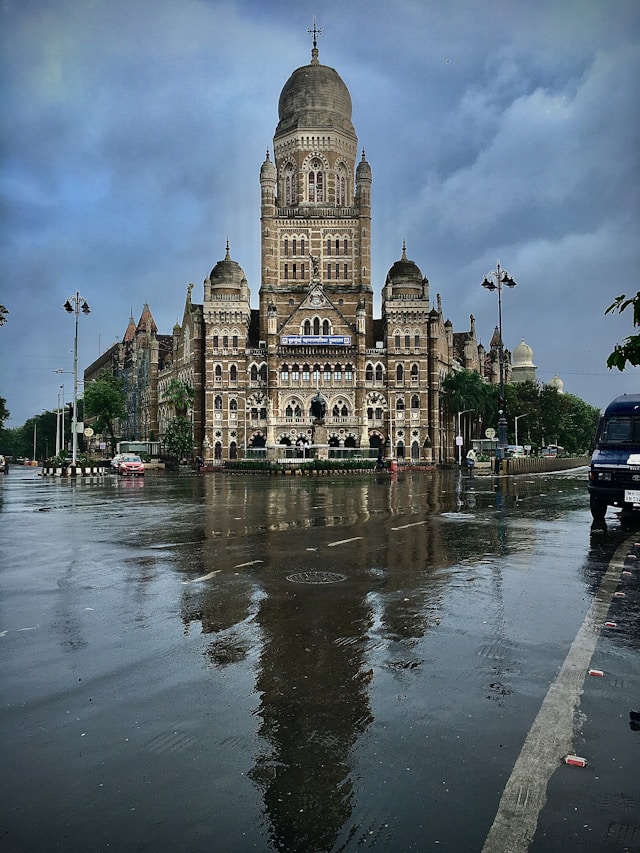
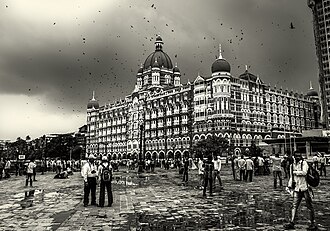
Mumbai was where the monsoon stopped feeling poetic and started feeling enormous; until then the rain had been tied mainly to coastlines, trees, green hills, and small streets, but Mumbai turned it into urban spectacle.
The scale of rain there feels difficult to explain until you experience it yourself. Local trains continued moving through conditions that elsewhere would probably shut entire cities down. Water cascaded off station roofs. Traffic collapsed into near-gridlock while office workers stood barefoot beside flooded roads holding rolled-up trousers above ankle-deep water.
At Marine Drive, waves crashed over the promenade hard enough to soak people standing well back from the sea wall, yet crowds still gathered to watch as if the violence of the weather itself had become public entertainment.
One taxi driver laughed when we asked whether the rain had been unusually intense that week: “This?” he said, pointing toward near-horizontal rain outside the windshield, “This is normal,” and the city kept functioning through all of it, not smoothly or efficiently, but stubbornly. Our onward flight out of Mumbai was delayed long enough that everyone in the terminal treated the announcement like routine weather housekeeping.
Late one evening in Colaba, after a temporary lull in the storm, the entire neighborhood smelled like wet concrete, frying snacks, diesel fumes, and seawater. Street vendors continued working beneath plastic tarpaulins while water dripped continuously from old balconies overhead.
It was exhausting and chaotic and completely waterlogged.
It also felt intensely alive.
That was probably the closest we came to fully understanding Frater’s obsession with monsoon travel.
The rains do not simply change scenery.
They change human behavior.
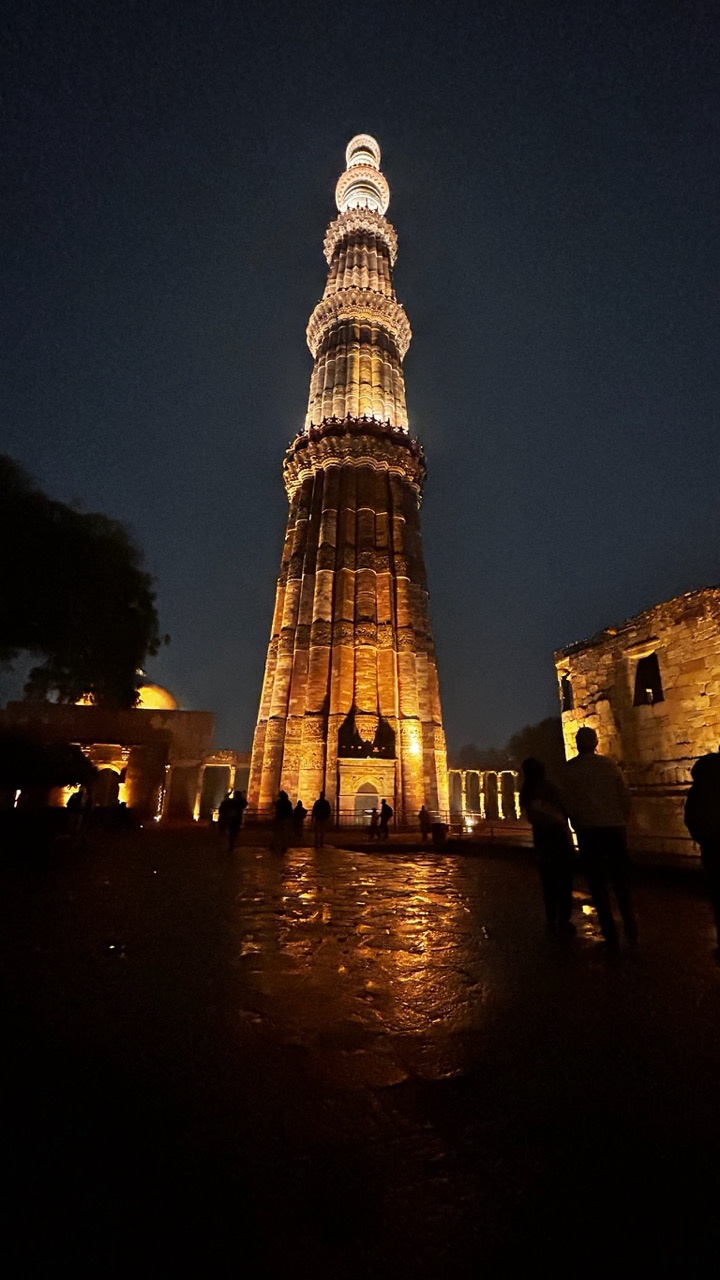
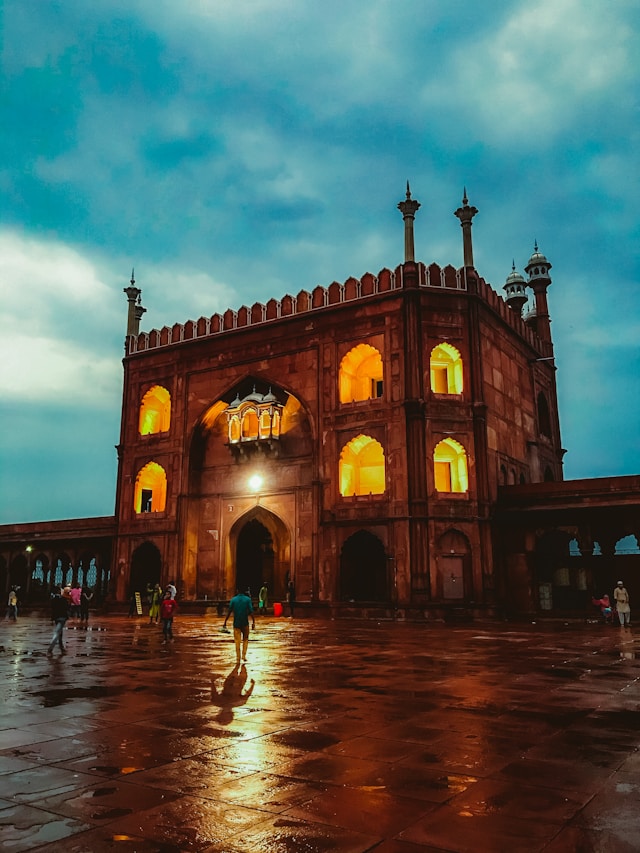
Delhi — Waiting for Relief From the Heat
Delhi carried a very different emotional energy because there the monsoon had still not fully arrived when we landed.
The city looked tired from heat.
Even locals who normally seemed endlessly energetic appeared visibly drained by temperature and humidity. Conversations repeatedly circled back to the same topic:
when would the rain finally arrive properly?
That anticipation created tension across the city.
Dust storms rolled through before actual rainfall appeared. Evenings remained brutally hot long after sunset. Parks looked dry and exhausted. Drivers kept scanning darkening skies hopefully whenever clouds gathered in the distance.
And then finally one afternoon the monsoon broke over the city.
The temperature drop felt immediate and almost psychological. People genuinely smiled outdoors. Children appeared on balconies. Traffic slowed beneath sudden heavy rain while the smell of wet earth spread through the city with almost startling intensity.
By then the trip had already changed the way we thought about monsoon season in India.
From outside the country, rain can easily seem romanticized in writing and film, but traveling northward through the heat made something else obvious: in huge parts of India, the monsoon is deeply tied to survival through agriculture, reservoirs, electricity demand, crop cycles, temperature relief, and daily comfort, so people are not simply waiting for picturesque weather, they are waiting for release.
Kolkata — Rain Feels Woven Into the City
Kolkata came across as softer than Mumbai, and older too.
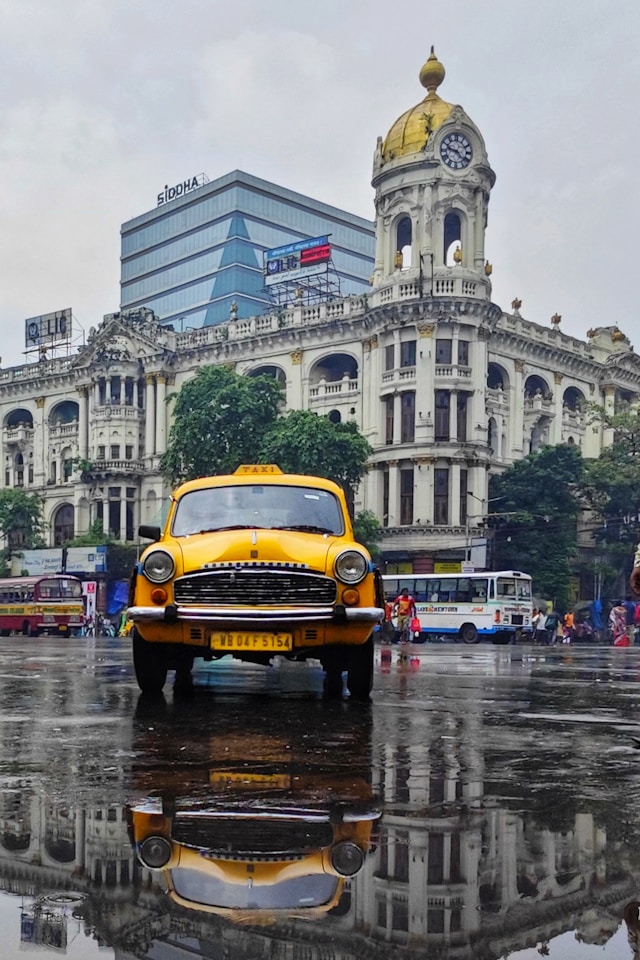
The rain there seemed absorbed into the personality of the city itself, with tram tracks disappearing into wet streets, yellow taxis reflecting in puddles, tea stalls steaming beside old colonial buildings, and bookshops with damp paper smells lingering permanently in the air; some cities resist monsoon weather, but Kolkata settled into it. Even short taxi rides became unpredictable when roads waterlogged and traffic redrew itself block by block.
Entire afternoons vanished inside coffee houses while rain hammered old windows hard enough to blur the streets outside completely. Long walks repeatedly became impossible because storms arrived suddenly and without warning, forcing everyone indoors together beneath awnings, café roofs, bookstore entrances, and tea stalls.
By then we had almost stopped discussing the “route” consciously.
The journey no longer felt like reenactment.
It felt more like surrendering gradually to the seasonal rhythm that Frater had described decades earlier.
Shillong and Cherrapunji — Entering the Heart of the Monsoon
The final leg of the journey was also the one we understood the least before arriving.
Kerala, Goa, Mumbai, and even Kolkata already exist strongly in most travelers’ imaginations, with familiar reference points like beaches, colonial streets, traffic, food, films, or skylines.
Meghalaya felt different.
Before this trip, most of what we knew about the region revolved around one recurring fact:
it rains here more than almost anywhere else on earth.
That turns out to be technically true and emotionally incomplete at the same time.
The easiest connection from Kolkata is flying into Guwahati in Assam, which acts as the primary gateway to the northeastern hill states. Flights between Kolkata and Guwahati are frequent and relatively short, but emotionally the transition feels much larger than a simple one-hour hop across the country.
The landscape changes almost immediately after leaving Guwahati.
The road climbs steadily into the Khasi Hills while the air cools, traffic thins out, and clouds begin appearing lower and closer than they did anywhere else on the route. After weeks of moving through dense Indian cities and monsoon-heavy plains, the drive toward Shillong felt unexpectedly calm.
And honestly, that drive matters.
This is not the kind of region where you should land, tick off a viewpoint, and immediately rush onward.
The monsoon changes pace here.
Fog drifts directly across the highway without warning. Pine forests appear suddenly between cloud banks. Small roadside stalls sell tea, roasted corn, Maggi noodles, and oranges while rain moves across the hills in slow visible sheets. Drivers here seem deeply accustomed to weather behaving unpredictably every few kilometers.
Shillong itself felt softer and slower than we expected, not sleepy exactly, just less aggressive than most Indian cities.
There were cafés everywhere, from small music cafés and rain-soaked bakeries to tea stalls and spaces with fading live-music posters, where students lingered for hours over coffee while clouds drifted outside.
The monsoon amplifies that atmosphere even further.
Nothing in Meghalaya feels separated from weather. Roads curve around waterfalls that appear temporarily during heavy rain. Entire neighborhoods disappear into fog by evening. Tin rooftops amplify rainfall into constant background sound.
And then there is Cherrapunji.
Or Sohra, as locals increasingly prefer calling it.
The drive there from Shillong was probably the single most visually dramatic transition of the entire journey.
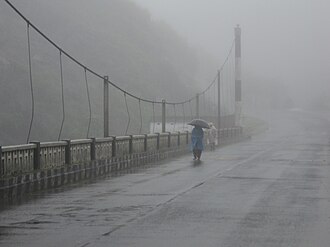
At times the road seemed suspended between clouds. Waterfalls emerged directly out of cliffs before vanishing again into mist within minutes. Entire valleys disappeared behind low cloud so dense it erased depth completely.
Rain no longer arrived dramatically there; it simply existed constantly in shifting forms like drizzle, mist, spray, cloud, wind-driven rain, waterfall runoff, and condensation hanging permanently in the air.
Everything looked wet all the time: road signs, buildings, trees, clothing, dogs sleeping beside tea stalls, and entire hillsides.
At several viewpoints, visibility collapsed so completely that valleys simply vanished behind white cloud. Then ten minutes later the entire landscape would suddenly reopen again:
green cliffs,
waterfalls dropping thousands of feet,
deep forested valleys stretching toward Bangladesh somewhere far below.
The weather constantly reshaped the scenery in real time.
Travel inside Meghalaya also requires different expectations than elsewhere in India.
Distances on maps appear short.
Actual travel takes much longer.
Roads are winding. Fog slows visibility. Landslides occasionally disrupt traffic during heavier monsoon weeks. Mobile signal becomes inconsistent in certain stretches outside Shillong. And unlike major tourist circuits elsewhere in India, the region still feels relatively under-commercialized once you move away from the main town centers.
Oddly enough, that lack of overdevelopment became one of the most memorable parts of the journey.
There were still places where roadside tea shops genuinely felt isolated.
Places where waterfalls had no ticket counters.
Places where clouds moved through villages so thickly that buildings disappeared entirely for several minutes at a time.
The monsoon no longer felt like weather there.
It felt like terrain itself.
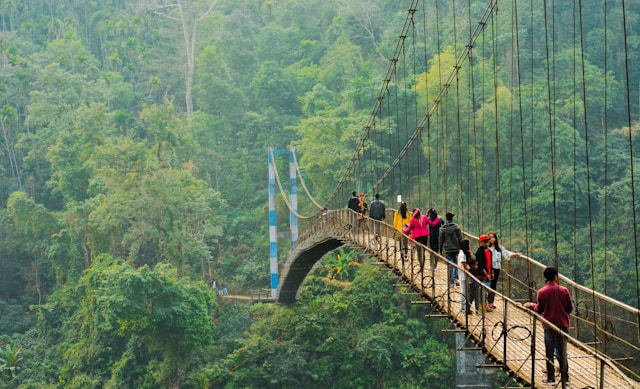
One afternoon near Nongriat, after climbing back up endless wet stone steps from the living root bridges, one of us slipped on algae-slick stone and banged a shin hard enough to force a long pause; we eventually sat completely exhausted under a corrugated metal roof drinking sweet tea while rain hammered the valley around us. Nobody really spoke much.
By then the journey had shifted emotionally again.
Earlier sections of the trip still carried movement and momentum through following forecasts, changing cities, and tracking rain northward, while Meghalaya felt more like arrival, not at a destination exactly, but at the center of the monsoon itself.
And in a strange way, it became the perfect ending for a journey inspired by Frater’s book because this was the first place where rain stopped feeling dramatic or cinematic.
Here it simply felt permanent.
Like another layer of geography.
Following the Monsoon Changed the Way We Saw India
By the final evening in Cherrapunji, everybody was exhausted from wet clothes, delayed schedules, humidity, muddy roads, fog, unpredictable weather, and constant adaptation.
But the journey had achieved something unexpectedly immersive.
We had not simply visited India during monsoon season; we had slowly watched the country transform beneath the movement of rain itself, and somewhere between Kerala and Meghalaya, the monsoon stopped feeling like weather and started feeling like geography in motion.
Best Time for Monsoon Travel in India
For this type of route, the most practical window is usually June through September, with regional timing differences. Kerala typically receives the southwest monsoon first, while intensity and timing vary as you move north and east. If you want live forecast context while planning, the India Meteorological Department (IMD) is the most useful official reference point.
How Many Days You Need for This Route
A meaningful version of this route needs at least 12 to 16 days if you want buffers for weather disruption. A faster 8 to 10 day version is possible, but it usually means fewer city stops and less flexibility during heavy rain windows. If you want a slower weather-and-landscape contrast, our Vegan South Korea Itinerary: 7 Days Through Seoul, Jeonju & Busan and 6-Day Bolivia 4x4 Itinerary: Uyuni Salt Flats & Altiplano show similar pacing principles in different environments.
FAQ
Is it realistic to follow the monsoon route across multiple Indian cities?
Yes, if you build in flexibility and treat weather delays as part of the route rather than exceptions.
Which city felt most intense during monsoon?
Mumbai felt the most intense in scale and volume of rain, while Meghalaya felt the most constant and immersive.
What should you pack for a monsoon-heavy India route?
Quick-dry clothing, light rain layers, waterproof bags, backup footwear, and practical day-to-day humidity management essentials.
Is Meghalaya difficult during monsoon?
Travel is manageable but slower than map distances suggest because of winding roads, fog, occasional landslides, and variable visibility.
Did the trip feel like reenacting the book exactly?
No. It felt more like following the same emotional arc with modern transport while letting weather shape the timing.
Ready to make it yours?
Customize this itinerary with AI
Now that you've seen the full route, use Honge to tailor stays, activities, and day-by-day pacing to your trip.
Related itineraries
- 8-Day Eastern India Itinerary: Kolkata, Odisha Temples & Darjeeling Tea
- 6-Day Bolivia 4x4 Itinerary: Uyuni Salt Flats & Altiplano
- 10-Day South Africa Itinerary: Cape Town, Winelands & Londolozi
- Vegan South Korea Itinerary: 7 Days Through Seoul, Jeonju & Busan
- Vegetarian Japan Itinerary: 10 Days Through Tokyo, Kyoto & Osaka
About The Author
Honge is a travel planning platform focused on practical, experience-led itineraries. Our editorial travel stories combine first-person route context, local friction, and planning realism so readers can convert inspiration into workable plans. We prioritize grounded detail over checklist-style travel content.
Image credits: Photos are sourced from Wikimedia Commons and Unsplash. Copyright remains with the respective photographers and rights holders. Images from Wikimedia Commons are used in accordance with their applicable licensing terms, including the Creative Commons Attribution-Share Alike 4.0 International license where noted. Unsplash images are used in accordance with the Unsplash License.
Travel disclaimer
This itinerary is intended as general travel inspiration and planning guidance only — not as personalised travel advice. Conditions change. Before you travel, check the current entry requirements, visa rules, and any travel advisories issued by your government for your destination. Review weather forecasts for your specific travel dates, confirm opening hours and ticket availability for attractions directly, and take out comprehensive travel insurance that covers medical, cancellation, and disruption. Honge is not responsible for any changes to conditions, services, or experiences described in this article after the date of publication.