
Most people arrive in Cappadocia chasing the same photograph.
Start with this itinerary
Open this route in Honge as your starting point, then shape the days, stays, and pace around how you travel.
Hot air balloons floating over soft pink valleys at sunrise. Stone cave suites. Rooftop terraces. Flowing dresses in the wind.
And honestly, we almost planned the trip that way too.
But somewhere during the early planning stage, we realized neither of us actually wanted to experience Cappadocia as a checklist of famous viewpoints and rushed excursions.
We were not interested in waking before sunrise every single day to chase the perfect balloon photo, racing between attractions, aggressive ATV tours, packed tour buses, or trying to cover all of Cappadocia in forty-eight hours.
What we wanted instead was much simpler: to spend enough time there for the landscape to stop feeling surreal and start feeling familiar.
That decision changed the entire trip.
Instead of treating Cappadocia as a short stop inside a larger Turkey itinerary, we stayed for ten days and slowly moved between Goreme, Uchisar, Ortahisar, Cavusin, and the surrounding valleys connecting them.
And honestly, by the end of the trip, the balloons barely felt like the main story anymore. The landscape did.
Arriving in Cappadocia, and Immediately Slowing Down
Flying into Cappadocia felt strangely abrupt. One moment there was modern Istanbul: traffic, noise, ferries, crowded streets. Then suddenly: soft volcanic valleys, stone houses, ancient cave dwellings, and enormous open skies.
We landed at Kayseri airport and took a shared shuttle toward Goreme rather than renting a car immediately. Originally we debated driving ourselves through the region, but once we arrived, not having a car actually became part of the experience.
Walking slowed everything down. Distances between villages looked small on maps but unfolded gradually through dusty paths, hidden churches, valley trails, tea stops, and unexpected viewpoints.
The first thing that surprised us was temperature. Despite the dry landscape, mornings and evenings were much colder than we expected, especially inside cave hotels.
Our room looked beautiful in photographs: arched stone ceilings, woven carpets, soft lighting, a terrace overlooking the valley. But it was also slightly damp in the mornings, WiFi drifted unpredictably between functional and nonexistent, and the stone interiors held cold air surprisingly well overnight.
Oddly, those imperfections made the stay feel better. The hotel felt connected to the landscape instead of isolated from it.
Goreme, and Why the Balloon Obsession Fades
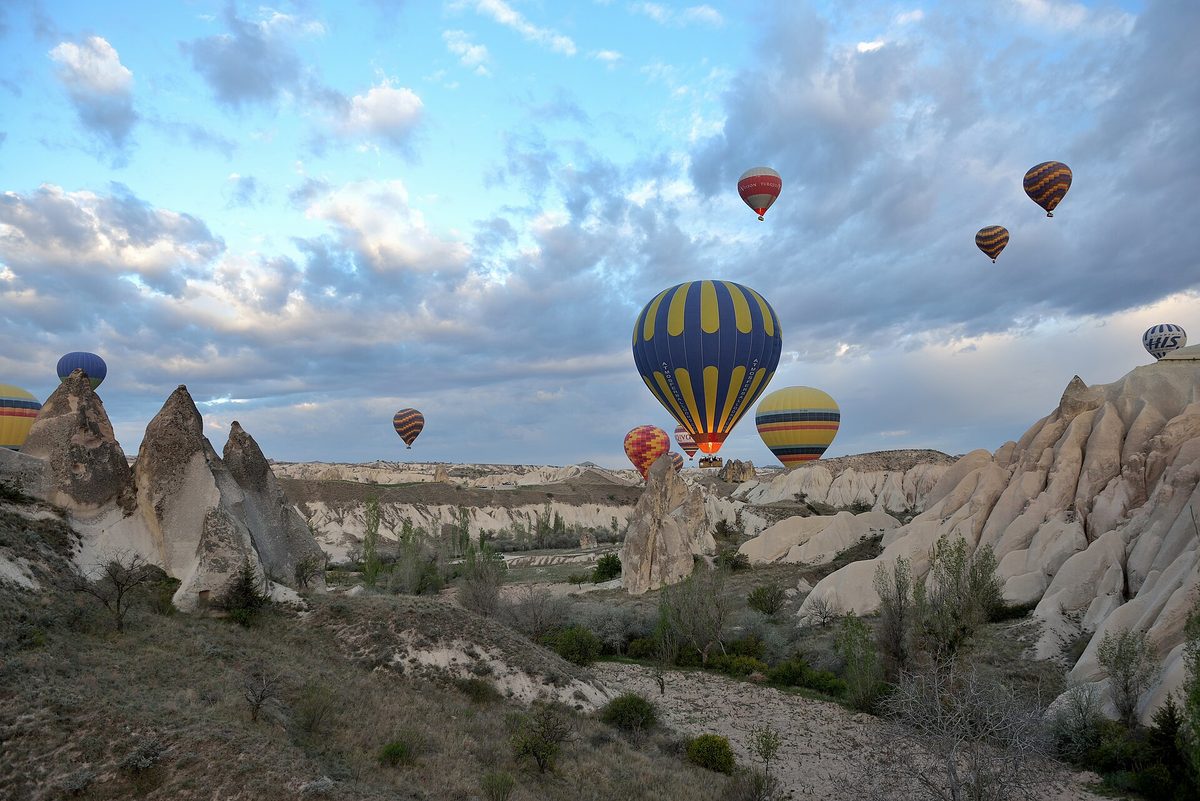
The first sunrise in Goreme felt almost unreal. At around five in the morning we heard burners igniting somewhere in the valley before we could even see anything clearly.
Gradually dozens of balloons started rising silently through the darkness while people on rooftops wrapped themselves in blankets holding coffee cups and phones.
It was beautiful. But what surprised us most was how quickly the spectacle became emotional rather than photographic.
And then, on the third morning, nothing happened. Strong wind. All flights cancelled.
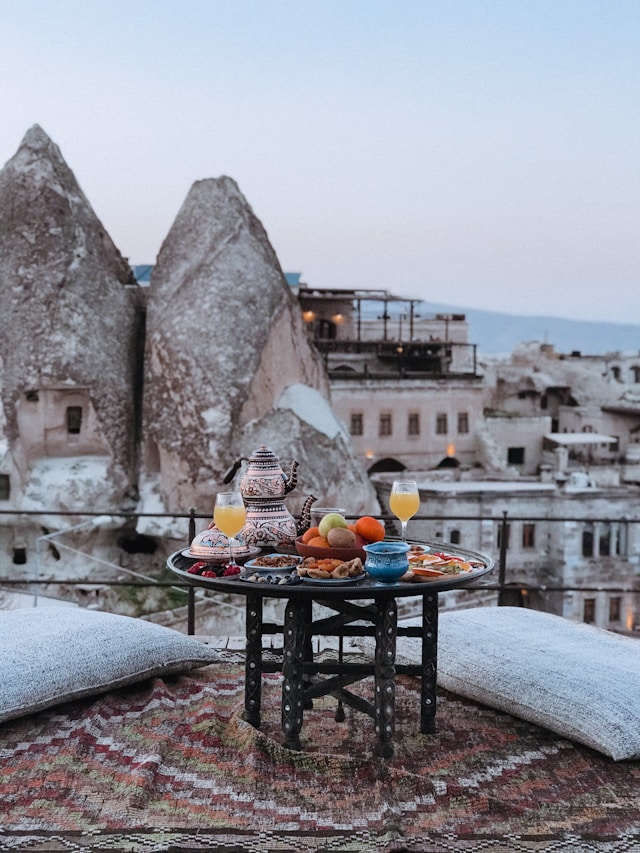
Initially everyone in town seemed disappointed. But that morning unexpectedly became one of our favorites: a long Turkish breakfast while fog drifted through the valley and grounded balloons inflated uselessly in nearby fields before collapsing again.
Fresh bread, olives, cheeses, honey, menemen, thick coffee, cold morning air, and nowhere to rush toward. That was probably the moment the trip fully shifted into slow travel.
Walking Valleys Instead of Collecting Attractions
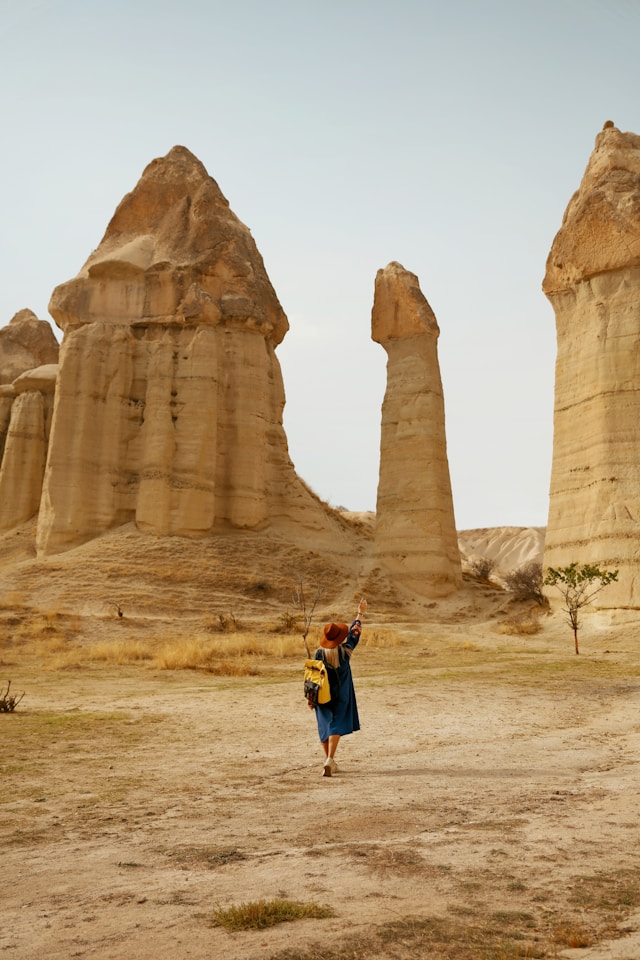
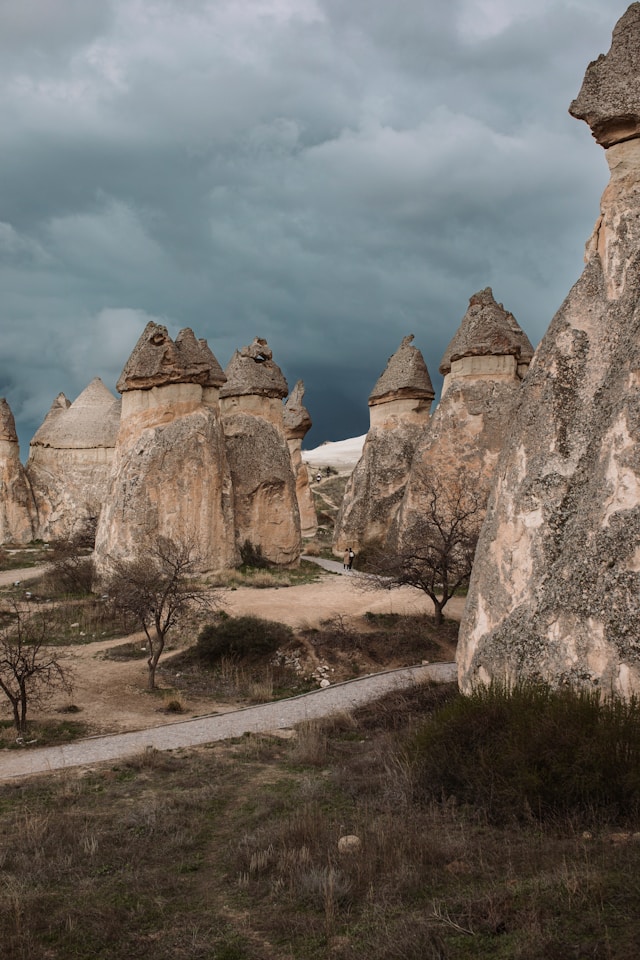
Most afternoons eventually turned into long walks through Rose Valley, Red Valley, Pigeon Valley, and Love Valley.
Before arriving, the names sounded slightly gimmicky online. In reality, the valleys felt quieter and more textured than the internet version of Cappadocia suggests.
Some days we walked for hours without any real destination. Small cave churches appeared unexpectedly, stray dogs followed hikers between trails, and elderly women sold fresh orange juice from tiny roadside stands.
Because we stayed longer than most visitors, we stopped feeling pressure to finish places quickly. One afternoon we missed a turn toward Cavusin and ended up spending an hour in a tiny tea garden while an older man explained directions through gestures and repeated glasses of tea.
Nothing important happened during that hour. And somehow it became one of the moments we remembered most later.
Uchisar and Ortahisar, Where Cappadocia Gets Quieter
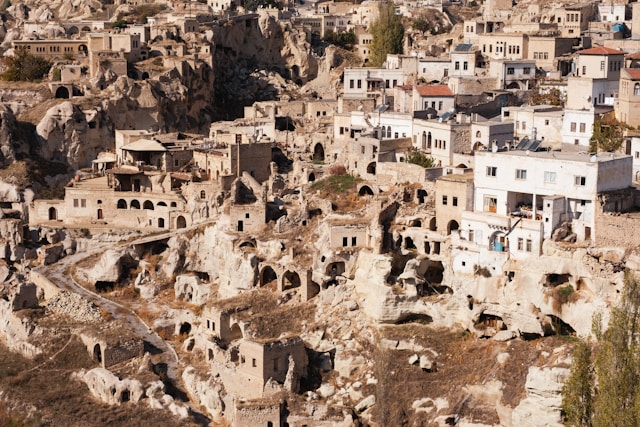
After several nights in Goreme, we shifted toward Uchisar and later Ortahisar. That decision mattered enormously.
Goreme carries most of the tourism energy. Uchisar and Ortahisar felt calmer and more residential once evening arrived.
The pace changed immediately: small grocery shops replaced souvenir stores, families gathered outside after sunset, and restaurants felt less performative and more local.
By then we had fully surrendered to Turkish breakfast culture. Several mornings stretched toward noon before we even started moving anywhere, and honestly, that pace felt entirely appropriate there.
Underground Cities Felt More Claustrophobic Than Expected
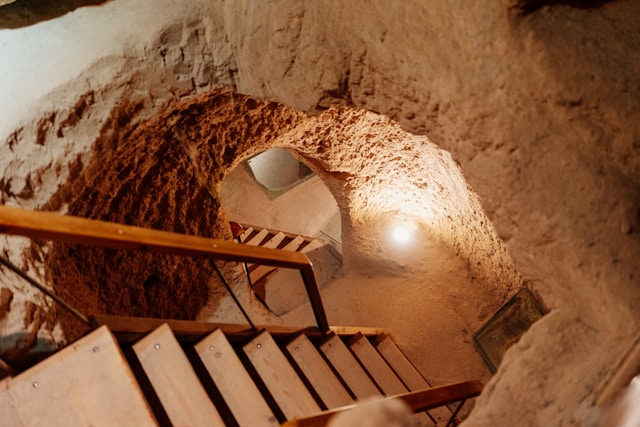
One of the few heavily structured things we planned was visiting the underground cities.
Photographs do not communicate how physically narrow and disorienting these spaces feel. The contrast against Cappadocia’s open valleys made the experience surprisingly unsettling.
Above ground, the landscape feels expansive and soft. Underground, everything suddenly becomes compressed, dark, and defensive.
After emerging back into daylight, both of us sat quietly outside for a long time drinking tea without saying much. Cappadocia reveals itself in layers like that: beautiful, then strange, then historically heavy, then peaceful again.
Food, Wine and Long Evenings
Food became more important to the trip than we expected, not because we were chasing famous restaurants, but because long evenings naturally slowed around meals.
Pottery kebabs arrived sealed inside clay pots cracked open at the table. Meze dinners stretched for hours beneath outdoor lights, and local Cappadocian wines felt unexpectedly good after dusty hiking days.
Some meals were excellent. Others were heavily adapted toward tourism. The best evenings usually stayed simple: shared plates, warm bread, wine, tea afterward, cold air settling across the valleys outside.
What We Ended Up Not Doing
By the second half of the trip, we had completely stopped worrying about whether we were seeing enough.
We skipped multiple ATV tours, packed group excursions, constant sunrise alarms, and several attractions people insisted were mandatory.
That probably became the biggest lesson of the trip: Cappadocia works better once you stop trying to consume it efficiently.
The landscape rewards repetition more than completion. The fifth slow morning matters more than the fifteenth attraction.
Leaving Cappadocia Felt Surprisingly Difficult
By the final days, the trip had settled into routines we were not ready to leave behind: wake slowly, check whether balloons were flying, drink coffee on a terrace wrapped in blankets, walk somewhere without urgency, stop for tea, watch light change across valleys, eat late, and sleep deeply inside cold stone rooms.
Nothing about the trip felt dramatic by then. That was exactly why leaving felt difficult.
Cappadocia had slowly stopped behaving like a destination. It started feeling more like a temporary alternative pace of life.
And honestly, that may be why people become emotionally attached to the place: not because of the balloons, but because Cappadocia quietly teaches you how pleasant travel can feel when not every moment is optimized.
Plan a Slow Journey in Honge
If this kind of pacing is what you want, use Honge’s Slow Travel Planner to structure a route with more breathing room and better flow.
FAQ
How many days should you spend in Cappadocia for a slow trip?
Around 7 to 10 days gives enough time to enjoy the valleys, villages, cave stays, and weather shifts without rushing through attractions.
Is Cappadocia worth visiting without doing every balloon sunrise activity?
Yes. Cappadocia remains deeply rewarding through village walks, valley trails, long breakfasts, and slower pacing even when balloon schedules change.
Which bases work well for a slower Cappadocia itinerary?
A combination of Goreme, Uchisar, and Ortahisar works well, with each area offering a different pace and atmosphere.
Do you need a car for a slow Cappadocia trip?
Not always. Walking and local transfers can work well for slower travel, especially when the priority is valley rhythm rather than rapid attraction coverage.
Ready to make it yours?
Customize this itinerary with AI
Now that you've seen the full route, use Honge to tailor stays, activities, and day-by-day pacing to your trip.
Related itineraries
- Ethiopia Coffee Trip Itinerary: Addis, Highlands & Coffee Ceremony
- 2-Week Georgia Itinerary: Tbilisi, Wine Country & Mountains
- 8-Day Uzbekistan Silk Road Itinerary: Samarkand, Bukhara & Khiva
- India Monsoon Itinerary: Kerala to Meghalaya
- 6-Day Bolivia 4x4 Itinerary: Uyuni Salt Flats & Altiplano
- Vegetarian Japan Itinerary: 10 Days Through Tokyo, Kyoto & Osaka
About The Author
Honge is a travel planning platform focused on practical, experience-led itineraries. Our editorial travel stories combine first-person route context, local friction, and planning realism so readers can convert inspiration into workable plans.
Image credits: Photos are sourced from Wikimedia Commons and Unsplash. Copyright remains with the respective photographers and rights holders. Images from Wikimedia Commons are used in accordance with their applicable licensing terms, including the Creative Commons Attribution-Share Alike 4.0 International license where noted. Unsplash images are used in accordance with the Unsplash License.
Travel disclaimer
This itinerary is intended as general travel inspiration and planning guidance only — not as personalised travel advice. Conditions change. Before you travel, check the current entry requirements, visa rules, and any travel advisories issued by your government for your destination. Review weather forecasts for your specific travel dates, confirm opening hours and ticket availability for attractions directly, and take out comprehensive travel insurance that covers medical, cancellation, and disruption. Honge is not responsible for any changes to conditions, services, or experiences described in this article after the date of publication.