
The result is a trip that feels more like island travel than a checklist of attractions.
Start with this itinerary
Open this Samoa route in Honge as your starting point, then shape beach days, waterfall stops, village visits and scenic drives around how you travel.
Introduction
Samoa is particularly well suited to solo travel if you enjoy moving at a slower pace. The two main islands, Upolu and Savai‘i, combine tropical beaches, freshwater swimming holes, waterfalls, volcanic landscapes and traditional villages, while the distances are manageable enough to explore independently by car.
This route is designed for independent travellers who want a mix of island culture, swimming, scenic drives and time to slow down. Upolu brings the markets, waterfalls and famous south-coast beaches, while Savai‘i adds lava fields, blowholes, waterfalls and quieter stretches of coastline.
The key to this itinerary is not trying to see every attraction in Samoa. Instead, it follows a simple Upolu → Savai‘i → Upolu route, giving you four days to explore Upolu, three days on Savai‘i and a final day for the ferry and departure. The result is a trip that feels more like island travel than a checklist of attractions.
Why This Trip Works
Samoa gives you a varied Polynesian experience without requiring a packed itinerary.
The route also works well for solo travel because you can explore Apia independently, rent a car for the quieter parts of Upolu and then take the vehicle ferry to Savai‘i for a slower island road trip.
The itinerary deliberately leaves room for spontaneous swimming stops, village scenery, local food and time at the beach.
Good to Know
- Samoa uses the Samoan tala (WST).
- Cards are accepted in many hotels and larger businesses, but carrying cash is useful for smaller establishments and local stops.
- Samoa drives on the left-hand side of the road.
- Tropical weather can change quickly, particularly around waterfalls and mountain roads.
- English is commonly used in tourist settings, although Samoan is the country's main local language.
- Sundays are generally quieter, with church, family and rest playing an important role in community life.
Before You Go
- Book your accommodation in Apia, Upolu's south coast and Savai‘i ahead during busier travel periods.
- Download offline maps before heading into quieter parts of the islands.
- Check waterfall and swimming conditions after heavy rain.
- If you plan to visit villages or churches, pack clothing that covers your shoulders and knees.
- If your trip includes Sunday, expect fewer commercial activities and plan around the quieter pace.
- Don't build every day around fixed timings. Some of Samoa's best moments come from stopping at a beach, village or viewpoint along the way.
Route Map
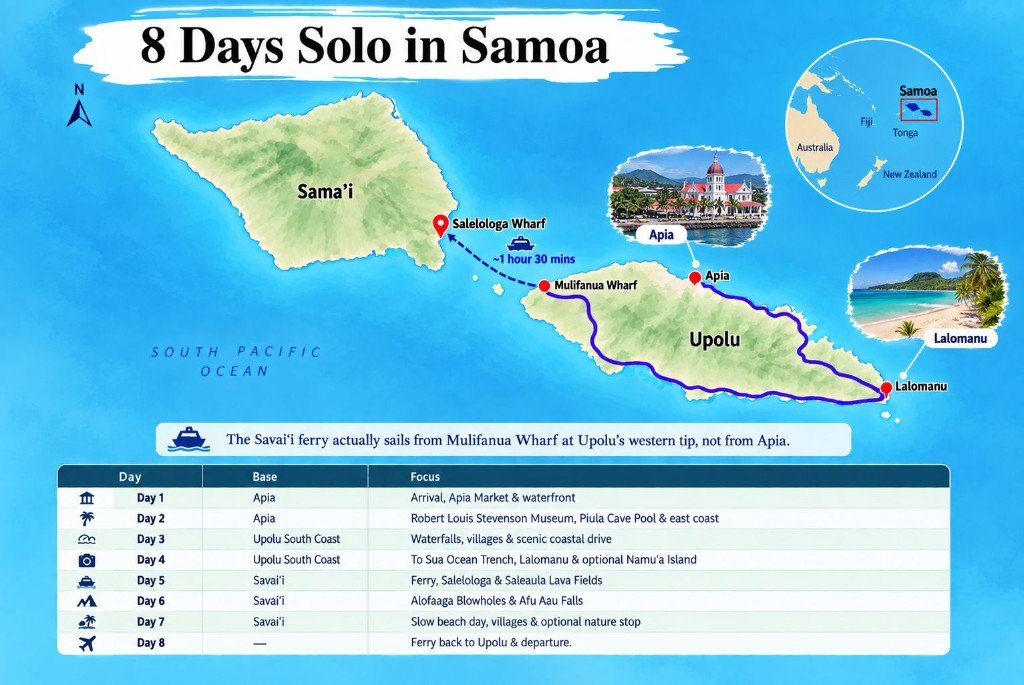
Journey Overview
The route starts in Apia, crosses Upolu to the south coast, takes the ferry to Savai‘i for three nights and returns to Upolu for your flight.
| Day | Base | Focus |
|---|---|---|
| Day 1 | Apia | Arrival, Apia Market & waterfront |
| Day 2 | Apia | Robert Louis Stevenson Museum, Piula Cave Pool & east coast |
| Day 3 | Upolu south coast | Waterfalls, villages & scenic coastal drive |
| Day 4 | Upolu south coast | To Sua Ocean Trench, Lalomanu & optional Namu‘a Island |
| Day 5 | Savai‘i | Ferry, Salelologa & Saleaula Lava Fields |
| Day 6 | Savai‘i | Alofaaga Blowholes & Afu Aau Falls |
| Day 7 | Savai‘i | Slow beach day, villages & optional nature stop |
| Day 8 | — | Ferry back to Upolu & departure |
Apia → Piula → Le Mafa Pass waterfalls → Lalomanu → Mulifanua ferry → Salelologa → Manase → Alofaaga & Afu Aau → Faleolo Airport
Day 1: Arrive in Apia & Ease Into Samoa
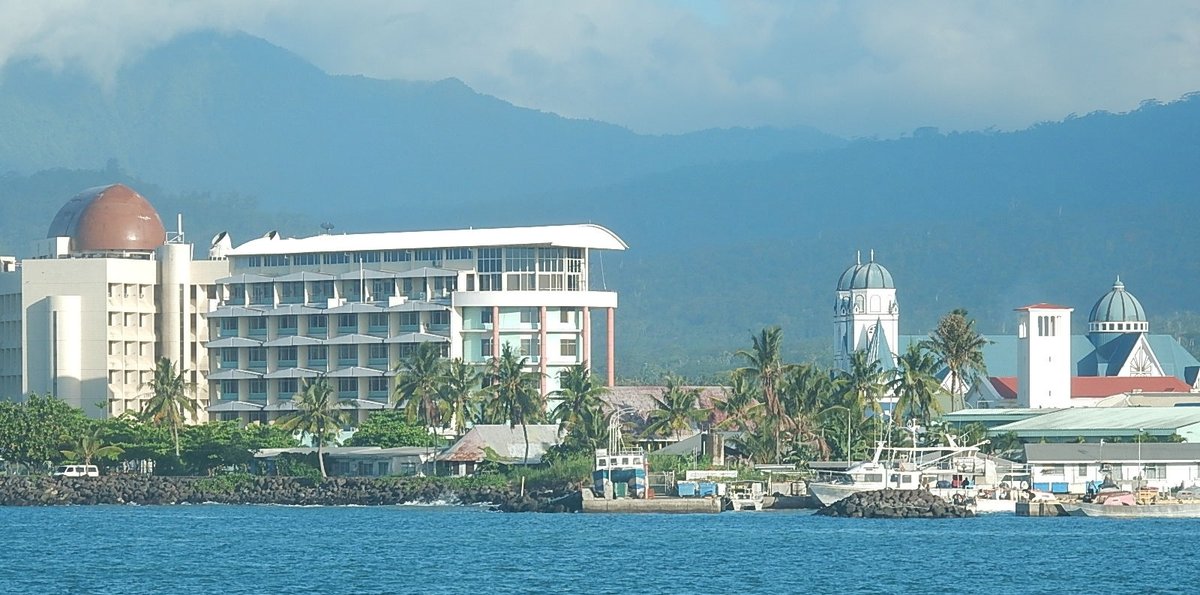
Arrive at Faleolo International Airport and collect your rental car if you are driving. The drive to Apia takes around 45 minutes to an hour. Apia is a good place to begin because you can settle in without immediately taking on a long island drive.
Spend the afternoon around Apia Market, where you can browse fresh produce, local foods and handmade goods. Continue towards the waterfront for an easy first walk. Keep the evening simple with a local meal and an early night.
If your accommodation offers a Fiafia night, this is a good evening to join one. These evenings combine traditional dancing with food, often including dishes prepared in an umu.
Day 2: Vailima, Piula Cave Pool & the East Coast
Start at the Robert Louis Stevenson Museum in Vailima. The former home sits in the hills above Apia and provides an introduction to the author's life in Samoa. The museum and surrounding Vailima area are among the attractions recommended by the Samoa Tourism Authority for visitors staying around Apia.
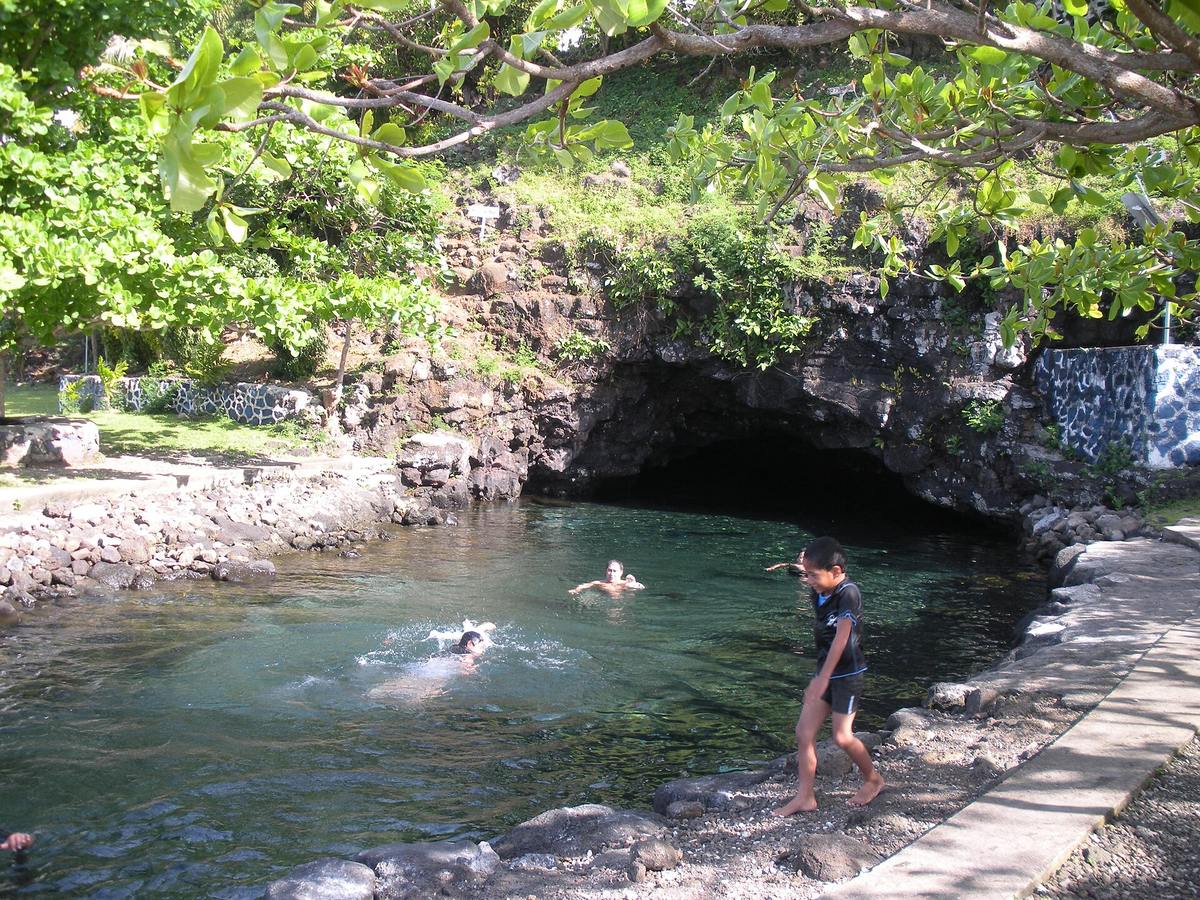
Continue east towards Piula Cave Pool, a freshwater spring and cave formed from an old lava tube. It is around 45 minutes from Apia and makes an excellent swimming stop on a warm day. It is open Monday to Saturday, so don't plan this day for a Sunday.
Return to Apia in the afternoon or continue along the east coast if you want a longer drive.
Day 3: Waterfalls, Villages & the South Coast
Check out of Apia and make your way towards the south coast. The direct drive to the Lalomanu area takes roughly 1–1.5 hours without stops, but this is a day for stopping often rather than rushing from attraction to attraction.
Begin with one of the island's viewpoints or waterfalls, then continue towards Fuipisia Waterfall and Sopo‘aga Falls.
The road becomes part of the experience. Look out for traditional fales, plantations, tropical vegetation and villages.
Continue towards Lalomanu and stay on the south coast for the next two nights.
Driving note: Don't try to fit every waterfall into the same day. Choose a few stops and allow time for photographs, swimming and unexpected roadside stops.
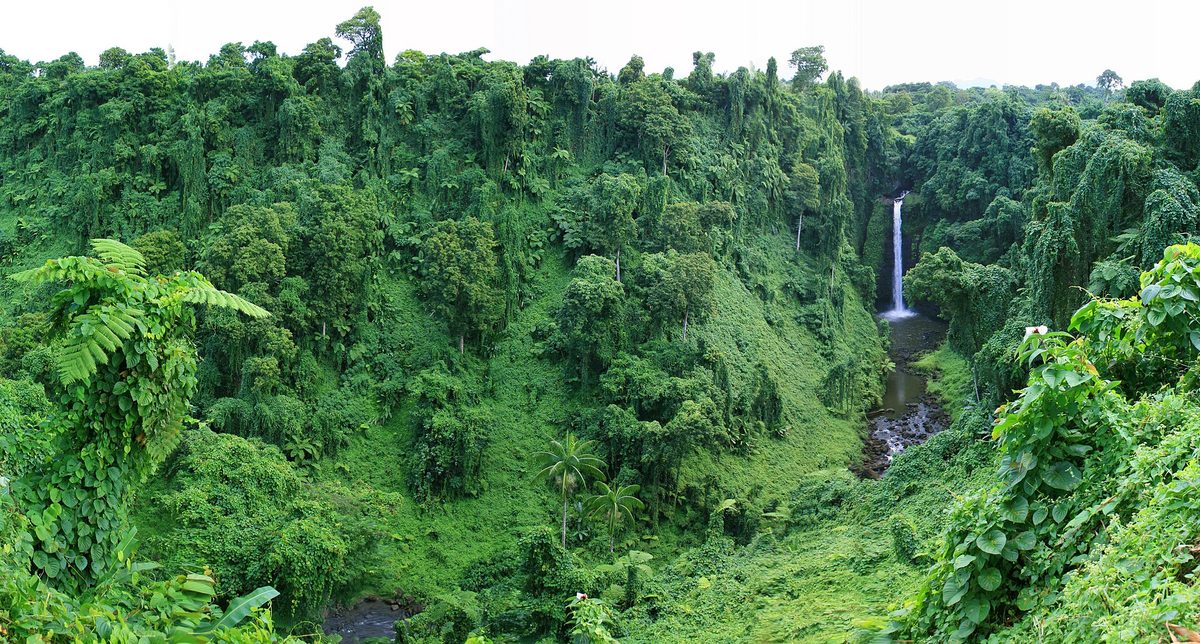
Day 4: To Sua Ocean Trench & Lalomanu Beach
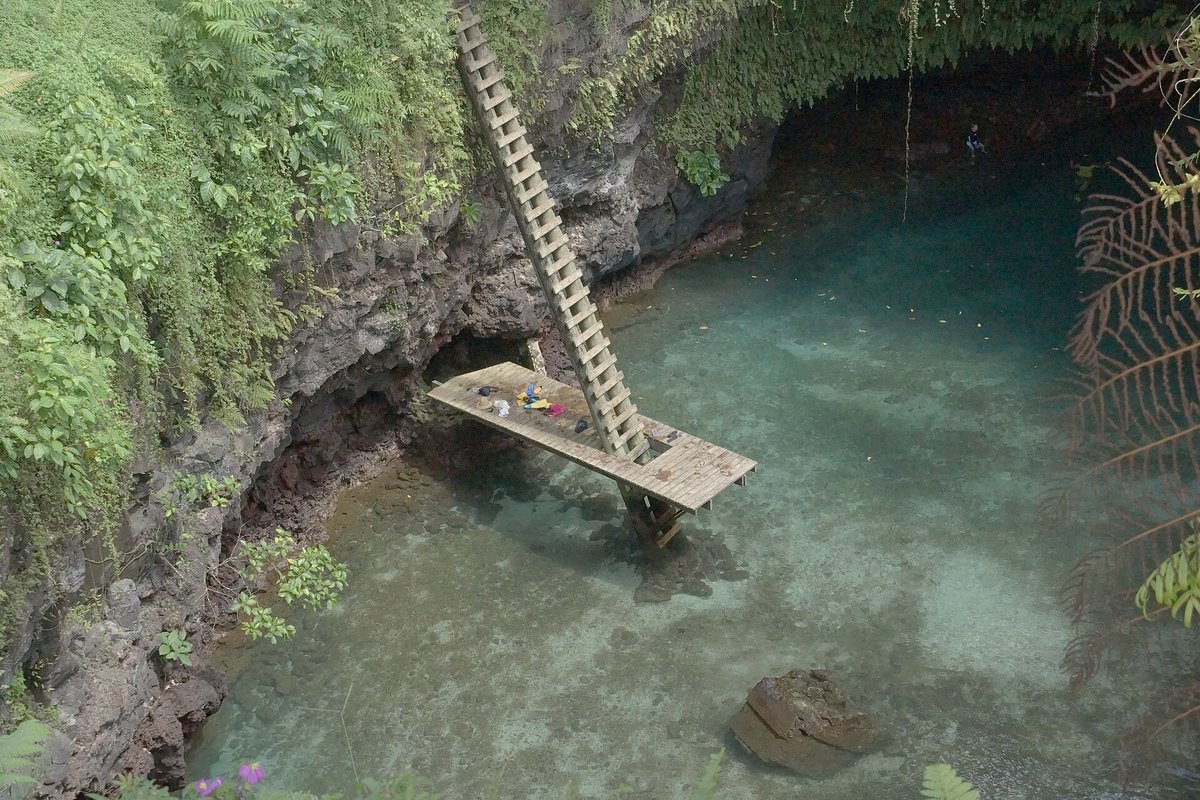
Start with To Sua Ocean Trench, one of Upolu's best-known natural swimming sites. The giant seawater pool is connected to the ocean through a lava-tube system and sits within a landscaped coastal garden.
Afterwards, head to Lalomanu Beach for a slower afternoon. The beach is known for white sand, clear water and traditional beach fales.
Optional: Namu‘a Island
If conditions and boat availability work, take a short boat trip to Namu‘a Island. It has opportunities for swimming and spending time in a traditional day fale.
Don't force Namu‘a into the day if the sea is rough or you simply want more time at Lalomanu.
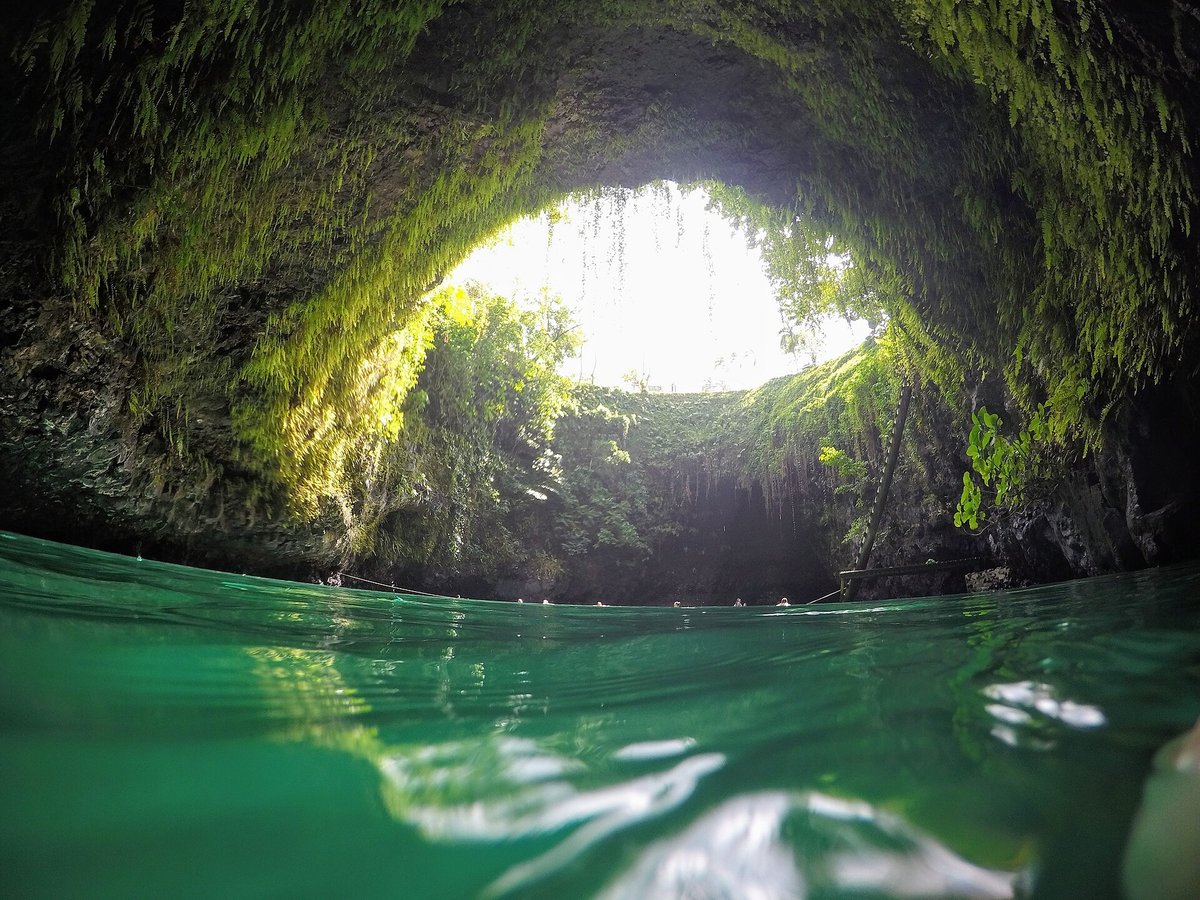
Day 5: Ferry to Savai‘i & the Saleaula Lava Fields
Leave the south coast early and drive to Mulifanua for the ferry to Savai‘i; from the Lalomanu area, allow around two hours. The inter-island ferry connects Upolu with Salelologa, Savai‘i's main arrival point. The crossing takes around 60–90 minutes, although schedules and conditions can vary, so check the current timetable before travelling. If you are taking a car, vehicle check-in closes an hour before departure. The ferry logistics are worth treating as part of the travel day.
After arriving at Salelologa, drive north towards the Saleaula Lava Fields.
Stay around Manase or the north coast for the next three nights.
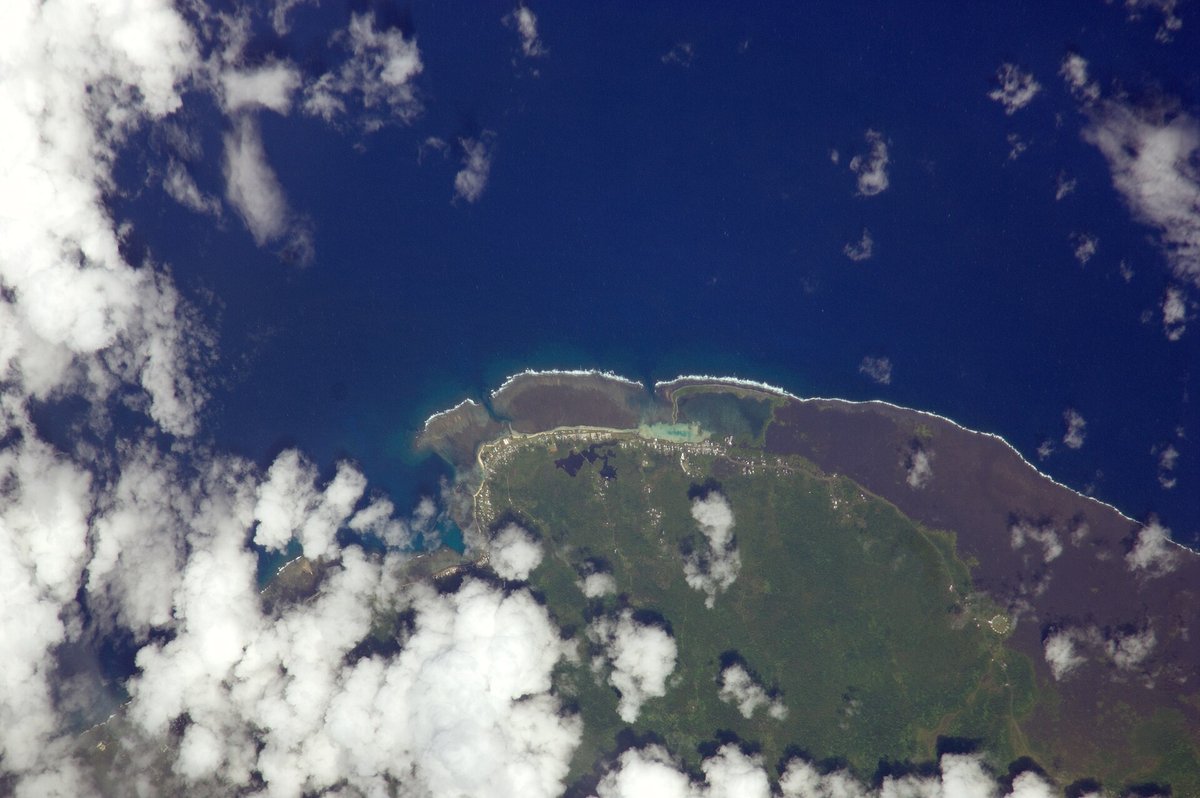
Day 6: Blowholes, Waterfalls & the South of Savai‘i
Head towards Alofaaga Blowholes on the south-west coast. Powerful waves are forced through volcanic openings in the coastal rock, creating dramatic bursts of seawater. Stay well back from the openings and follow local instructions. Ocean conditions can change quickly.
Continue towards Afu Aau Falls, where rainforest water drops into a freshwater pool.
Keep this day focused on two or three substantial stops rather than attempting a complete island loop. Return north in the afternoon.
Driving note: This is one of Savai‘i's longer driving days, with the route from the north coast to Alofaaga Blowholes and Afu Aau Falls and back. Allow plenty of time for the road journey and avoid trying to add too many extra stops.
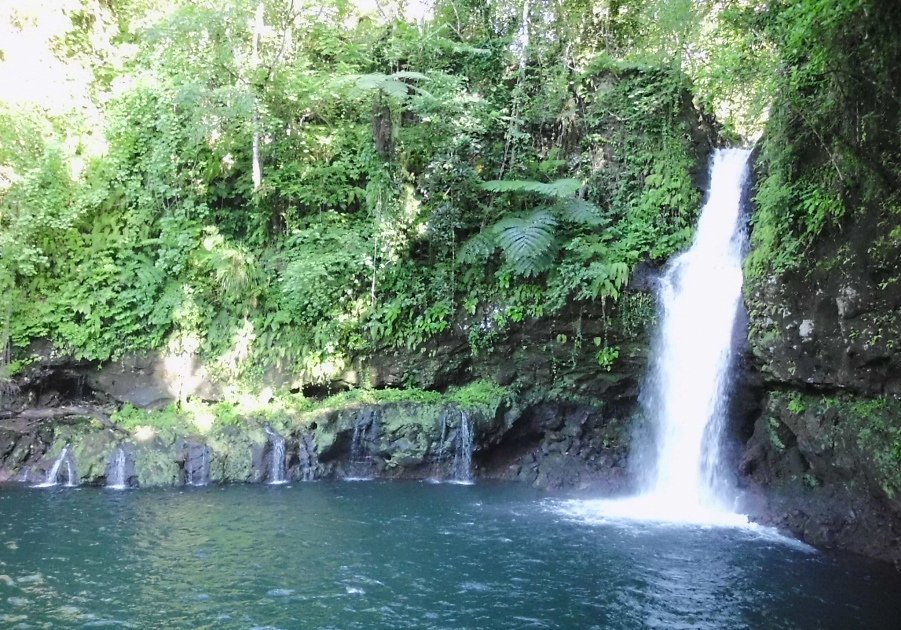
Day 7: Slow Savai‘i, Beaches, Villages & Island Time
Keep the final full day intentionally light.
Choose a beach near your accommodation and spend the morning swimming, reading or simply relaxing in a beach fale. Savai‘i is less populated than Upolu, with a slower rhythm and a main road that circles the island, making it particularly suitable for an unhurried day.
You can also make a short scenic drive through the villages, stop for local food or visit another swimming spot if conditions are good.
If you want another nature stop, Mataolealelo Spring is an option. The spring is associated with Samoan legends and has swimming pools in the area.
This is deliberately not a packed sightseeing day. After several days of driving and exploring, leaving space to simply enjoy Savai‘i makes the itinerary feel more like a holiday than a checklist.
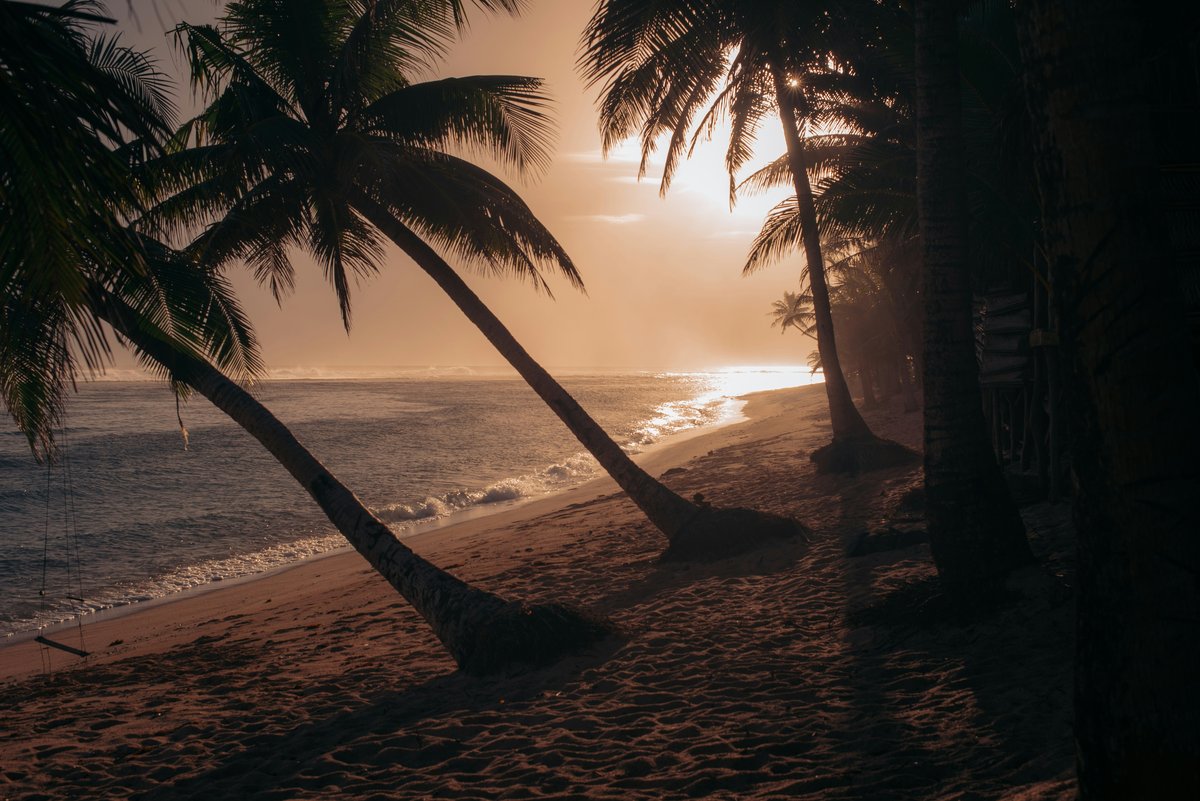
Day 8: Ferry Back to Upolu & Departure
Have breakfast and leave Savai‘i with enough time to reach the ferry terminal without rushing.
Take the ferry from Salelologa back to Mulifanua, then continue to Faleolo International Airport, only a few minutes' drive from the wharf, for your departure.
Build some flexibility into this day. Ferry schedules can vary, and weekend or Sunday services may differ, so check the current schedule before planning your flight connection.
If your flight is later in the day, keep your final morning simple rather than adding another major attraction.
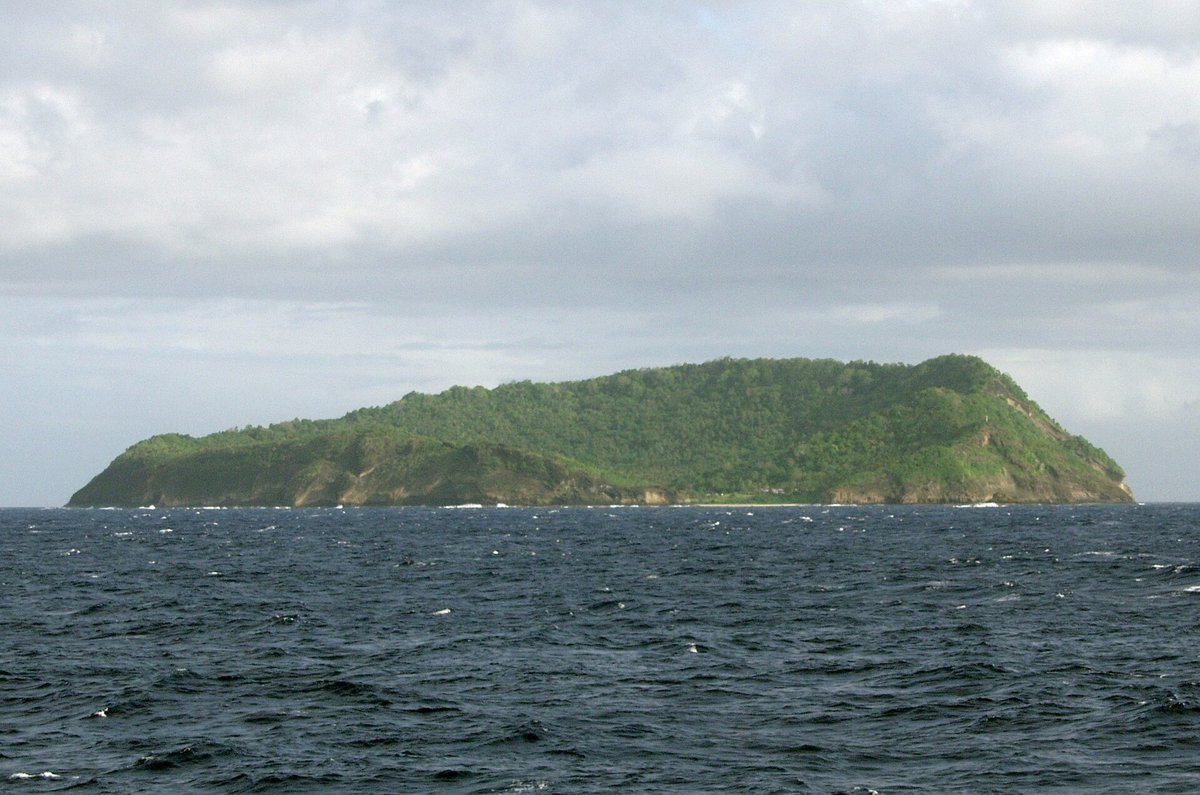
Estimated Budget
For an 8-day solo trip to Samoa, excluding international flights, a realistic mid-range budget is around US$940–1,535 per person.
| Expense | Estimated cost |
|---|---|
| Accommodation | US$350–600 |
| Rental car + fuel | US$250–400 |
| Ferry to Savai‘i (car and driver, return) | US$60–85 |
| Food & drinks | US$200–300 |
| Activities & entrance fees | US$80–150 |
| Estimated total | US$940–1,535 |
- Budget: US$650–900. Guesthouses, local food, fewer paid activities and limited car use.
- Mid-range: around US$940–1,535. Comfortable accommodation, rental car, regular local meals and several paid attractions.
- Comfortable: US$1,600+. Higher-end resorts, more organised activities, better dining and greater flexibility.
This estimate assumes mid-range accommodation, a rental car and fuel, the ferry to Savai‘i, regular meals and several paid attractions, but excludes international flights. Vehicle ferry fares are around SAT$80–110 each way depending on the size of the car, including the driver.
Solo Travel in Samoa
Samoa can work particularly well for travellers who don't need every hour planned.
That makes the slower structure of this itinerary intentional: you have enough planned to keep moving, but enough free time to change your plans.
Where to Stay
| Base | Where to stay |
|---|---|
| Apia | Stay centrally around the waterfront or central Apia if you want restaurants, markets and easy access to the city's attractions. |
| Upolu south coast | Stay around Lalomanu, Lotofaga or nearby coastal villages for easy access to To Sua, beaches and the eastern and southern attractions. |
| Savai‘i | Manase and the north coast work well as a base for beaches and island exploration. Salelologa is more practical if ferry logistics are your priority. |
Getting Around Samoa
Is a rental car worth it?
For this itinerary, yes, particularly once you leave Apia. A car makes the waterfall stops, south-coast beaches and Savai‘i's circular road much easier to combine.
- You can manage parts of Apia without a car, but public transport is less useful when you want to stop at several remote natural attractions in one day.
- Savai‘i's main road circles the island, making independent road travel relatively straightforward.
- Drive on the left and allow extra time for villages, pedestrians, animals and changing weather.
- Rental car information (Samoa Tourism Authority)
- Airport rental options (Samoa Airport Authority)
Taking the Ferry to Savai‘i
The main passenger and vehicle ferry, run by the Samoa Shipping Corporation, sails between Mulifanua on Upolu and Salelologa on Savai‘i.
For a solo road trip:
- Check the current sailing timetable before travelling.
- Confirm that your rental car can be taken across.
- Arrange a vehicle ticket where required, either at the Samoa Shipping Corporation office in Apia or through your rental company.
- Arrive early, especially when travelling with a car: vehicle check-in closes one hour before departure.
- Carry cash if you are buying a walk-on passenger ticket at the wharf.
- Don't schedule a tight international-flight connection immediately after the ferry.
- Treat Sunday schedules separately when planning.
More detail: Samoa ferry information.
How to Arrive & Depart
Arriving in Samoa: Most international travellers arrive at Faleolo International Airport (APW) on Upolu, around 45 minutes to an hour's drive from Apia. From the airport, you can arrange a rental car, airport transfer or taxi to reach Apia.
For this itinerary, picking up a rental car at the airport is the most convenient option if you plan to explore Upolu independently.
Departing Samoa: For the return journey, take the ferry from Salelologa on Savai‘i to Mulifanua on Upolu, then continue by road to Faleolo International Airport.
Allow plenty of buffer time between the ferry and your international flight, as ferry schedules and crossings can be affected by weather or operational changes.
Sundays in Samoa
If your trip includes a Sunday, expect a noticeably quieter day.
- Sundays are strongly associated with church, family and rest, with fewer normal activities taking place.
- Dress modestly if visiting villages or churches.
For a visitor, Sunday can actually become one of the most atmospheric days of the trip if you slow down and observe rather than expecting normal tourist activity.
Samoan Food to Try
Look for:
- Palusami: taro leaves with coconut cream
- Oka: raw fish prepared with coconut and citrus
- Umu dishes: food cooked in a traditional earth oven
- Taro
- Breadfruit
- Fresh seafood
- Tropical fruit
- Koko Samoa
A Fiafia evening is another opportunity to combine local food with traditional performance.
Village Etiquette
A few simple habits make a difference:
- Dress modestly away from resort areas.
- Ask before entering private or village-owned areas.
- Respect signs and local instructions.
- Remove shoes when entering a fale if requested.
- Keep your voice low around churches and during prayer.
- Don't assume every beach or swimming hole is public.
- Follow local guidance about swimming conditions.
Swimming & Waterfall Safety
Samoa's water is one of its biggest attractions, but conditions shouldn't be underestimated.
At waterfalls and swimming holes:
- Don't jump from cliffs or waterfalls.
- Don't dive into unfamiliar pools.
- Check depth and current conditions.
- Be especially careful after heavy rain.
- Use footwear where rocks are slippery.
At Piula Cave Pool, the official guidance specifically prohibits diving and jumping and notes that there is no lifeguard.
At coastal sites such as To Sua and Alofaaga, stay aware of the sea and follow local instructions.
Cash, Payments & Practical Planning
Carry some Samoan tala (WST) for smaller attractions, local food, village stops and places outside the main tourist centres. Don't rely entirely on cards when driving around the islands.
Also download maps before heading into quieter areas, keep some drinking water in the car and refuel whenever you're near a larger town rather than waiting until the tank is nearly empty.
What If It Rains?
Don't automatically cancel the day. Samoa's tropical weather can change quickly. On wet days, use Apia for museums, markets, cafés and cultural experiences, or simply slow down at your accommodation.
Avoid waterfalls and fast-moving streams after particularly heavy rain if local conditions make them unsafe.
Extending the Trip
If you have 10–12 days, don't simply add more attractions to the same eight days. Instead, add:
- 2 extra nights on Savai‘i for a deeper island loop
- Manono Island for a quieter island experience
- More time on Upolu's south coast
- A longer stay around Lalomanu
- Additional rainforest or coastal walks
- A dedicated cultural day in Apia
Useful Links
- Samoa Tourism Authority
- Samoa travel FAQs
- Samoa immigration & customs
- Samoa arrival information
- Savai‘i island guide
- Samoa Shipping Corporation ferry timetable & fares
FAQs
Is Samoa good for solo travel?
Yes. Samoa works particularly well for independent travellers who enjoy a slower pace. Apia is easy to explore independently, while a rental car gives you more flexibility for beaches, waterfalls, villages and scenic drives across Upolu and Savai‘i.
How many days do you need in Samoa?
Eight days is enough for a well-paced introduction to Upolu and Savai‘i. This itinerary gives four days to Upolu, three days to Savai‘i and one day for the return journey.
Do I need a car in Samoa?
A car is not essential in central Apia, but it is useful for this itinerary. It makes it much easier to reach waterfalls, swimming holes, beaches and villages, particularly on Savai‘i. Rental cars can also be taken across to Savai‘i by ferry, subject to the rental company's conditions.
How do you get from Upolu to Savai‘i?
Passenger and vehicle ferries operate between Mulifanua Wharf on Upolu and Salelologa Wharf on Savai‘i. The crossing takes around 60–90 minutes.
Can you take a rental car to Savai‘i?
Some rental companies allow it, but you should confirm this before booking. If you're taking a vehicle across, arrange the ferry vehicle booking in advance where required.
What currency is used in Samoa?
Samoa uses the Samoan tala (WST). ATMs are available in Apia, around Faleolo International Airport and in Salelologa, but are scarce elsewhere, so carry cash when you head out of town.
Is Sunday a good day for sightseeing in Samoa?
Sunday has a different rhythm. It is traditionally a day for church, family and rest, and many businesses and attractions close or operate on reduced schedules. Visitors are expected to travel quietly and slowly through villages.
What is the Sa in Samoa?
Some villages observe an evening prayer period called Sa, usually around 6–7pm and lasting roughly 10–20 minutes. A bell or conch announces it. Visitors should avoid walking or driving through villages during this period.
Can you swim in Samoa's waterfalls and natural pools?
Some natural pools are suitable for swimming, but conditions vary. Check locally before entering, particularly after rain, and avoid jumping or diving into unfamiliar water. Samoa's official travel guidance also recommends taking care around tides and currents when snorkelling.
Do I need a visa for Samoa?
For stays of less than 60 days, visitors generally do not need to obtain an entry permit in advance. Travellers need a passport valid for at least six months and a return or onward ticket. Always check the latest entry requirements before travelling.
Is English spoken in Samoa?
Samoan is the national language, while English is widely spoken, particularly in Apia and for business and tourism.
What should I do if I visit a Samoan village?
Dress modestly, ask permission before photographing people, and ask before entering a lagoon, bay or beach that may be under customary village ownership.
Prompts to Try in Honge
- Plan a slower 3-day extension to my Samoa trip.
- Find the best beaches and swimming holes near my current base in Samoa.
- Build me a Savai‘i road-trip day with minimal driving.
- Plan a Sunday in Samoa around church, food and cultural experiences.
- Find quiet places to stay on Savai‘i for a solo traveller.
- Create a Samoa packing list for an 8-day solo trip.
- Plan a rainy-day itinerary for Apia.
- Help me decide whether I should rent a car for my Samoa trip.
- Create a 10-day Samoa itinerary by extending this 8-day route.
- Find the best local food experiences along my Samoa route.
Ready to Start Your Adventure?
Start with this Samoa itinerary on Honge, then tailor your island days, waterfall stops, beach escapes and scenic drives to your travel style.
Ready for waterfalls, beach fales and island time?
Plan your Samoa trip with Honge
Keep Apia, the south coast and Savai‘i as bases, then shape swimming stops, scenic drives and ferry days around your pace.
Related itineraries
Written by
This blog was contributed by Sheba M, a travel enthusiast and writer. Sheba can be reached at shebaranjitha@gmail.com.
About Honge
Honge is an AI travel planning platform focused on practical, experience-led itineraries with realistic pacing and logistics. All blog content is edited and published by Honge. Our Samoa research draws on updated practical logistics as of September 2026. © Honge. All rights reserved.
Image credits: Photos are sourced from Unsplash and Wikimedia Commons. Copyright remains with their respective photographers and rights holders. Unsplash images are used according to the Unsplash License. Wikimedia Commons images are used according to their applicable license terms: CC BY 2.0, CC BY-SA 2.0, CC BY-SA 3.0 or CC BY-SA 4.0. The NASA image is in the public domain.
Travel disclaimer
This itinerary is intended as general travel inspiration and planning guidance only — not as personalised travel, safety or medical advice. Before you travel, check current entry requirements, health advice and travel advisories, and confirm ferry timetables, opening days and fees directly with official sources. Samoa drives on the left; allow for narrow roads, pedestrians, children and animals in villages, and avoid driving at night where possible. Waterfalls, swimming holes and coastal sites such as To Sua and the Alofaaga Blowholes usually have no lifeguards; conditions change after heavy rain and with tides and swell, so never dive or jump into unfamiliar water. November to April is the wet and cyclone season, when ferries, roads and plans can be disrupted. Medical facilities outside Apia are limited, so take out comprehensive travel insurance that includes medical evacuation. Many beaches and pools are on customary village land with their own rules and entry fees; respect Sunday observance and the evening Sa. Suggested hotels and stay styles in this article are samples only and depend on availability; in the Honge app they may appear as booking options when offered by our vendors at the time of your search. Honge is not responsible for decisions made based on this guide or for changes to places, prices, access, services or experiences after the date of publication.