Barcelona earns its reputation before you've even checked in.
Start with this itinerary
Open this route in Honge as your starting point, then shape the days, stays, and pace around how you travel.
You might step out of the metro at Liceu into the noise and colour of La Rambla and wonder what all the fuss is about — and then turn down any side street into the Gothic Quarter, and the city suddenly makes complete sense. The narrow lanes, the old stone archways, the smell of coffee and something frying in olive oil, a busker two corners away — Barcelona works best when you stop moving so quickly and simply pay attention.
This itinerary isn't trying to squeeze every Gaudí building, beach, and rooftop bar into four days. Instead it moves through the city the way the city itself seems designed to be experienced: mornings for architecture and history, afternoons for neighborhoods and small discoveries, evenings for food, music, and the particular quality of Barcelona light just before dark.
You'll cover the Gothic Quarter, Museu Picasso, Sagrada Família, the magnificent Bunkers del Carmel panorama, Casa Batlló, the guitar shops and music culture of the Raval, a proper tablao flamenco performance, and finally Park Güell in the soft light of an early morning. Every destination has breathing room. Every evening has a reason to linger.
Is 4 Days Enough for Barcelona?
Four days is an excellent introduction to Barcelona — long enough to understand the city's character and cover its most meaningful sites, short enough to avoid the fatigue that comes from trying to see everything.
The key is not trying to combine too many neighborhoods in a single day. Barcelona's districts — the Gothic Quarter, El Born, the Eixample, and Gràcia — each have a distinct personality. This itinerary gives you time to feel the difference between them rather than ticking them off a list.
If you have five or six days, add a morning at the Palau de la Música Catalana, an afternoon at Montjuïc, or a day trip to Sitges or the Penedès wine country. For four days, this route is well-balanced and genuinely rewarding.
Best Time to Visit Barcelona
Barcelona is a year-round destination, but timing makes a real difference:
- Spring (April–June): Ideal conditions — warm days, manageable crowds, longer evenings. The city's outdoor café culture is in full swing and the light for photography is exceptional.
- Autumn (September–October): Still warm, noticeably quieter after the summer peak, and local life returns fully after August. Arguably the best time to visit.
- Summer (July–August): Hot, very busy, and expensive. Sagrada Família and Park Güell queues can be intense even with pre-booked tickets. Go early and plan outdoor visits before 10 AM.
- Winter (November–March): Mild by northern European standards, quieter, and significantly cheaper for accommodation. Some outdoor terrace culture disappears but the city's museums, architecture, and food remain excellent year-round.
La Mercè festival (late September) and Sant Jordi Day (April 23rd) are particularly good times to experience Barcelona's local culture. Book accommodation well ahead for either.
4-Day Barcelona Route Overview
- Day 1 — Gothic Quarter & El Born: Barcelona Cathedral, La Rambla, Museu Picasso, tapas bars in El Born.
- Day 2 — Sagrada Família, Shopping & Bunkers del Carmel: Sagrada Família in the morning, Passeig de Gràcia and El Born boutiques in the afternoon, golden hour at the Bunkers.
- Day 3 — Casa Batlló, Guitar Culture & Flamenco: Casa Batlló mid-morning, guitar shops along Carrer de Tallers, evening flamenco tablao.
- Day 4 — Park Güell & Departure: Early entry to Park Güell's monumental zone, final neighbourhood stroll, afternoon flight.
Getting Around Barcelona
Barcelona's metro is among Europe's most user-friendly urban rail networks, run by TMB (Transports Metropolitans de Barcelona). All the destinations on this itinerary are on or near metro lines L2, L3, and L5.
The most economical option for four days is the T-Casual card — a 10-trip card valid across metro, bus, and local trains within Zone 1. It's significantly cheaper per journey than single tickets. Cards are available from any metro station vending machine.
- Gothic Quarter and El Born are best explored entirely on foot.
- Sagrada Família: Metro L2 or L5 to Sagrada Família.
- Bunkers del Carmel: Metro L4 to El Carmel or Guinardó, then a 20-minute uphill walk, or taxi/rideshare directly to the hilltop.
- Casa Batlló: Metro L2, L3, or L4 to Passeig de Gràcia.
- Carrer de Tallers guitar shops: Metro L1 or L3 to Catalunya, then a 5-minute walk.
- Park Güell: Metro L3 to Vallcarca or bus 116, then a 10-minute walk uphill.
What to Book Before You Arrive
Barcelona's most popular attractions regularly sell out. Book these before leaving home:
- Sagrada Família: Book timed-entry tickets directly at sagradafamilia.org. Add tower access when booking — the Nativity Tower and Passion Tower offer dramatically different perspectives and require separate tickets. Aim for the first entry slot of the day.
- Casa Batlló: Book at casabatllo.es. The Magic Nights evening experience (available in summer and selected dates) is worth the premium if available during your trip.
- Park Güell monumental zone: Book at parkguell.barcelona. The free areas surrounding the monumental zone don't require tickets, but the famous mosaic terrace, hypostyle room, and dragon staircase all require timed-entry passes. The first slots of the morning are the least crowded and have the best light.
- Museu Picasso: Advance tickets available at museupicasso.bcn.cat. Not always essential outside peak season, but strongly recommended between April and October.
- Casa Sors flamenco show: Book directly at bestflamencobarcelona.com. With only 30 guests per show, Casa Sors sells out well in advance — especially on weekends and during peak season (April–October). Reserve as early as possible. The ticket includes the flamenco performance and a guided tour of the private guitar collection.
Best Areas to Stay in Barcelona
- El Born / La Ribera: The most atmospheric choice for this itinerary — central, beautifully preserved, walkable to Day 1 and Day 2 morning highlights, and lined with excellent tapas bars and natural wine shops for evening meals.
- Gothic Quarter: Immersive and central, though narrow lanes can feel busy during the day. Quieter in the early mornings, which is exactly when this neighborhood is at its most atmospheric. Suits travelers who want to step out of their door into living medieval Barcelona.
- Eixample: Quieter, very well served by metro, and puts Sagrada Família and Passeig de Gràcia at walking distance. A good base if you prefer more modern, spacious accommodation and a calmer evening neighbourhood.
- Gràcia: A genuine local neighbourhood of independent restaurants, bookshops, and weekend markets. Less central but particularly convenient for Day 4's Park Güell visit. The feel is noticeably more residential than the tourist-facing areas further south.
Good to Know Before You Go
- Barcelona uses the euro (€); contactless card payment is widely accepted.
- Lunch (2–4 PM) is the main meal of the day; many locals don't eat dinner before 9 PM. Restaurants serving dinner from 7 PM are usually tourist-oriented — embrace the local rhythm for better food and a more authentic experience.
- The menú del día — a set lunch of two or three courses with bread and a drink — is one of the best values in European dining and available at most traditional restaurants on weekdays.
- Tipping is appreciated but not obligatory; rounding up the bill or leaving a few euros is standard.
- La Rambla is tourist-heavy and pickpocketing is common; keep bags secured and be especially careful around Plaça de Catalunya and the Boqueria market entrance.
- Many smaller museums and galleries offer free entry on the first Sunday of the month.
- Modest clothing is required to enter Barcelona Cathedral and the Sagrada Família — shoulders and knees should be covered.
Day 1 — Gothic Quarter & El Born: Barcelona's Medieval Core
Base: Gothic Quarter and El Born on foot
Start the day early, before the city fully wakes up. The Gothic Quarter — the Barri Gòtic — is an extraordinary tangle of lanes, squares, and Roman foundations that feels entirely different at 8 AM than it does at noon. The stone is cooler, the light slants in at angles that make everything dramatic, and for an hour or so you'll share it with almost nobody.
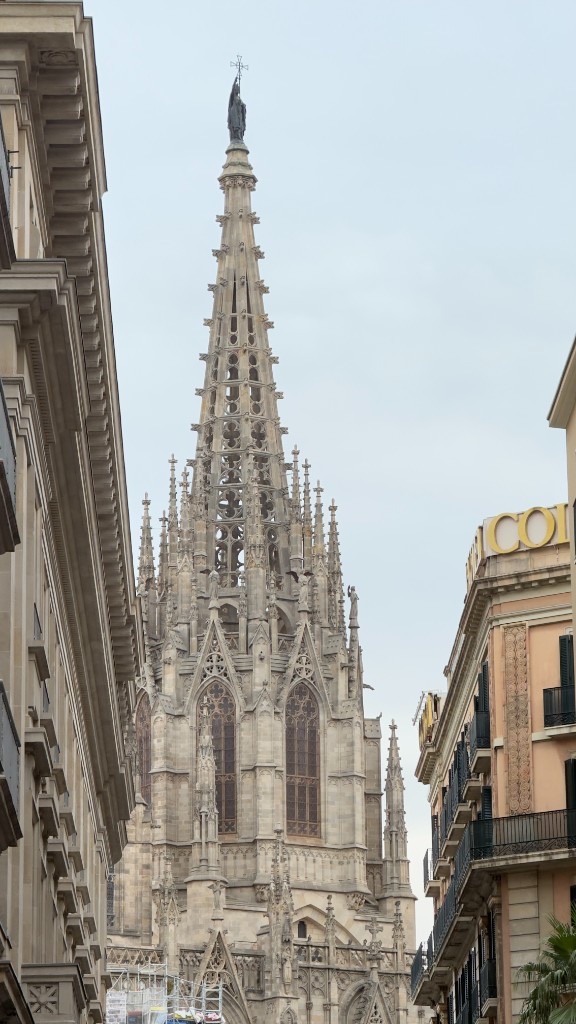
Begin at Barcelona Cathedral — formally the Catedral de la Santa Creu i Santa Eulàlia — whose construction began in 1298 on the site of an earlier Visigoth church, itself built over a Roman temple to Augustus. The Gothic nave, with its soaring ribbed vaults and chapels dedicated to Barcelona's patron saints, is one of the finest in Spain. Don't miss the cloistered courtyard, home to a small flock of white geese that have been kept here for centuries — their honking is oddly calming in the early morning quiet.
From the cathedral, wander south through Plaça de Sant Jaume — Barcelona's political heart, flanked by the Palau de la Generalitat and the Ajuntament (City Hall) — and continue down toward La Rambla. This 1.2-kilometre pedestrian boulevard stretches from Plaça de Catalunya at the top to the Columbus Monument and the waterfront below. It's best experienced as a means of getting somewhere rather than a destination in itself — the flower stalls, bird sellers, and human statues are atmospheric, but the real Barcelona is in the streets that branch off to either side.
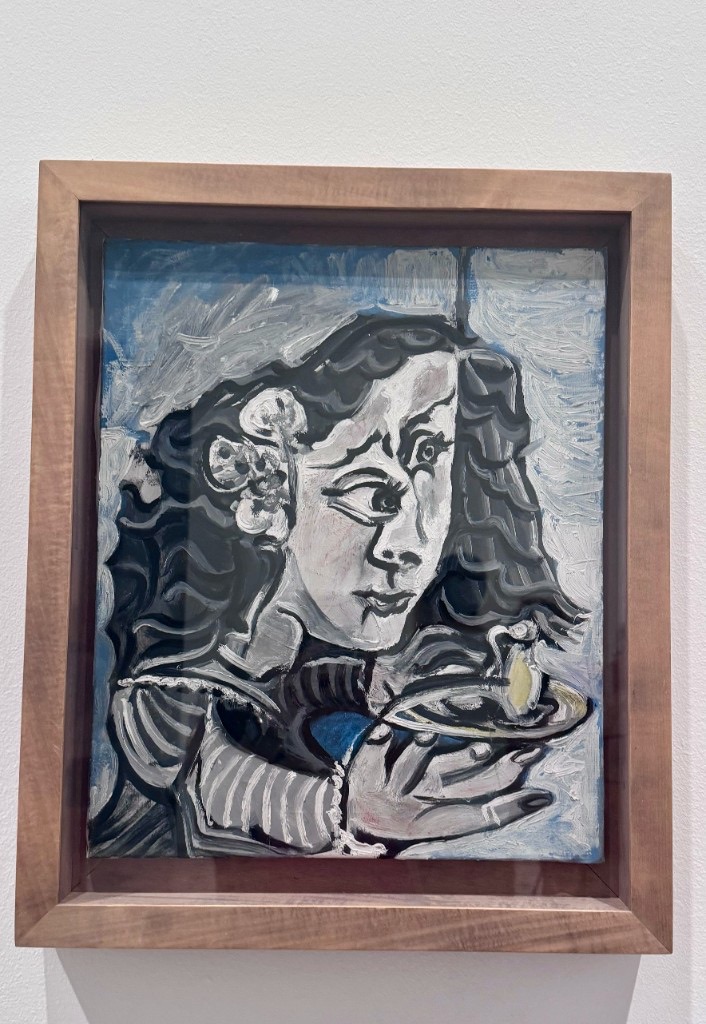
Cross into El Born — the neighbourhood immediately east of the Gothic Quarter — and make your way to Carrer de Montcada, one of the finest medieval streets in any European city. The Museu Picasso occupies five interconnected Gothic palaces along this street, tracing Pablo Picasso's formative years in Barcelona with over 4,000 works. The early rooms showing his student work in Barcelona are remarkable — the Las Meninas series on the upper floors is extraordinary. Arrive as it opens to avoid the midday crowds.
Lunch in El Born — this neighborhood has some of the best casual eating in the city. Choose a menú del día at a small restaurant on a side street rather than anywhere directly on the tourist trail.
Spend the afternoon exploring the backstreets of El Born itself: the covered Mercat de Santa Caterina (a working neighbourhood market with a spectacular undulating roof of ceramic tiles), the ruins of the 1714 neighbourhood visible through the glass floor of the Born Cultural Centre, and the dozens of small independent shops selling ceramics, leather goods, clothing, and food from the region.
As early evening arrives, move into tapas bar territory — El Born has an exceptional concentration of them. Look for bars serving pintxos (Basque-style small plates on bread), croquetes de bacallà (salt cod croquettes), patatas bravas, and pa amb tomàquet — Catalan bread rubbed with tomato and olive oil, simple and perfect.
Food suggestions: Pa amb tomàquet at any bar, salt cod croquettes, Iberian ham, grilled vegetables with romesco sauce, and local vermut (vermouth) as an aperitif in the late afternoon.
Pacing note: Save energy — Day 2 starts early with Sagrada Família and ends late at the Bunkers.
Day 2 — Sagrada Família, Shopping & the Bunkers del Carmel at Golden Hour
Base: Eixample in the morning, Gràcia/Carmel in the evening
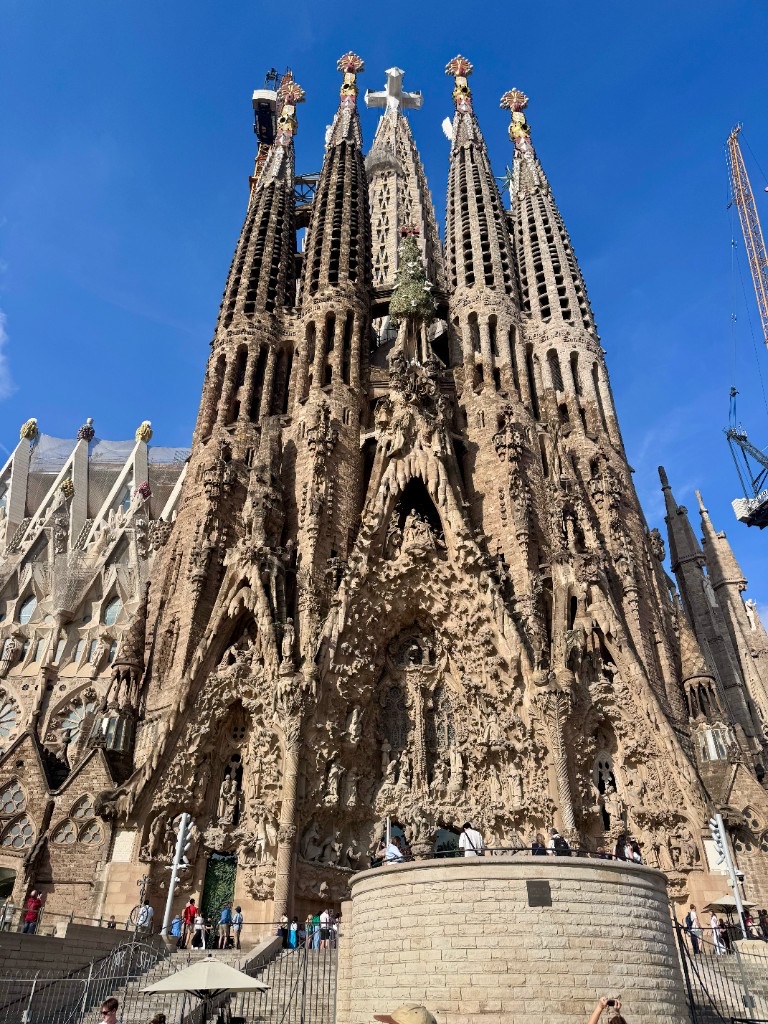
Book the first timed-entry slot for Sagrada Família — ideally 9 AM — before the light changes and the crowds build. Antoni Gaudí began work on his basilica in 1882 and dedicated the last 43 years of his life to it; he died in 1926, knowing it would never be finished in his lifetime. Construction continues today and is expected to complete in the coming years.
Nothing quite prepares you for the interior. The nave is a forest of branching stone columns that spread into the ceiling like trees, filtering light through stained glass in deep amber, blue, and green on the western side and warm gold on the eastern Nativity facade. Standing beneath this in the morning light is one of the most extraordinary architectural experiences in Europe.
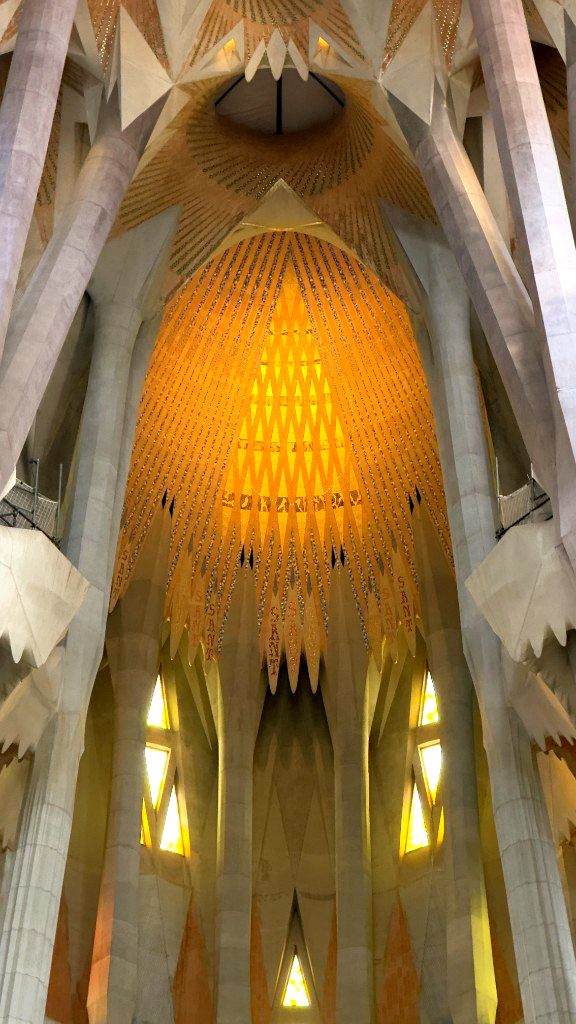
Walk the exterior slowly before leaving. The two completed facades — the Nativity facade to the east, covered in organic sculptural detail, and the Passion facade to the west, deliberately stark and angular — tell completely different theological stories and reward close attention. If you booked tower access, the views from the top over the Eixample grid toward the sea make the additional ticket worthwhile.
In the afternoon, move into shopping mode. Passeig de Gràcia — the grand Haussmann-esque boulevard running through the Eixample — carries the luxury flagships (Loewe, Zara's flagship, international design brands), but the more interesting shopping is one block either side on Carrer de Provença, Carrer d'Enric Granados (a tree-lined pedestrianised street of cafés and independent boutiques), and into El Born for ceramics, locally designed clothing, vintage shops, and artisan food.
Allow time for tapas in El Born — a light early dinner — before heading up to the Bunkers. This is important timing: you don't want to be climbing a hill on an empty stomach, but you also don't want a heavy meal before watching a sunset.
The Bunkers del Carmel — officially the Turó de la Rovira — were built in 1938 as anti-aircraft gun emplacements during the Spanish Civil War. After the war they became a shanty settlement for Barcelona's rural migrants, demolished in the 1990s to reveal the gun battery ruins beneath. Today the hilltop is Barcelona's best-loved viewpoint: 360° panoramic views across the entire Eixample grid, the Sagrada Família towers you visited that morning, Montjuïc, the port, and on a clear evening, the shimmer of the Mediterranean on the horizon.
Locals bring wine, bread, and blankets. There are no vendors at the top, so pack something to drink and enjoy the view as the city goes from gold to deep blue. Arrive at least 45 minutes before sunset to settle in — the hilltop fills quickly on good evenings.
Pacing note: The walk from the nearest metro is uphill and takes about 20 minutes. Wear comfortable shoes and bring a light layer — it can be breezy at the top even on warm evenings.
Day 3 — Casa Batlló, Guitar Culture & an Evening at Casa Sors
Base: Eixample in the morning, Raval in the afternoon, city centre in the evening
Begin mid-morning at Casa Batlló on Passeig de Gràcia. Gaudí redesigned this 1877 building between 1904 and 1906, producing one of the most extraordinary facades in European architecture: a shimmering dragon-scale roof of ceramic tiles in blues, greens, and gold; skulls and bones woven into the balcony ironwork; and a facade that ripples with organic movement, as though the building is breathing.
The interior is just as astonishing. The light well at the building's core is tiled in deepening shades of blue from white at the top — where light is most intense — to deep cobalt at the base, regulating the quality of natural light throughout the building. The main salon's undulating ceiling, curved doorframes, and mushroom-shaped chimneys on the roof terrace show Gaudí at his most inventive and most personal.
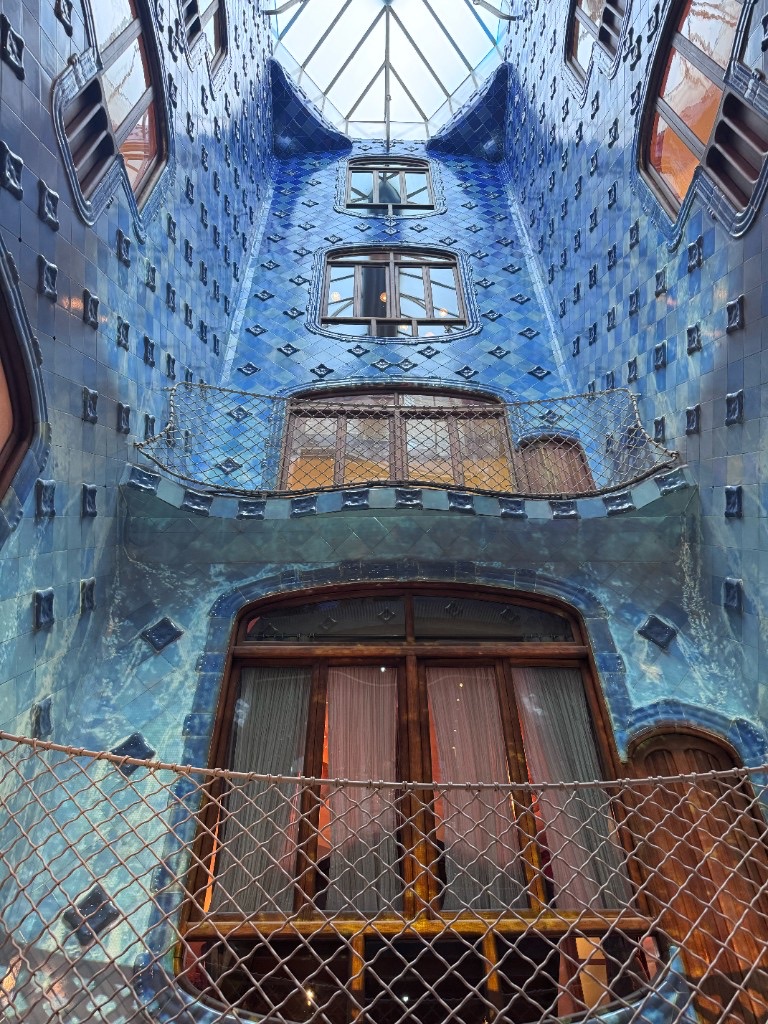
Allow at least 90 minutes inside. If the Magic Nights evening programme is running during your visit, it's worth seeing Casa Batlló on a separate evening — the projection-mapped light show on the roof and facade is genuinely spectacular.
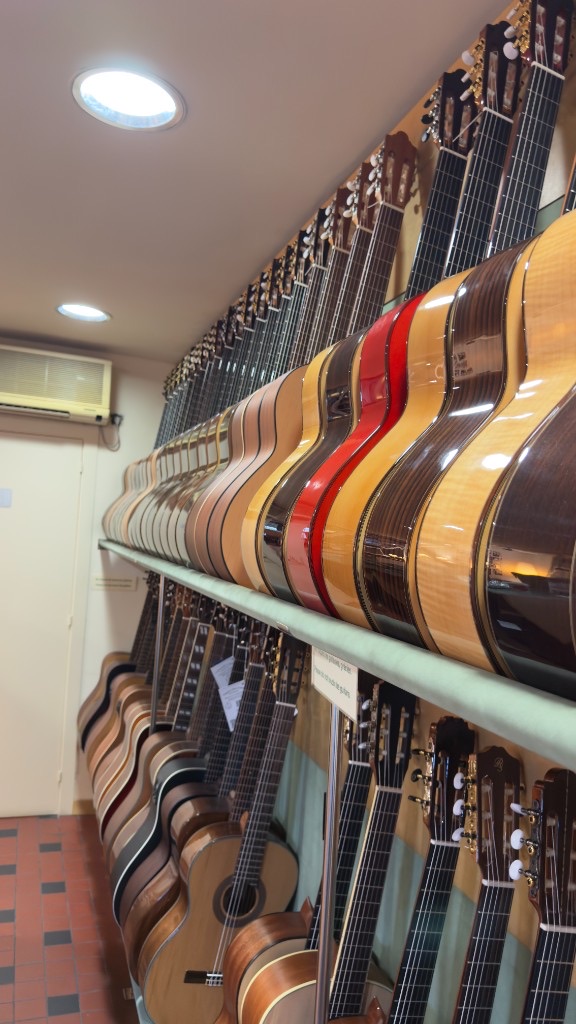
After Casa Batlló, walk or take the metro one stop to the Raval neighbourhood and make your way to Carrer de Tallers. This short street, running north from La Rambla near the MACBA (Barcelona Museum of Contemporary Art), is one of the best streets in Spain for music shops: guitars, bass guitars, vintage instruments, specialist luthiers, and record shops have clustered here for decades. It's a genuine working street for Barcelona's musicians — studios and rehearsal spaces are tucked above the shops — and the staff in most stores are players themselves and happy to talk. Even if you're not buying, it's an absorbing place to spend an hour.
A short walk away on Carrer de Balmes, Casa Luthier is worth seeking out if you're serious about guitars: a specialist shop with a deep classical and flamenco selection where the staff encourage you to sit and play. It's an easy place to lose an afternoon testing instruments — and a tempting one to walk out of with a student guitar of your own.
This afternoon on Carrer de Tallers is deliberately chosen to set up the evening: you'll arrive at Casa Sors having spent the afternoon immersed in guitar culture, which makes the guided tour of their private collection — over 100 instruments, some of extraordinary rarity — land with much greater weight.
This evening belongs to Casa Sors — and it's one of the more distinctive experiences on this itinerary. Barcelona is not Andalusia, and flamenco is not native to Catalonia, but Casa Sors has been presenting flamenco from its home on Consell de Cent since 1972. The name honours Fernando Sor (1778–1839), the Catalan classical guitarist and composer, and the venue leans into that guitar heritage.
What sets it apart is the combination: a show for around 30 guests in a small room with excellent acoustics, followed by a guided tour of their private guitar collection — more than 100 instruments, with staff who can speak to each guitar's provenance and sound with real depth. The venue is consistently well reviewed, and the intimate scale makes it feel very different from Barcelona's larger, more commercial tablaos.
After an afternoon on Carrer de Tallers among the guitar shops and players, arriving at Casa Sors in the evening and walking through a collection of 100 historical instruments before watching flamenco performed a few metres in front of you — this is the kind of evening that makes a trip. Book directly at bestflamencobarcelona.com and reserve well ahead — capacity is 30 people and it sells out consistently.
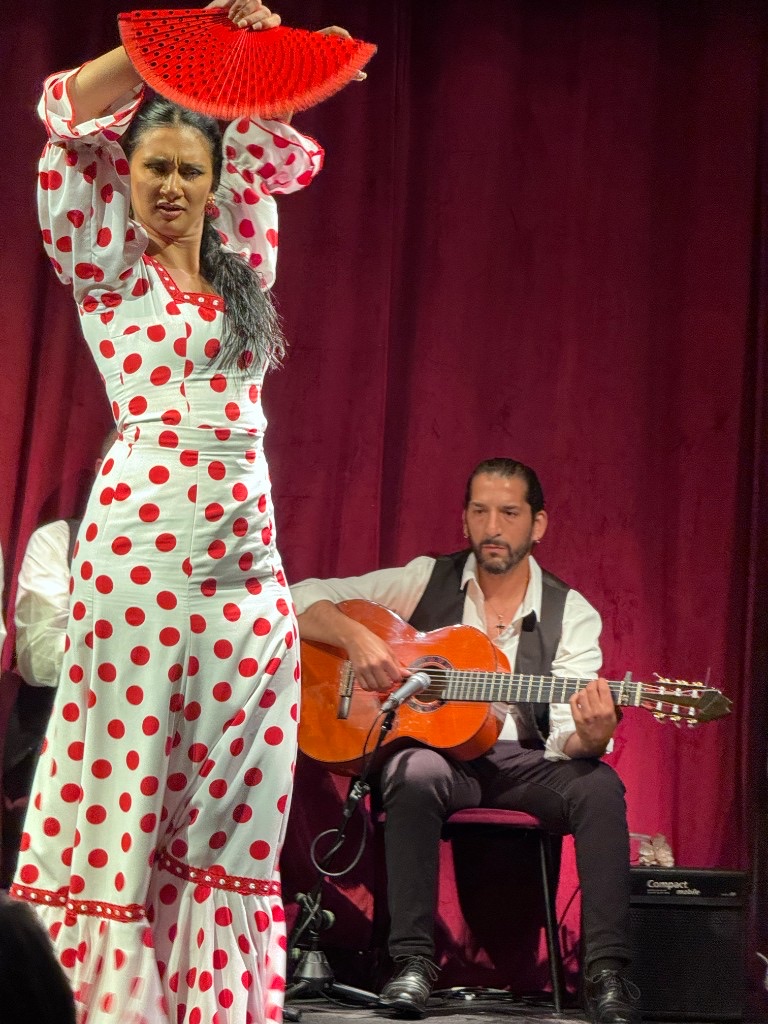
Shows typically run 60–75 minutes. Depending on the format you book, dinner or tapas can be incorporated. Either way, you'll finish the evening back in one of Barcelona's finest neighbourhoods — Eixample is a short walk; El Born is 15 minutes by taxi.
Food suggestions: Have dinner before or pair with the tapas option at Casa Sors. Try fideuà (a Catalan noodle dish similar to paella), grilled octopus, or croquetes de bacallà at a neighbourhood restaurant beforehand.
Pacing note: The guitar street in the afternoon connects directly to the Casa Sors guitar collection in the evening — keep Day 3 as a music-focused day from afternoon through to night and don't overload the morning.
Day 4 — Park Güell at Opening & Departure
Base: Gràcia (morning)
Set an early alarm. Park Güell's monumental zone opens to visitors at 9:30 AM, and booking the very first timed-entry slot is by far the best — the famous mosaic terrace, the dragon staircase, and the hypostyle room of tilted Doric columns feel almost like a private garden before the mid-morning crowds arrive, with the light still catching the ceramic tile work in ways that harsh midday sun simply doesn't replicate.
Antoni Gaudí designed Park Güell between 1900 and 1914 as part of an ambitious residential development commissioned by his patron Eusebi Güell. The housing project never materialized, but the park infrastructure — the viaducts, the market hall, the serpentine tiled bench — was completed and donated to the city of Barcelona in 1926, the same year Gaudí died. It became a UNESCO World Heritage Site in 1984.
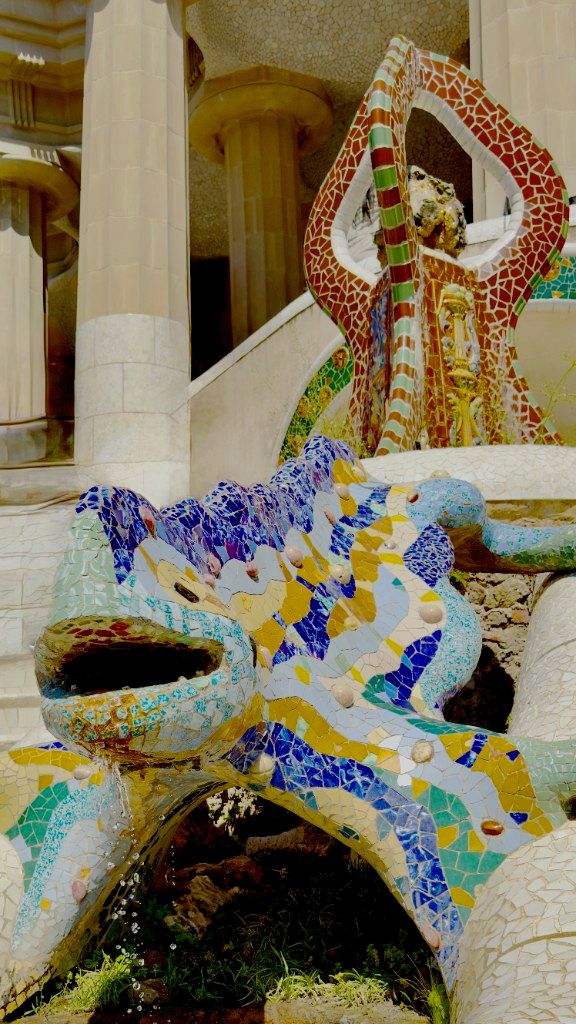
Walk the mosaic bench along the main terrace — the serpentine bench designed by Josep Maria Jujol, often cited as one of the longest undulating benches in the world — and look south across the entire city toward the sea. On a clear morning you can see Sagrada Família from here, its towers rising above the Eixample grid like something from another time. Which, in a way, they are.
After the monumental zone, the free areas of the park that surround it — wooded paths, viaducts, the Gaudí House Museum (where Gaudí lived for 20 years) — are worth exploring before the heat builds. By late morning the park fills noticeably; visiting the surrounding free areas after your monumental-zone slot makes the experience significantly more pleasant.
Descend into Gràcia for a final breakfast — the neighbourhood's independent cafés and bakeries are among the best in the city. Browse the small squares (Plaça de la Vila de Gràcia, Plaça del Diamant), pick up any remaining ceramics, olive oil, or local food you want to take home, and make your way to the airport at a comfortable pace.
Barcelona El Prat Airport is approximately 35–45 minutes from the city centre by Aerobus or by train via the R2 Nord line from Passeig de Gràcia or Sants. Allow at least two hours before your flight during busy periods.
Food suggestion: Final breakfast in Gràcia — pa amb tomàquet, a fresh orange juice, and a croissant de mantequilla from a proper local bakery.
Pacing note: Park Güell is the priority — book the first 9:30 AM slot and don't let a late previous night tempt you into a later entry, or you'll spend half the visit navigating crowds rather than the park.
Budget Notes
- Budget traveler: €80–120 per person per day — hostel or guesthouse, T-Casual metro card, menú del día lunches, tapas bar dinners, free Sunday museums.
- Mid-range traveler: €150–250 per person per day — boutique hotel in El Born or Eixample, all main attraction tickets, sit-down dinners, flamenco show with dinner.
- Luxury traveler: €350+ per person per day — design hotel on Passeig de Gràcia or in Gràcia, private Sagrada Família and Casa Batlló guided visits, fine dining, Casa Batlló Magic Nights, private flamenco tablao.
Attraction tickets add up: factor approximately €30–40 per person for Sagrada Família with tower access, €35–45 for Casa Batlló, and around €18 for Park Güell's monumental zone. Book in advance on official websites — third-party ticket platforms often charge significant markups.
Barcelona Prompts to Try in Honge
FAQ
Do you need to book Barcelona attractions in advance?
Yes — for Sagrada Família, Casa Batlló, and Park Güell's monumental zone, advance booking is essential. These are among the most visited attractions in Europe and often sell out days or weeks ahead, particularly between March and October. Always book directly on official websites to avoid third-party markups and ticketing scams.
Is 4 days enough for Barcelona?
Four days is a very satisfying length for a first visit, provided you focus on one or two neighbourhoods per day rather than trying to cover the entire city. This itinerary concentrates on the Gothic Quarter, El Born, the Eixample, and Gràcia — the areas that best represent Barcelona's character. If you have a fifth day, add Montjuïc or Palau de la Música Catalana.
What is the best neighbourhood to stay in Barcelona?
El Born and the Gothic Quarter are the most atmospheric choices for cultural travelers, with excellent walking access to this itinerary's first two days. The Eixample is quieter, better connected by metro, and puts Sagrada Família and Passeig de Gràcia at walking distance. Gràcia saves time on Day 4 and gives you a genuine local neighbourhood experience.
Is Barcelona safe for tourists?
Barcelona is generally very safe. Pickpocketing is the main concern — particularly on La Rambla, the metro, and around crowded markets. Keep bags in front of you, use inner pockets or a money belt in busy areas, and be aware around Plaça de Catalunya and La Barceloneta beach. El Born, Eixample, and Gràcia are calm and easy to navigate.
What is the best way to get around Barcelona?
Barcelona's metro is efficient, affordable, and covers all the destinations in this itinerary. A T-Casual (10-trip card) offers excellent value for four days of mixed metro and bus use. Much of this itinerary is also walkable — the Gothic Quarter, El Born, and parts of the Eixample are best explored on foot.
Ready to make it yours?
Customize this itinerary with AI
Now that you've seen the full route, use Honge to tailor stays, activities, and day-by-day pacing to your trip.
Related itineraries
- 7-Day Buenos Aires Couples Itinerary: Tango, Steak & Río de la Plata
- 9-Day Greek Islands Itinerary: Santorini, Naxos & Paros
- 10-Day Scotland Road Trip: Whisky, Castles & Mountains
- 12-Day France Itinerary: Paris to Provence & Cassis
- 12-Day Italy Itinerary: Milan to the Amalfi Coast
- 3-Day Madrid Itinerary: Tapas, Museums & Neighborhoods
- 8-Day Morocco Cultural Itinerary: Casablanca, Fes, Chefchaouen & Marrakech
- 8-Day Utah Family Road Trip: Zion, Bryce, Arches & Dinosaurs
- 5-Day Panama City & San Blas Itinerary: Canal, Casco Viejo & Islands
- 4-Day Santa Fe & Taos Itinerary: Art, Culture & Rio Grande Gorge
About Honge
Honge is an AI travel planning platform focused on practical, experience-led itineraries with realistic pacing and logistics. All blog content is edited and published by Honge. Our Barcelona research draws on updated practical logistics as of July 2026 and attraction recommendations reviewed against current visitor experience. © Honge. All rights reserved.
Image credits: Photos © Honge. All rights reserved.
Travel disclaimer
This itinerary is intended as general travel inspiration and planning guidance only — not as personalised travel advice. Conditions change. Before you travel, check the current entry requirements, visa rules, and any travel advisories issued by your government for your destination. Review weather forecasts for your specific travel dates, confirm opening hours and ticket availability for attractions directly, and take out comprehensive travel insurance that covers medical, cancellation, and disruption. Honge is not responsible for any changes to conditions, services, or experiences described in this article after the date of publication.