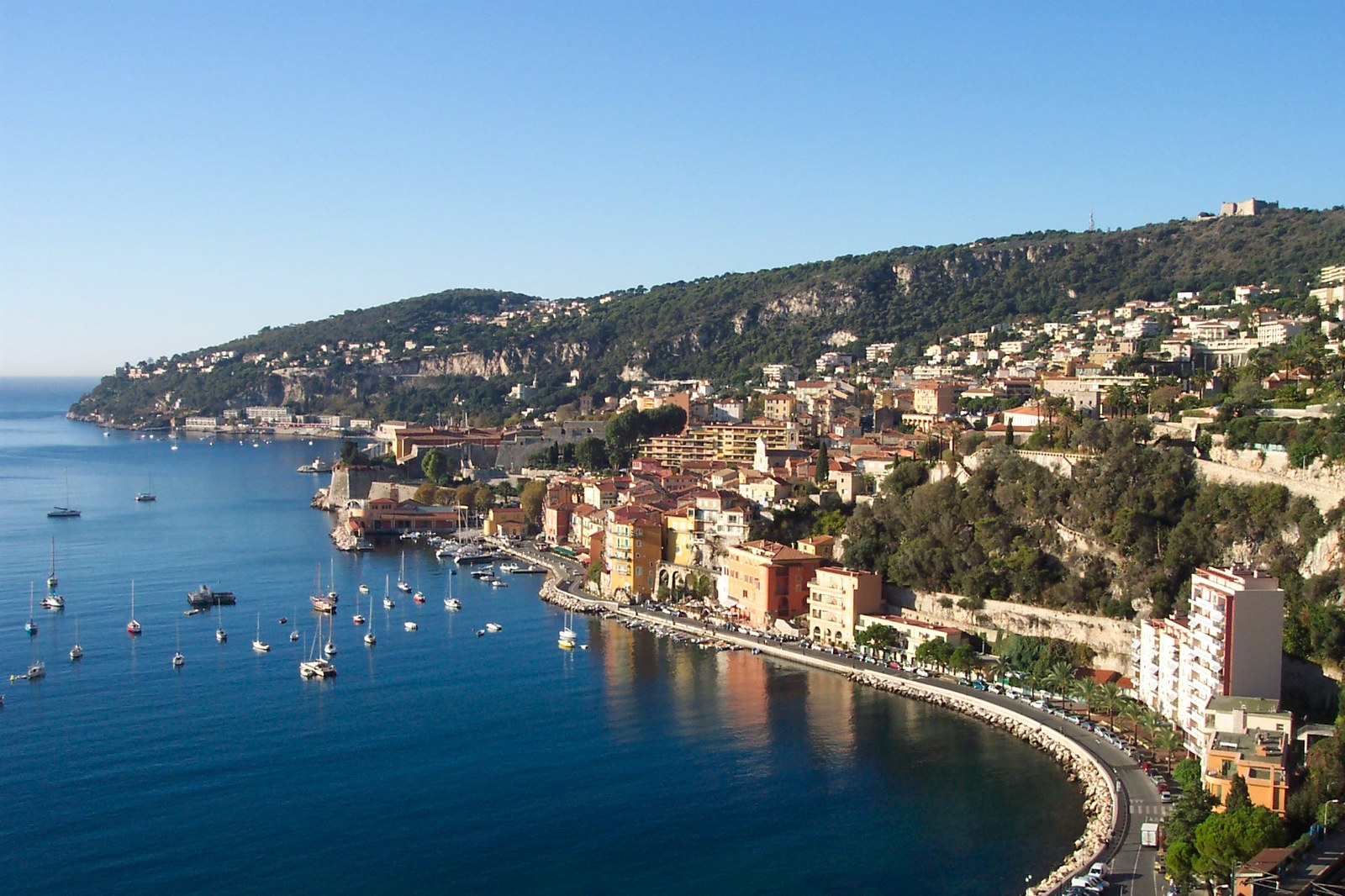
Discover four days on the French Riviera, combining Nice’s lively streets, Èze’s hilltop beauty and Monaco’s glamorous Mediterranean harbor.
Start with this itinerary
Open this 4-day French Riviera itinerary in Honge as your starting point, then shape your museum days, the Èze and Monaco day trip and your beach day around your dates.
How Many Days on the French Riviera Is Enough?
Four days is enough to see Nice, Èze and Monaco comfortably: two days in Nice for the Old Town, waterfront, markets and museums, one day for Èze and Monaco by bus and train, and one flexible day for the beach or a coastal outing such as Villefranche-sur-Mer. Stay in Nice throughout; Èze and Monaco are both easy day trips.
Introduction
The French Riviera has a way of making even an ordinary afternoon feel special. One moment you are wandering through the colorful lanes of Nice’s Old Town, surrounded by flower markets, cafés and the scent of fresh socca; the next, you are looking out across the Mediterranean from a medieval hilltop village or watching yachts drift through Monaco’s elegant harbor.
A four-day trip is just enough to experience three very different sides of this celebrated stretch of the Côte d’Azur. Nice brings the energy, history and everyday charm of a working Riviera city. Èze offers a quieter world of stone pathways, climbing bougainvillea and spectacular coastal views. Monaco adds a polished finish, with grand architecture, immaculate gardens and one of the Mediterranean’s most recognizable harbors.
There is also plenty to enjoy between the landmarks: long seaside walks, excellent markets, Provençal cooking, art museums and relaxed meals that stretch well into the afternoon.
This itinerary uses Nice as a convenient base, with a day trip to Èze and Monaco and a final day left deliberately flexible for beaches, food, art or another stretch of coastline.
French Riviera at a Glance
- Duration: 4 days
- Base: Nice, France
- Main destinations: Nice, Èze and Monaco
- Best for: Coastal scenery, food, art, architecture, historic villages and Mediterranean atmosphere
- Getting around: Walking, tram, regional trains and buses
- Suggested pace: Moderate, with one particularly active day for Èze and Monaco
- Best time to visit: April to June and September to October
- Currency: Euro (€)
- Language: French, with English widely understood in visitor areas
- Arrival: Nice Côte d’Azur Airport (NCE), roughly 6–7 km from the center and linked by tram and taxi; Nice-Ville is the main train station
- Plugs: Type C/E sockets (230 V), the same in France and Monaco
- Monaco: An independent principality that also uses the euro; there are no routine border checks from France, but carry photo ID
The Route
| Day | Focus | Highlights |
|---|---|---|
| Days 1–2 | Nice | Old Town, Promenade des Anglais, markets, food and museums |
| Day 3 | Èze & Monaco | Hilltop village views, then Monaco’s harbor and Monte-Carlo |
| Day 4 | Flexible finale | Beach, more art and food, or a coastal outing |
Nice (Old Town & waterfront) → Nice art & food → Èze Village → Monaco → Beach or Villefranche
Day 1: Discover Nice — Old Town, Markets & the Mediterranean
Begin your French Riviera trip in Nice, a city that combines Italian-influenced architecture, French café culture and an unmistakably Mediterranean outlook. Its pastel-colored buildings, lively squares and palm-lined waterfront make it an easy place to explore on foot, particularly if you give yourself time to wander without following a strict schedule.
Morning: Vieux Nice and Cours Saleya
Start in Vieux Nice, the city’s atmospheric Old Town. Its narrow streets are lined with ochre and terracotta façades, traditional shops, small restaurants and churches tucked between residential buildings.
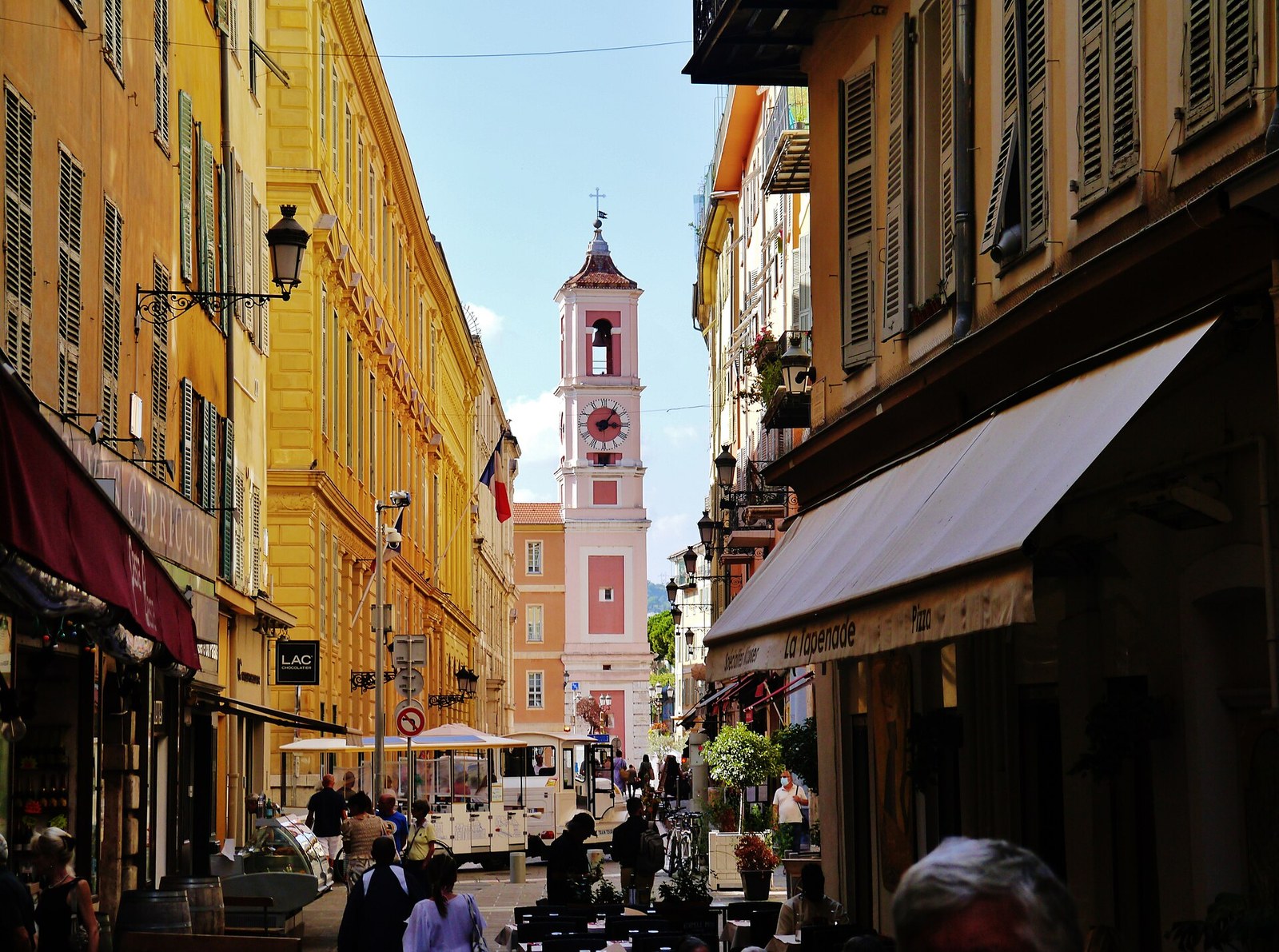
Nice’s Old Town is a maze of pastel façades, traditional shops and lively café terraces that capture the city’s Mediterranean character.
The best approach is simply to explore. Wander through the lanes around Place Rossetti, pause for a coffee and look inside the beautiful Sainte-Réparate Cathedral. The neighborhood feels particularly lively in the morning, when local shops open and cafés begin filling their outdoor tables.
Continue toward Cours Saleya, one of Nice’s most recognizable markets. Depending on the day, you will find colorful flowers, seasonal produce, local specialties and stalls selling regional ingredients. It is a lovely place to appreciate the flavors and colors of Provence.
Check the day: The flower and produce market runs Tuesday to Sunday, and the produce stalls wind down around 1:30 p.m. On Mondays it is replaced by an antiques and flea market, so on a Monday focus on the Old Town lanes and save market snacking for another day.
Pick up some fresh fruit, olives or a small snack before continuing your walk. The market is also an excellent introduction to the region’s food culture, where simple ingredients and seasonal produce play an important role.
Late Morning: Place Masséna and the City Center
Walk toward Place Masséna, Nice’s grand central square. Its red façades, patterned paving and open public spaces create a striking contrast with the narrow streets of the Old Town.
From here, explore the surrounding shopping streets and pedestrian areas. Avenue Jean Médecin is the city’s main commercial thoroughfare, while the nearby streets offer smaller boutiques, cafés and bakeries. This is a good opportunity to stop for a pastry or a second coffee before heading toward the waterfront.
Afternoon: Promenade des Anglais
No visit to Nice feels complete without spending time along the Promenade des Anglais. This famous waterfront boulevard curves around the Baie des Anges, with palm trees, grand hotels and a wide pedestrian promenade overlooking the Mediterranean.
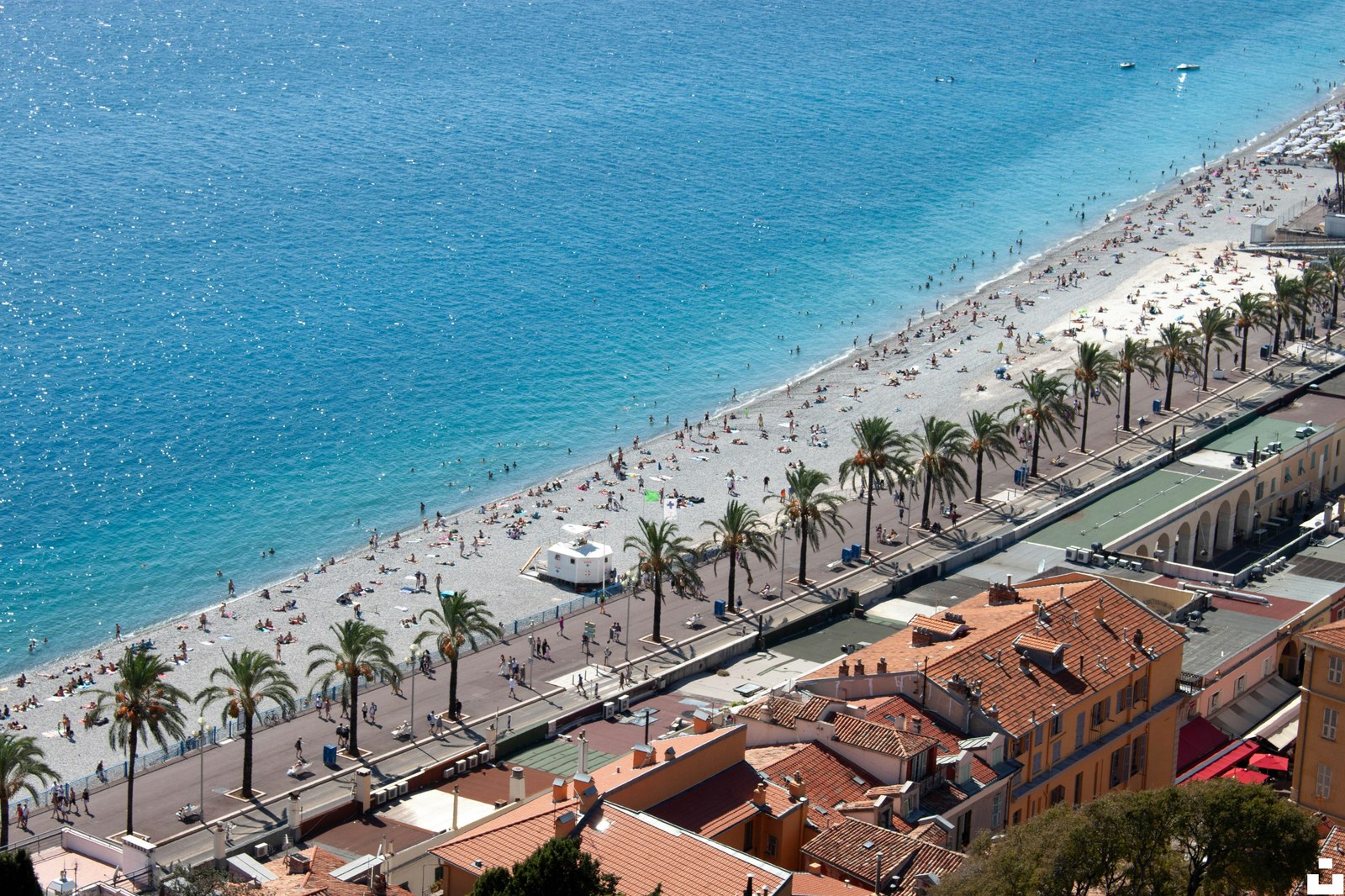
Walk along the seafront, watch the waves and take in the changing shades of blue. The views are particularly lovely in the afternoon, when the sunlight catches the water and the city takes on its classic Riviera appearance. If you want a longer walk, continue toward the eastern end of the promenade and the entrance to the Port area. Otherwise, find a comfortable spot by the sea and enjoy a slower afternoon.
Nice’s beaches are mostly pebbled rather than sandy, so consider bringing water shoes if you plan to swim.
Late Afternoon: Castle Hill
For one of the best views in Nice, make your way to Colline du Château, or Castle Hill.
Despite its name, the original castle no longer stands, but the hill is now a beautiful public park with shaded paths, viewpoints and a waterfall. From the upper terraces, you can look across the Old Town, the curve of the Promenade des Anglais and the rooftops surrounding the port. You can climb the steps or take the free elevator (the Ascenseur du Château, near Quai des États-Unis), which usually runs from about 9 a.m. to 7:30 p.m. The park itself closes earlier in winter, around 6 p.m. from October to April, so check current hours and aim to arrive by mid-afternoon.
Stay long enough to appreciate the view before heading back down toward the Old Town for dinner.
Evening: A First Taste of Niçoise Cooking
Spend your first evening enjoying the food that makes Nice distinct from other French cities.
Look for a traditional restaurant serving salade niçoise, petits farcis (vegetables stuffed with a savory filling), pissaladière (a local onion tart) or ravioli niçois. For something casual, try socca, a thin, savory chickpea-flour pancake cooked in a large oven and served hot with black pepper. It is one of the city’s best-known street foods and particularly good as an afternoon snack.
Finish with a relaxed stroll through the illuminated Old Town. The narrow streets feel different in the evening, when restaurant terraces fill up and the atmosphere becomes lively without losing its neighborhood character.
Food note: Make time for socca, pissaladière and a traditional Niçoise dish. These local specialties are a much better introduction to Nice than relying only on familiar French restaurant classics.
Do not miss: The views from Castle Hill across the Baie des Anges, especially in the late afternoon.
Logistics: Nice is easy to explore on foot. The Old Town, Place Masséna, Cours Saleya and much of the Promenade des Anglais can be combined into one walking day. Wear comfortable shoes for the Old Town’s uneven paving and Castle Hill’s steps.
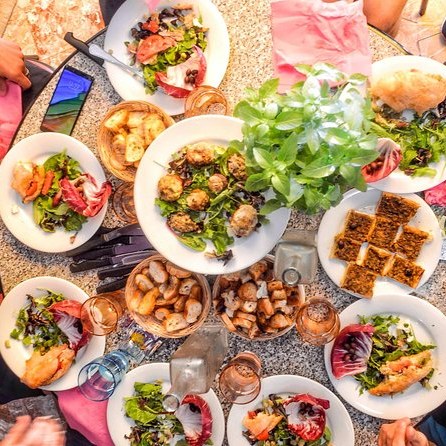
Tour on Honge
No Diet Club — Unique Local Food in Nice
A small-group Old Town food walk with socca, pissaladière, farçis niçois, pan bagnat and more included — an easy Day 1 or Day 2 lunch option if you want Niçoise flavors guided rather than choosing restaurants solo.
Day 2: Nice — Art, Food & Local Riviera Life
After yesterday’s introduction to Nice’s waterfront and historic center, use the second day to discover more of the city’s artistic side and its everyday Mediterranean rhythm.
Nice has long attracted painters, writers and creative visitors. Its light, landscapes and colors have inspired artists for generations, and the city has several worthwhile museums that make a cultural day particularly rewarding.
Check the day first: The Musée Matisse, the Musée National Marc Chagall and the Palais Lascaris are closed on Tuesdays, and the Musée des Beaux-Arts is closed on Mondays. If Day 2 falls on a Tuesday, swap in the Beaux-Arts, a long walk around Port Lympia or the Day 4 coastal outing, and move the museum day to another date. Hours change, so confirm on each museum’s official website.
Morning: Musée Matisse
Begin in the Cimiez neighborhood at the Musée Matisse, housed in a historic villa surrounded by gardens.
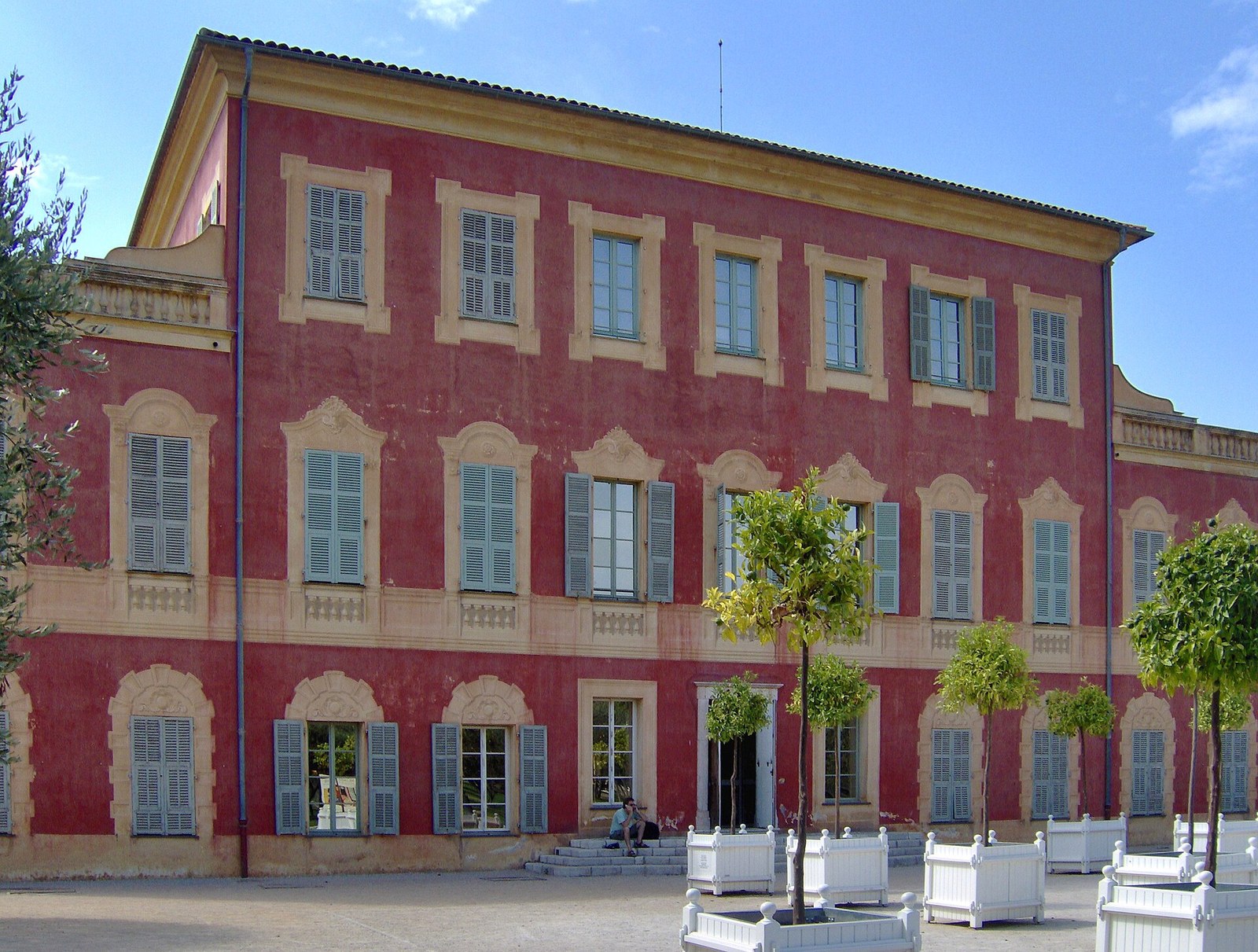
Set in the peaceful Cimiez neighborhood, the Musée Matisse celebrates the artist’s connection with Nice and the French Riviera.
The museum explores the life and work of Henri Matisse, who spent an important part of his later life in Nice. Its collection includes paintings, drawings, sculptures and personal objects that help explain his artistic development. The building and its setting are also part of the appeal. Cimiez is quieter than the city center, with tree-lined streets and a more residential atmosphere.
Allow enough time to explore the collection rather than rushing through it.
Late Morning: Cimiez and Its Historic Surroundings
After the museum, take a little time to explore the surrounding area.
The Monastère de Cimiez and its gardens offer another attractive stop. The gardens are peaceful, with views over parts of Nice, and provide a pleasant contrast to the busy waterfront. The nearby Roman archaeological site and museum are also worth considering if you are interested in the city’s ancient history. The remains help explain how Nice developed long before it became a fashionable seaside destination.
Afternoon: Musée Marc Chagall or a Food-Focused Break
Choose between more art or a leisurely food experience. The Chagall museum is a separate stop in the hills above the center, not next door to the Matisse museum, so check the bus route or allow time for a taxi.
The Musée National Marc Chagall is a rewarding visit, particularly for those interested in modern art and religious or biblical themes. Its collection includes works created by Chagall around the Biblical Message series. Entry is roughly €8–10, with a free day usually offered on the first Sunday of the month; check current prices.
Alternatively, keep the afternoon more relaxed with a long lunch and a little shopping. Nice has excellent food shops, bakeries and markets, and this is a good time to seek out local olive oil, regional sweets and Provençal ingredients. If you prefer to explore independently, spend time in the neighborhoods around the Old Town and Port Lympia. The port area has a different character from the waterfront promenade, with colorful buildings, boats and restaurants.
Late Afternoon: Port Lympia and the Eastern Waterfront
Walk around Port Lympia, Nice’s historic harbor.
The port is framed by attractive buildings in warm colors, with fishing boats, pleasure craft and larger vessels sharing the water. It feels more local and less grand than Monaco, making it an enjoyable place to spend an unhurried hour. From here, you can continue toward the coastal paths and viewpoints east of the city, depending on your energy and the weather.
Evening: Dinner in the Old Town or Near the Port
For your second evening, choose a restaurant that focuses on regional cooking.
Look for dishes featuring seasonal vegetables, seafood, olives, herbs and local cheeses. Nice is also a good place to try a regional wine from Provence or the surrounding area. If you are interested in the local food culture, consider ordering a few dishes to share rather than choosing a large main course each. It is a relaxed way to sample more of the region.
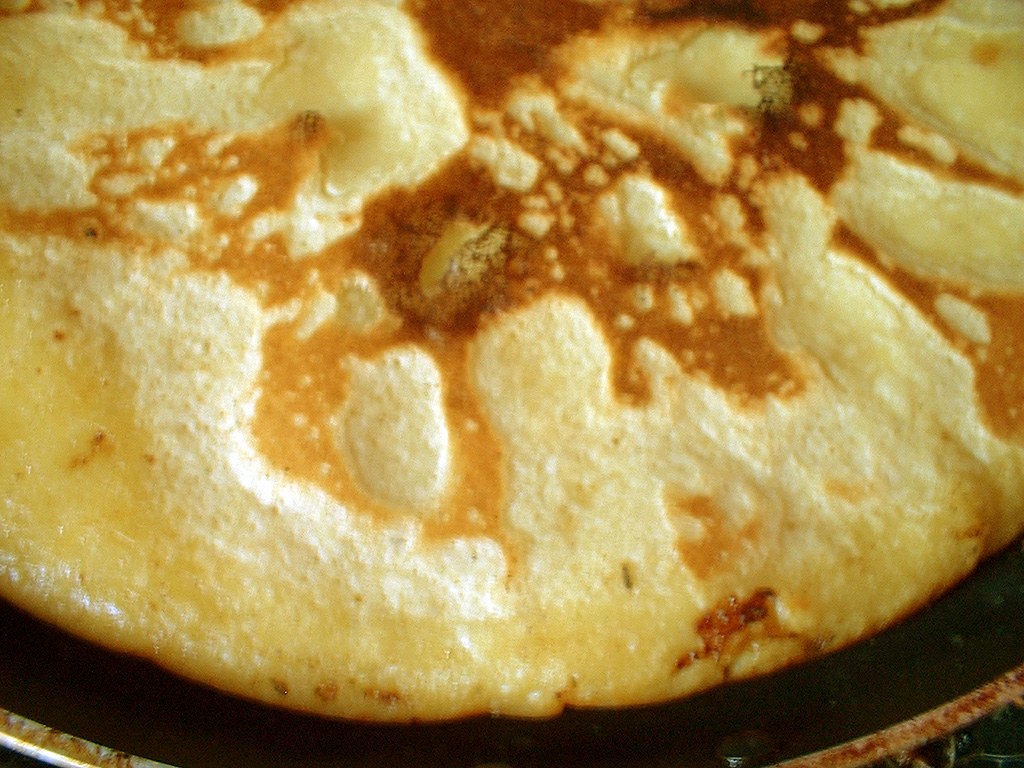
Socca is one of Nice’s best-loved local specialties, a simple chickpea-flour pancake traditionally enjoyed hot from the oven.
Food note: Try petits farcis or ravioli niçois if you have not already. For dessert, look for a local specialty such as tourte de blettes, a sweet or savory Swiss-chard tart depending on the preparation.
Do not miss: The Musée Matisse and the quieter gardens of Cimiez. They reveal a different side of Nice beyond its beaches and Old Town.
Logistics: The tram covers the center, but Cimiez and the museums are mainly reached by local bus. Check current routes and opening days before traveling, as museum schedules can vary. If you plan to visit both the Matisse and Chagall museums, allow enough time for travel between them. See also Lignes d’Azur for local transport.
Day 3: Èze & Monaco — Hilltop Beauty and Riviera Glamour
Today brings two of the most memorable contrasts on the French Riviera.
First comes Èze, a medieval village perched high above the Mediterranean, with winding stone lanes and beautiful coastal views. Later, continue to Monaco, where grand buildings, manicured gardens and an impressive harbor create a very different atmosphere.
It is a busy day, but one of the highlights of the trip.
Morning: Travel to Èze Village
Leave Nice in the morning and make your way to Èze. It is important to distinguish between Èze Village, the historic hilltop settlement, and Èze-sur-Mer, the coastal area beside the railway line. They are not the same place, and the village sits considerably higher above sea level. The famous Chemin de Nietzsche footpath links Èze-sur-Mer to the village, but it is a steep climb of an hour or more, so treat it as a hike, not a transfer.
The most direct public transport option is usually a bus from Nice to Èze Village, depending on the current timetable. Another option is to take a train to Èze-sur-Mer and connect with a local bus up the hill. Check the latest bus services before setting out, as connections and frequency can vary by season. Èze Tourism is a useful starting point for visitor information.
Late Morning: Explore the Medieval Village
Once you arrive, leave the main road behind and wander through the village’s narrow stone streets.
Èze feels wonderfully different from Nice. Its lanes are quieter and more intimate, with small galleries, artisan boutiques, old stone houses and climbing plants adding color to the village. Take your time exploring the little passages and courtyards. There is no need to follow a strict route: much of the pleasure comes from discovering a viewpoint or quiet corner unexpectedly.
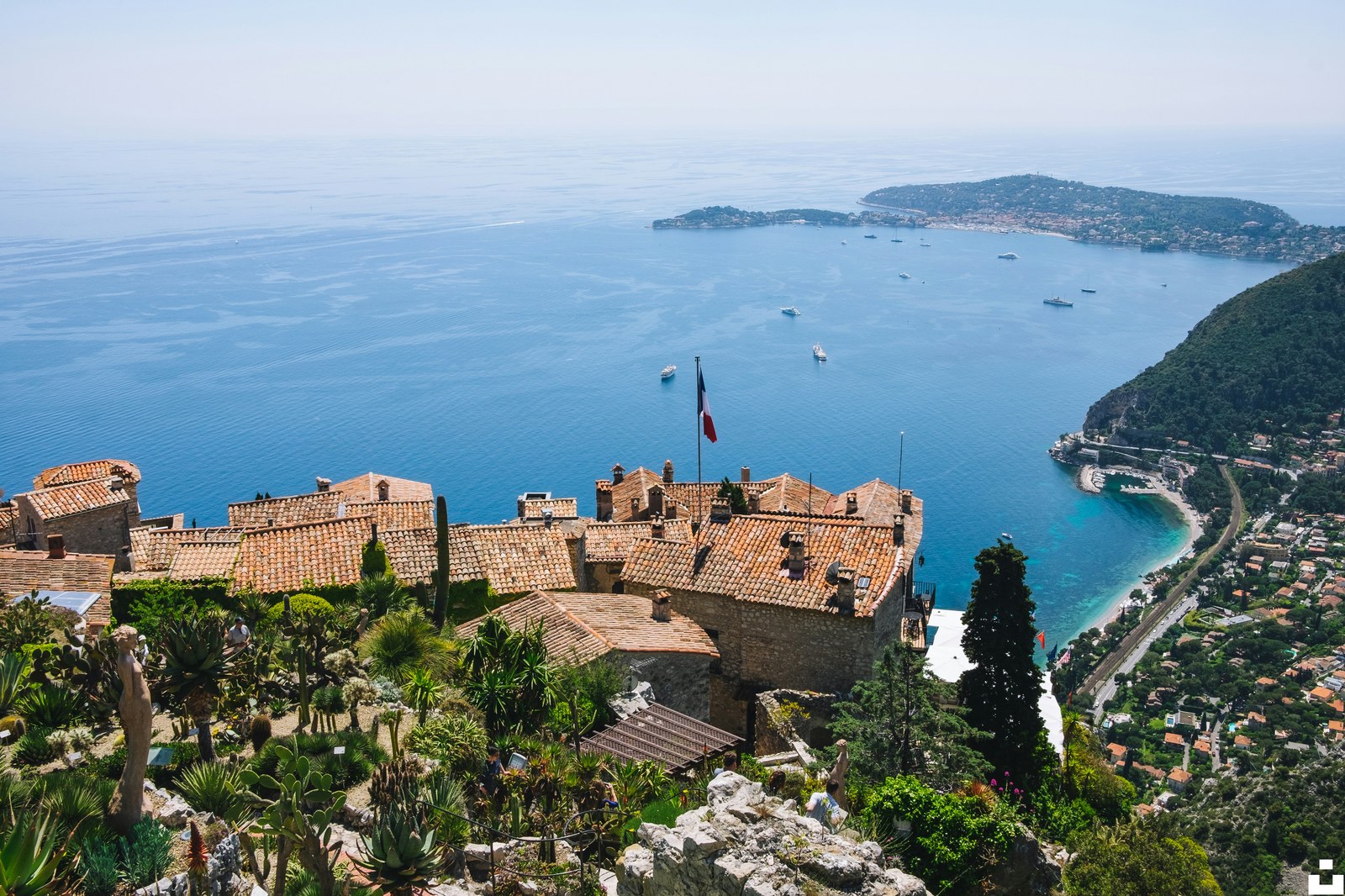
One of the village’s main attractions is the Jardin Exotique d’Èze, set at the top of the village. Its collection of plants and sculptures is matched by spectacular views across the coastline. On a clear day, the panorama is exceptional, with the Mediterranean stretching into the distance and the coastline curving around the bays below.
Lunch: A Scenic Village Break
Stay in Èze for lunch if your budget allows.
The village has restaurants and terraces with beautiful views, although prices can be higher than in Nice because of its location and popularity. For a more casual option, choose a café or bakery and enjoy a lighter meal before continuing to Monaco. This is also a good time to browse the small shops for local crafts, perfumes and regional products.
Afternoon: Continue to Monaco
From Èze, make your way to Monaco.
If you are traveling by public transport, the route may involve returning down to Èze-sur-Mer and taking a regional train to Monaco–Monte-Carlo. The regional train from Èze-sur-Mer to Monaco takes only a few minutes, and Nice to Monaco takes roughly 20–25 minutes by train. Check the connections before leaving the village so that you know how much time to allow. Monaco is compact, but its steep streets and different districts mean that getting between attractions can take longer than expected.
Start with Monaco-Ville, the historic old town on the Rock. See also Visit Monaco for orientation.
Explore Monaco-Ville and the Prince’s Palace
The old town has a more traditional atmosphere than the modern harbor district.
Walk through its pedestrian streets, admire the pastel façades and visit Place du Palais, where the Prince’s Palace overlooks the harbor. The palace is the official residence of Monaco’s ruling family. The State Apartments are open to visitors only from spring to mid-October (the 2026 season ended on October 15), so in winter you can still see Place du Palais, the cathedral and the viewpoints, but not the interiors. Check the official visitor information before you plan to go inside.
Nearby, the Saint Nicholas Cathedral, commonly known as Monaco Cathedral, is another worthwhile stop. It is an important landmark and the resting place of several members of the Grimaldi family. Continue toward the viewpoints around the Rock for impressive views over Port Hercule and the surrounding coastline.
Late Afternoon: Port Hercule and Monte-Carlo
Walk down toward Port Hercule, Monaco’s famous harbor.
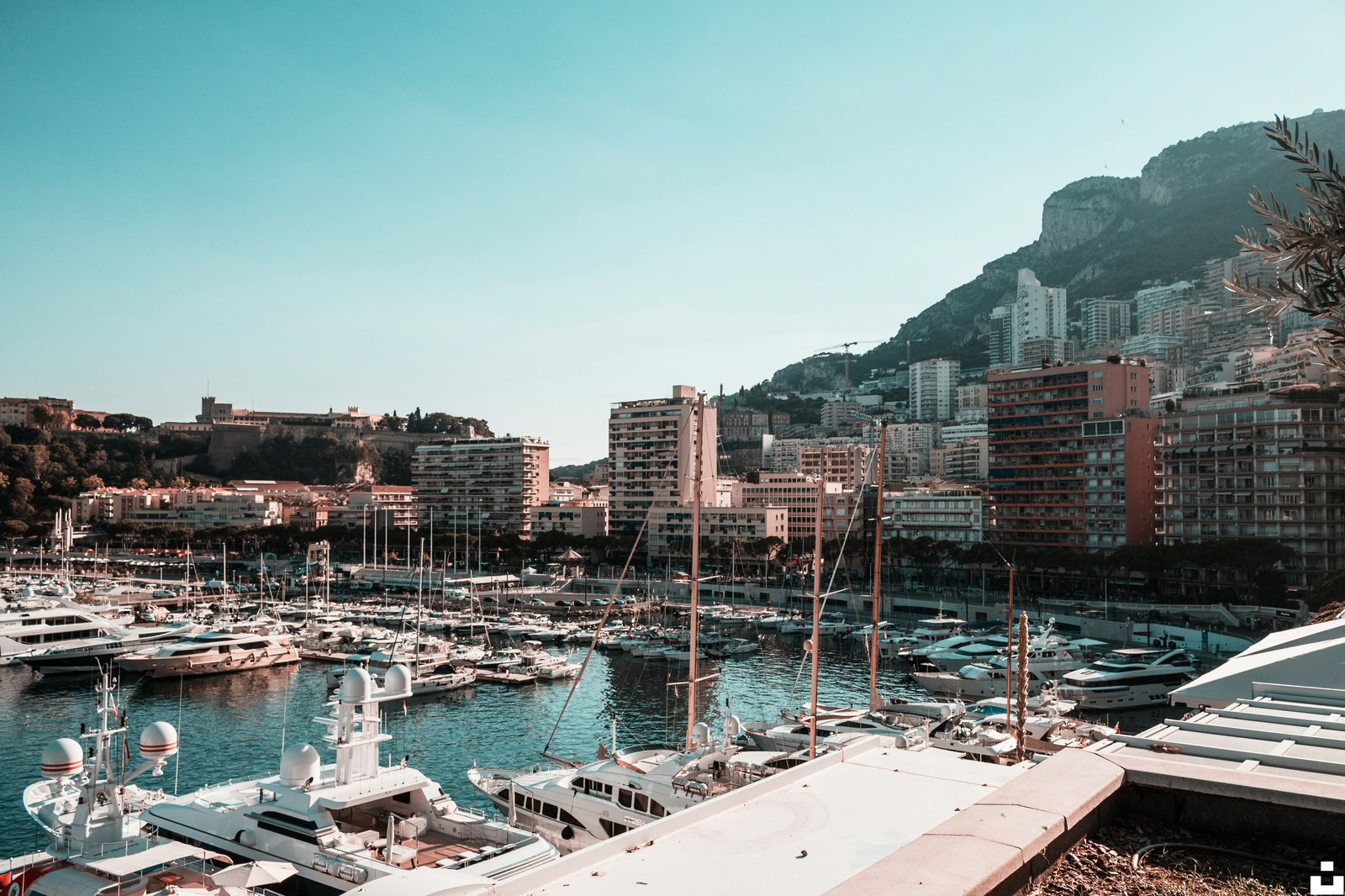
The contrast with Nice is immediately noticeable. Large yachts line the water, elegant buildings rise behind the marina and the entire setting feels carefully polished. Continue toward the Monte-Carlo district, where the famous Casino de Monte-Carlo stands among grand architecture, landscaped gardens and luxury hotels. Even if you are not interested in gambling, the square outside the casino is worth seeing for its architecture and atmosphere; the gaming rooms themselves are restricted to adults with photo ID.
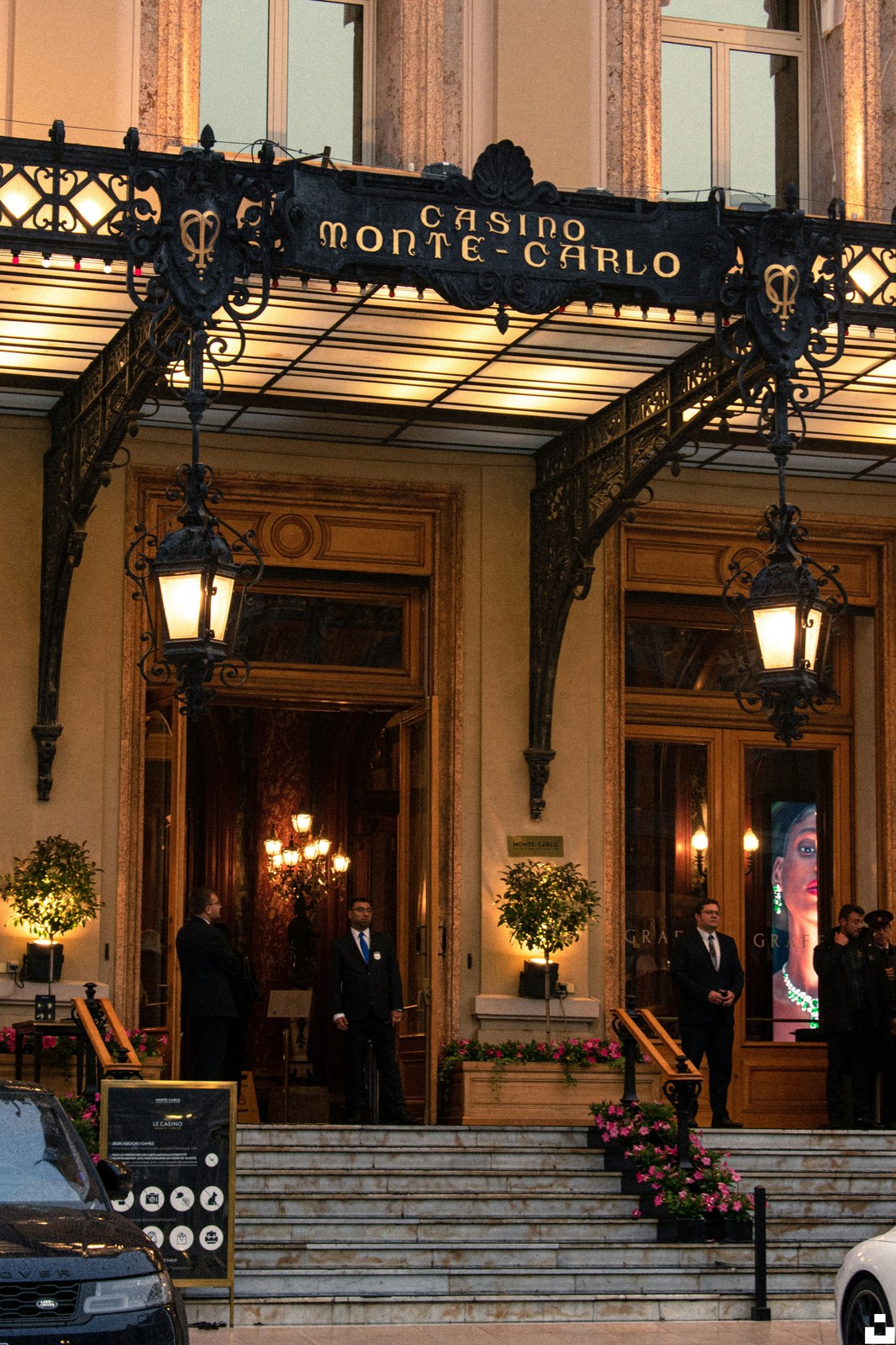
Take time to admire the surroundings and enjoy a coffee or drink before returning to Nice.
Evening: Return to Nice
After a full day, take the train back to Nice.
The railway journey is convenient and offers another glimpse of the beautiful coastline. Once back in Nice, keep dinner simple and enjoy a relaxed evening close to your accommodation. Check regional services via TER Sud.
Food note: Have lunch in Èze for the views, but consider dinner back in Nice for better choice and generally more flexible prices. Try fresh seafood or a Provençal dish if you want to finish the day with something local.
Do not miss: The panoramic views from the Jardin Exotique d’Èze and the harbor views from Monaco’s Rock. They are two very different but equally memorable Riviera scenes.
Logistics: This is the itinerary’s most transport-dependent day. Check the Nice–Èze bus timetable, the Èze-sur-Mer connection and regional train services to Monaco before leaving. Wear shoes with good grip: Èze’s stone lanes are steep and uneven, and Monaco also involves plenty of walking. Allow extra time for connections rather than relying on tight transfers, and check the last train back to Nice before you settle in for dinner in Monaco.
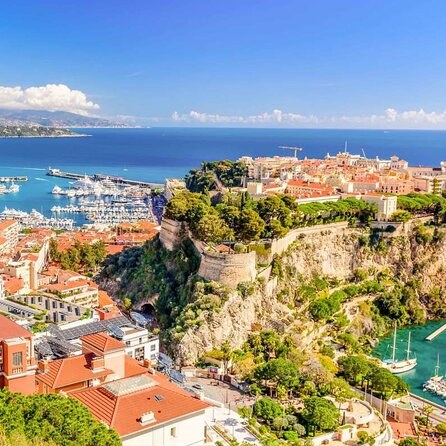
Tour on Honge
Monaco, Monte-Carlo & Èze Village Half-Day Tour
Small-group pickup from Nice covering Èze Village, a Fragonard perfumery stop, Monaco-Ville and Casino Square — a natural Day 3 if you want the coastal highlights without piecing together buses and trains yourself.
Day 4: A Relaxed Riviera Day — Beaches, Food & Coastal Scenery
After three busy days, leave the final day open to enjoy the Riviera at a slower pace.
Nice is particularly good for this. You can spend the morning beside the sea, explore another neighborhood, enjoy a long lunch or take a short trip along the coast.
Choose the option that best suits your interests and the weather.
Option 1: A Slow Morning on the Beach
If the weather is warm, spend the morning at one of Nice’s beaches. The city has both public and private beach areas, with the familiar pebbled shoreline stretching along the Baie des Anges.
Public beaches are a good choice if you want a simple swim and a relaxed morning. Private beach clubs offer sun loungers, food and drinks, usually at a higher price. Bring sun protection and water shoes if you are not accustomed to pebbled beaches. After swimming, enjoy a leisurely coffee or lunch along the waterfront.
Option 2: Explore More of Nice’s Art and Architecture
If you prefer a cultural morning, use the extra time to visit a museum you missed earlier.
The Musée des Beaux-Arts de Nice is an option for those interested in painting and sculpture, while the Palais Lascaris in the Old Town offers a glimpse of historic interiors and decorative arts. You could also revisit Cours Saleya, explore the independent shops or spend more time around the Port Lympia neighborhood.
This is a particularly good option if the weather is unsettled or you want to avoid another day of traveling between destinations.
Option 3: Take a Coastal Outing
For a little more scenery, consider a short trip east along the coast.
Villefranche-sur-Mer is an excellent choice. This attractive seaside town has a picturesque harbor, colorful waterfront buildings and a more relaxed atmosphere than central Nice. It is a short train ride (roughly 10 minutes) from Nice-Ville, or an easy bus trip, making it a practical half-day outing without requiring a car. Other easy options by regional train include Antibes (old town and market) and Menton (known for its lemon festival in February), both within about 40 minutes of Nice.
Walk around the old harbor, explore the historic streets and find a waterfront table for lunch. If the weather is suitable, spend some time at the beach before returning to Nice. Another option is to explore the coastal area toward Saint-Jean-Cap-Ferrat, known for its beautiful villas, walking routes and Mediterranean scenery. Check local transport connections and walking distances before setting out.
Afternoon: A Long Riviera Lunch
Whichever option you choose, make time for one final leisurely meal.
The Riviera is best enjoyed without rushing, and a long lunch is an ideal way to bring the trip together. Choose seafood, grilled vegetables, fresh salads or a regional special. If you are in Villefranche-sur-Mer, look for a restaurant near the harbor. In Nice, return to the Old Town or choose somewhere around the port.
Evening: One Last Walk Along the Promenade
Finish your trip with a final walk along the Promenade des Anglais. The evening light over the Baie des Anges is a fitting end to four days on the French Riviera. Take a seat by the water, enjoy a final drink and think back over the contrasts that made the journey special: Nice’s lively streets, Èze’s hilltop views and Monaco’s elegant harbor.
Food note: Use the final day to enjoy whatever you have not yet tried, whether that is fresh seafood, a local tart, a Provençal rosé or another serving of socca.
Do not miss: If you want a change of scenery without a complicated journey, Villefranche-sur-Mer is one of the best choices for a final coastal outing.
Logistics: Keep the day flexible around the weather and your departure time. Regional trains and buses make nearby coastal towns accessible, but check return services in advance, particularly if you are traveling in the evening. Check Météo-France before coastal walks.
Where to Stay on the French Riviera
For a four-day trip combining Nice, Èze and Monaco, staying in Nice is the most practical choice.
It offers a wide range of accommodation, good public transport and straightforward rail connections along the coast. It also means you can return to the same hotel each evening rather than moving between destinations. Hotels in Monaco cost considerably more than in Nice, and Nice adds a nightly tourist tax (taxe de séjour) to the room rate.
- Old Town — best for atmosphere and food: Close to restaurants, markets and historic streets. Watch for noise and luggage drop-off constraints on narrow streets.
- Around Place Masséna — best for a central base: Walkable to the Old Town, shopping streets, the Promenade and tram connections.
- Near Nice-Ville station — best for train connections: Practical for regional rail and arrivals; less atmospheric than the Old Town or waterfront.
- Promenade des Anglais — best for sea views: Classic Riviera stay with easy waterfront access; often more expensive on the promenade itself.
Recommendation: Choose the Old Town or Place Masséna for the best balance of atmosphere, restaurants and access to the main sights. If rail travel is your priority, stay closer to Nice-Ville station.
Getting Around: Trains, Buses & Walking
One of the advantages of this itinerary is that you do not need to rent a car.
Nice, Èze and Monaco are connected by a combination of regional trains and buses, while much of Nice itself is easy to explore on foot. Official tourism information for Nice is available via Explore Nice Côte d’Azur.
- In Nice: Tram and bus for longer hops; walking for Old Town, Cours Saleya, Place Masséna and the Promenade.
- Nice to Èze: Direct bus to Èze Village when available, or train to Èze-sur-Mer plus a local bus uphill. Do not treat the climb from the station as a casual stroll.
- Èze to Monaco: Bus down to Èze-sur-Mer, then regional train to Monaco–Monte-Carlo.
- Nice to Monaco: Regional train is usually easiest (roughly 20–25 minutes); expect steep walking in Monaco, with public elevators helping some elevation changes.
- From the airport: Nice Côte d’Azur Airport connects to the center by tram (roughly 30 minutes) and by taxi; confirm current services before you travel.
For this four-day itinerary, a car is not essential. Public transport is practical for the main destinations, and driving in Nice and Monaco can involve traffic, expensive parking and busy roads. A rental car becomes more useful if you want remote villages or less convenient stretches of coast.
Best Time to Visit Nice, Èze & Monaco
- April–June: Excellent for sightseeing — comfortable walking weather and fewer peak crowds.
- July–August: Best beach weather, but busier and often pricier; visit Èze early.
- September–October: Strong overall balance of swimming, sightseeing and lighter crowds.
- November–March: Quieter city break for museums, markets and food; less beach-focused. Beach clubs and some seasonal attractions close or shorten their hours, and the Prince’s Palace State Apartments in Monaco are closed.
What to Eat on the French Riviera
- Socca: Thin chickpea-flour pancake, served hot with black pepper.
- Salade niçoise: Classic Nice salad with tomatoes, olives, anchovies or tuna, and eggs.
- Pissaladière: Savory onion tart often topped with olives and anchovies.
- Petits farcis: Stuffed vegetables with a savory filling.
- Ravioli niçois: Local-style ravioli.
- Tourte de blettes: Swiss-chard tart, sweet or savory.
- Fresh seafood: Grilled fish, shellfish and seasonal coastal dishes.
- Provençal wines: Especially rosé, plus local reds and whites.
For a more local experience, visit a market in the morning, look for seasonal produce and choose restaurants that feature regional dishes rather than only international menus.
Practical Tips for Your French Riviera Trip
- Stay in Nice rather than changing hotels — visit Èze and Monaco as a day trip.
- Start the Èze day early — the village is small and popular.
- Check transport connections — Èze Village is not beside the railway station.
- Pack comfortable walking shoes — uneven paving, steep lanes and hills.
- Bring sun protection — Mediterranean sun is strong even outside peak summer.
- Book popular attractions ahead — museums, exhibitions and palace visits when needed.
- Expect different prices — Nice is flexible; Èze and Monaco can cost more.
- Keep some time unplanned — cafés, harbor views and extra sea time matter.
- Check closing days — Matisse, Chagall and Palais Lascaris close on Tuesdays; the Cours Saleya produce market is closed on Mondays.
- Currency and plugs — France and Monaco use the euro, and sockets are Type C/E (230 V), so US visitors need a plug adapter.
- Tipping — Service is included in French restaurant prices; rounding up or leaving a few euros for good service is appreciated but not required.
- Watch your belongings — Crowded trains, the Old Town and Monaco’s busiest spots attract pickpockets; keep bags closed and in front of you.
- Expect event pricing — Monaco Grand Prix weekend (usually late May or early June) and Nice Carnival (February) fill hotels and raise prices; book early.
Estimated Budget for 4 Days on the French Riviera
The following is a broad planning estimate per person, assuming two people sharing a room, public transport and a mixture of casual and sit-down meals.
| Expense | Approximate cost per person |
|---|---|
| Accommodation, 3 nights | €180–€420 |
| Food and drinks | €120–€220 |
| Local transport and regional trains | €25–€55 |
| Museums and attractions | €25–€65 |
| Additional activities and treats | €30–€80 |
| Estimated total | €380–€840 |
These are indicative planning figures rather than live prices. Actual costs will depend on travel dates, accommodation standards, restaurant choices and which attractions you visit. The figures exclude the optional guided tours shown above, and hotel prices can run well above this range in July–August or during major events. A nightly tourist tax is usually added to the room rate.
For a more budget-conscious trip, choose accommodation away from the seafront, use public beaches, enjoy market food and make the most of Nice’s walkable attractions. For a more indulgent experience, consider a sea-view hotel, a scenic lunch in Èze and a special dinner in Monaco.
Important Links
- Nice Côte d’Azur Tourism
- Musée Matisse
- Musée National Marc Chagall
- Èze Tourism
- Jardin Exotique d’Èze
- Visit Monaco
- Prince’s Palace
- TER Sud — Nice–Monaco trains
- Lignes d’Azur — Nice local transport
- Météo-France
Frequently Asked Questions
Is four days enough for Nice, Èze and Monaco?
Yes. Four days is enough for a satisfying introduction to all three destinations. Two days in Nice allow time for the Old Town, waterfront, markets and museums, while a full day can cover Èze and Monaco. The final day provides room for a beach visit or another coastal outing.
Should I stay in Nice or Monaco?
Nice is generally the more practical base for this itinerary. It offers a broader choice of accommodation and restaurants, good public transport and convenient connections to both Èze and Monaco. Monaco is worth visiting for its harbor, architecture and polished atmosphere, but it is not necessary to stay there.
Can you visit Èze and Monaco in one day?
Yes. It is a popular and practical combination, provided you start early and plan your transport connections. Spend the morning in Èze Village and the afternoon in Monaco, allowing enough time to travel between the two.
Is Èze difficult to explore?
Èze Village is steep, with narrow stone streets and uneven surfaces. You do not need to be an experienced hiker to explore the village itself, but comfortable shoes and a reasonable level of mobility are helpful.
Is a car necessary for this trip?
No. Nice, Èze and Monaco can be explored using public transport and walking. A car is only worth considering if you plan to visit more remote villages or countryside locations.
What is the best way to travel from Nice to Monaco?
The regional train is usually the most convenient option. It connects Nice with Monaco–Monte-Carlo and avoids the challenges of driving and parking.
Are the beaches in Nice sandy?
Most of Nice’s central beaches are pebbled rather than sandy. Bring water shoes if you plan to swim or spend a long time on the beach.
Is the French Riviera expensive?
It can be, particularly during July and August and in destinations such as Monaco and Èze. However, staying in Nice, using public transport, choosing public beaches and eating at local restaurants can make a four-day visit more manageable.
Which days are Nice’s museums and markets closed?
The Musée Matisse, the Musée National Marc Chagall and the Palais Lascaris are closed on Tuesdays, and the Musée des Beaux-Arts is closed on Mondays. The Cours Saleya flower and produce market does not run on Mondays, when an antiques and flea market takes its place. Hours change, so confirm on each official website before you go.
Can you visit the French Riviera in winter?
Yes. November to March is quieter and good for museums, markets and food, but it is less suited to swimming. The Prince’s Palace State Apartments in Monaco are closed outside the spring-to-October season, and beach clubs and some seasonal attractions have shorter hours.
Can I reach Èze without a car?
Yes. Take a bus from Nice to Èze Village, or take the train to Èze-sur-Mer and continue by local bus. The Chemin de Nietzsche footpath from Èze-sur-Mer is a steep climb of an hour or more, so treat it as a hike rather than a transfer. Check current timetables before you go.
Conclusion
Four days on the French Riviera offer a wonderful combination of city life, historic villages and Mediterranean scenery.
Nice is the natural heart of the trip. Its Old Town, markets, museums and famous waterfront provide enough variety to fill two days without feeling rushed. It is lively and colorful, with a strong sense of local identity beneath its international reputation.
Èze offers something completely different. Its stone lanes, hilltop setting and extraordinary coastal views create an almost timeless atmosphere, making it one of the most memorable stops on the itinerary.
Then there is Monaco, where the mood changes again. Its grand buildings, immaculate gardens and harbor full of yachts present a polished, distinctly glamorous side of the Riviera.
Together, these three destinations capture much of what makes this coastline so appealing. There is art and history, excellent food, beautiful architecture, relaxed seaside living and scenery that invites you to slow down.
The best approach is to enjoy the highlights while leaving enough time for spontaneous discoveries. Take the long lunch, pause for the sea view and let the atmosphere of the Riviera become part of the journey.
Ready for Nice, Èze and Monaco?
Plan your French Riviera trip with Honge
Open this itinerary in Honge and make it yours: keep Nice as your base, then slot Èze, Monaco and a beach day around your dates.
Related itineraries
Written by
This blog was contributed by B. Sai Nikita, a travel enthusiast and writer. B. Sai Nikita can be reached at bsainikita10@gmail.com.
About Honge
Honge is an AI travel planning platform focused on practical, experience-led itineraries with realistic pacing and logistics. All blog content is edited and published by Honge. Our French Riviera research draws on updated practical logistics as of November 2026. © Honge. All rights reserved.
Travel disclaimer
This itinerary is intended as general travel inspiration and planning guidance only — not as personalized travel, safety or medical advice. Opening hours, ticket types, tour availability, event schedules, weather, transport timetables and seasonal closures can change. Confirm details with official sources before you travel, and check weather and conditions before any coastal or hillside walk. Take out comprehensive travel insurance. Suggested stay areas in this article are samples only and depend on availability; in the Honge app they may appear as booking options when offered by our vendors at the time of your search. Honge is not responsible for decisions made based on this guide or for changes to places, prices, access, services or experiences after the date of publication.