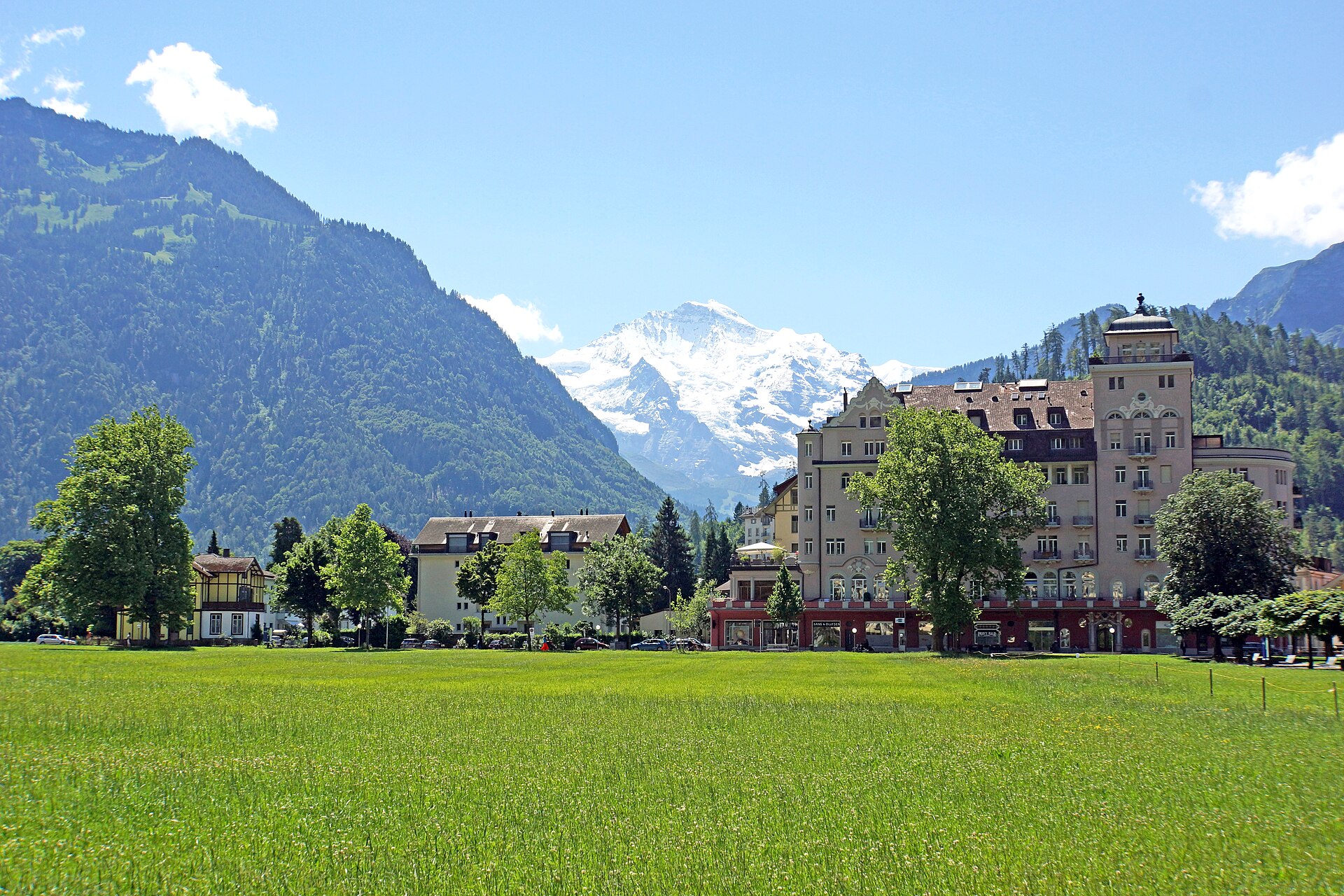
The Swiss Alps in summer are a completely different experience from the ski-season version most people imagine.
Start with this itinerary
Open this route in Honge as your starting point, then shape the days, stays, and pace around how you travel.
Longer daylight hours, wildflower-covered meadows, turquoise lakes, and waterfalls running hard from snowmelt make the Bernese Oberland one of Europe's most beautiful destinations between June and September. And unlike winter, you do not need specialist gear, advance piste bookings, or a rental car to see any of it.
This itinerary focuses on the Jungfrau region — the area around Interlaken, Grindelwald, and Lauterbrunnen that concentrates Switzerland's most iconic alpine scenery into a compact, rail-connected corridor. Four days is enough to experience the best of it without rushing any of it.
4-Day Swiss Alps Summer Route Overview
This route keeps Interlaken as the base for all four nights, which simplifies logistics and avoids packing up every day. Mountain excursions go out and return the same day by train, funicular, and cable car.
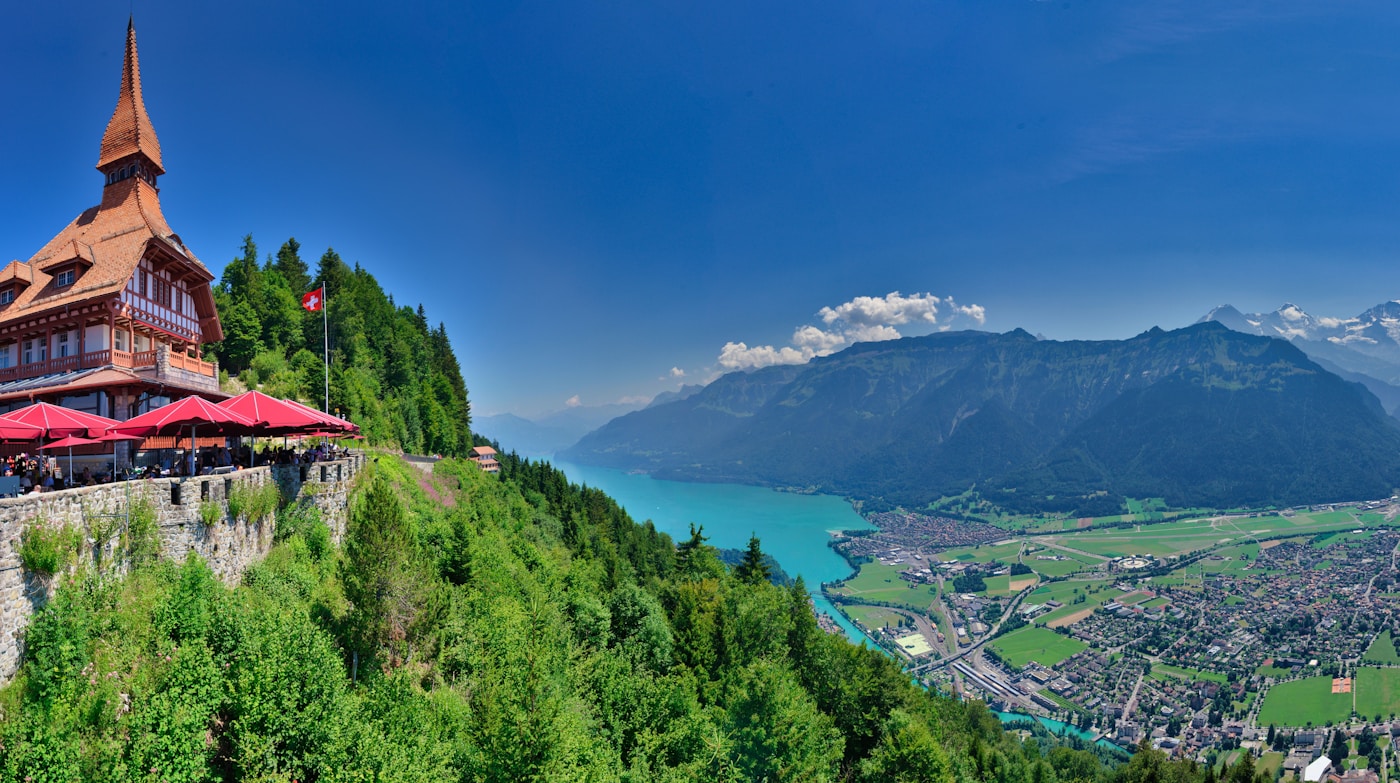
- Day 1 — Interlaken & Harder Kulm: Arrive, settle in, and take the funicular up to Harder Kulm for a panoramic introduction to the Jungfrau region.
- Day 2 — Grindelwald First: Scenic train to Grindelwald, mountain views from First Cliff Walk, and optional tandem paragliding before returning to Interlaken.
- Day 3 — Lauterbrunnen Valley: Waterfalls, valley walks, and optional side trip to Wengen — a slower day built around atmosphere rather than ticking off sights.
- Day 4 — Oeschinensee & departure: Cable car to Oeschinensee from Kandersteg, with time for a lakeshore walk before heading home — optionally stopping at Blausee en route.
Is 4 Days Enough for the Swiss Alps?
Four days is enough to experience the Jungfrau region's best summer highlights — mountain viewpoints, alpine villages, waterfalls, and one of Switzerland's most beautiful lakes — without trying to see everything.
It is not enough for a slow exploration of the entire Bernese Oberland, long multi-day hikes, or side trips to Zermatt, Lucerne, and Geneva in the same visit. If you want that breadth, plan seven to ten days instead.
This itinerary deliberately skips Jungfraujoch in favour of Grindelwald First, which offers equally impressive views with a more relaxed pace and better value for most solo summer travellers.
Can You Explore the Jungfrau Region Without a Car?
Yes — and this itinerary is designed entirely around Switzerland's public transport network. Interlaken connects by rail to Grindelwald, Lauterbrunnen, and Kandersteg. A Swiss Travel Pass or regional pass can reduce costs across multiple mountain journeys — buy it online from swissrailways.com, the official SBB tourist webshop, and you receive an instant PDF e-ticket by email within minutes. Note that the pass is only available to visitors whose permanent residence is outside Switzerland and Liechtenstein. Always check which cable cars and funiculars are included before buying — some Harder Kulm, First, and Oeschinensee trips may require separate discounted tickets even with a pass.
Who This Itinerary Is Best For
- Solo travellers who want scenic rail travel without renting a car
- First-time visitors to the Swiss Alps looking for a manageable summer introduction
- Travellers who enjoy mountain viewpoints, waterfalls, and moderate walking — not extreme hiking
- People willing to spend on cable cars and funiculars for access to alpine scenery
- Anyone interested in optional adventure activities such as paragliding
Day 1 — Arrive in Interlaken & Harder Kulm
Arrive in Interlaken and check in before heading out to explore one of Switzerland's most scenic alpine towns. Interlaken sits between Lake Thun and Lake Brienz, surrounded by mountains, and serves as the ideal base for this itinerary. Hostels here are sociable and well-run; solo travellers find it easy to meet other people without trying.
Spend the afternoon wandering through town, strolling along the Aare River, and taking in the first views of the peaks that will frame the next four days. Later, take the funicular up to Harder Kulm — Interlaken's local mountain. The viewpoint offers panoramic views across both lakes and the Eiger, Mönch, and Jungfrau: one of the best introductions to the Swiss Alps, and a clear sense of the landscape you are about to explore.
Stay a little longer as evening approaches to watch the changing light over the mountains before returning to Interlaken for dinner.
Day 2 — Grindelwald First & Alpine Views
Begin the morning with a train to Grindelwald, one of Switzerland's most picturesque mountain villages, surrounded by towering peaks and traditional wooden houses. The journey from Interlaken takes around 35 minutes and the views from the carriage are part of the experience.
From Grindelwald, continue up to Grindelwald First by gondola cable car. The area is known for its mountain views, alpine trails, and outdoor activities that make it one of the most popular summer destinations in the Jungfrau region.
Walk the First Cliff Walk — a suspension bridge extending out over the mountainside with views of the surrounding landscape that stop most people in their tracks. Even travellers who are not experienced hikers can reach it comfortably and enjoy the scenery from the viewpoints along the way.
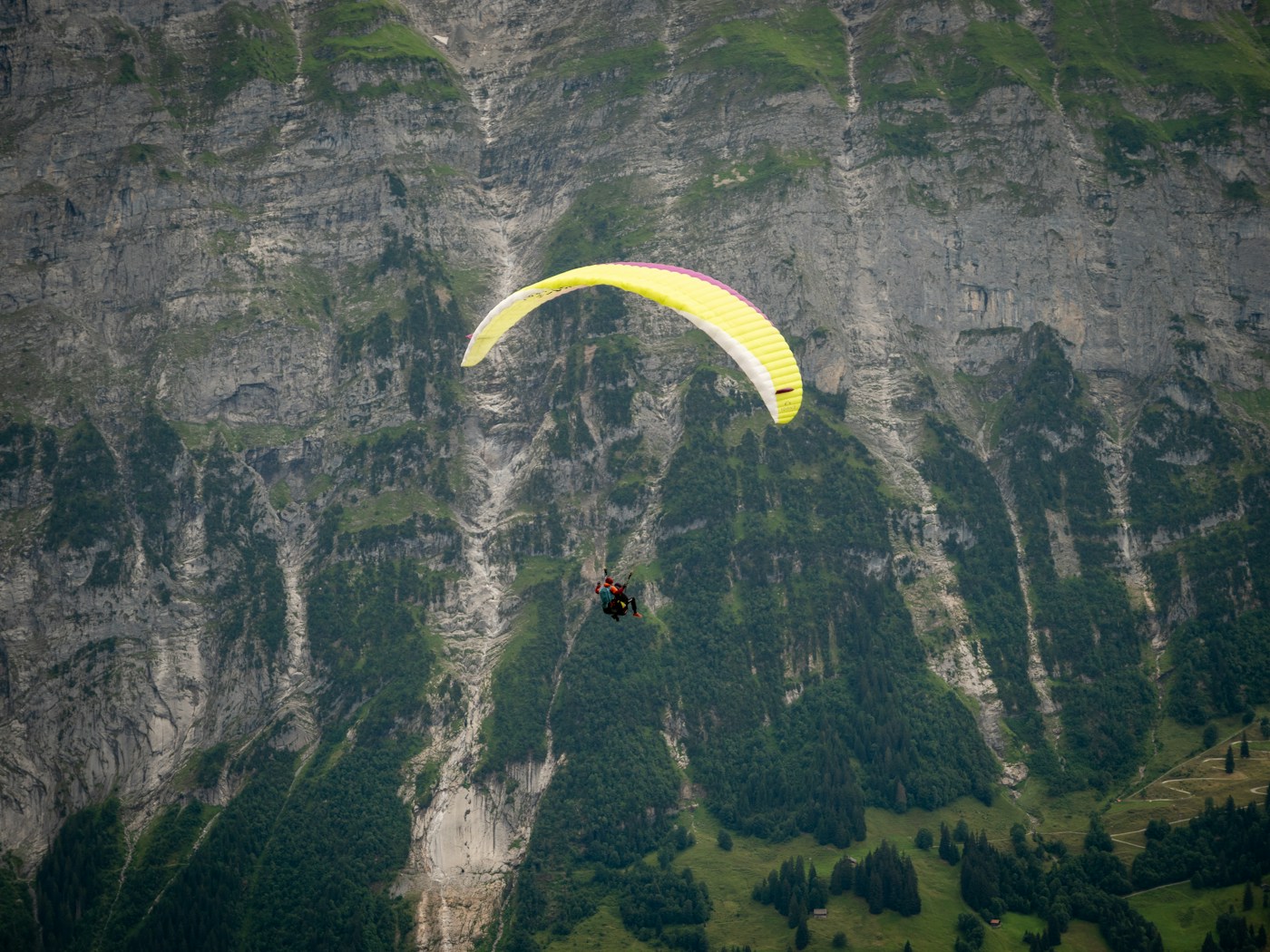
The rest of the day can be spent at your own pace — a scenic hike, lunch with mountain views, or simply appreciating the landscape. For solo travellers who want more adventure, book a tandem paragliding flight with Paragliding Jungfrau GmbH Grindelwald during the afternoon. Flying above the mountains and over alpine meadows, traditional villages, and turquoise lakes is one of the most memorable experiences a Swiss Alps trip offers.
Day 3 — Lauterbrunnen Valley & Switzerland's Most Famous Waterfalls
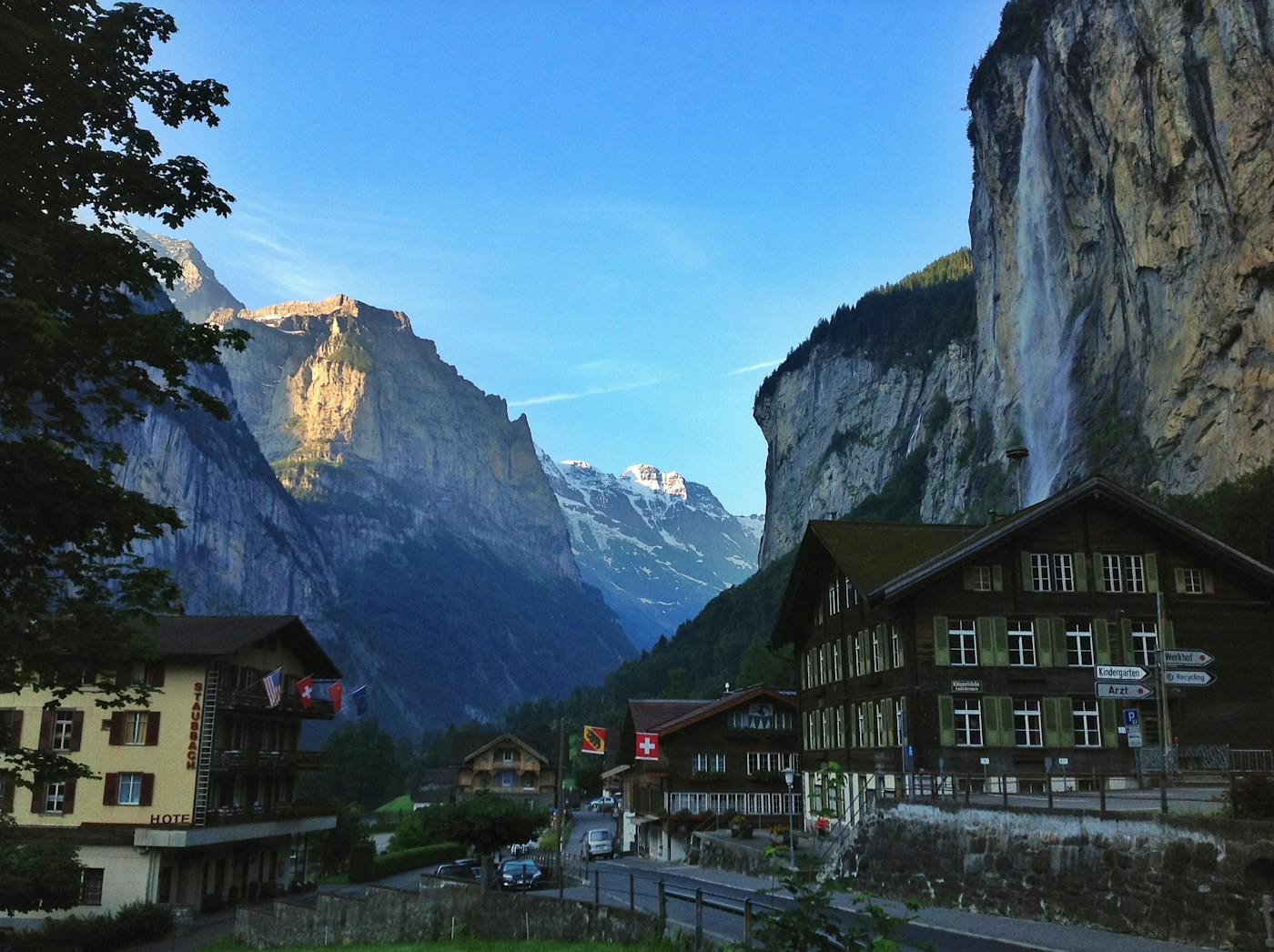
Today, visit Lauterbrunnen — a valley often described as one of the most beautiful places in Switzerland. Steep cliffs, 72 waterfalls, and green meadows stretching to the valley floor create a landscape that feels almost unreal in summer.
Start the morning exploring the village of Lauterbrunnen and visiting Staubbach Falls, one of the highest free-falling waterfalls in Europe at 297 metres. It drops directly from the cliff face above the village and is visible from most of the valley floor.
From there, continue to Trümmelbach Falls. Hidden inside the mountain, these glacial waterfalls carry meltwater from the Eiger, Mönch, and Jungfrau through a series of tunnels and rock formations at up to 20,000 litres per second. The experience is completely different from the open views at Staubbach Falls — loud, physical, and fascinating.
The rest of the day is best spent slowly — walking through the valley, stopping at local cafés, and taking in the views that appear around almost every corner. If time allows, take the train up to Wengen for additional mountain views before returning to Interlaken.
Day 4 — Oeschinensee & Departure
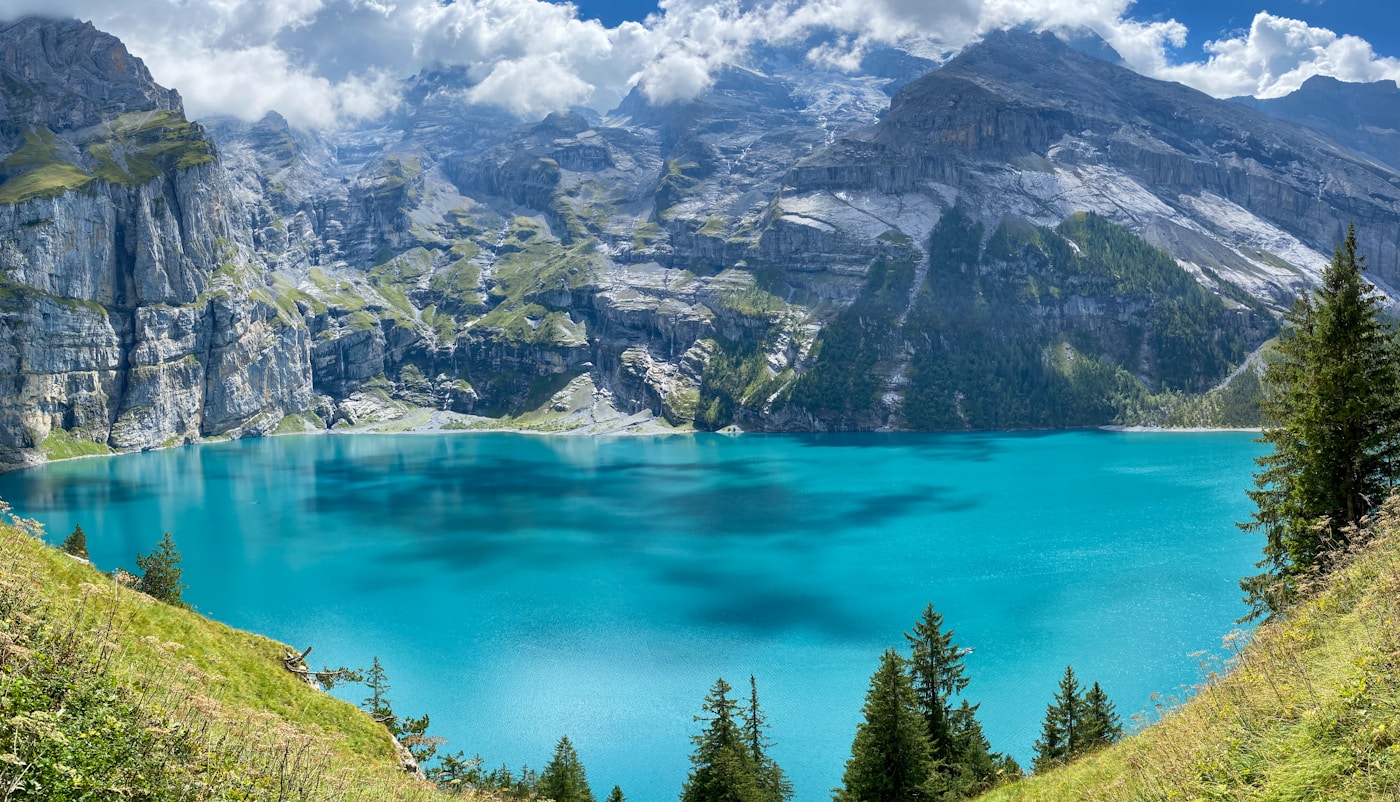
For the final day, travel to Kandersteg and take the cable car up to Oeschinensee — widely considered one of the most beautiful alpine lakes in Switzerland. The lake's striking turquoise color, the surrounding mountain walls, and the glacial clarity of the water make it unlike anywhere else in the Bernese Oberland.
Spend the morning at your own pace. Walk the lakeshore, find a quiet viewpoint, or follow a section of the Panorama Trail for views across the lake and surrounding peaks. The scenery here feels more remote and untouched than many of Switzerland's larger tourist destinations.
One reason Oeschinensee stays with people is its simplicity. There is not much to do beyond the lake and the mountains — and that turns out to be exactly enough.
Depending on departure plans, consider stopping at Blausee on the return journey — a small forest lake known for its remarkably clear turquoise water, and a beautiful final glimpse of Switzerland before heading home.
Budget Notes for a Mid-Budget Solo Trip
How Honge Helps You Plan This Trip
A 4-day Swiss Alps trip that runs on trains, funiculars, and cable cars has more moving parts than it looks. Weather windows, cable car timetables, paragliding booking slots, and the question of whether a Swiss Travel Pass actually saves money on this specific set of journeys all require answers before you arrive.
Honge is where you work through those decisions. Start with the basic shape — "4 days in the Jungfrau region, solo, no car, based in Interlaken" — and build out from there: the right days for each excursion based on forecast windows, accommodation sorted by budget and location, paragliding booked and time-blocked, and the Oeschinensee cable car checked for the return day's schedule.
The mountains are better when the logistics are already sorted.
Swiss Alps Prompts to Try in Honge
FAQ
Is 4 days enough for the Swiss Alps?
Yes. Four days covers the Jungfrau region's best summer highlights — Harder Kulm, Grindelwald First, Lauterbrunnen Valley, and Oeschinensee — without rushing any of them. For a broader exploration of the Bernese Oberland or side trips to Zermatt and Lucerne, plan seven to ten days instead.
Is Interlaken a good base for solo travellers?
Yes — and it is the right base for this itinerary specifically. It sits between Lake Thun and Lake Brienz with rail connections to every destination on this route. Hostels here are social, accommodation is varied, and keeping it as a fixed base means you never pack up between excursion days.
Do you need a car for this itinerary?
No. The entire route runs on Switzerland's public transport network — trains, funiculars, and cable cars. A Swiss Travel Pass or regional pass can help with costs but check which mountain journeys are included before buying, as some require separate tickets.
Should you visit Grindelwald First or Jungfraujoch?
For most solo summer visitors, Grindelwald First offers a better balance of scenery, activity options, and value. Jungfraujoch is iconic but expensive and crowded in summer. Grindelwald First delivers equally impressive mountain views with a more relaxed pace, the First Cliff Walk, and the option to add paragliding.
Is Oeschinensee worth visiting?
Absolutely. It is one of the most beautiful alpine lakes in Switzerland — turquoise, quiet, and surrounded by mountains in a way that feels more remote than the busier Jungfrau attractions. The cable car from Kandersteg takes about ten minutes and the lakeshore walk is easy and spectacular.
What is the daily budget for a solo Swiss Alps trip in summer?
A rough mid-budget estimate is CHF 200–250 per day for accommodation, meals, and local transport. Mountain excursions — cable cars, funiculars, paragliding — are on top of that and add up quickly. Treat CHF 200–250 as a baseline and budget the excursions separately.
Is the Swiss Alps suitable for solo travel?
Yes — it is one of the best solo travel destinations in Europe. The transport network is reliable and easy to navigate independently, trails are well-marked, and Interlaken hostels are social environments where meeting other travellers is easy. The route here is designed specifically for solo visitors but works for couples and small groups too.
Ready to make it yours?
Customize this itinerary with AI
Now that you've seen the full route, use Honge to tailor stays, activities, and day-by-day pacing to your trip.
Related itineraries
Written by
This blog was contributed by Sheba M, a travel enthusiast and writer. Sheba can be reached at shebaranjitha@gmail.com.
About Honge
Honge is an AI travel planning platform focused on practical, experience-led itineraries with realistic pacing and logistics. All blog content is edited and published by Honge. Our Switzerland research draws on firsthand destination testing, updated practical logistics as of June 2026, and activity recommendations reviewed against current visitor experience. © Honge. All rights reserved.
Image credits: Photos are sourced from Wikimedia Commons and Unsplash. Copyright remains with the respective photographers and rights holders. Images from Wikimedia Commons are used in accordance with their applicable licensing terms, including the Creative Commons Attribution-Share Alike 4.0 International license where noted. Unsplash images are used in accordance with the Unsplash License.
Travel disclaimer
This itinerary is intended as general travel inspiration and planning guidance only — not as personalised travel advice. Conditions change. Before you travel, check the current entry requirements, visa rules, and any travel advisories issued by your government for your destination. Review weather forecasts for your specific travel dates, confirm opening hours and ticket availability for attractions directly, and take out comprehensive travel insurance that covers medical, cancellation, and disruption. Honge is not responsible for any changes to conditions, services, or experiences described in this article after the date of publication.