

Rio de Janeiro is one of those cities that arrives with a reputation and then exceeds it.
Start with this itinerary
Open this route in Honge as your starting point, then shape the days, stays, and pace around how you travel.
It sits on Brazil's southeastern coast, hemmed in by mountains, tropical forest, and the Atlantic Ocean — a geography so dramatic it shapes everything about the city, from where people live to how they spend a Saturday afternoon. For a friends' trip, Rio offers a rare combination: iconic sights that actually deliver, beaches that reward slow mornings, a nightlife district with real energy, and an urban rainforest that feels like a different country twenty minutes from the hotel.
This itinerary balances the iconic with the local — covering Christ the Redeemer, Sugarloaf Mountain, Ipanema, and Copacabana while making room for Santa Teresa's hillside streets, a Sunday market with live samba, and a day in one of the world's largest urban forests.
5-Day Rio de Janeiro Route Overview
- Day 1 — Ipanema, Leblon & Arpoador: Beach morning, neighbourhood wandering, and the legendary sunset at Pedra do Arpoador.
- Day 2 — Christ the Redeemer & Sugarloaf Mountain: Early start for Corcovado, Mirante Dona Marta on the way back, then Sugarloaf for the late afternoon and sunset.
- Day 3 — Santa Teresa & Lapa: Escadaria Selarón, bohemian Santa Teresa, Parque das Ruínas, and Lapa's nightlife district in the evening.
- Day 4 — Tijuca National Park: Atlantic rainforest, Cascatinha Taunay waterfall, and optional full-day hike to Pedra do Telégrafo.
- Day 5 — Museum of Tomorrow, Feira da Glória & Copacabana: Waterfront museum, Sunday market with live samba (if visiting on a Sunday), and a final afternoon on Copacabana before departure.
This route keeps you in the South Zone for most of the trip, with Ipanema or Copacabana as a practical base. Days 1 and 5 are walkable from the beach neighbourhoods; Days 2–4 mix Uber or ride-shares with organised excursions for the mountain and forest sections.
Is 5 Days Enough for Rio de Janeiro?
Yes. Five days covers Rio's major highlights without rushing any of them. It is not enough for a deep exploration of every neighbourhood, extended multi-day hiking in the Tijuca range, or side trips to Ilha Grande or Paraty. If you want that breadth, plan eight to ten days.
For a first friends trip, five days is the sweet spot — enough to feel like you know the city by the time you leave, not so long that you run out of things to do.
Who This Itinerary Is Best For
- Groups of friends looking for a mix of beaches, culture, and nightlife
- First-time visitors who want Rio's iconic viewpoints and neighbourhoods in one trip
- Travellers comfortable with some early starts for the best views and smaller crowds
- Anyone who wants both urban energy and natural landscapes without leaving the city
- Friends who enjoy spontaneous beach afternoons as much as planned sightseeing
Day 1 — Ipanema, Leblon and Sunset at Pedra do Arpoador
Begin in the city's most famous coastal neighbourhoods. Start the morning at Ipanema Beach — one of Brazil's most iconic stretches of sand, known for its lively atmosphere, beach volleyball, and strong sense of neighbourhood identity. Whether you swim, rent a chair, or simply watch the morning unfold, Ipanema is the right introduction to Rio's beach culture.
Walk west to Leblon for lunch. Slightly quieter than Ipanema and slightly more local in feel, Leblon offers good beachfront cafés and the chance to slow down after arriving. Try a traditional açaí bowl from ASA Açaí — fresh, customisable, and one of Rio's most reliable midday stops.
Spend the afternoon exploring the surrounding streets. One of the things that makes this area work as a first day is that there is always something happening without anything being mandatory — a volleyball game, live music, people watching the waves. Leave space for it.
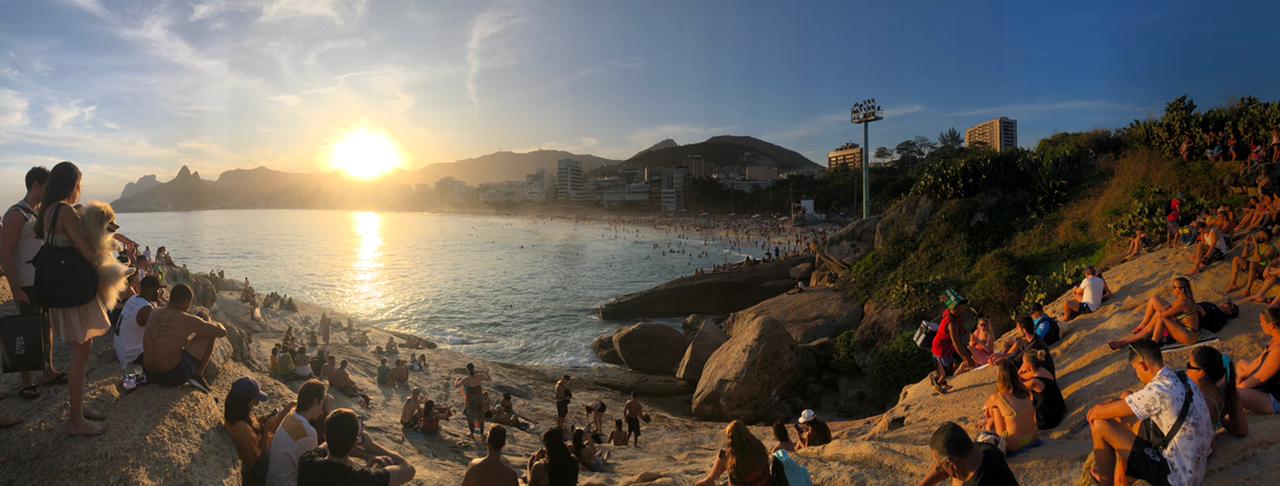
As the day closes, walk to Pedra do Arpoador. This rocky peninsula between Ipanema and Copacabana is one of Rio's most beloved evening rituals — as the sun drops behind the mountains, the crowd on the rocks applauds. It sounds like something invented for tourists and turns out to be completely genuine. Surfers ride the last waves below, the city lights up behind you, and the Atlantic goes orange. It is one of the best first evenings of any Rio trip.
After sunset, dinner in Ipanema. The neighbourhood rewards walking until you find somewhere that looks right.
Pacing note: Ipanema and Leblon connect seamlessly on foot — no transport needed. Keep the first day loose. The jet lag or travel fatigue catches up in the afternoon, and Rio at a slow pace is better than Rio rushed.
Day 2 — Christ the Redeemer, Mirante Dona Marta and Sugarloaf Mountain
The big viewpoint day — and worth an early start. Begin with Christ the Redeemer. The statue atop Corcovado Mountain at 710 metres offers one of the most complete panoramas in the city: Guanabara Bay, Sugarloaf, the beaches stretching south, and the favelas and forest filling in the gaps. Arriving early avoids the largest tour groups and gives the clearest views before any morning cloud builds on the mountain.
On the way back down, stop at Mirante Dona Marta — a viewpoint that most first-time visitors skip and shouldn't. It gives you the Christ statue from below and to the side, the whole city spread out in front, and a perspective you don't get from any of the main lookouts. It takes twenty minutes and changes how you understand the geography.
Lunch back in the South Zone, then head to Sugarloaf Mountain for the late afternoon. Two cable car stages climb the 396-metre granite peak rising from the edge of Guanabara Bay. The views from the top are completely different from Corcovado — coastal, wide, and particularly spectacular as the light changes. Plan to be there for sunset.
Pacing note: Visit Christ the Redeemer as early as possible — 8–9am if the first tram or van allows. Sugarloaf runs until 9pm in summer, giving you flexibility on when to go up. This is a long day; do not try to add other stops.

Day 3 — Santa Teresa, Escadaria Selarón and Lapa
Today is Rio's cultural and artistic side — a day with no beaches and no viewpoints, and one of the most memorable of the trip.
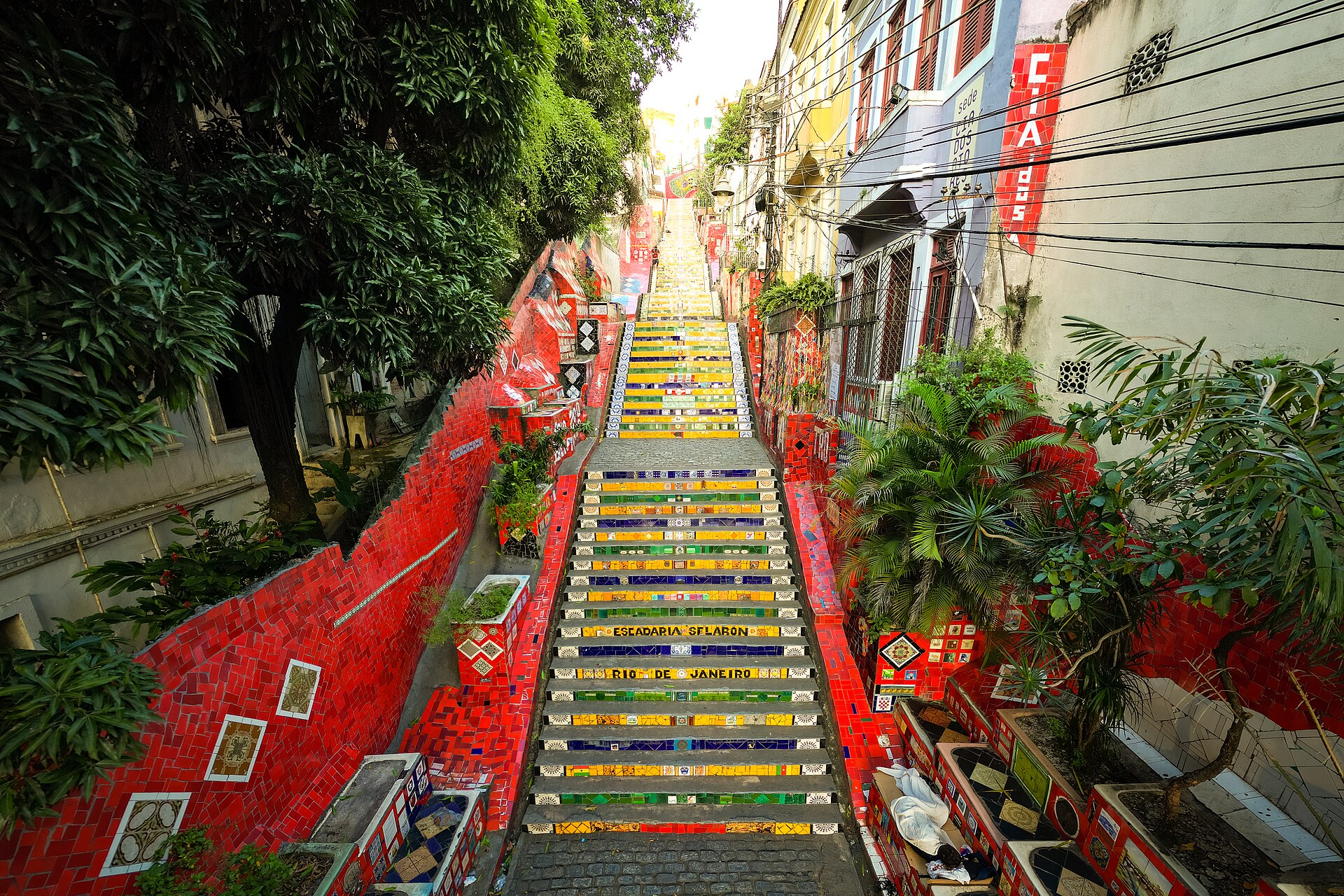
Start at Escadaria Selarón, the famous tiled staircase connecting Lapa and Santa Teresa. Chilean-born artist Jorge Selarón covered the steps with tiles collected from over 60 countries over three decades — the result is one of the most photographed landmarks in Brazil and the right starting point for a day in this part of the city.
From there, continue into Santa Teresa. This hillside neighbourhood has a completely different character from the beach districts — colonial architecture, steep winding streets, street art on almost every wall, independent galleries, and the kind of cafés where you end up staying for another coffee. It is a neighbourhood that rewards wandering with no fixed plan. Give it at least three hours.
Stop at Parque das Ruínas — a cultural centre built around the ruins of a historic mansion, with rotating exhibitions and views across the city from its terrace. It is one of the most pleasant places to pause in Santa Teresa, and the view from the top is genuinely worth the visit.
As evening approaches, head down to Lapa. Rio's most famous nightlife district is built around its historic arches and a grid of music bars and open-air spaces that come alive after dark. Even if the group is not planning a late night, Lapa is worth an evening for its atmosphere, the live music spilling out of every doorway, and the very Rio feeling of a city that takes its nights seriously.
Pacing note: Santa Teresa is best on foot. Wear comfortable shoes and allow the afternoon to drift — the neighbourhood's best moments are unplanned.
Day 4 — Tijuca National Park
Rio is often associated exclusively with its beaches. Day 4 is for the other Rio — the Atlantic rainforest that covers the mountains above the city, one of the largest urban forests in the world.
Tijuca National Park begins twenty minutes from Ipanema and feels like a different country. Dense forest, waterfalls, monkeys, toucans, and trails that climb into the mountains above the city. The contrast with the previous three days is part of what makes it memorable.
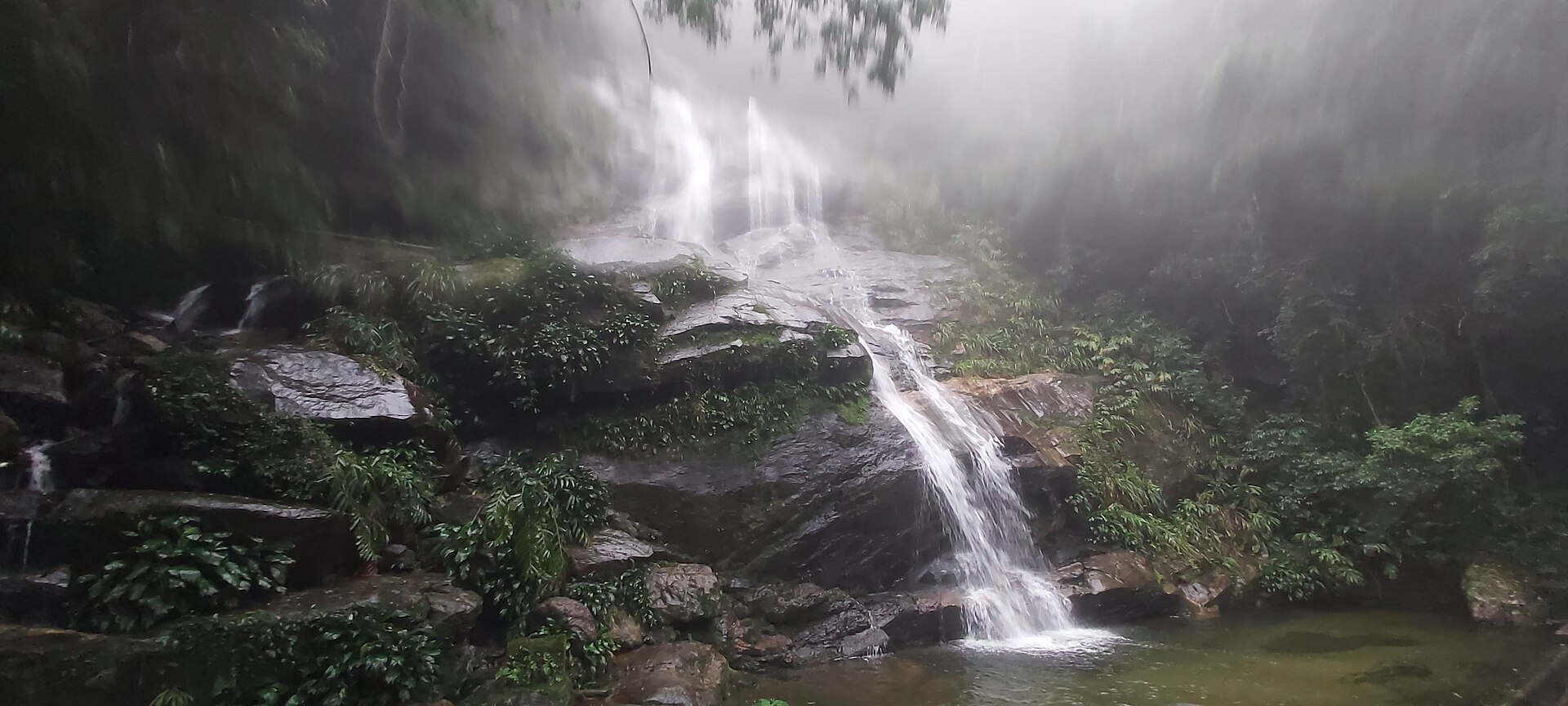
Start at Cascatinha Taunay — the tallest waterfall in the park, surrounded by lush Atlantic rainforest vegetation. It is an easy walk from the main entrance and a peaceful stop that sets the tone for the day.
From there, the day can go in one of two directions depending on the group's energy and how much time you have:
- Option A — Park exploration: Continue through the forest trails, visit the Cascata da Primavera, stop at the Vista Chinesa viewpoint, and return to the city for a relaxed evening. This is the right call for most groups.
- Option B — Pedra do Telégrafo: A 5–7 hour round-trip hike famous for its optical illusion photographs taken at the cliff edge. This should be treated as a full separate day commitment, not an afternoon addition to the park. Start before 8am, bring plenty of water, and plan dinner back in the city. The coastal views at the top are extraordinary, but the hike is a proper undertaking.
Pacing note: Start early — Tijuca is best before midday heat builds. If doing Pedra do Telégrafo, be at the trailhead by 7:30–8am. Most groups find the waterfall-and-forest option gives a fuller, more varied day with less physical cost.
Day 5 — Museum of Tomorrow, Feira da Glória and Copacabana
The final day moves through three different Rio atmospheres before departure.
Begin at the Museum of Tomorrow (Museu do Amanhã) on the Mauá Pier waterfront in the revitalised port area. Designed by Santiago Calatrava, the building is one of the most striking pieces of contemporary architecture in South America — and the interactive exhibits on science, sustainability, and the future hold up well for groups who are not primarily museum visitors. Give it two hours.
If your Day 5 falls on a Sunday, head directly to the Feira da Glória market on Avenida Augusto Severo, right outside Glória metro station (8am–4pm). One of Rio's most authentic and atmospheric open-air markets — fresh produce, street food from across Brazil and the world, artisan crafts, and live samba circles that rotate through the afternoon. Go early to avoid the peak crowds, and carry cash as many vendors do not take cards. If your Day 5 is not a Sunday, the waterfront area around the Museum of Tomorrow and the nearby Praça Mauá has plenty to fill the same time on any day.
In the afternoon, head to Copacabana Beach for one final taste of Rio's coastal life. Walk the iconic black-and-white wave mosaic promenade, find a spot on the sand, and let the last afternoon be unscheduled. After five days of beaches, viewpoints, forest, and culture, Copacabana is the right place to end up — the most famous beach in the world, and Rio at its most classic.
Pacing note: Feira da Glória is Sunday only, 8am–4pm. If your departure is a Sunday, plan around the market first — it pairs perfectly with the Museum of Tomorrow, which is a short Uber or metro ride away.
Budget Notes for a Mid-Budget Friends Trip
Treat BRL 400–600/day as a planning baseline excluding international flights. Nightlife in Lapa, upscale dining in Leblon and Ipanema, or private drivers will push costs higher. The market, beach days, Escadaria Selarón, Parque das Ruínas, Pedra do Arpoador, and Mirante Dona Marta are all free.
Rio de Janeiro Prompts to Try in Honge
FAQ
Is 5 days enough for Rio de Janeiro?
Yes. Five days covers Rio's major highlights — Christ the Redeemer, Sugarloaf Mountain, Ipanema, Copacabana, Santa Teresa, and Tijuca — without rushing any of them. For extended hiking or side trips to Ilha Grande, plan eight to ten days.
Where should first-time visitors stay in Rio de Janeiro?
Ipanema and Copacabana are the best first-trip bases. Both offer beach access, good restaurants, reliable transport, and proximity to most attractions on this itinerary. Ipanema is slightly more walkable and upscale; Copacabana is slightly better value and has the longer beach stretch.
Is Rio de Janeiro good for a friends trip?
Absolutely. Rio has the right mix for group travel — iconic shared experiences (Sugarloaf, Christ the Redeemer), beach days with flexible pace, a genuine nightlife district in Lapa, and enough variety that friends with different travel styles can usually agree on the day.
Is Rio de Janeiro safe for tourists?
Rio's main tourist areas — Ipanema, Copacabana, Leblon, Santa Teresa, and the South Zone — are well-visited by international travellers. Stay aware of your surroundings, don't display expensive gear, and use Uber or trusted taxis at night rather than walking unfamiliar areas after dark. These are normal big-city precautions, not unique to Rio.
Should you visit both Christ the Redeemer and Sugarloaf Mountain?
Yes — and this itinerary fits both into a single day. Christ the Redeemer gives you the full city panorama from 710 metres. Sugarloaf gives you the coastal view from sea level, rising 396 metres from the edge of Guanabara Bay. They are completely different perspectives and both are worth experiencing.
What is the best beach in Rio de Janeiro?
Ipanema is the most iconic and lively — great for groups and people-watching. Leblon is quieter and more local. Copacabana is the most famous in the world, with a longer stretch and a classic Rio promenade. All three are within walking distance of each other in the South Zone.
What is the best time to visit Rio de Janeiro?
The dry season (May–October) offers clearer skies and more comfortable temperatures for sightseeing — the best conditions for Christ the Redeemer and Sugarloaf views. The summer (December–March) brings higher heat, Carnival energy, and livelier beaches. February is Carnival — extraordinary but book accommodation months ahead.
Is Tijuca National Park worth visiting?
Yes. It is one of the world's largest urban forests — a genuine Atlantic rainforest twenty minutes from Ipanema. The contrast with Rio's beaches and city streets is part of what makes it memorable. Start with Cascatinha Taunay and the main forest trails; treat Pedra do Telégrafo as a full separate day if the group wants it.
What is the biggest mistake first-time visitors make in Rio?
Spending all their time at the beaches. Rio's coastline is world-famous, but many of the city's most memorable experiences are in its hillside neighbourhoods, mountain viewpoints, rainforest, and cultural spaces. This itinerary is designed to fix that balance.
When does the Feira da Glória market take place?
The Feira da Glória is a Sunday market, 8am–4pm, at Avenida Augusto Severo in the Glória neighbourhood — directly outside Glória metro station. It features fresh produce, street food, artisan crafts, and live samba. If your Day 5 falls on a Sunday, plan the day around it. If not, the Museum of Tomorrow waterfront area and nearby Praça Mauá fill the same time on any day.
Ready to make it yours?
Customize this itinerary with AI
Now that you've seen the full route, use Honge to tailor stays, activities, and day-by-day pacing to your trip.
Related itineraries
- 7-Day Buenos Aires Couples Itinerary: Tango, Steak & Río de la Plata
- 12-Day Colombia Itinerary: Coffee Region, Medellín & Cartagena
- 10-Day Mexico City Itinerary: World Cup, Food & Culture
- 6-Day Bolivia 4x4 Itinerary: Uyuni Salt Flats & Altiplano
- 5-Day Panama City & San Blas Itinerary: Canal, Casco Viejo & Islands
Written by
This blog was contributed by Sheba M, a travel enthusiast and writer. Sheba can be reached at shebaranjitha@gmail.com.
About Honge
Honge is an AI travel planning platform focused on practical, experience-led itineraries with realistic pacing and logistics. All blog content is edited and published by Honge. Our Rio de Janeiro research draws on firsthand destination testing, updated practical logistics as of June 2026, and attraction recommendations reviewed against current visitor experience. © Honge. All rights reserved.
Image credits: Photos are sourced from Wikimedia Commons and Unsplash. Copyright remains with the respective photographers and rights holders. Images from Wikimedia Commons are used in accordance with their applicable licensing terms, including the Creative Commons Attribution-Share Alike 4.0 International license where noted. Unsplash images are used in accordance with the Unsplash License.
Travel disclaimer
This itinerary is intended as general travel inspiration and planning guidance only — not as personalised travel advice. Conditions change. Before you travel, check the current entry requirements, visa rules, and any travel advisories issued by your government for your destination. Review weather forecasts for your specific travel dates, confirm opening hours and ticket availability for attractions directly, and take out comprehensive travel insurance that covers medical, cancellation, and disruption. Honge is not responsible for any changes to conditions, services, or experiences described in this article after the date of publication.