
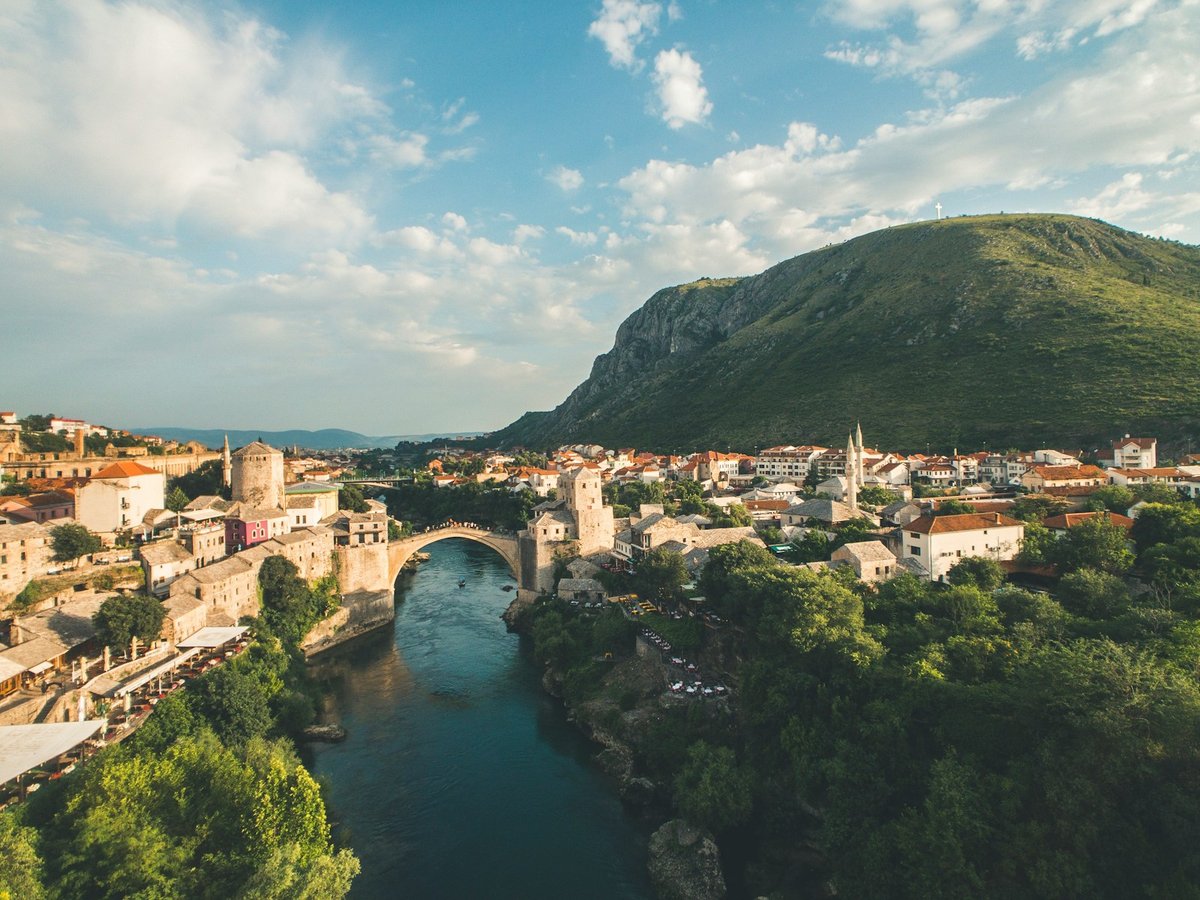
Start with this itinerary
Open this Bosnia and Herzegovina itinerary in Honge as your starting point, then shape the pace around old-town walking, riverside scenery, food and a few countryside stops.
How Many Days in Bosnia Is Enough?
Seven days is enough for a first visit covering Sarajevo's old town and museums, overnight Mostar with Stari Most, then Blagaj, Kravica and Konjic. Skip Jajce, Travnik and a full Sutjeska stay in this window; add them if you have 10 days.
Keep the structure tight: three nights in Sarajevo, two in Mostar for the old town and a countryside day, then Konjic or a buffer night back in Sarajevo. Trying to add Jajce, Travnik and Sutjeska into the same seven days usually turns scenic drives into back-to-back transfer days.
The strongest version is this one: Sarajevo for arrival and museums, Mostar for Stari Most and Blagaj–Kravica, then the Neretva valley around Konjic before departure. Use the extension ideas below if you can stay longer.
Introduction
There are places that impress you with their beauty, and then there are places that stay with you because of how they make you feel. Bosnia and Herzegovina belongs to the second kind. Here, the sound of church bells mingles with the call to prayer, Ottoman-era streets open into elegant Austro-Hungarian avenues, and rivers wind through valleys framed by mountains. It is a country where history is never far away, yet everyday life carries a warmth and rhythm that invite you to slow down.
A week offers a useful introduction to those layers. Begin in Sarajevo, a capital shaped by centuries of cultural exchange, where cobbled lanes, traditional coffee houses, lively markets and poignant museums tell stories of both beauty and resilience. Continue to Mostar, where Stari Most arches over the emerald Neretva, surrounded by stone streets and riverside cafés. Along the way, the spring at Blagaj, the waterfalls near Kravica and the landscapes around Konjic add quieter countryside days.
What makes the journey rewarding is how much variety fits into a relatively compact route. Within seven days you can experience historic cities, traditional Bosnian food, riverside scenery, mountain viewpoints and small towns that feel removed from the rush of modern travel. This itinerary is designed for a first visit, balancing sightseeing with enough breathing room to enjoy the atmosphere rather than simply moving from one attraction to the next.
Sarajevo’s layered streets → Mostar’s stone bridge → Blagaj, Kravica and the mountains around Konjic.
Why This Trip Works
- A balanced first visit: three nights in Sarajevo give the capital time to settle, two nights in Mostar cover the old town and a countryside day, and the final night stays flexible between Konjic and Sarajevo.
- Cities and landscape in one loop: Ottoman bazaars, Austro-Hungarian façades, a riverside tekke, waterfalls and mountain roads sit on a compact southbound route rather than a country-wide dash.
- Transport you can mix: the Sarajevo–Mostar train or bus covers the main transfer; a rental car or organised day tour only becomes useful for Blagaj, Kravica and Počitelj.
- Room to slow down: café culture, Bosnian coffee and evening walks are part of the plan, not leftover hours after a packed checklist.
Who Is This Trip For?
This journey suits travellers who enjoy discovering destinations through their streets, food, architecture and local stories. It is particularly appealing to first-time visitors who want a balanced introduction without attempting to cover the entire country in one week.
Couples, solo travellers, friends and culture-focused travellers can all use this route. It also works for those who appreciate scenic journeys, although some days involve winding roads and mountainous terrain.
Good to Know
- Currency: Bosnian convertible mark (BAM). Cash remains useful for smaller cafés, markets and local services.
- Language: Bosnian, Croatian and Serbian. English is commonly understood in tourist-facing businesses in Sarajevo and Mostar.
- Time zone: Central European Time / Central European Summer Time.
- Driving: cars drive on the right-hand side.
- History: museums and memorial sites connected to the 1990s war are places of living memory. Visit with curiosity and respect.
- Tipping: a small tip for good restaurant or café service is customary.
- Cash: card acceptance varies outside major tourist areas, so carry some local currency.
Before You Go
- Check current Sarajevo–Mostar train and bus timetables before locking Day 4.
- If you want Blagaj, Kravica and Počitelj in one day, decide early whether you will hire a car or join an organised excursion.
- Confirm Trebević cable-car operations and weather before Day 3.
- If your international flight leaves early, book Night 6 in Sarajevo rather than staying in Konjic.
- Review current entry requirements and travel advice for your nationality.
Journey Overview
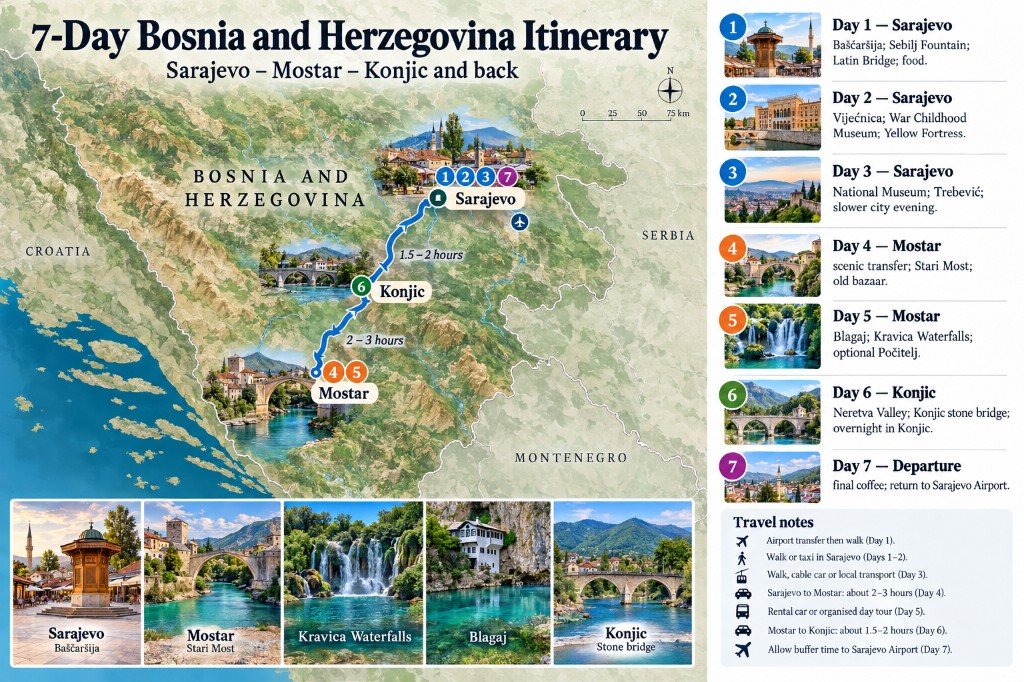
The route begins in Sarajevo, travels south into Herzegovina for Mostar and nearby countryside stops, then turns back along the Neretva Valley through Konjic before departure from Sarajevo.
| Day | Base | Focus | Travel / getting around |
|---|---|---|---|
| Day 1 | Sarajevo | Baščaršija, Sebilj Fountain, Latin Bridge and food | Airport transfer, then walk |
| Day 2 | Sarajevo | Vijećnica, War Childhood Museum, Yellow Fortress | Walk / taxi to viewpoints |
| Day 3 | Sarajevo | National Museum, Trebević and a slower city evening | Walk / cable car or local transport |
| Day 4 | Mostar | Scenic transfer, Stari Most and the old bazaar | Sarajevo → Mostar: ~2–3 hrs |
| Day 5 | Mostar | Blagaj, Kravica Waterfalls and optional Počitelj | Rental car or organised day tour |
| Day 6 | Konjic or Sarajevo | Neretva Valley and Konjic’s stone bridge | Mostar → Konjic: ~1.5–2 hrs |
| Day 7 | — | Final coffee and departure | Buffer to Sarajevo Airport |
Route Map
Day 1 — Arrival in Sarajevo and the Charm of Baščaršija
Sarajevo is a city best approached slowly. Rather than filling the first day with museums and monuments, begin by settling into the rhythm of the old town. After checking into your accommodation, make your way towards Baščaršija, the historic bazaar district where narrow cobbled streets, copper workshops, traditional bakeries and small cafés create an atmosphere that feels distinctly different from much of Europe.
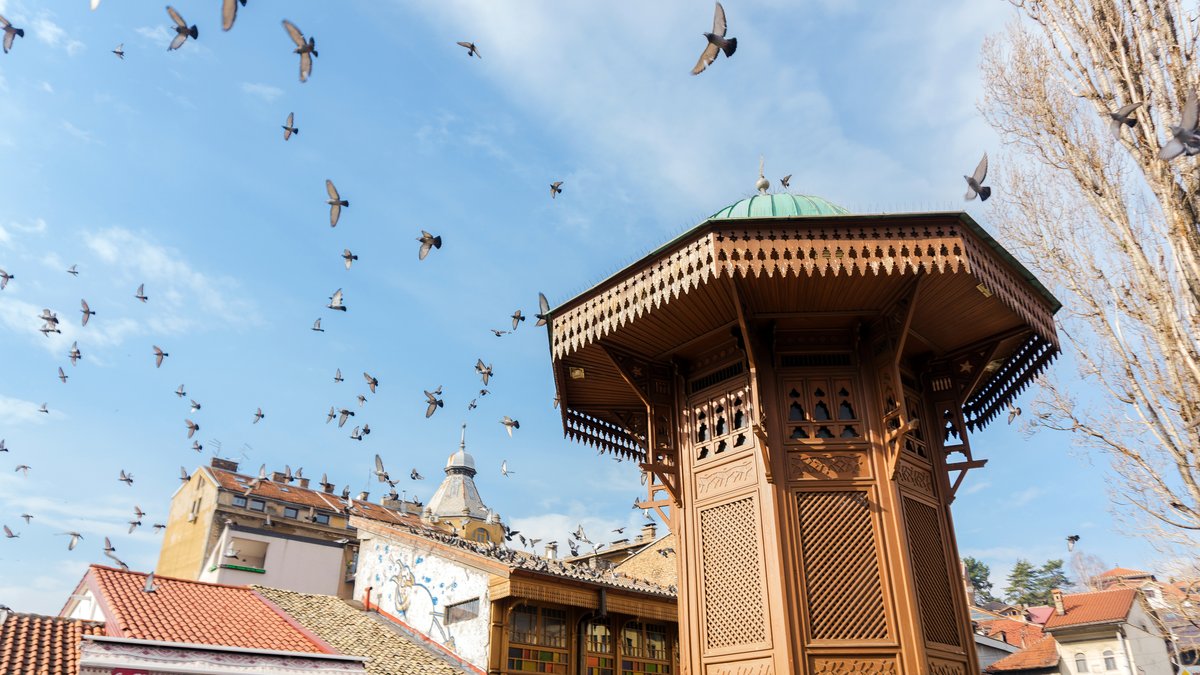
At the heart of the district stands Sebilj Fountain, one of Sarajevo’s most recognisable landmarks. From here, wander the surrounding lanes, where artisans still work with copper and shopfronts display traditional crafts. The streets are especially enjoyable without a fixed route, allowing you to pause for coffee, browse local stores or simply watch daily life unfold.
Continue towards the Latin Bridge, a historic crossing over the Miljacka associated with the assassination of Archduke Franz Ferdinand in 1914, an event that helped trigger the First World War. The surrounding streets provide an introduction to Sarajevo’s layered past, where Ottoman, Austro-Hungarian and modern influences meet within a relatively small area.
As evening approaches, return to the old town for a traditional Bosnian dinner. Try ćevapi, small grilled minced-meat sausages commonly served with somun bread and chopped onions. Finish with Bosnian coffee, traditionally prepared and served in a small metal pot with a ritual of its own. Begin with ćevapi, burek or another bakery favourite, then leave room for a sweet treat such as baklava.
- Do not miss: Baščaršija, Sebilj Fountain, the copper-craft streets and the Latin Bridge.
- Logistics: Sarajevo International Airport is a short drive from the central city, though transfer times vary with traffic. Staying in or near the old town keeps the first day walkable.
Day 2 — Sarajevo’s History, Architecture and Viewpoints
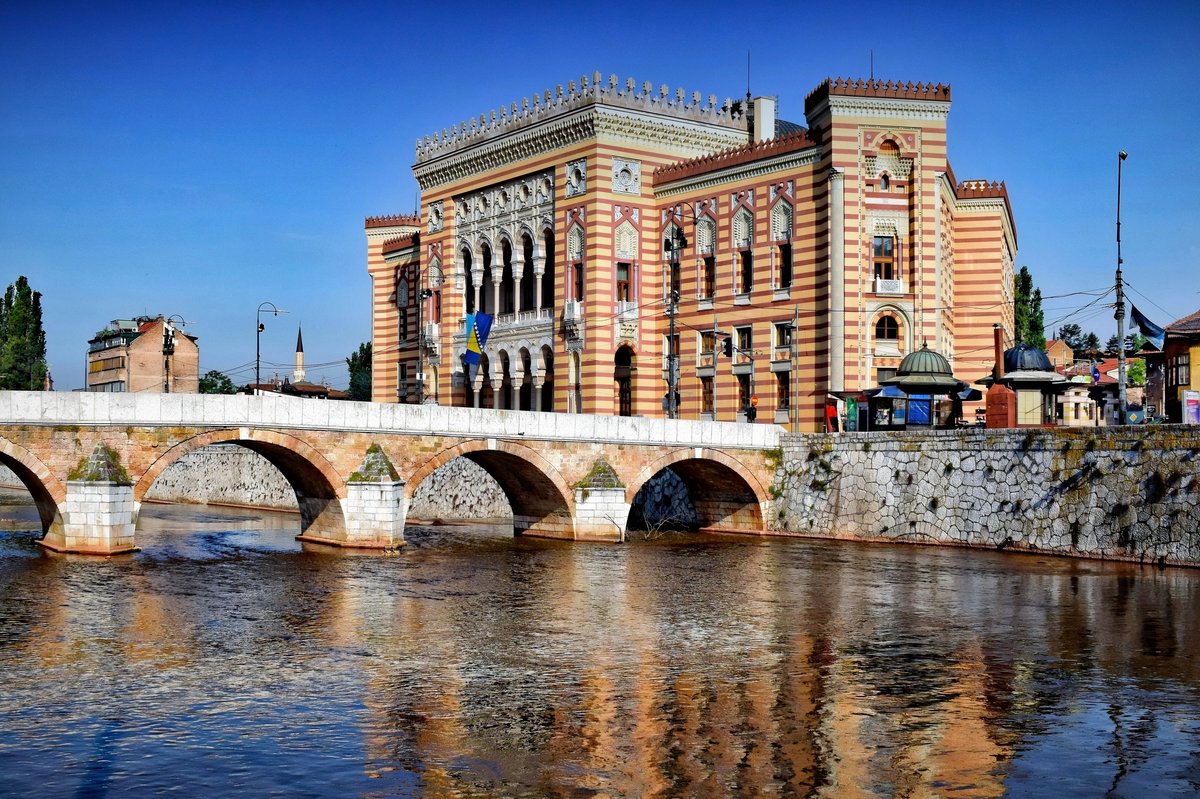
Begin the morning at Vijećnica, Sarajevo’s City Hall, known for its richly decorated façade and distinctive architectural style. The building reflects the Austro-Hungarian period and offers a striking contrast to the Ottoman character of Baščaršija. Its history also connects to the destruction and restoration of cultural heritage during the Bosnian War.
From here, explore the city’s museums. The War Childhood Museum offers personal accounts and objects connected to childhood during wartime, presenting history through individual experiences rather than only dates and political events. It is a deeply moving visit and deserves time and attention.
After lunch, take a slower walk along the Miljacka River, passing bridges and neighbourhood streets that reveal Sarajevo’s everyday character. If you prefer a broader view of the city, make your way towards the Yellow Fortress in the late afternoon. The viewpoint offers sweeping perspectives over rooftops and surrounding hills, particularly as the light begins to soften.
Spend the evening enjoying the city’s café culture. Sarajevo has a relaxed social rhythm, and lingering over coffee is as much a part of the experience as visiting its major landmarks. Look for sogan-dolma, stuffed onions, or traditional Bosnian stews if available, and leave room for a local dessert.
- Do not miss: Vijećnica, the War Childhood Museum, the Miljacka River and the Yellow Fortress viewpoint.
- Logistics: central attractions are accessible on foot, but elevated viewpoints can involve steep streets. A taxi is useful if you prefer to save energy for exploring.
Day 3 — A Slower Sarajevo Day and Trebević
Use the third day to experience Sarajevo beyond its main historic streets. Start with a leisurely breakfast, then visit the National Museum of Bosnia and Herzegovina if its exhibitions and opening arrangements suit your plans. Its collections offer a broader understanding of the country’s cultural and natural heritage.
Later, consider heading towards Trebević Mountain, which rises above the city and provides a striking change of scenery. Depending on current transport arrangements and weather, you can enjoy viewpoints, forest paths and fresh mountain air before returning to the city.
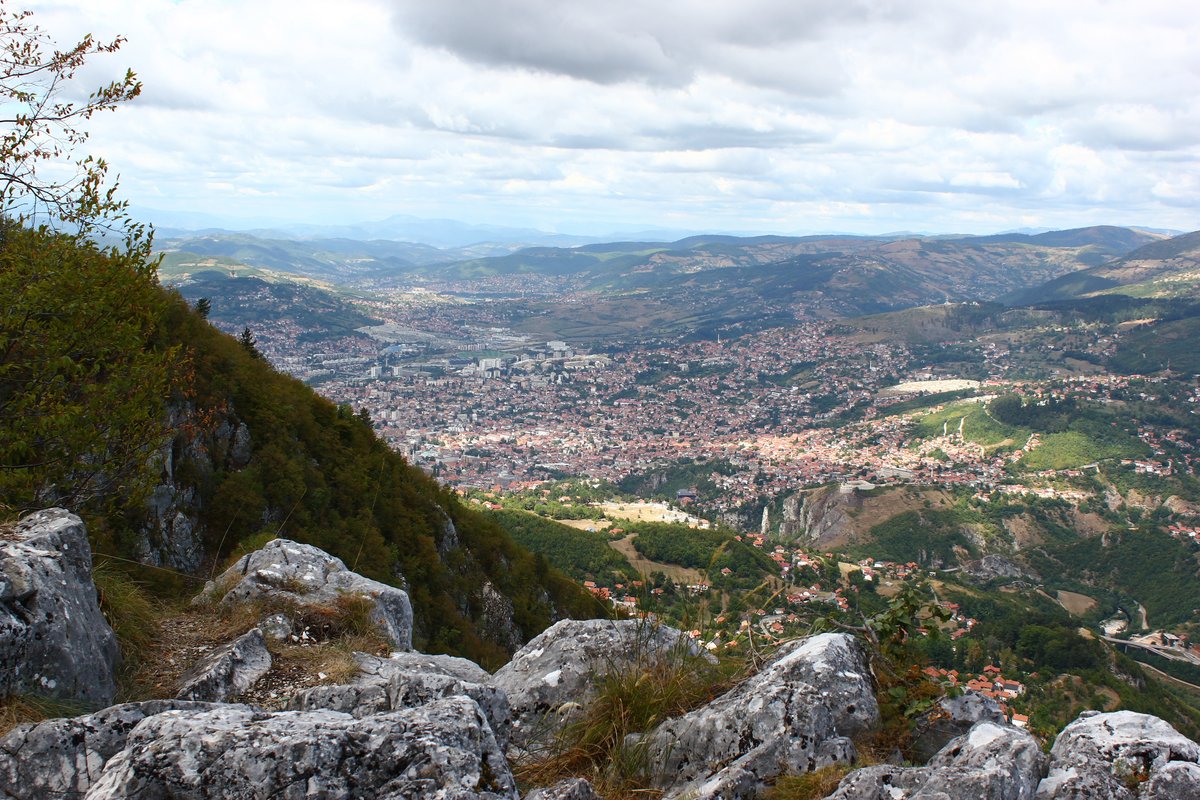
Trebević is also a reminder of how closely Sarajevo’s urban life is connected to its surrounding landscape. Within a relatively short journey, the busy streets give way to wooded slopes and panoramic views.
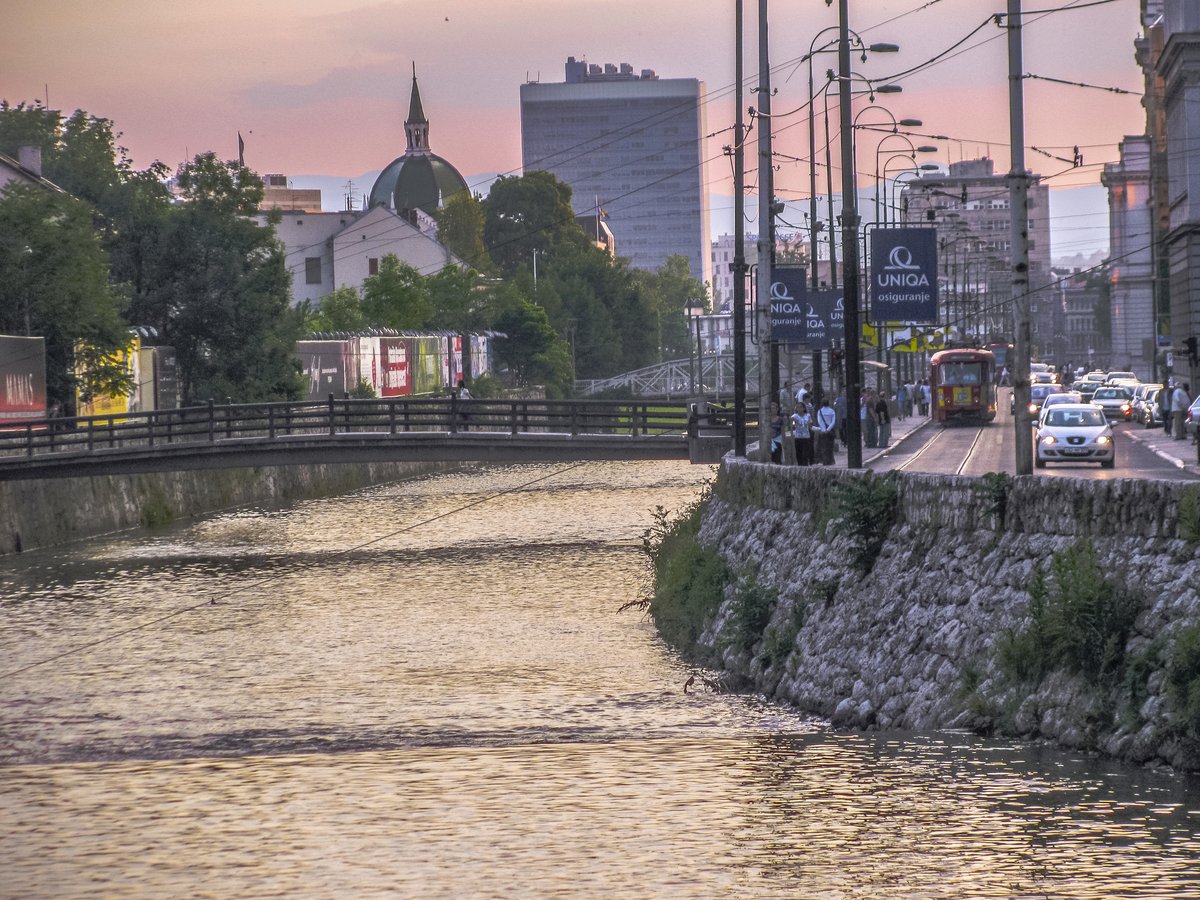
Return to the centre for a relaxed evening. This is a good opportunity to revisit a favourite café, browse the bazaar for souvenirs or enjoy a longer dinner before travelling onward the next day. Try a traditional Bosnian lunch and make time for another coffee stop; Sarajevo’s café culture is worth enjoying without rushing.
- Do not miss: Trebević’s scenery, a relaxed walk through the city and a final evening in Baščaršija.
- Logistics: check current cable-car or local-transport arrangements before visiting Trebević. If conditions are unsuitable, keep the day flexible and explore museums and neighbourhoods instead.
Day 4 — From Sarajevo to Mostar
Leave Sarajevo in the morning and travel towards Mostar, one of the country’s most memorable destinations. The journey itself is part of the experience, with mountain scenery, river valleys and changing landscapes gradually introducing the warmer character of Herzegovina.
Depending on your transport choice, the journey generally takes around two to three hours, though schedules, road conditions and stops can affect the total time. The train route is particularly appealing for travellers who enjoy looking out at the scenery, while a car offers flexibility for photo stops and detours. Bus services are another practical option.
After arriving and checking in, head towards the old town. Mostar’s historic centre is built around stone lanes, traditional shops and Stari Most, the Old Bridge. The graceful arch over the Neretva is one of the defining sights of Bosnia and Herzegovina.
Spend the afternoon exploring the old bazaar, crossing the bridge and finding a riverside viewpoint. The surrounding architecture reflects Ottoman influence, while the river adds a vivid contrast of turquoise and green beneath the pale stone buildings. As evening approaches, the atmosphere becomes especially inviting. Settle into a terrace restaurant or café overlooking the river and enjoy the changing light on the bridge. Try Herzegovinian dishes and local grilled specialities; a riverside meal is a lovely way to end the day.
- Do not miss: Stari Most, the old bazaar, the Neretva viewpoints and the evening atmosphere around the bridge.
- Logistics: staying in or close to Mostar’s old town makes it easy to explore on foot. The historic streets can be uneven and slippery, so comfortable walking shoes are useful.
Day 5 — Blagaj, Kravica Waterfalls and Historic Villages
Today is dedicated to the landscapes and small historic places surrounding Mostar. Begin with Blagaj, a peaceful settlement known for the Buna River spring and the historic Blagaj Tekke, a religious complex set dramatically beside the water and beneath a rocky cliff.
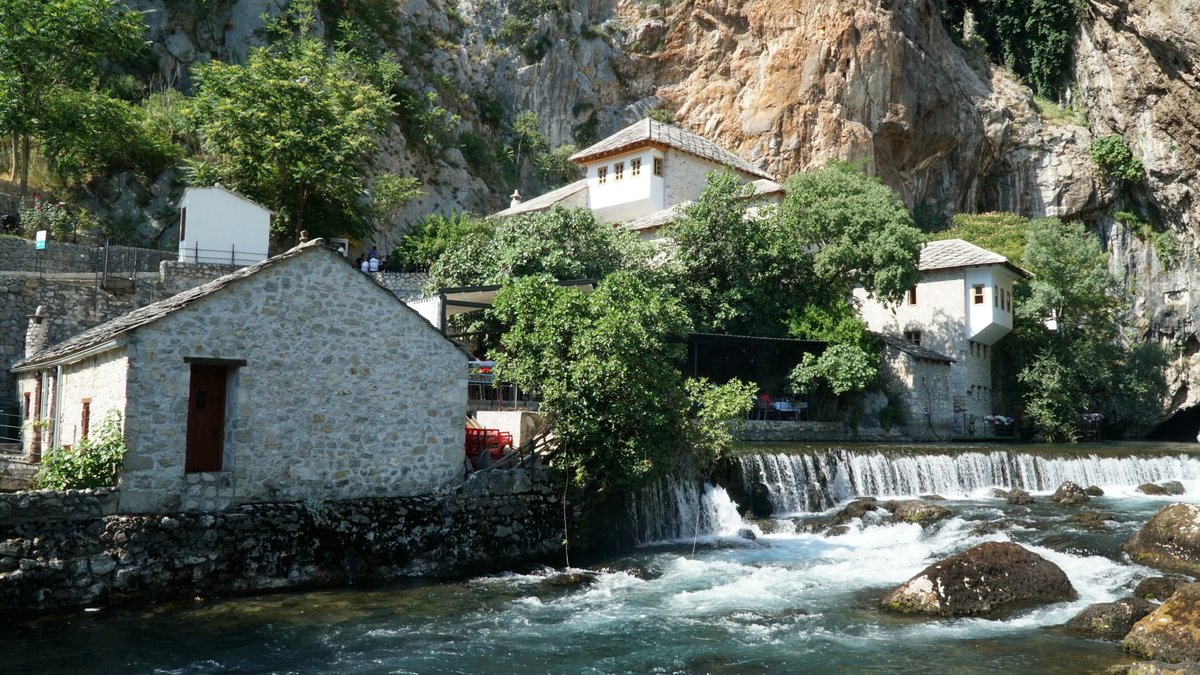
The setting feels almost cinematic. The spring emerges from the rock, creating clear water that flows past cafés and traditional buildings. Take time to enjoy the surroundings rather than treating Blagaj as a quick photo stop. A quiet drink beside the river can become one of the most memorable moments of the trip. Many travellers enjoy a meal near the Buna during the visit; look for local trout, grilled dishes and regional specialities.
Continue towards Kravica Waterfalls, where water cascades over a broad natural ledge into a pool surrounded by greenery. The area is particularly appealing in warmer months, although water levels and access conditions vary by season. Allow time to walk around the viewing areas and enjoy the landscape.
If time and transport allow, add Počitelj, a historic stone village with Ottoman-era architecture, narrow stairways and views over the Neretva valley. Its hillside setting makes it a rewarding stop, though the climb can be steep in places. Return to Mostar in the late afternoon or evening for a relaxed dinner and one final walk through the old town.
- Do not miss: Blagaj Tekke, the Buna spring, Kravica Waterfalls and Počitelj if time permits.
- Logistics: a rental car or organised day tour makes these stops easier to combine. Public transport may require separate connections and more time, so check routes before committing to the full day.
Day 6 — Konjic and the Neretva Valley
Leave Mostar and travel north towards Konjic, a town set beside the Neretva and surrounded by dramatic mountain scenery. The journey takes approximately one and a half to two hours by road, depending on conditions and stops.
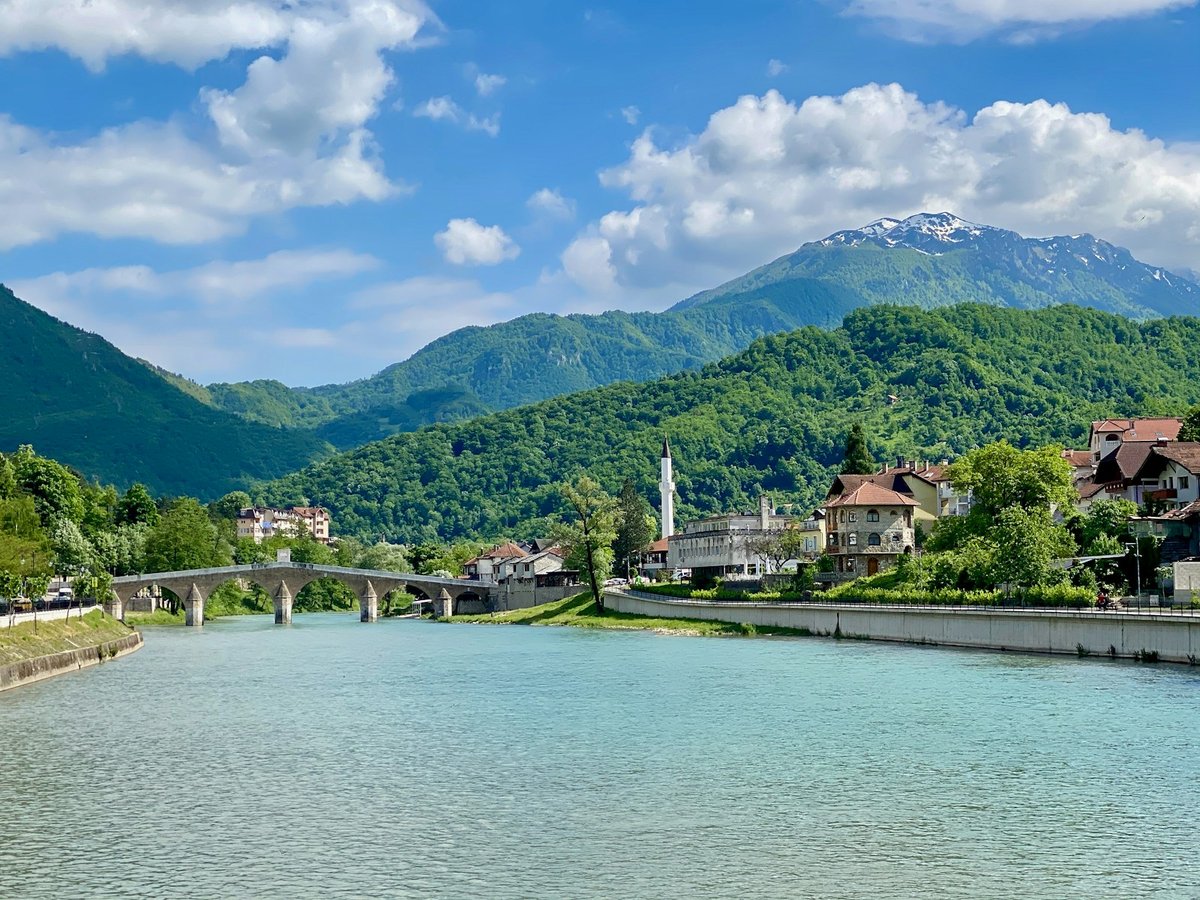
Konjic offers a quieter atmosphere than Sarajevo or Mostar. Its historic stone bridge, riverside setting and mountain backdrop make it an appealing place to pause and experience a different side of the country. Spend time walking near the river and exploring the central streets. If you enjoy outdoor activities, the surrounding region is associated with rafting and other nature-based experiences, although these should be arranged in advance and depend on season and conditions.
For the night, you can either stay in Konjic or continue towards Sarajevo, depending on your departure plans. Staying locally creates a slower final evening, while returning to Sarajevo may be more convenient if you have an early flight. Enjoy a relaxed lunch or dinner in town, ideally with a view of the river or surrounding landscape.
- Do not miss: Konjic’s historic bridge, the Neretva and the mountain scenery along the journey.
- Logistics: allow extra time for mountain roads and any planned activities. If rafting or a guided excursion is part of your plans, confirm seasonal availability and booking requirements beforehand.
Day 7 — A Final Mountain View and Departure
Keep the final day flexible. If you stayed in Konjic, enjoy a quiet breakfast before travelling towards Sarajevo or your departure airport. If you returned to Sarajevo the previous evening, use the morning for a final coffee, a short walk or a last visit to a favourite part of the old town.
Travellers with additional time can consider another viewpoint around Sarajevo or a gentle visit to Trebević, provided it fits comfortably with airport-transfer arrangements. Avoid scheduling a long excursion close to your flight, particularly when road conditions or traffic may affect journey times.
As the trip comes to an end, Bosnia and Herzegovina leaves you with a collection of contrasts: the layered streets of Sarajevo, the stone bridge of Mostar, the clear waters of Blagaj and the mountains that seem to accompany every journey. Make time for one final Bosnian coffee or a bakery breakfast before departure.
- Do not miss: a relaxed final moment in Sarajevo or Konjic, without rushing the journey to the airport.
- Logistics: confirm your departure airport, transfer time and transport arrangements the evening before. If flying from Sarajevo, allow a comfortable buffer from your accommodation.
Where to Stay
This route is planned around neighbourhoods rather than named hotels. Book Sarajevo and Mostar early in July and August, when old-town rooms fill quickly.
Sarajevo
- Stay around Baščaršija, the historic centre or the central pedestrian area for easy access to restaurants, cafés, museums and major sights. These neighbourhoods are convenient for a first visit and reduce the need for local transport.
Mostar
- Staying near the old town lets you enjoy the bridge and riverside atmosphere early in the morning and after sunset, when day visitors have begun to leave. If you prefer a quieter setting, look slightly beyond the busiest lanes while remaining within walking distance.
Final night
- Konjic suits travellers seeking a slower countryside atmosphere. Sarajevo is more practical for many departure schedules. Choose based on your flight time rather than trying to squeeze in one more destination.
Getting Around Bosnia & Herzegovina
Bosnia and Herzegovina can be explored using a combination of public transport and local excursions. For a first visit focused on Sarajevo and Mostar, a car is not essential. Travellers can use trains or buses between the main cities and arrange local day trips.
By train
The Sarajevo–Mostar train is a scenic option, particularly for travellers who prefer not to drive. Check the current timetable and operating days before booking.
By bus
Buses connect major towns and are useful for Sarajevo, Mostar and other established routes. For excursions to Blagaj, Kravica and Počitelj, local transport or organised tours may be more convenient.
By rental car
A rental car offers flexibility for countryside stops, viewpoints and smaller villages. It is particularly useful for combining Mostar with Blagaj, Počitelj and Kravica. Confirm licence, insurance, mileage and one-way return fees before collecting a car.
Best Time to Visit
- May–June: pleasant temperatures, greener landscapes and comfortable conditions for walking and sightseeing.
- July–August: long days and lively historic centres, but Mostar can become very hot and popular sights can be crowded. Start sightseeing early.
- September–October: a comfortable period for city exploration, scenic drives and countryside visits, with autumn colours becoming more noticeable later in the season.
- Winter: Sarajevo can be cold and snowy, and mountain areas offer winter activities. Some countryside excursions may be less convenient.
For a first seven-day visit combining cities, rivers and mountain scenery, late spring and early autumn are particularly practical choices.
What to Eat in Bosnia & Herzegovina
Food is an important part of the experience, and Bosnia’s culinary traditions reflect centuries of cultural exchange.
| Food | What to expect |
|---|---|
| Ćevapi | Grilled minced meat served in soft flatbread, often with onions and kajmak |
| Burek | A savoury pastry, traditionally filled with meat; other varieties include cheese, potato or spinach |
| Bosnian coffee | Strong coffee prepared and served in a traditional copper pot |
| Begova čorba | A rich traditional soup often made with chicken and vegetables |
| Dolma / sogan-dolma | Vegetables or leaves filled with seasoned rice or meat; sogan-dolma uses stuffed onions |
| Tufahija | A traditional dessert made with poached apple and a walnut filling |
| Baklava | A sweet layered pastry with nuts and syrup |
Practical Tips
- Carry some convertible marks (BAM), particularly for smaller businesses and rural stops.
- Keep a bank card and a little cash available.
- Wear comfortable shoes for cobbled streets and uneven stone paths.
- Start early in Mostar during summer to avoid the hottest part of the day.
- Check train and bus timetables before planning connections.
- Keep some flexibility for mountain weather and countryside excursions.
- Be respectful at memorials and sites connected to the country’s recent history.
- Check current entry requirements and travel advisories before departure.
What to Pack
- Comfortable walking shoes.
- Lightweight clothing for summer.
- A light jacket or warmer layer for evenings and mountains.
- Waterproof outerwear in spring and autumn.
- Sunglasses and sunscreen.
- A small daypack and reusable water bottle.
- Travel adapter and power bank.
- Passport, travel documents and any required insurance information.
Itemised Budget for 7 Days (Per Person, Excluding International Flights)
These are approximate planning ranges in euros for one person, covering 6 nights (3 in Sarajevo, 2 in Mostar, and 1 in Konjic or back in Sarajevo). Peak summer weekends, private transfers and organised countryside tours sit at the high end. A comfortable mid-range daily allowance is around €60–110, or closer to €70–130 if you add a rental car and paid excursions.
| Item | Budget | Mid-range |
|---|---|---|
| Accommodation, 6 nights | €150–300 | €270–540 |
| Food | €80–140 | €140–220 |
| Transport / car or tours | €40–90 | €90–180 |
| Activities and entrance fees | €20–50 | €50–100 |
| Miscellaneous | €25–50 | €50–80 |
| Estimated total | €315–630 | €600–1,120 |
International flights are not included. Travellers using simple guesthouses, public transport and casual eateries may spend less; boutique hotels, private transfers and organised excursions increase the total. Keep a separate allowance for unexpected transport changes.
What to Book Ahead
- Accommodation in Sarajevo and Mostar, especially during summer.
- Sarajevo–Mostar train or bus tickets, after checking current schedules.
- A rental car, if planning a countryside-focused route.
- Guided excursions to Kravica, Blagaj or Počitelj if you are not driving.
- Any rafting or outdoor activity with a reputable operator.
- Airport transfers if arriving late or departing early.
Leave cafés, walking routes and smaller sightseeing stops flexible.
Extending Your Trip: 10, 12 or 14 Days in Bosnia
This 7-day route is the Sarajevo–Mostar–Herzegovina core. Extra days work best as a second historic-town or mountain block, not squeezed between the same six nights.
10 days: Počitelj, Jajce or Travnik
Keep this itinerary, then add two or three nights for a quieter Počitelj overnight, or continue north-west to Jajce or Travnik for another historic town and waterfall landscape. Do not treat those as casual same-day detours from Mostar.
12 days: deeper mountains
Add buffer in Sarajevo or Mostar for museums and café time, or a fuller stay around Bjelašnica or Sutjeska if hiking is the priority. Keep Sarajevo and Mostar intact so the city and old-bridge days do not get rushed.
14 days: a wider Balkan link
A fortnight can hold this 7-day core plus a dedicated mountain block, or an open-jaw link with neighbouring Balkan destinations. Treat those as their own bases with clear transfer days.
Key Places and Exact Locations
- Sarajevo: Days 1–3 and 7
- Baščaršija: Days 1 and 3
- Sebilj Fountain: Day 1
- Latin Bridge: Day 1
- Vijećnica: Day 2
- War Childhood Museum: Day 2
- Yellow Fortress: Day 2
- National Museum of Bosnia and Herzegovina: Day 3
- Trebević Mountain: Day 3
- Mostar: Days 4–5
- Stari Most: Day 4
- Blagaj Tekke: Day 5
- Kravica Waterfalls: Day 5
- Počitelj: Day 5
- Konjic: Day 6
Useful Links
- Tourism Association of Bosnia and Herzegovina
- Visit Sarajevo
- Herzegovina tourism
- Vijećnica
- War Childhood Museum
- National Museum of Bosnia and Herzegovina
- Trebević cable car
- Federation of Bosnia and Herzegovina Railways
- Centrotrans bus services
- Kravica Waterfalls
- UK travel advice: Bosnia and Herzegovina
Transport schedules, attraction access and entry requirements may change. Confirm details with the relevant official source before travelling.
FAQs
How many days in Bosnia is enough?
Seven days is enough for a first visit covering Sarajevo's old town and museums, overnight Mostar with Stari Most, then Blagaj, Kravica and Konjic. Skip Jajce, Travnik and a full Sutjeska stay in this window; add them if you have 10 days.
Is Bosnia & Herzegovina suitable for first-time visitors?
Yes. Sarajevo and Mostar are established visitor destinations with accommodation, restaurants and transport connections. Planning the countryside excursions in advance makes the journey easier, especially for travellers relying on public transport.
Should I rent a car?
A car is useful for visiting Blagaj, Kravica, Počitelj and smaller countryside stops. The main Sarajevo–Mostar journey can also be made by train or bus. The right choice depends on your comfort with driving and how much flexibility you want.
Can I visit Mostar as a day trip from Sarajevo?
It is possible, but staying at least one night is more relaxed. An overnight stay gives you time to enjoy the old town after day visitors leave and makes it easier to explore nearby attractions.
What is Bosnia & Herzegovina known for?
The country is known for its cultural influences, historic cities, Ottoman and Austro-Hungarian architecture, traditional cuisine, rivers, mountains and significant modern history. Sarajevo and Mostar offer two distinct but complementary introductions.
Is Bosnia & Herzegovina expensive?
Compared with many Western European destinations, it can be relatively affordable, although costs depend on season, accommodation, transport and activities. A mid-range planning range is around €60–110 per person per day, excluding international flights.
What is the best time to visit Bosnia & Herzegovina for this itinerary?
May to June and September to October suit this mix of city walking, riverside stops and mountain scenery. July and August bring long days, but Mostar can become very hot and crowded. Winter is workable in Sarajevo, though some countryside excursions are less convenient.
Where should I stay in Sarajevo?
Stay around Baščaršija, the historic centre or the central pedestrian area for walking access to restaurants, cafés, museums and major sights. These neighbourhoods reduce the need for local transport on a first visit.
Do I need cash in Bosnia & Herzegovina?
Cards work in many tourist-facing businesses in Sarajevo and Mostar. Keep some convertible marks (BAM) for smaller cafés, markets, rural stops and local services where card acceptance is uneven.
What language is spoken in Bosnia & Herzegovina?
Bosnian, Croatian and Serbian are widely spoken. English is commonly understood in tourist-facing businesses in Sarajevo and Mostar, and less consistently in smaller towns.
Should I return to Sarajevo the night before my flight?
Yes, if your international flight leaves early. Konjic to Sarajevo takes roughly one and a half to two hours, and mountain roads or traffic can add delay. Spending Night 6 in Sarajevo gives a larger buffer.
Which side of the road do people drive on in Bosnia & Herzegovina?
Traffic keeps to the right. Confirm licence, insurance, mileage and one-way return fees before collecting a rental car for the countryside days around Mostar.
Prompts to Try in Honge
- Plan a 3-day city break in Sarajevo focused on Baščaršija, museums and café culture.
- Build a weekend itinerary for Mostar with Stari Most, Blagaj and Kravica Waterfalls.
- Plan a 7-day Bosnia and Herzegovina trip using trains and buses instead of a rental car.
- Find the best Bosnian foods to try in Sarajevo and Mostar.
- Add a rafting day around Konjic to this itinerary without rushing the airport transfer.
- Create a slower Bosnia itinerary with two extra nights in Herzegovina.
Ready to Start Your Adventure?
Seven days in Bosnia and Herzegovina is less about ticking off landmarks and more about discovering the character of a country through its contrasts. Sarajevo introduces centuries of cultural exchange and stories of resilience. Mostar brings you closer to the Neretva and the atmosphere of its old town. Blagaj, Kravica and Konjic reveal a quieter side, where water, stone and mountains shape the rhythm of everyday life.
If you are planning your own Bosnia and Herzegovina escape, you can customise this itinerary, adjust the pace and create your personal travel plan with Honge AI.
Ready for Sarajevo, Mostar and the Neretva Valley?
Plan your Bosnia & Herzegovina trip with Honge
Keep Sarajevo and Mostar as bases, then shape the countryside day, Konjic overnight and airport buffer around your energy.
Related itineraries
Written by
This blog was contributed by B. Sai Nikita, a travel enthusiast and writer. B. Sai Nikita can be reached at bsainikita10@gmail.com.
About Honge
Honge is an AI travel planning platform focused on practical, experience-led itineraries with realistic pacing and logistics. All blog content is edited and published by Honge. Our Bosnia and Herzegovina research draws on updated practical logistics as of October 2026. © Honge. All rights reserved.
Image credits: Photos are sourced from Unsplash and Wikimedia Commons. Copyright remains with their respective photographers and rights holders. Unsplash images are used according to the Unsplash License. Wikimedia Commons images are used according to their applicable license terms: CC BY 2.0 or CC BY-SA 2.0.
Travel disclaimer
This itinerary is intended as general travel inspiration and planning guidance only, not as personalised travel, safety, driving or medical advice. Train and bus times, museum and cable-car hours, waterfall access and mountain-road times shift with weather, season and operator availability. Sarajevo’s old town and Mostar’s historic streets include cobbles, uneven stone and steep approaches; wear suitable shoes. Memorials connected to the 1990s war deserve time and respect; they are not simply sightseeing stops. Day 4 and Day 6 involve intercity travel of two to three hours, and Day 5 countryside stops around Blagaj, Kravica and Počitelj are easier with a car or organised tour. Confirm current railway and bus timetables, Kravica access and Trebević cable-car operations before you travel. Take out comprehensive travel insurance that covers driving, walking and cancellation. Suggested stay areas in this article are samples only and depend on availability; in the Honge app they may appear as booking options when offered by our vendors at the time of your search. Honge is not responsible for any changes to conditions, services or experiences described in this article after the date of publication. Always follow current local guidance from operators and site authorities on the day you travel.